Can AI Help Indian Farmers? Real Solutions Already Working in the Fields
AI tools are already helping Indian farmers diagnose crop diseases, plan sowing, get weather alerts by SMS and find better market prices.
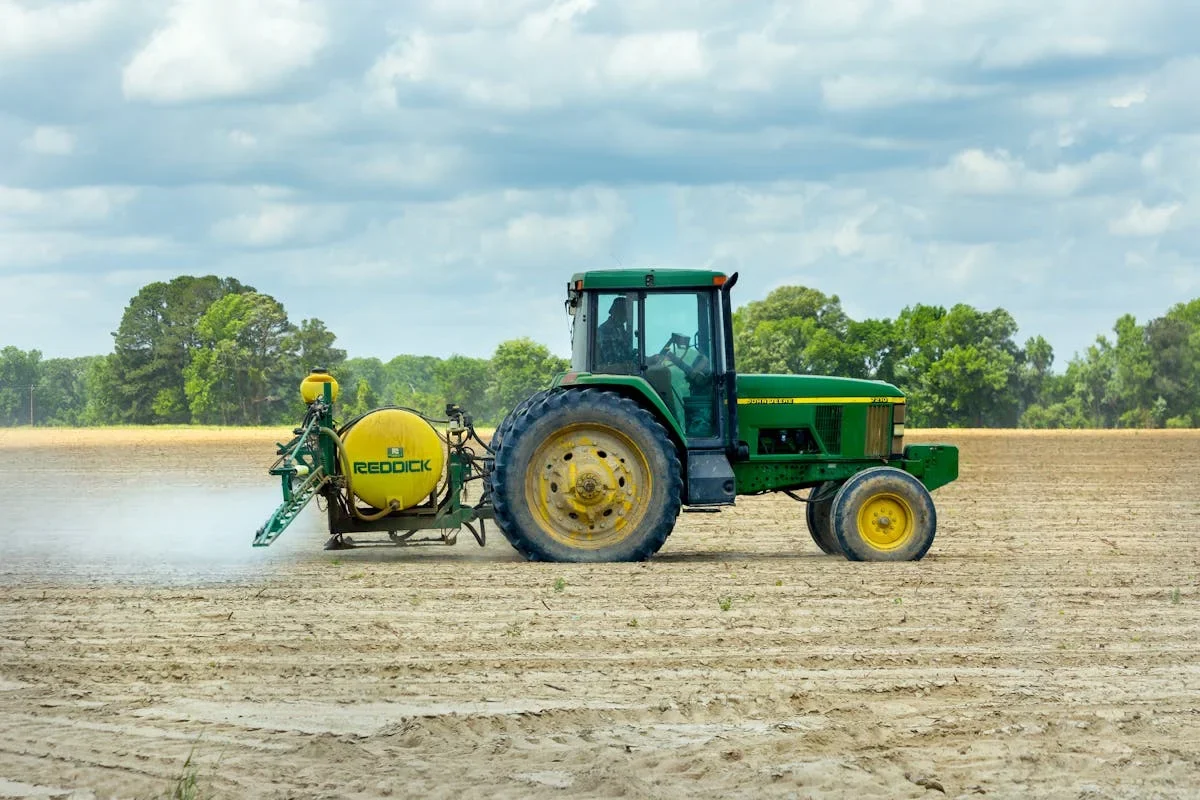
India has over 150 million farming households. Most of them operate on small plots, less than 2 hectares, with limited access to expert advice, market information, and weather forecasts. For decades, farmers have relied on generational knowledge, local dealers, and government extension officers who are stretched impossibly thin.
Artificial intelligence is changing this. Not in the futuristic, robot-tractor sense that headlines suggest, but in practical, phone-based applications that are already helping farmers detect crop diseases, predict weather patterns, get fair prices, and reduce waste.
Here is what is actually working on the ground right now.
Crop Disease Detection Through Phone Cameras
One of the most immediate applications of AI in Indian agriculture is disease identification. A farmer notices spots on their tomato leaves. Before AI, they would either ignore it, consult a local pesticide dealer (who has an incentive to sell products regardless), or wait days for an extension officer visit.
Now, several apps allow farmers to take a photo of the affected plant and get an instant diagnosis.
- Plantix: Developed by a Berlin-based company but widely used across India, Plantix uses image recognition to identify over 400 crop diseases, pest infestations, and nutrient deficiencies. Available in Hindi, Telugu, Marathi, and other Indian languages. Over 30 million downloads
- Kisan Raja: An Indian app focused on major crops like rice, wheat, and cotton. It identifies diseases and recommends treatment options, including organic alternatives
- ICRISAT’s AI-Sowing Advisory: The International Crops Research Institute for the Semi-Arid Tropics, based in Hyderabad, developed an AI system that advises farmers on optimal sowing dates based on weather predictions. Tested across Andhra Pradesh and Karnataka, it has improved crop yields by 10-30% in trial areas
These tools are not perfect. They require decent phone cameras and internet connectivity, which is still patchy in remote areas. But for farmers near towns with 4G coverage, they represent a genuine leap in accessible expertise.
Weather Prediction for Smallholder Farmers
India’s monsoon determines everything for rain-fed agriculture. A week of unexpected dry spell can destroy a paddy crop. An early monsoon withdrawal can leave jowar fields parched. Traditional weather forecasts cover large regions but rarely provide village-level accuracy.
AI-powered weather systems are filling this gap.
- IBM’s Watson Decision Platform for Agriculture: Deployed in parts of Maharashtra and Madhya Pradesh, it combines satellite imagery, soil sensor data, and weather models to provide hyper-local forecasts and crop management recommendations
- Microsoft’s AI for Agriculture (Project Farmbeats): In partnership with ICRISAT, Microsoft developed AI models that analyze weather data, soil moisture, and satellite imagery to send personalized advisories to farmers via SMS. No smartphone required, critical for farmers who still use feature phones
- Skymet: An Indian private weather company that uses AI models trained on decades of Indian weather data. Their forecasts are used by insurance companies for crop insurance payouts and by farmers for planting decisions
The SMS-based systems are particularly important. They don’t require internet access or smartphone literacy, a farmer receives a text message in their language saying “Do not irrigate for next 3 days, rain expected” or “High humidity alert: spray fungicide on cotton by Friday.”
Market Price Intelligence
One of the biggest problems for Indian farmers is not growing crops, it is selling them at fair prices. Middlemen and commission agents have traditionally controlled market access, and farmers often sell at whatever price is offered at the local mandi because they lack information about prices at other markets.
- Agmarknet and eNAM: Government platforms that publish daily mandi prices. While not AI-powered themselves, several AI-driven apps layer on top of this data to provide price predictions and market recommendations
- Ninjacart: Uses AI for demand forecasting and supply chain optimization, connecting farmers directly to retailers. Active in Karnataka, Tamil Nadu, Andhra Pradesh, and Maharashtra. Farmers registered on the platform get price alerts and can choose which buyer offers the best rate
- DeHaat: A full-stack agricultural platform operating across Bihar, UP, Odisha, and Rajasthan. Uses AI to predict which crops will command premium prices in upcoming seasons, helping farmers make better planting decisions months in advance
- AgriBazaar: An AI-powered commodity trading platform that helps farmers sell directly to bulk buyers. The platform uses machine learning to grade crop quality through photos, reducing disputes and enabling remote transactions
When a farmer in Bihar knows that their maize is selling at Rs 2,400/quintal at the local mandi but Rs 2,800/quintal at a mandi 80 km away, that information alone can increase their income by 15-20%.
Soil Health and Precision Agriculture
Indian farmers use more fertilizer per hectare than the global average, yet yields remain below global benchmarks. The problem is not quantity but precision, farmers apply the same fertilizer mix everywhere, regardless of what the soil actually needs.
- CropIn: A Bangalore-based agritech company using satellite imagery and AI to provide plot-level crop monitoring. Their system can detect stress in crops before it is visible to the naked eye, enabling early intervention. Working with over 7 million farmers across 56 countries, with strong adoption in India
- Fasal: IoT sensors placed in fields collect real-time data on temperature, humidity, soil moisture, and light. AI algorithms process this data to send specific irrigation and nutrition recommendations via an app. Active in Karnataka, Maharashtra, and Andhra Pradesh for high-value crops like grapes, pomegranates, and chillies
- SatSure: Uses satellite data and AI to assess crop health, land use, and yield estimation at scale. Their technology is used by banks for agricultural lending decisions and by state governments for crop insurance verification
Precision agriculture is currently more viable for high-value crops and larger farms where the cost of sensors and subscriptions is justified by the returns. For subsistence farmers growing wheat or rice on 1-acre plots, the economics don’t work yet. But as sensor costs drop and satellite imagery becomes more accessible, this will change.
Government Programs Using AI
Several state and central government initiatives are incorporating AI into agricultural support:
- PM-KISAN AI Integration: The government is exploring AI to identify eligible beneficiaries and detect fraud in the PM-KISAN income support scheme, ensuring that subsidies reach genuine farmers
- Andhra Pradesh’s Real-Time Adaptive Management (RTAM): AP is using AI to monitor crop production across the state in real time, enabling faster response to crop failures and more accurate production estimates
- Karnataka’s Raita Mitra: An AI-powered helpline where farmers can describe crop problems in Kannada and receive automated diagnoses and recommendations
- Tamil Nadu’s TNAU AI Labs: Tamil Nadu Agricultural University is developing AI tools specifically calibrated for the state’s crops and conditions, including rice blast prediction models and coconut pest detection
The Real Barriers
For all the promising developments, significant barriers prevent AI from reaching most Indian farmers:
- Language and literacy: Most AI tools are designed in English. Even when translated, the interfaces assume a level of digital literacy that many farmers lack. Voice-based systems in local languages are the most promising solution, but few exist at scale
- Connectivity: AI applications need data connectivity. In many farming regions, 4G coverage is unreliable, and Wi-Fi is nonexistent. Offline-capable apps and SMS-based systems are essential bridges
- Trust: Farmers trust experience over algorithms. When an AI app recommends a different sowing date than what a farmer’s family has followed for generations, adoption is slow. Demonstrations, peer success stories, and gradual results build trust over time
- Data quality: AI models are only as good as their training data. Indian agriculture is extraordinarily diverse, thousands of crop varieties, soil types, and microclimates. Models trained on global data often give poor recommendations for specific Indian conditions
- Cost: Premium features of most agritech apps require subscriptions that small farmers cannot afford. Freemium models and government-subsidized access are needed to reach the farmers who need help the most
What Needs to Happen Next
AI in Indian agriculture is past the experimental stage but nowhere near its potential. To scale meaningfully:
- Build for feature phones, not just smartphones: The most impactful AI services will be delivered via voice calls, SMS, and USSD, not apps
- Invest in Indian-language AI: Voice assistants in Bhojpuri, Tulu, Marwari, and other regional languages can make AI accessible to farmers who cannot read screens
- Create open agricultural data: Government should open up soil health card data, mandi prices, weather station data, and satellite imagery as public datasets for startups and researchers to build on
- Integrate with existing trust networks: Deploy AI tools through Farmer Producer Organizations (FPOs), self-help groups, and Krishi Vigyan Kendras rather than expecting individual farmers to download apps on their own
- Measure impact, not just adoption: The real metric is not how many farmers downloaded an app but whether their yields improved, their costs decreased, or their incomes increased
The Bottom Line
AI will not solve Indian agriculture’s problems alone. Land fragmentation, water scarcity, market access, climate change, and policy gaps require systemic solutions that technology cannot replace.
But for a farmer standing in their field, wondering whether the spots on their crop are a disease or a nutrient deficiency, wondering whether to irrigate today or wait for rain, wondering which mandi will give them a better price, AI can provide answers that were previously available only to the wealthy or well-connected.
The technology exists. The startups are building. The question is whether the delivery systems, in the right languages, on the right devices, through the right channels, will reach the 150 million farming families who need them most.
What you can do
- Share the evidenceSend this to one person who should know about this issue.Share on WhatsApp
- Give an afternoonTeach, mentor, clean up, or lend your professional skills.Ways to volunteer
- Tell us what's missingKnow a story, a fact we got wrong, or a solution worth spotlighting?Suggest a story
Politically neutral. Every claim sourced. Report a correction.


No comments yet