What's working
Solutions
For every challenge India faces, there are people working to solve it. Unite 4 India profiles what works and what can be scaled.
For every challenge India faces, there are people, organisations and innovations working to solve it. Our Solutions section profiles what is working, and what can be scaled.
Why solutions matter
Most coverage of social issues stops at the problem. Knowing the scale of a challenge matters, but so does knowing what works. Amplifying successful models can inspire replication, attract resources and move public debate from despair to possibility.
What we profile
Grassroots innovations
Community-driven solutions born from lived experience, from village water harvesting to local education initiatives.
NGO models
Organisations with scalable, evidence-backed models, and an honest look at what makes them work.
Social enterprises
Businesses built with social impact at their core, proving revenue and purpose can go together.
Citizen initiatives
Individuals and informal groups making a difference: teachers running free coaching, volunteers cleaning rivers, citizens using RTI to demand accountability.
Know a solution worth spotlighting?
If you know a grassroots innovation, NGO, social enterprise or citizen initiative that deserves wider attention, tell us about it.
Latest solution spotlights
All solutions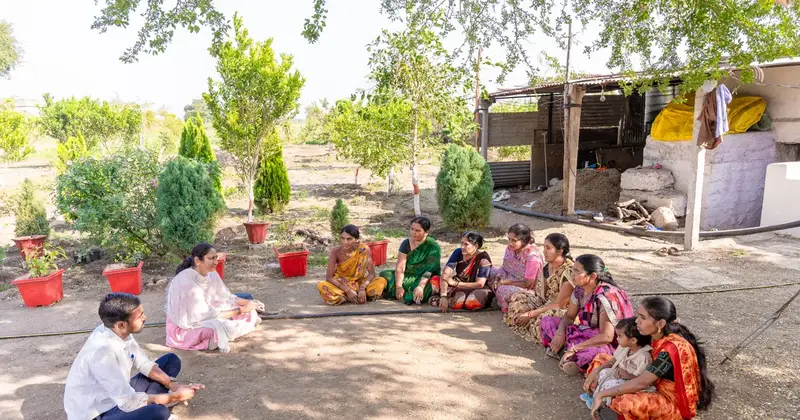
Solutions
Community Solutions: 7 Indian Community-Led Programmes With Measured Results, and What Each Number Really Shows
Seven Indian community programmes in water, sanitation, health, education, livelihoods and heat, each with its numbers, its source and an honest note on what the evidence can and cannot prove.

Solutions
Curitiba's BRT: How Bus Rapid Transit Outperforms Metro in Mid-Sized Cities
Curitiba's Bus Rapid Transit system delivers 80% of metro capacity at 10% of the cost. With only 9 functioning BRT corridors in India and several abandoned, this is the transit model India's tier-2 cities need most urgently.

Environment
The Chipko Movement 50 Years On: What India's First Climate Protest Got Right About Forest Economics
In 1973, Gaura Devi led 27 women to hug trees in Reni village, Uttarakhand. The Chipko movement that followed produced the Forest Conservation Act of 1980, inspired Wangari Maathai's Green Belt Movement, and validated forest ecosystem economics that NITI Aayog would only articulate 50 years later. Here is the full accounting.
Know a solution worth spotlighting?
Tell us about it. We follow up on every lead.