Curitiba's BRT: How Bus Rapid Transit Outperforms Metro in Mid-Sized Cities
Curitiba's Bus Rapid Transit system delivers 80% of metro capacity at 10% of the cost. With only 9 functioning BRT corridors in India and several abandoned, this is the transit model India's tier-2 cities need most urgently.
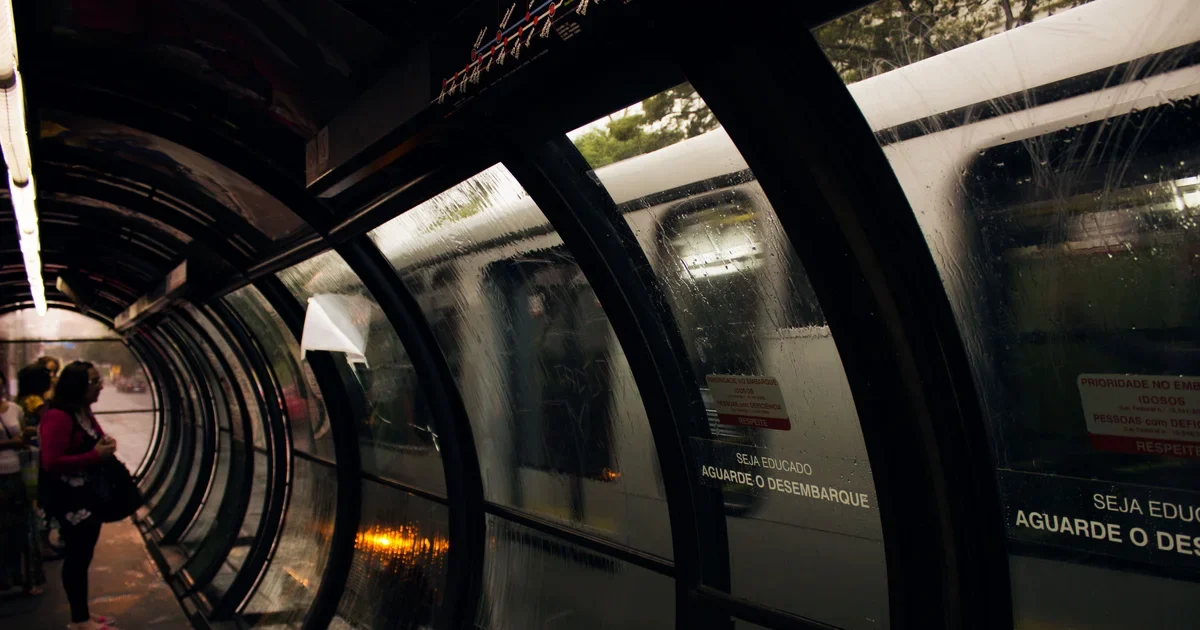
In 1974, Curitiba, a mid-sized Brazilian city of fewer than 600,000 people, opened a bus corridor unlike anything built before: dedicated lanes, tube-shaped stations with level boarding, tickets purchased before boarding, and buses that ran like clockwork. Fifty years later, that system - the world’s first true Bus Rapid Transit network - still carries 2.3 million passenger trips per day, more than the metro systems of most Indian cities ten times its size. The lesson for India is not subtle: BRT works, it is affordable, and the country is barely using it.
What Is Bus Rapid Transit, and Why Does It Matter?
Bus Rapid Transit (BRT) is not a better bus. It is a fundamentally different approach to public transit - one that replicates the performance characteristics of a metro or light rail system using surface infrastructure and buses. The three non-negotiable elements of a genuine BRT system are:
- Dedicated lanes: Buses run in lanes physically separated from general traffic - not painted lanes that cars and motorcycles invade, but kerb-separated or median-separated corridors where only the bus operates.
- Level boarding: Stations are elevated to bus floor height, so passengers step horizontally onto the bus rather than climbing steps. This eliminates the 15-20 second dwell time per boarding that makes conventional buses so slow.
- Off-board fare collection: Passengers pay at the station entrance, not on the bus. This means the bus doors open and everyone boards simultaneously - no fumbling with cash at the driver’s window.
These three elements together create a system where a bus can carry 15,000 to 45,000 passengers per direction per hour - comparable to a metro - at a capital cost of USD 2-10 million per kilometre, compared to USD 40-200 million per kilometre for underground metro construction. The BRT corridor can be built in 18 to 36 months; metro lines typically take 8 to 15 years.
Curitiba: The System That Changed Urban Transit
Curitiba’s BRT was the vision of Jaime Lerner, an architect who became mayor of the city in 1971. Faced with urban sprawl, traffic congestion, and a city budget that could not afford a metro, Lerner and his team at IPPUC (the city’s urban planning institute) designed a transit system that worked with the city’s existing road network rather than requiring entirely new right-of-way.
The key innovation was the integration of the transit system with land use. Curitiba’s BRT corridors run along structural axes that the city designated for high-density residential and commercial development. Buildings along the BRT corridors received higher floor area ratios (FAR) - the incentive to develop densely near transit. The result: the transit system and the city grew together, each making the other more viable. Today, 75% of Curitiba’s 2.4 million residents use the BRT as their primary commute mode - one of the highest transit mode shares of any city in the Western Hemisphere.
The Tube Stations: Curitiba’s Signature Innovation
Curitiba’s BRT stations are distinctive: translucent tube-shaped structures that act as mini-terminal stations where passengers queue, purchase tickets, and wait at platform height. When the bus arrives, its doors align with the tube station openings, and boarding begins simultaneously through multiple doors. A 40-passenger boarding cycle that takes 40 seconds on a conventional bus takes 7 to 10 seconds at a Curitiba tube station. Multiply this across hundreds of stops and the time savings compound into a system that rivals rail in speed.
The stations also function as weather-protected, well-lit public spaces that change the perception of the bus from a vehicle of last resort to a modern transit experience. This is not a trivial detail - transit ridership is heavily influenced by perceived quality. Clean, bright, safe stations attract riders that would otherwise drive.
The Numbers: BRT vs Metro for Mid-Sized Cities
The ITDP (Institute for Transportation and Development Policy) has produced comprehensive comparisons of BRT and metro systems globally. The numbers make a compelling case for BRT in cities where passenger volumes are in the 5,000 to 30,000 passengers-per-hour range:
Metric | BRT (Well-Implemented) | Metro / Rapid Rail |
|---|---|---|
Capital cost (per km) | USD 2 - 10 million | USD 40 - 200 million |
Construction time | 18 - 36 months | 8 - 15 years |
Peak capacity (pphpd) | 15,000 - 45,000 | 20,000 - 80,000 |
Operating cost (per km) | USD 0.50 - 2.00 | USD 2.00 - 6.00 |
Cities where viable | 500,000 - 5 million population | Primarily 3 million+ population |
Land acquisition needed | Minimal (uses existing roads) | Extensive (new right-of-way) |
The critical insight from the ITDP data: for cities in the 500,000 to 3 million population range - the exact range of India’s tier-2 and many tier-1 cities - BRT is not a compromise. It is the right tool. A metro is overengineered and unaffordable for these populations; conventional buses are too slow and unreliable. BRT fills the gap precisely.
Santiago’s Transantiago Parallel: Where Integrated Networks Win
Chile’s capital Santiago launched its BRT-based transit reform (Transantiago) in 2007. The initial rollout was troubled - services were poorly coordinated, coverage was uneven, and the city went through a painful adjustment period. But Santiago persisted, refined the system, and by 2015 had built one of South America’s most effective integrated transit networks, combining metro lines with BRT trunk corridors and feeder buses on a single fare card.
Santiago’s experience contains an important lesson for India: BRT fails when it is treated as an isolated bus improvement project. It succeeds when it is the backbone of an integrated network where different modes (metro, BRT, feeder buses, last-mile services) are planned as a single system with unified ticketing. The integration, not the infrastructure alone, is what makes the system work. This mirrors a broader governance lesson from India’s own experience: as the story of how Tamil Nadu built India’s best social outcomes shows, sustained investment in systems rather than isolated projects is what separates high-performing states from the rest.
India’s BRT Story: Promising Starts, Abandoned Corridors
India’s BRT record is a case study in implementation failure. The JNNURM (Jawaharlal Nehru National Urban Renewal Mission) funded BRT projects in multiple cities beginning in 2005. The results have been mixed to poor. As of 2025, only 9 Indian cities have functioning BRT corridors with any degree of operational integrity. Several high-profile projects have been abandoned or degraded into conventional bus lanes.
Delhi: The BRT That Was Torn Down
Delhi’s BRT corridor on the 5.8-kilometre Ambedkar Nagar to Delhi Gate stretch opened in 2008. It was India’s most ambitious BRT experiment: dedicated bus lanes, cycle tracks, pedestrian infrastructure, and controlled intersections. The project was immediately controversial. Car users - and the media that served them - complained relentlessly about traffic congestion in the remaining lanes. Studies by transport researchers showed the BRT corridor was actually moving more people than before (buses + cyclists + pedestrians), but car users perceived their travel times as longer. In 2016, the Delhi government dismantled the corridor.
Delhi’s BRT failure was not a failure of the BRT concept. It was a failure of political will, stakeholder management, and public communication. The corridor was under-marketed, under-policed (private vehicles encroached on bus lanes constantly), and evaluated by the wrong metric (car travel time rather than people per hour). The lesson is clear: BRT requires political commitment to protect the dedicated lane, even when car users object.
Ahmedabad: The One That Worked
Ahmedabad’s Janmarg BRT, launched in 2009, is the brightest exception in India’s BRT story. Running along 88 kilometres of corridors, Janmarg carries approximately 130,000 passengers per day. It uses Curitiba-style elevated stations, has a real-time tracking app, and has been maintained as a dedicated bus network that actually enforces lane exclusivity. The system won the ITDP’s Sustainable Transport Award in 2010. Ahmedabad demonstrates that India can build and operate a world-class BRT system - the prerequisites are consistent enforcement, political protection of the dedicated lane, and integration with feeder services.
The 9-City Picture
Beyond Ahmedabad, India’s functioning BRT systems include Bhopal, Indore, Rajkot, Surat, and a few others. None have matched Ahmedabad’s ridership. Several cities that received JNNURM BRT funding - including Pune - built corridors that were quickly degraded by vehicle encroachment and operational neglect. The MoHUA (Ministry of Housing and Urban Affairs) acknowledged in a 2022 review that most Indian BRT corridors were operating at 20 to 40% of their design capacity.
Why India Keeps Getting BRT Wrong
The gap between Curitiba’s success and India’s mixed record is not a gap in engineering knowledge or financial resources. It is a gap in urban governance. Three structural failures recur across failed Indian BRT projects:
1. No Protected Right-of-Way
In Curitiba, the dedicated bus lane is physically separated from traffic by kerbs. Cars cannot enter it. In most Indian BRT projects, the separation was painted lines or low bollards - both of which private vehicles routinely cross. Without physical enforcement infrastructure, the dedicated lane disappears within months. BRTS (Bus Rapid Transit System) becomes just another bus route with a dedicated sign.
2. Treated as a Bus Project, Not a City Project
In Curitiba, the BRT was the spine of a comprehensive urban development strategy. In India, BRT has typically been a transport department project disconnected from land use planning, housing policy, and economic development. Without the higher density development that makes a corridor financially viable, BRT corridors carry insufficient passengers to justify their capital cost and political cost. India’s infrastructure governance gaps extend across sectors: the same pattern of poor systems design without integrated planning afflicts the power grid, as detailed in our analysis of India’s power outage problem compared to Japan’s 99.97% uptime standard.
3. Car-User Political Economy
Indian urban policy has, for decades, been influenced disproportionately by car users - who are wealthier, more politically vocal, and more likely to interact with urban officials than bus users. BRT explicitly reallocates road space from cars to buses (and cyclists and pedestrians). This is always politically difficult. Cities that have successfully protected their BRT corridors have done so by building a political coalition around the 80-90% of commuters who do not own cars.
The Opportunity: India’s Tier-2 Cities Are the Perfect BRT Market
India’s 60 cities with populations between 500,000 and 5 million represent the natural market for BRT. These cities are growing rapidly - urban India is expected to add 400 million residents by 2047. They cannot afford metro systems (even a 20-km metro requires Rs 5,000 to 10,000 crore and 10 years to build). Their road networks are not yet saturated by private vehicles, which means dedicated bus corridors can still be carved out without the political pain of Delhi or Mumbai. And their commuter volumes - typically 50,000 to 500,000 daily transit users - are in the sweet spot for BRT.
Cities like Coimbatore, Visakhapatnam, Nagpur, Mysuru, and Kochi are in this category. Nagpur has already invested in a metro; Kochi is building one. Both might have been better served by a BRT network that could have been operational in three years rather than fifteen. The window for getting this right is narrowing as these cities grow and their road networks fill.
The ITDP Standard: What a Gold-Level BRT Looks Like
The ITDP’s BRT Standard scorecard evaluates systems on eight categories: dedicated infrastructure, service design, station design, demand management, universal access, technology, fare system, and urban integration. Systems that score 85+ points earn Gold certification. As of 2025, only one Indian system - Ahmedabad’s Janmarg - has ever been rated at ITDP Gold level (it scored Silver in 2017 after an initial Gold, reflecting some operational deterioration).
Curitiba’s system, which predates the standard, would score Gold. Bogota’s TransMilenio (another Latin American BRT benchmark) scores Gold and carries 2.4 million passengers per day on a USD 240 million investment spread over its initial corridors - a figure that would represent world-class value for India as well.
The State-Level Mandate: What India Needs Nationally
The ITDP India office, EMBARQ India (now WRI India), and MoHUA have all published detailed guidance on what a successful BRT policy framework requires. The core elements:
- State-level BRT policy mandates: Cities above 500,000 population that receive central transit funding should be required to evaluate BRT as the primary mass transit option before applying for metro funding. Currently, metro projects are often approved with minimal comparison to BRT alternatives.
- Physical enforcement standards: Any BRT project receiving central funds must demonstrate physical separation of the bus lane - concrete kerbs or medians, not paint. This should be a condition of AMRUT or Smart Cities Mission funding.
- Integration requirements: BRT projects must demonstrate a feeder network plan that connects the trunk corridor to last-mile destinations. A trunk route without feeders creates the “walk to the corridor” problem that drives riders back to autorickshaws.
- Performance-linked funding: Central funds disbursed in tranches linked to ridership targets, not just construction completion. This changes the incentive from building infrastructure to operating effective transit.
What Citizens Can Do: Five Layers of Action
BRT’s success is ultimately a question of political will - and political will follows citizen pressure. Here is how to apply it at every level.
Layer 1: Personal - Use the System
If your city has a BRT corridor, use it. Transit systems live and die on ridership numbers. Low ridership is used as justification for neglect and eventual abandonment. Even if the system is imperfect, your ridership is a vote in favour of improving it. Track your trips, write reviews on Google Maps and transport apps, and report encroachments on the dedicated lane through your city’s complaint system.
Layer 2: RWA Level - Demand Feeder Connectivity
The most common reason people don’t use BRT is the last-mile gap. Petition your city’s transit authority through your RWA for feeder bus services or cycling infrastructure that connects your neighbourhood to the nearest BRT station. The BRTS authorities in Ahmedabad and Bhopal have formal channels for feeder route requests from resident groups. Use them. Document the demand in a petition with signatures, and present it at ward-level civic meetings.
Layer 3: Ward Level - Protect the Corridor
The single biggest threat to any BRT corridor is encroachment by private vehicles and parking. Document encroachments with photographs and timestamps and report them to the traffic police and the BRT authority. In cities where the BRT is failing, ward councillors often have the political power to demand enforcement from the traffic department - lobby them directly. A ward with a clean BRT corridor is a ward with better air quality, faster commutes for the majority, and better overall liveability.
Layer 4: City Level - Demand BRT-First Planning
If your city is planning a metro, ask publicly what the BRT alternative evaluation looked like. File RTI requests with the municipal corporation and the state urban development department to access the transit demand studies and cost-benefit analyses. Transport think tanks like WRI India, ITDP India, CSTEP, and EMBARQ publish city-specific transit analyses - cite these in public consultations on new transit projects. City master plans are public documents that can be commented on during review periods; use those channels.
Layer 5: National - Advocate for Stronger BRT Standards
The most leverage point in India’s transit policy is the central government’s urban transit funding mechanism. Advocate for MoHUA to require BRT evaluation as a precondition for metro funding approval for cities under 3 million population. Write to your elected national representative on the Urban Development Committee. Support civil society organisations (WRI India, ITDP India, UITP India) that are directly lobbying for stronger BRT standards. India’s urban transit investments over the next twenty years will determine the mobility of 700 million urban residents - getting the policy right now matters enormously.
Conclusion: The Curitiba Standard Is Not Out of Reach
Curitiba built its BRT in 1974 with a budget that would not cover a single metro station today. It worked because the city integrated transit with land use, protected the corridor with physical infrastructure, and committed politically to bus riders over car users. That commitment - not the technology, not the buses - is what made Curitiba a global model. Ahmedabad proved India can replicate it. The question is whether India’s other cities will learn from Ahmedabad or repeat Delhi.
Fifty Indian cities are in the population range where BRT is the optimal mass transit investment. They are building roads that will be congested in a decade, or lobbying for metro lines they cannot afford. The Curitiba model - adapted, improved, and enforced - offers a path to mass transit that these cities can build in years rather than decades, at a fraction of the cost. That is not a planning abstraction. It is a choice that each city’s residents and officials are making right now, in zoning approvals and transit funding applications and road-widening projects.
The next Curitiba does not have to be in Brazil. It can be in Coimbatore or Visakhapatnam or any of the fifty Indian cities where the choice is still open.
What you can do
- Share the evidenceSend this to one person who should know about solutions.Share on WhatsApp
- Back what worksVolunteer time or skills with groups doing this work.Ways to volunteer
- Tell us what's missingKnow a story, a fact we got wrong, or a solution worth spotlighting?Suggest a story
Politically neutral. Every claim sourced. Report a correction.

No comments yet