1 Gbps Standard: South Korea Made It Universal. India's Broadband Audit by State.
South Korea achieved near-universal 1 Gbps broadband coverage by treating internet connectivity as public infrastructure. India's national average sits at roughly 65 Mbps. This state-by-state audit examines the gap, what BharatNet Phase 3 promises, and what every citizen can do to close the distance.
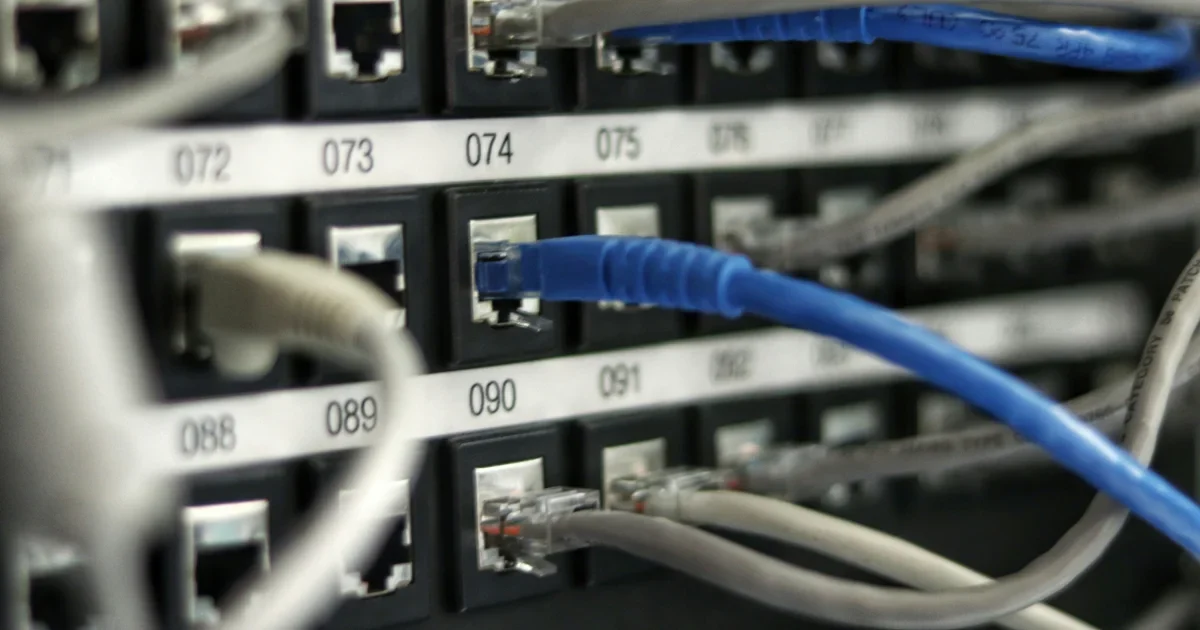
In 2001, South Korea made a national decision: every household in the country would have access to high-speed broadband. By 2010, the country had achieved 99 percent fibre-to-the-home coverage with speeds of 100 Mbps as a baseline. By 2020, 1 Gbps connections were available nationwide as a standard commercial offering. Today, South Korea consistently ranks first or second in global broadband speed indices. India’s national average fixed broadband speed in mid-2025, per Ookla’s Speedtest Global Index, was approximately 65 Mbps - adequate for basic streaming but a significant distance from the infrastructure required for the digital economy India is trying to build. This article examines how South Korea built its broadband network, where each Indian state stands today, and what the path forward looks like from BharatNet Phase 3 to the last-mile connection in a village gram panchayat.
The South Korea Model: What a National Broadband Commitment Actually Looks Like
South Korea’s broadband story begins with the Korea Information Infrastructure (KII) initiative launched by the Kim Dae-jung government in the late 1990s. The timing matters: Korea was emerging from the 1997 Asian financial crisis and looking for a structural shift in its economy. The government bet on information technology as the vector for that transformation. The KII plan involved three parallel levers that, in combination, produced outcomes no single lever could have achieved alone. South Korea’s transformation from an agrarian economy to a technology powerhouse is part of a broader pattern - as this site’s analysis of South Korea’s five economic inflection points since 1960 shows, the broadband investment was one element in a deliberate, sequenced national development strategy.
The first lever was infrastructure investment. The government mandated that apartment complexes - which house the majority of the Korean urban population - be pre-wired for broadband as a condition of construction permits. Korea’s highly urbanised population, concentrated in apartment towers, meant that laying fibre to the building and wiring internally was extremely cost-effective per household. Government subsidies supported deployment in rural and low-density areas where commercial returns were marginal.
The second lever was competitive licensing. Korea issued broadband licenses to multiple providers - KT, SK Broadband, LG Uplus - and required them to share infrastructure at regulated wholesale rates. This meant new entrants could offer services without building entire parallel networks, which kept consumer prices low. Monthly 1 Gbps residential broadband in South Korea today costs approximately 25,000 to 30,000 Korean Won - roughly 1,500 to 1,800 Indian rupees. The combination of competition and infrastructure-sharing prevented the monopoly rent extraction that has slowed broadband rollout in many other countries.
The third lever was demand creation. The government invested heavily in PC labs, broadband-enabled community centres, and digital literacy programmes. It made e-government services genuinely useful - by the mid-2000s, Koreans could renew driving licenses, file taxes, apply for permits, and access medical records entirely online. When government services are delivered digitally and reliably, broadband becomes a necessity rather than a luxury, which drives adoption rates and sustains the commercial case for continued investment.
Year | South Korea Average Fixed Speed | India Average Fixed Speed | Global Rank (Korea) |
|---|---|---|---|
2010 | ~30 Mbps | ~1 Mbps | 2 |
2015 | ~100 Mbps | ~4 Mbps | 1 |
2020 | ~250 Mbps | ~35 Mbps | 1 |
2025 (est.) | ~800 Mbps | ~65 Mbps | 1-2 |
India’s Broadband Architecture: BharatNet and the Last-Mile Problem
India’s broadband infrastructure programme has operated at a scale that dwarfs most comparable national efforts. BharatNet, launched in its first phase in 2011 as the National Optical Fibre Network, aims to provide broadband connectivity to all of India’s approximately 250,000 gram panchayats. The project is among the largest rural connectivity programmes ever attempted anywhere. As of 2025, approximately 210,000 gram panchayats have been connected with optical fibre, meaning the backbone exists. The challenge that remains is the last mile: getting the connection from the panchayat office to homes, schools, health centres, and small businesses in the village.
BharatNet Phase 3, announced in 2023 with a revised structure and funding mechanism involving states as equity partners, is intended to address this last-mile gap by bringing fibre to each household in covered gram panchayats. The total cost is estimated at over 1.3 lakh crore rupees across multiple phases. The programme represents the largest infrastructure commitment in Indian digital history.
Three structural challenges have slowed BharatNet’s delivery against its original timelines. First, right-of-way clearances for laying underground cable have been administratively complex, requiring permissions from multiple levels of government - national highway authorities, state public works departments, district administrations, and local bodies - that do not always operate in coordination. Second, the maintenance model for completed infrastructure has been inconsistent: dark fibre (fibre that has been laid but not yet lit or connected to service providers) is a recurring finding in independent audits. Third, the transition from backbone connectivity at the panchayat level to actual household-level service delivery requires active involvement of internet service providers, many of which have found the economics of serving small rural settlements challenging without additional subsidy.
State-by-State: India’s Broadband Divide
India’s broadband reality is not uniform. The gap between the best-performing and worst-performing states in fixed broadband penetration is substantial. TRAI’s Telecom Subscription Data and the Broadband India Forum’s state-level analyses provide the clearest picture of where the gaps are concentrated.
State / Category | Fixed Broadband Subscribers per 100 Households (approx.) | Primary Coverage Challenge |
|---|---|---|
Kerala | 35-40 | High baseline; last-mile gaps in remote highlands |
Delhi / NCR | 50-60 | Urban densification; building-level wiring quality |
Maharashtra | 25-30 | Mumbai vs. rural Vidarbha gap is extreme |
Karnataka | 20-25 | Bengaluru vs. North Karnataka gap |
Tamil Nadu | 22-28 | Chennai vs. delta districts gap |
Uttar Pradesh | 8-12 | Sheer scale; BharatNet last-mile connectivity |
Bihar | 5-8 | Infrastructure investment gap, last-mile density |
Jharkhand | 5-8 | Terrain, tribal area connectivity |
Odisha | 8-12 | Coastal vs. interior district gap |
Manipur / NE States | 4-7 | Terrain, border area restrictions, maintenance |
Kerala’s relative leadership in fixed broadband reflects decades of investment in its state-owned fibre network, K-FON (Kerala Fibre Optic Network), which was conceived specifically to provide free broadband to below-poverty-line households and low-cost broadband to others. K-FON passed an important milestone in 2023 when it began active service delivery in multiple districts. It represents the clearest Indian state-level attempt to replicate the South Korean model of treating broadband as public infrastructure rather than purely a commercial service.
Bihar and Jharkhand’s low penetration numbers reflect a combination of factors: lower per-capita income reducing household affordability, lower density of commercial ISP investment in the absence of sufficient demand, and the specific challenge of the last-mile connection in densely populated but diffuse rural settlements. These states also have the most to gain from high-speed connectivity - telemedicine access, digital payment infrastructure for farmers and traders, remote learning for students who cannot access city schools.
Mobile vs. Fixed: Why India Cannot Skip Fixed Infrastructure
A common response to discussions of India’s fixed broadband gap is that it does not matter because mobile broadband is widely available. India has among the world’s cheapest mobile data - Jio’s entry in 2016 triggered a price war that reduced mobile data costs by over 90 percent in three years and drove India to the top of global mobile data consumption rankings. By 2025, over 700 million Indians have access to 4G or better mobile networks. Is fixed broadband redundant in this context?
The answer is no, for several interconnected reasons. First, mobile broadband speeds - while adequate for personal communication and streaming - are not reliably sufficient for the applications that will drive India’s next phase of economic growth. Remote work at professional quality, video conferencing at high definition, cloud computing for small businesses, telemedicine with diagnostic imaging, precision agriculture sensors, industrial IoT applications: all of these require the consistent, low-latency, high-bandwidth performance that only fixed connections provide reliably. Second, mobile spectrum is a shared resource. As more users stream video, the per-user speed drops. Fixed fibre, routed directly to a household, does not face this contention. Third, mobile data security and reliability are lower than fixed connections - a consideration for financial transactions and sensitive professional use.
South Korea did not choose between mobile and fixed - it built both. Korea has among the world’s most advanced 5G networks in addition to its 1 Gbps fixed broadband infrastructure. The two complement rather than substitute for each other. India’s Digital India programme has prioritised mobile connectivity as the near-term access vector, correctly, given the cost and speed of deployment. But the medium-term infrastructure goal must include fixed fibre to every household, not just to the panchayat building. The governance model for achieving this mirrors what other nations have done with digital transformation: Estonia’s 15-year digitisation of government is the most closely studied parallel, having used mandatory digital service standards to create both demand for and accountability around connectivity infrastructure.
The Competitive Licensing Gap and What India Can Learn
One of the most actionable lessons from the South Korean model is the importance of competitive wholesale access to infrastructure. When multiple service providers can offer broadband over the same physical fibre, competition drives prices down and service quality up. India’s current framework allows for this in principle - the Unified License regime under which ISPs operate does not prohibit wholesale access - but the commercial and regulatory environment has not consistently produced the same outcome.
BharatNet was designed to be a carrier-neutral open-access network: any licensed ISP should be able to use the BharatNet fibre to deliver services to households. The degree to which this open-access architecture has been implemented in practice has varied by state and by phase. Some states have successfully onboarded multiple ISPs onto BharatNet infrastructure; others have seen the backbone remain underutilised. TRAI’s recommendations on mandatory open-access for all publicly funded broadband infrastructure, issued in 2023, represent an important regulatory step in the right direction - the question is implementation.
The E-Services Demand Creation Loop
South Korea’s broadband adoption was accelerated by the quality and comprehensiveness of its e-government services. India’s digital public infrastructure has made enormous strides in the same direction: Aadhaar-enabled authentication, UPI’s transformation of retail payments, the DigiLocker document repository, CoWIN’s vaccine registration system, UMANG’s aggregation of government services. These platforms have demonstrated that Indian citizens will adopt digital services rapidly when those services are genuinely useful and reliably available.
The next phase of this demand-creation loop requires taking these services to their logical extension. Health stack integration that allows a village health worker to access a patient’s medical history and consult a specialist via video requires reliable broadband, not just mobile data. The PM eVIDYA content delivery system, designed to reach students through broadband-connected school smart classrooms, requires the broadband to actually be present and functioning in the school. The National Digital Health Mission’s ambition to create a unified health record for every Indian requires the connectivity to make those records accessible where the patient actually is - which is often rural.
Urban Broadband: The Building-Level Wiring Problem
India’s broadband discussion often focuses on rural connectivity, but urban areas have their own significant gap: the quality of last-mile wiring within buildings. In many Indian cities, optical fibre runs to a building, then transitions to copper telephone lines or coaxial cable for the final run to individual apartments. This transition - from fibre to copper - dramatically reduces the achievable speed. A 100 Mbps fibre connection that ends in 1990s-era copper wiring in a housing society delivers far less than 100 Mbps to the user’s device.
South Korea resolved this by making fibre-to-the-apartment (FTTA) a construction standard. India’s current National Building Code does not include comparable mandatory provisions for fibre wiring in new residential construction. A revision of building code standards to require fibre-ready internal wiring in new construction - similar to requirements for electrical wiring and plumbing - would address this gap for the future building stock. For existing buildings, housing societies and real estate investment trusts (REITs) need commercial incentives to upgrade internal wiring infrastructure.
What You Can Do: Five Layers of Citizen Action on Broadband
Broadband infrastructure is not something that happens to citizens - it is something that citizens can actively shape through engagement at every level of governance. Here are five concrete layers of action.
- Personal level: Measure your own broadband speed using TRAI’s MySpeed app or Ookla Speedtest, and contribute your results to the national crowdsourced database. TRAI uses this data for regulatory analysis. If you are in a village or peri-urban area, reporting consistent low speeds creates a documented evidence base that local officials and BharatNet monitoring committees can use to prioritise maintenance or extension. If your ISP is not delivering the speed promised in your service agreement, file a complaint through TRAI’s grievance portal - ISPs are required to respond.
- Housing society / RWA level: If your housing society has old copper wiring for broadband, organise a collective upgrade to fibre-to-the-apartment. Multiple ISPs will offer competitive proposals if approached as a building-wide customer. The investment per household is typically recovered in speed improvement and lower per-unit cost. Ask your society management committee to include internal broadband wiring upgrade in the next capital expenditure plan.
- Ward level: Identify the BharatNet gram panchayat connectivity status for rural wards in your local area through the BharatNet dashboard (bharatnet.gov.in). Raise questions at ward meetings about whether connected panchayat buildings are actually delivering services to households, or whether the connection is dark or unused. Advocate for the ward to nominate a local broadband committee that monitors service quality and escalates maintenance issues.
- City level: Engage with your city’s digital infrastructure plan. Most large municipalities have a smart city or digital infrastructure component in their development plans. Advocate for mandatory fibre-ready wiring standards in new construction permits, open-access infrastructure for new township developments, and publicly funded broadband in schools, libraries, health centres, and community halls. These are achievable asks that multiple cities have implemented in some form.
- National level: Write to your elected representatives asking them to advocate for: increased BharatNet Phase 3 funding and transparent delivery timelines; mandatory open-access provisions for all publicly funded broadband infrastructure; a national building code amendment requiring fibre-to-the-apartment in new residential construction; and a dedicated annual broadband quality report tabled in the national legislature, with explicit state-level targets and accountability mechanisms. India’s digital future is being built now - citizen engagement with the infrastructure decisions being made today will determine what that future looks like.
Conclusion: Infrastructure as National Aspiration
South Korea’s broadband success was not an accident. It was the result of a deliberate national decision, sustained over two decades, to treat high-speed internet connectivity as infrastructure as essential as roads and electricity. The mechanisms it used - mandated deployment, competitive open access, e-services demand creation, public subsidy for underserved areas - are all available to India. The scale is different; the geography is more complex; the population is 25 times larger. But the logic is the same.
India has already made significant commitments in this direction. BharatNet is among the most ambitious rural connectivity programmes in the world. The Digital India stack has produced world-class digital public infrastructure in payments, identity, and services. The 5G rollout has proceeded faster than most analysts predicted. The question now is whether the country can close the last-mile gap - both rural and urban - with the same energy and accountability that characterised these earlier achievements. That closure will not happen through technology alone. It will happen through the combination of institutional investment, regulatory clarity, and active citizen demand that turned South Korean broadband from a government target into a national standard. India is capable of the same. The path is visible. The work is underway. What it needs is consistent pressure, from citizens as much as from officials, to see it through.
What you can do
- Share the evidenceSend this to one person who should know about digital india.Share on WhatsApp
- Give an afternoonTeach, mentor, clean up, or lend your professional skills.Ways to volunteer
- Tell us what's missingKnow a story, a fact we got wrong, or a solution worth spotlighting?Suggest a story
Politically neutral. Every claim sourced. Report a correction.


No comments yet