Yoga: How an Ancient Indian Practice Became a $130-Billion Global Industry
Yoga originated in ancient India with the Patanjali Sutras and was modernised by Tirumalai Krishnamacharya in the 20th century. Today it is a $130-billion global industry. This is the full story of how India gave the world yoga, who commercialised it, who owns it culturally, and what India can do to lead the next chapter.
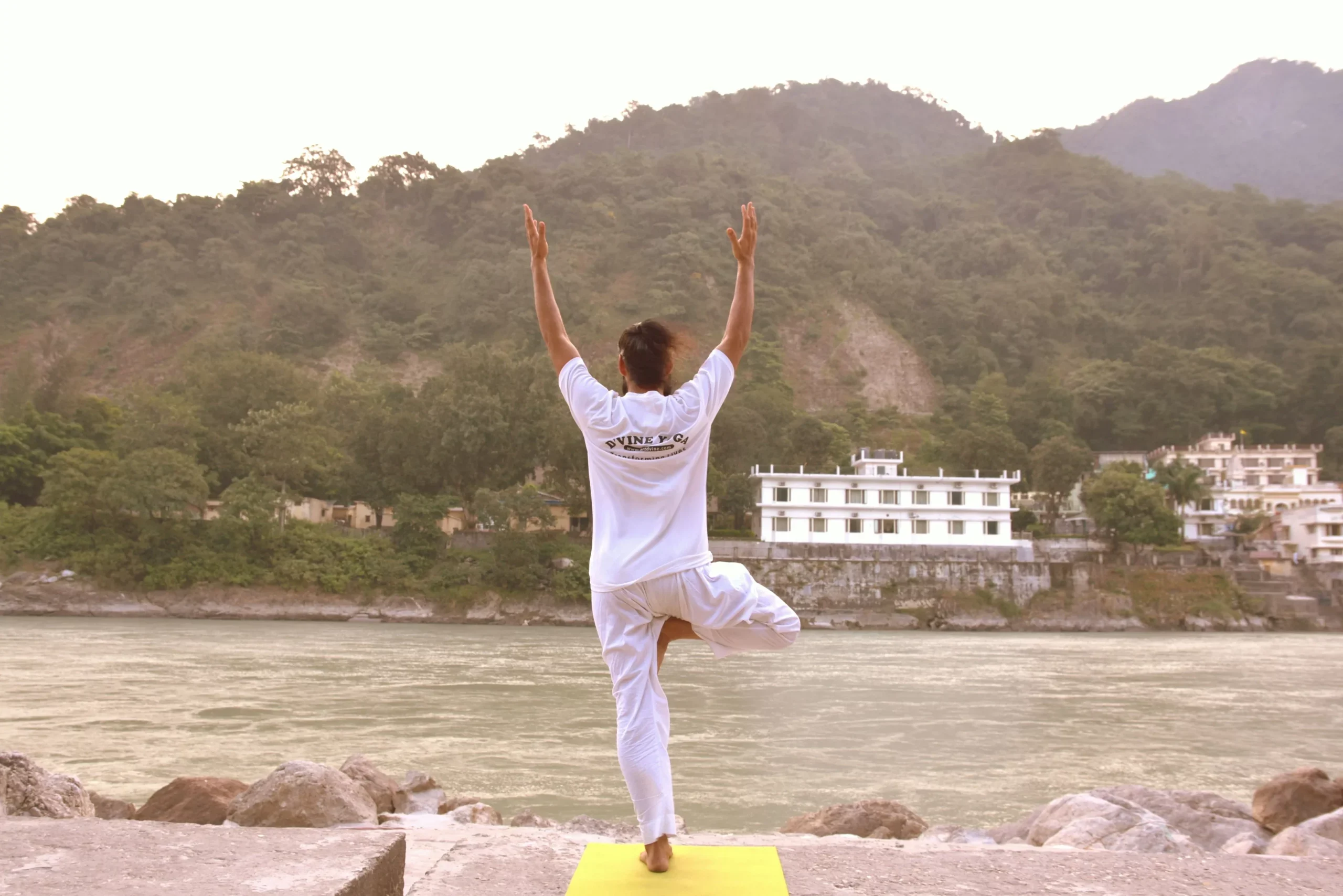
Somewhere in the world right now, thousands of people are unrolling yoga mats - in studios with heated floors in Chicago, on rooftop platforms in Amsterdam, in government-funded community halls in Singapore, and at dawn on the ghats of Rishikesh. Yoga, which originated in ancient India and was nearly lost to history before being revived and systematised by a Tamil brahmin scholar in the 20th century, is now a $130-billion global industry. That number includes studios, apparel, retreats, apps, equipment, and teacher certification programs. It grows by roughly 9% each year. And India - the civilisation that created it - captures a surprisingly small fraction of that economic value.
This is the story of yoga’s origins in the Patanjali Sutras, its near-disappearance, its dramatic revival through the genius of one man - Tirumalai Krishnamacharya - the global export by his students B.K.S. Iyengar and K. Pattabhi Jois, the commercial appropriation by Western brands including Lululemon and Bikram Choudhury’s franchise, the geo-political assertion by India through International Yoga Day, and what it means for a civilisation to own a practice that has become the world’s most popular mind-body discipline. India has gifted the world other ancient knowledge systems with comparable reach - as explored in the story of Sushruta Samhita, whose surgical principles still appear in modern medical journals - but none with yoga’s scale of global economic impact.
Origins: The Patanjali Sutras and Yoga’s Ancient Roots
Yoga’s written origin is generally traced to the Yoga Sutras of Patanjali, a foundational text of approximately 196 sutras (aphorisms) compiled between 400 BCE and 400 CE. The Yoga Sutras do not describe yoga as physical exercise. They describe it as a system of mental and spiritual discipline - a methodology for stilling the fluctuations of the mind and achieving a state of pure awareness (samadhi). Patanjali’s Ashtanga (eight-limbed) yoga includes ethical precepts (yama and niyama), physical postures (asana), breath control (pranayama), withdrawal of senses (pratyahara), concentration (dharana), meditation (dhyana), and absorption (samadhi).
Asana - the physical postures now synonymous with yoga globally - occupies only the third of eight limbs in Patanjali’s system. The emphasis was always on the full path, not the postures. Earlier references to yoga appear in the Rigveda (roughly 1500 BCE), the Upanishads, and the Bhagavad Gita, where Lord Krishna describes four paths of yoga to Arjuna: Karma Yoga (path of action), Bhakti Yoga (path of devotion), Jnana Yoga (path of knowledge), and Raja Yoga (path of meditation). The Hatha Yoga Pradipika, written in the 15th century CE by Swami Swatmarama, first systematised the physical postures as a path to spiritual awakening.
For centuries, yoga was transmitted orally from guru to student in small lineages. It was not a mass practice. It was esoteric, protected, and not particularly accessible to women, lower castes, or non-Hindus. This would change dramatically in the 20th century.
Tirumalai Krishnamacharya: The Man Who Invented Modern Yoga
If there is one person most responsible for the global yoga phenomenon, it is Tirumalai Krishnamacharya (1888-1989), a scholar, healer, and teacher from Mysore who studied with a Himalayan master named Ramamohan Brahmachari for seven years and then returned to become court yogi to the Maharaja of Mysore, Nalvadi Krishnaraja Wadiyar. Krishnamacharya is called the father of modern yoga for a reason: virtually every major yoga tradition practised in the West today traces its lineage directly to him.
Krishnamacharya synthesised ancient texts including the Yoga Korunta (a manuscript he claimed to have studied under Brahmachari, now lost) with Indian gymnastic traditions, wrestling, and breathing techniques to develop what he called Vinyasa - a dynamic sequence of postures linked by breath. He taught in the Mysore Palace’s gymnasium from the 1930s and, unusually for the time, taught women and students of all castes. He also began teaching Western students.
His four most influential students became the founders of the major schools of yoga practised globally today:
- B.K.S. Iyengar (his brother-in-law): Developed Iyengar Yoga, known for precision alignment and use of props, and taught Yehudi Menuhin, which brought him global fame. Founded thousands of institutes worldwide.
- K. Pattabhi Jois: Developed Ashtanga Vinyasa Yoga, the athletic, structured sequence practice that became the ancestor of Power Yoga, Hot Yoga, and most modern studio yoga.
- Indra Devi: A Latvian-Russian student who brought yoga to Hollywood in the 1940s, teaching Greta Garbo and Gloria Swanson.
- T.K.V. Desikachar (his son): Developed Viniyoga - a therapeutic, individualised approach that influenced yoga therapy and rehabilitation medicine worldwide.
Krishnamacharya’s genius was adaptability. He taught different students different practices based on their age, health, and constitution. He made yoga accessible without diluting its depth. And he trained teachers who were willing to cross cultural and geographic boundaries in a way that previous yoga masters had not.
The Global Export: Iyengar, Pattabhi Jois, and the Western Studio Boom
B.K.S. Iyengar’s 1966 book “Light on Yoga” - a systematic guide to 200+ yoga postures with photographs - became the foundational text of modern yoga as a physical practice. It has sold over 3 million copies and has been translated into 17 languages. Iyengar taught in Pune from 1937 until his death in 2014, but his influence spread globally through students who returned to Europe, North America, and Australia and opened studios teaching his method. The Iyengar Yoga National Association of the United States was founded in 1984. By 2000, there were Iyengar Yoga institutes in 80+ countries.
K. Pattabhi Jois’s Ashtanga Vinyasa Yoga was discovered by Western practitioners in the 1970s and 1980s, particularly after American student David Williams and others trained in Mysore and brought the practice back to California. By the 1990s, celebrities including Madonna, Sting, and Gwyneth Paltrow were practising Ashtanga - and its athletic, sweat-inducing style aligned with the Western fitness culture in ways that more contemplative forms of yoga did not. Power Yoga, Hot Yoga (popularised by Bikram Choudhury’s franchise in the 1970s), and the broader studio yoga market of the 1990s and 2000s all drew from Ashtanga’s DNA.
Lineage | Founded by | Key Features | Global Reach |
|---|---|---|---|
Iyengar Yoga | B.K.S. Iyengar (Pune) | Precision alignment, props | 80+ countries, thousands of certified teachers |
Ashtanga Vinyasa | K. Pattabhi Jois (Mysore) | Fixed sequences, breath-linked movement | Origin of Power/Hot Yoga worldwide |
Sivananda Yoga | Swami Vishnudevananda (Kerala) | Classical 5-point system | 90 centres across 6 continents |
Kundalini Yoga | Yogi Bhajan (Punjab/LA) | Breathwork, chanting, kriyas | 3HO Foundation active in 80+ countries |
Bikram/Hot Yoga | Bikram Choudhury (Kolkata/LA) | 26 postures, 40C heated room | Peak: 600+ studios globally (controversy ended franchise) |
The $130-Billion Industry: Who Makes the Money
The global yoga market, valued at approximately $130 billion in 2023 according to Research and Markets, breaks down into several segments. Understanding who captures value in each segment is essential to understanding why India - yoga’s country of origin - has not yet become yoga’s dominant economic beneficiary.
- Apparel and equipment (~$35B): Led by Lululemon (founded in Vancouver, 1998), Athleta, Alo Yoga, and Manduka. Lululemon’s revenue alone exceeded $9 billion in 2023. India-based yoga apparel brands hold a negligible fraction of global apparel revenue.
- Studios and classes (~$25B): Driven by boutique studios in the US, UK, Australia, and Europe. CorePower Yoga (US) and YogaWorks are among the largest chains. India’s yoga studio market is growing but primarily domestic.
- Wellness retreats and tourism (~$20B): Rishikesh and Mysore attract international yoga tourism, but the retreat market is fragmented and India captures only a portion of global yoga retreat spending.
- Digital and streaming (~$15B): Apps like Down Dog, Glo, and Peloton’s yoga content are headquartered in the US. India’s yoga apps (Cult.fit, OmAware) are primarily domestic.
- Teacher training (~$10B): A 200-hour Teacher Training Course (TTC) costs $2,000-$5,000 in the West. India-based TTCs are growing but priced far lower, capturing value in volume rather than margin.
- Books, media, supplements (~$25B): Global publishing, YouTube channels, and yoga wellness supplements largely based in Western markets.
The economic picture is clear: the practices are Indian in origin, but the value chain - brand development, premium pricing, intellectual property, and distribution - is largely owned by Western companies. This is not fundamentally different from the pattern in many other domains where a traditional knowledge system from the Global South has been commercialised by the Global North.
The Appropriation Question: Who Owns Yoga?
The question of cultural ownership is genuinely complex. Yoga’s strongest philosophical claim is that it belongs to humanity - the Patanjali Sutras themselves do not restrict yoga’s transmission, and Indian yoga masters from Vivekananda to Krishnamacharya actively sought to share yoga with the world. The yoga tradition has never been a closed, proprietary system.
But there is a meaningful distinction between sharing a practice and stripping it of context. When Western studios teach yoga purely as physical fitness, dropping the philosophical framework, ethical principles, and breath-awareness that distinguish yoga from generic stretching, the practice is impoverished. When Western brands trademark terms like “Yoga Booty Ballet” or “Hot Yoga” without attribution or licensing from the traditions they draw on, the economic benefit flows without acknowledgment.
India has periodically attempted to establish intellectual property protections for yoga. The Traditional Knowledge Digital Library (TKDL), established in 2001, has documented 900+ yoga asanas as prior art specifically to prevent fraudulent patents by Western practitioners or companies. The TKDL has successfully challenged or pre-empted hundreds of patent applications in the US, UK, and EU that attempted to patent asanas as novel inventions. This is a genuine legal achievement - prior art documentation is the correct tool for preventing monopolisation of traditional knowledge.
However, prior art documentation prevents bad patents but does not create positive economic ownership. India cannot copyright asanas or the Yoga Sutras - they are in the public domain. What India can build is brand equity, quality standards, and a recognised certification ecosystem that gives Indian-trained teachers and Indian yoga centres a premium position in the global market.
International Yoga Day and India’s Geo-Cultural Assertion
On June 21, 2015, the first International Yoga Day was observed globally - a UN-designated day initiated by India and supported by 177 nations. The event placed yoga in India’s soft power portfolio. The image of tens of thousands of people practising yoga together at Rajpath in New Delhi, with participation from Rishikesh to Times Square, was a powerful statement of yoga’s Indian origin and global reach.
International Yoga Day is now observed in over 190 countries and has become one of the most widely participated UN observances. It has created a durable association between yoga and India in global public consciousness. It has also driven measurable tourism and teacher training interest in India - visits to Rishikesh and Mysore for yoga study increased significantly in the years following 2015.
The Morarji Desai National Institute of Yoga (MDNIY), established in Delhi under the Ministry of AYUSH, has become the government’s primary institution for yoga teacher training, research, and standardisation. The Ministry of AYUSH (Ayurveda, Yoga and Naturopathy, Unani, Siddha, and Homoeopathy) has invested significantly in yoga promotion, research, and international outreach since 2014.
The Singapore Model: How a Small Nation Built a Yoga Certification Standard
Singapore offers a useful comparison for how India can build economic and institutional primacy in yoga. The Singapore Yoga Federation (SYF), operating under the Singapore Sports Council, developed a national yoga certification framework that standardises teacher qualifications, studio safety requirements, and curriculum benchmarks for yoga instruction in Singapore. This framework - which draws directly on India’s classical yoga traditions - has become the reference standard for yoga teacher certification in Southeast Asia.
Singapore did not invent yoga. But it built the institutional infrastructure around yoga - standards, certification, insurance frameworks, and professional association - that give Singapore-certified teachers a recognised credential in the regional market. India, which holds the deepest source knowledge in yoga, has not yet built an equivalent globally recognised certification framework that commands premium positioning in the US, European, or global studio market. The Ministry of AYUSH’s yoga certification program is a start, but it lacks the international brand recognition of the Yoga Registration Body (a US-based certification organisation founded in 1999 that now registers teachers in 85 countries and is the de facto global standard).
India’s strategic opportunity is to do what Singapore did with ASEAN standards: create a credentialed, internationally benchmarked Indian yoga certification that is recognised by governments, insurance companies, and studio chains globally. This would shift the economic centre of gravity from US-based registrar bodies toward an Indian institution.
The Rishikesh and Mysore Ecosystems: India’s Existing Advantage
India already has two world-class yoga education centres that attract international students: Rishikesh in Uttarakhand (the self-proclaimed Yoga Capital of the World) and Mysore in Karnataka (home of the Ashtanga Yoga Research Institute founded by K. Pattabhi Jois, now run by his grandson Sharath Jois).
Rishikesh hosts several hundred registered yoga schools and ashrams, attracting an estimated 300,000+ international yoga students and visitors annually. A 200-hour TTC in Rishikesh costs $1,000-$3,000 - far less than an equivalent program in the US or UK. This price advantage, combined with authentic lineage access, gives Rishikesh a competitive position. The AYUSH ministry has identified Rishikesh as a Wellness Tourism destination under the National Medical and Wellness Tourism Board, and infrastructure investment is ongoing.
Mysore’s Ashtanga Yoga Research Institute under Sharath Jois remains the world’s most prestigious destination for Ashtanga practitioners. Students from 40+ countries come to Mysore each year for an “Authorised” or “Certified” teacher certification - designations that carry global recognition in the Ashtanga community. The Mysore style of teaching - where each student practices at their own pace with individual instruction from the teacher - is now replicated in Ashtanga studios globally, and “studying in Mysore” carries enormous brand value for teachers. This soft power through ancient knowledge is a pattern that connects India’s broader healthcare and wellness comparative advantages - the country has depth of traditional knowledge that no competitor can replicate from scratch.
What Citizens Can Do: Five Layers of Action
Yoga’s global future is not decided by governments alone. Every Indian and every yoga practitioner can contribute to shaping how yoga is transmitted, attributed, and valued.
Personal
Learn yoga from sources that acknowledge lineage. When you join a yoga class or download a yoga app, ask: does this teacher or platform acknowledge the tradition they are drawing from? Does the curriculum include pranayama, dharana, and the eight limbs, or just asanas? Choosing teachers and platforms that transmit yoga with its full context keeps the practice whole and rewards educators who honour its origins.
RWA / Neighbourhood
Push your Resident Welfare Association and local park committee to establish regular yoga sessions in public spaces - parks, community halls, school grounds. Government-sponsored free yoga classes build a practising community and reduce dependence on paid studios for access. Several municipal corporations (Delhi, Bengaluru, Pune) already run free yoga programs in parks. Where they do not, a 50-signature petition from an RWA to the Parks Department is usually enough to get a municipal instructor assigned.
Ward / City
Advocate for your city to participate actively in International Yoga Day (June 21) with public events that include philosophical context, not just mass asana demonstrations. Request that your municipal corporation’s yoga events include sessions on pranayama, meditation, and yoga philosophy - reframing yoga as a complete system, not just exercise, in public consciousness. Request that your city’s wellness tourism board include yoga school listings in its international outreach, with quality standards tied to AYUSH certification.
State / National
Support advocacy for an India-anchored global yoga certification body with genuine international brand recognition. Write to your state’s AYUSH department asking whether India-certified yoga teachers are finding recognition in international job markets. Push for Ministry of AYUSH to fund bilateral recognition agreements with yoga industry bodies in the US, EU, Australia, and Singapore - so that an AYUSH-certified teacher is recognised by overseas studios and insurance providers.
Professional / Institutional
If you are a yoga teacher or yoga school operator, consider registering with both the US-based teacher certification body and AYUSH - building a bridge credential that is recognised internationally while being rooted in Indian institutional standards. If you work in healthcare or wellness, advocate for yoga therapy protocols to be included in clinical guidelines. India has produced significant research on yoga’s efficacy for conditions including hypertension, anxiety, and chronic back pain. The more yoga appears in clinical practice guidelines - as it does in the US National Institutes of Health’s complementary medicine framework - the more its Indian origins are documented in the global health knowledge base.
Reclaiming the Value Chain
Yoga is one of the most extraordinary gifts Indian civilisation has given the world. In the 5,000-year arc from the Rigveda to a Lululemon store in Toronto, yoga has been transmitted, adapted, commercialised, and sometimes stripped of context. The $130-billion industry that exists today is built on intellectual and spiritual foundations that are unambiguously Indian.
India does not need to be defensive about this. The right response to appropriation is not withdrawal - it is building stronger institutions, better certification, deeper research, and more accessible domestic practice. The TKDL protects India’s knowledge from being monopolised. International Yoga Day anchors yoga’s identity in India’s cultural heritage. The Rishikesh and Mysore ecosystems hold real competitive advantages in lineage and authenticity.
What remains to be built is the institutional infrastructure that ensures Indian-trained teachers, Indian yoga schools, and Indian wellness destinations are the recognised global premium in a $130-billion market. That work - standards, certification, research, and brand - is within reach. It requires the same strategic clarity that turned ISRO into a world-class space agency on a fraction of NASA’s budget: define the mission, build the institutions, and commit to the standard.
Yoga began in India. The next chapter of yoga’s global story should too.
What you can do
- Share the evidenceSend this to one person who should know about this issue.Share on WhatsApp
- Give an afternoonTeach, mentor, clean up, or lend your professional skills.Ways to volunteer
- Tell us what's missingKnow a story, a fact we got wrong, or a solution worth spotlighting?Suggest a story
Politically neutral. Every claim sourced. Report a correction.


No comments yet