Sushruta Samhita: Why a 2,500-Year-Old Indian Text Is Still Cited in Modern Surgery Journals
Sushruta cataloged 121 surgical instruments and described nasal reconstruction and cataract removal in the 6th century BCE. Germany's Carl Ferdinand von Graefe, the father of modern plastic surgery, credited Sushruta directly. India built the world's first surgical textbook. The question is what we are doing with that legacy now.
In 1794, the British surgical journal Gentleman’s Magazine published an account of a Maratha bullock-cart driver named Cowasjee whose nose was reconstructed by a Maharashtrian potter using a forehead flap. The technique was 2,500 years old when European surgeons saw it. Joseph Constantine Carpue read the report, traveled, observed the procedure, and performed the first European rhinoplasty in 1814 using the Indian method. Twenty-four years later, Carl Ferdinand von Graefe of Berlin, who would later be called the father of modern plastic surgery, named the procedure ‘rhinoplastik’ and credited the Sushruta Samhita as the source. India did not just contribute to surgery. India wrote the first surgical textbook.
What Sushruta Actually Wrote
The Sushruta Samhita, attributed to the physician-surgeon Sushruta and composed in Sanskrit between the 6th century BCE and the 4th century BCE, runs to 184 chapters across six books. The text is exhaustive in a way that no other ancient medical document is exhaustive. It catalogs 121 surgical instruments, describes more than 300 surgical procedures, classifies surgery into eight categories (incision, excision, scarification, puncturing, exploration, extraction, evacuation, suturing), and provides clinical protocols for everything from cataract removal to caesarean section to the management of war wounds.
What makes the text remarkable is not the existence of surgical knowledge in ancient India. Ancient Egypt, Mesopotamia, and Greece all produced medical texts. What makes Sushruta different is methodology. The Samhita prescribes dissection of cadavers as a mandatory part of surgical training, specifying that students learn anatomy by submerging the body in a wooden cage in running water for seven days and then examining the layers as the soft tissue softens. This is the earliest documented surgical anatomy curriculum in human history. Hippocrates, writing in Greece in the same era, did not require dissection. The Roman physician Galen, writing six hundred years later, performed dissections only on animals because human dissection was banned in the Roman Empire.
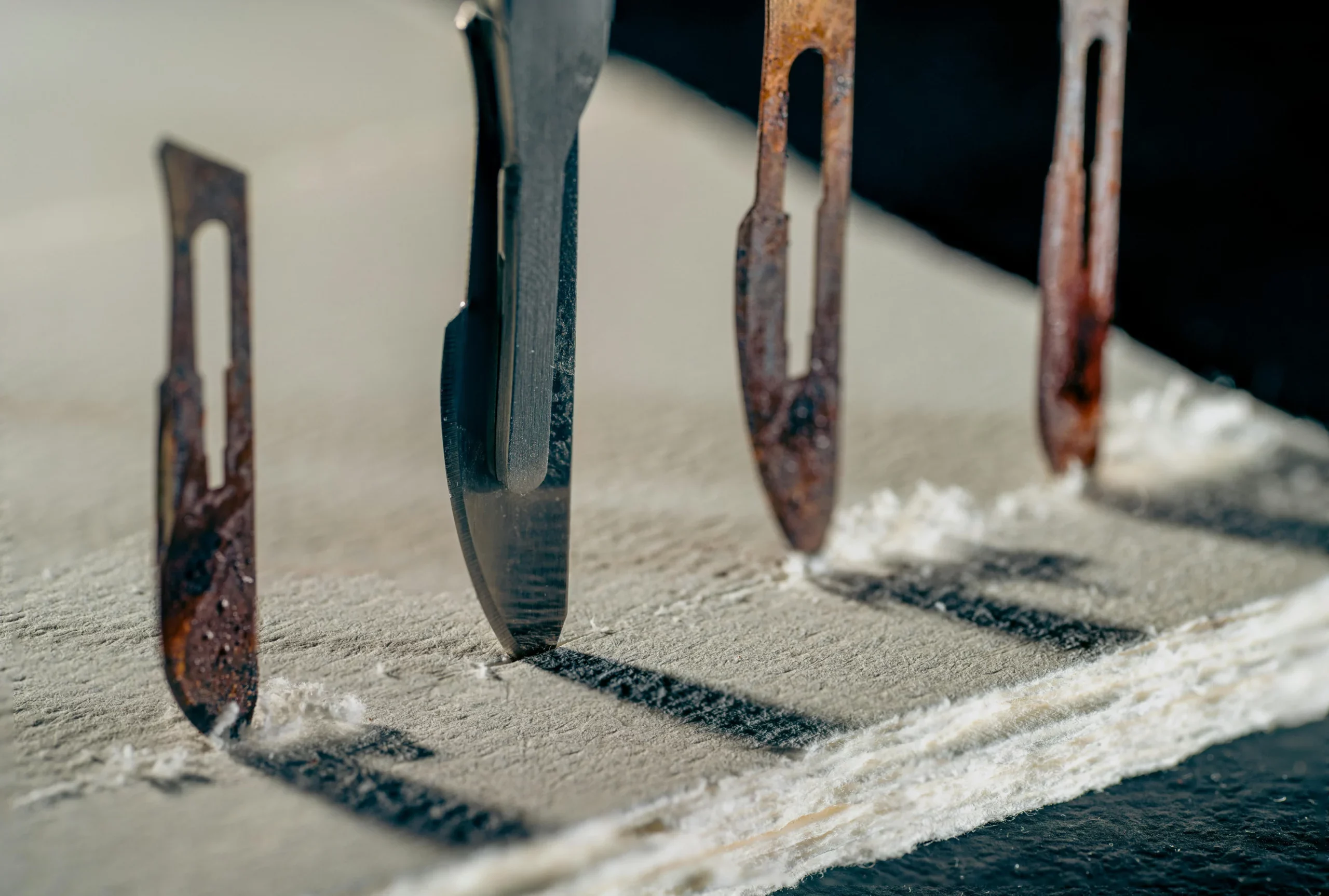
- 121 surgical instruments cataloged. The Samhita describes 101 blunt instruments (forceps, tubes, levers, hooks, probes) and 20 sharp instruments (scalpels, scissors, saws, needles, lancets). Each instrument has a specified shape, material (steel, bronze, copper), and use case. The cataloging detail is unmatched in any other ancient medical text.
- Rhinoplasty using the forehead flap. The Samhita describes nasal reconstruction by lifting a flap of skin from the forehead, rotating it down to the nose site, and suturing it in place. This technique, modified across millennia, remains a standard reconstructive procedure today, taught in every plastic surgery residency program in the world as ‘the Indian flap.’
- Cataract surgery (couching). Sushruta describes displacement of the opaque lens using a curved needle, restoring vision. The technique was practiced in India for two thousand years and reached Europe via Arab translations in the 9th century CE.
- Plastic surgery on the earlobe. The Samhita describes 15 methods of repairing torn earlobes, anticipating problems that arose from the cultural practice of heavy earrings. This is the earliest documented cosmetic surgery.
- Caesarean section under specific conditions. The Samhita describes the procedure as a last-resort measure when the mother has died and the foetus is viable. The procedure was recorded centuries before the Roman Lex Caesarea formalized it in Western practice.
How the Knowledge Traveled to Europe
The pathway from Sushruta’s text to modern Western surgery is documented and specific. In the 8th century CE, Arab scholars translated portions of the Samhita into Arabic. The Arabic translations reached Persia, then Andalusia (Islamic Spain), then through Spanish and Latin translations into European universities by the 12th century CE. Medieval Arab surgical texts, including those of Albucasis (10th century, Cordoba) and Avicenna (11th century, Persia), cite Indian sources directly. Albucasis’s surgical compendium, Kitab al-Tasrif, which was the standard surgical textbook in European medical schools for five hundred years, references Sushruta’s methods for managing battlefield injuries and reconstructive procedures.
The rhinoplasty pathway is the cleanest example. The Indian flap method, practiced continuously in India by hereditary potter and barber-surgeon castes for two millennia, was observed by the British in the late 18th century when nose amputation was a common punishment for adultery, theft, and military disloyalty. The 1794 Gentleman’s Magazine article describing Cowasjee’s reconstruction by a Maharashtrian potter triggered direct knowledge transfer. Joseph Constantine Carpue performed the first European rhinoplasty using the Indian method in London in 1814. Carl Ferdinand von Graefe in Berlin systematized the procedure in his 1818 book Rhinoplastik, naming the field and crediting the Sushruta Samhita as the originating source. The Indian flap is still the standard nasal reconstruction taught in plastic surgery worldwide.
The British Medical Journal and The Lancet have published historical pieces on Sushruta’s influence at multiple points in the 20th and 21st centuries. A 2007 BMJ feature on the history of plastic surgery names Sushruta as ‘the father of plastic surgery’ and traces the lineage from Sushruta to modern reconstructive practice. A 2009 Lancet review of the history of cataract surgery cites Sushruta’s couching technique as the earliest documented procedure. These citations are not honorary. They appear in peer-reviewed historical literature because the technical lineage is direct and verifiable.
“The Indian rhinoplasty, performed for centuries by the potter caste of Maharashtra, is the direct ancestor of modern plastic surgery. Carl Ferdinand von Graefe, who named the field, acknowledged the Sushruta Samhita as his source. To teach plastic surgery without teaching Sushruta is to teach mathematics without teaching Euclid.”
Dr. Sanjay Saraf, in the Indian Journal of Plastic Surgery, 2006
The Germany Comparison: What a Country Does With Its Medical Heritage
Germany, which produced Carl Ferdinand von Graefe and a string of 19th-century surgical pioneers, treats its medical heritage as live intellectual capital. The Charite Berlin medical museum displays von Graefe’s surgical instruments alongside historical context cards that name the Indian source. German medical history is taught as a mandatory module in German medical schools, with at least 8 percent of the first-year curriculum devoted to the history of medicine, according to the German Medical Association’s 2022 curriculum review. German medical journals routinely publish historical features that connect modern practice to its origins. The Deutsches Arzteblatt, the official journal of the German Medical Association, publishes a quarterly history-of-medicine section that reaches 400,000 German doctors.
India, which produced Sushruta and Charaka and an entire 2,500-year tradition of documented medical practice, treats this heritage as cultural decoration. The Medical Council of India’s MBBS curriculum allocates approximately 2 percent of the first year to medical history, and the content is taught primarily through dates and names rather than through technical analysis of what ancient Indian practitioners actually did. Indian medical students learn that Sushruta existed. They do not typically learn the specific surgical techniques he documented, the anatomical dissection methodology he prescribed, or the direct lineage from his text to procedures they will perform in their own careers.
The result is asymmetric. A German plastic surgeon knows that von Graefe named the field by crediting an Indian source. An Indian plastic surgeon often does not know that the procedure being performed in the operating room is the direct descendant of a technique documented in a Sanskrit text written in their own civilizational tradition. This asymmetry is not because the knowledge is missing. The Sushruta Samhita is preserved, translated, and available. The asymmetry is because the educational and institutional commitment to teaching the lineage is missing.
Why This Matters Beyond Pride
Acknowledging Sushruta is not a matter of national pride. The practical value of teaching the lineage from Sushruta to modern surgery is that it changes how Indian medical students see their own field. A student who knows that the surgical anatomy curriculum was first documented in Sanskrit, that the rhinoplasty they will learn was developed in India, that the cataract surgery they will perform descends from a technique their civilizational tradition produced, has a different relationship to medical innovation than a student who sees Western surgery as the source and Indian surgery as the recipient. The first student sees themselves as part of a 2,500-year continuous tradition. The second student sees themselves as a late entrant to someone else’s discipline.
The downstream effect of this difference is measurable. Countries that teach their own scientific heritage as a continuous tradition produce more confident researchers, more original research, and more patent applications per capita. South Korea, which built its modern technology sector partly by reframing its history as a continuous innovation lineage from the Goryeo metal type printing of 1377 to modern semiconductor manufacturing, files approximately 3,200 patent applications per million people per year, according to the World Intellectual Property Organization’s 2022 indicators report. Israel, which centers its civic and technical education on the continuity of Jewish scholarly tradition, files 1,400 patents per million people. India files approximately 50 patents per million people. The gap is partly about research funding. It is also partly about whether students see themselves as inheritors of an innovation tradition.
The other practical value is in legitimizing traditional medical knowledge that has not yet been systematically tested by modern methods. The Sushruta Samhita contains specific botanical formulations, dietary protocols, and surgical preparation techniques that modern pharmacology and clinical research have not yet evaluated. A 2019 review in the journal Phytomedicine catalogued 47 distinct plant compounds described in classical Sanskrit medical texts that have been validated in modern clinical trials, including reserpine (from Rauwolfia serpentina, used in Ayurveda for centuries, now a standard anti-hypertensive) and curcumin (from turmeric, with extensive published research on anti-inflammatory effects). The Indian medical system has a backlog of testable hypotheses sitting in 2,500-year-old texts. Treating those texts as a research source rather than a museum piece is what countries that take their heritage seriously do.
The Five Specific Things Sushruta Got Right That Modern Surgery Still Uses
1. Pre-operative protocols
The Samhita prescribes specific pre-operative steps that match modern surgical protocols closely. Patient fasting before surgery, examination of the surgical site under good light, sterilization of instruments by passing them through flame, preparation of bandages and ligatures in advance, and assessment of patient strength to determine procedure tolerance are all documented. Modern preoperative checklists, codified by the World Health Organization in 2008, include the same core elements that Sushruta prescribed in the 6th century BCE.
2. Instrument design specifications
Each of the 121 instruments cataloged in the Samhita has a specified geometry, recommended material, and intended use. The text prescribes that scalpels should have a specific edge angle, that forceps should have a specific spring tension, that probes should be a specific length. Modern surgical instrument design follows the same principle of fit-for-purpose specification. A modern orthopedic drill is not designed differently because it was invented later. It is designed using the same engineering logic Sushruta applied to bronze surgical hooks.
3. Surgical training methodology
Sushruta’s training methodology prescribes practice on inanimate objects before living patients. Students learned incision on watermelons, suturing on leather, and cautery on lotus stems. This is the same logic that drives modern surgical simulation training, which moves residents through synthetic skin pads, animal cadavers, and supervised live procedures before they operate independently. The Stanford School of Medicine’s 2021 surgical training curriculum review explicitly cites Sushruta’s training methodology as a historical antecedent.
4. Wound management and infection control
The Samhita prescribes daily wound inspection, dressing changes with medicated oils, and isolation of infected wounds from non-infected ones. Sushruta describes the relationship between cleanliness and wound healing in terms that anticipated germ theory by 2,400 years, without identifying microorganisms as the causative agent but recognizing the operational principle that dirty wounds heal worse than clean ones.
5. The flap reconstruction principle
The single most consequential surviving contribution is the principle that damaged tissue can be reconstructed by relocating healthy tissue from an adjacent site, maintaining its blood supply, and allowing it to integrate. This principle, embodied in the Indian forehead flap, is the foundation of modern reconstructive surgery. Every flap procedure taught in plastic surgery today, from the simple advancement flap to the complex free flap with microvascular anastomosis, descends from Sushruta’s documented insight that tissue can be moved with its blood supply intact and that the recipient site will accept it.
What Every Indian Can Do: Five Levels of Citizen Action
- Personal level: Read or listen to a translated version of the Sushruta Samhita. Multiple English translations are in print, including the 2003 Chaukhambha Sanskrit Series edition. The text is not difficult once the technical vocabulary is glossed. Read at least the introduction and the chapters on surgical training and instruments to understand what a 2,500-year-old Indian text actually contains.
- RWA/building level: Support local history education in your community. Many residential welfare associations run weekend cultural programs for children. Request a ‘Founders of Indian Science’ session that covers Sushruta, Charaka, Aryabhata, and Bhaskara as practicing professionals rather than as mythological figures. Local history teachers and retired medical professionals are often willing to volunteer for such sessions.
- Ward/local body level: Petition your local municipal corporation to install a public information board at any government hospital named after a Sushruta-era figure. Many Indian government hospitals are named after ancient Indian medical figures (Sushruta, Charaka, Dhanvantari) but contain no information about who those figures were or what they contributed. A simple bilingual information board, funded through ward-level discretionary funds, costs less than Rs 50,000 and changes how thousands of hospital visitors per month understand Indian medical history.
- City/state level: Advocate for revision of state secondary school science curricula to include a mandatory module on the history of Indian science. The current National Council of Educational Research and Training (NCERT) science textbooks include scattered references to ancient Indian scientific figures but lack systematic treatment of the technical content of their work. State education boards have authority to add supplementary modules. Write to your state’s education secretary requesting a ‘History of Indian Science’ module for classes 9 and 10.
- National level: Support a National Mission for Translation and Modernization of Classical Indian Scientific Texts. The Ministry of AYUSH and the Indian Council of Medical Research jointly fund classical text research at a level approximately one-twentieth of what Germany spends on history of medicine research. The Vaidik Vaidyak Granth Anveshan Mandal and similar bodies that translate and contextualize classical texts are underfunded. A national mission, with a stable budget commitment of Rs 500 crore per year over a decade, would translate the full classical medical corpus into modern English with technical commentary, making the texts usable as research sources for contemporary medicine. Write to the Department of Higher Education and the Ministry of AYUSH requesting this initiative.
The Continuing Lineage
The Indian flap rhinoplasty is performed somewhere in the world every day. The instruments Sushruta cataloged have evolved in materials but not in form. The surgical training principles he documented are mirrored in every medical school curriculum on Earth. The texts he wrote are cited in the British Medical Journal and The Lancet. The lineage is alive and well in clinical practice. What is missing is institutional acknowledgment within India that this lineage exists and that the country that produced it has both the right and the responsibility to invest in extending it.
A developed India is not a country that abandons its scientific heritage to chase Western validation. A developed India is a country that teaches its own scientific lineage with technical rigor, funds research that extends classical insights using modern methods, and produces medical scientists who see themselves as continuing a 2,500-year tradition rather than starting a new one. Germany did this with Goethe and von Graefe. Korea did this with the Goryeo printers. Israel did this with Maimonides. India can do this with Sushruta, Charaka, Aryabhata, Brahmagupta, and a dozen others whose work is preserved, available, and waiting for the next generation of Indian scientists to claim as their inheritance.
Explore More on India’s Forgotten Scientific Heritage
India’s scientific tradition is documented across our coverage. Read the Forgotten Heroes series for stories of Indians whose contributions shaped global practice without receiving the recognition the lineage warrants, and the Health and Society category for ongoing analysis of India’s healthcare system and what a developed-country healthcare workforce looks like.
What you can do
- Get help nowTele-MANAS is the government's free tele-mental health helpline, in languages across states.Call 14416
- Share the evidenceSend this to one person who should know about health.Share on WhatsApp
- Give an afternoonTeach, mentor, clean up, or lend your professional skills.Ways to volunteer
- Tell us what's missingKnow a story, a fact we got wrong, or a solution worth spotlighting?Suggest a story
Politically neutral. Every claim sourced. Report a correction.

No comments yet