Indian Temple Architecture: Nagara, Dravida, and Vesara Explained
India's three great temple architecture traditions - Nagara in the north, Dravida in the south, and Vesara in the Deccan - represent among the most sophisticated building languages ever developed. Understanding them is the first step toward protecting what India built and keeping it alive for the future.
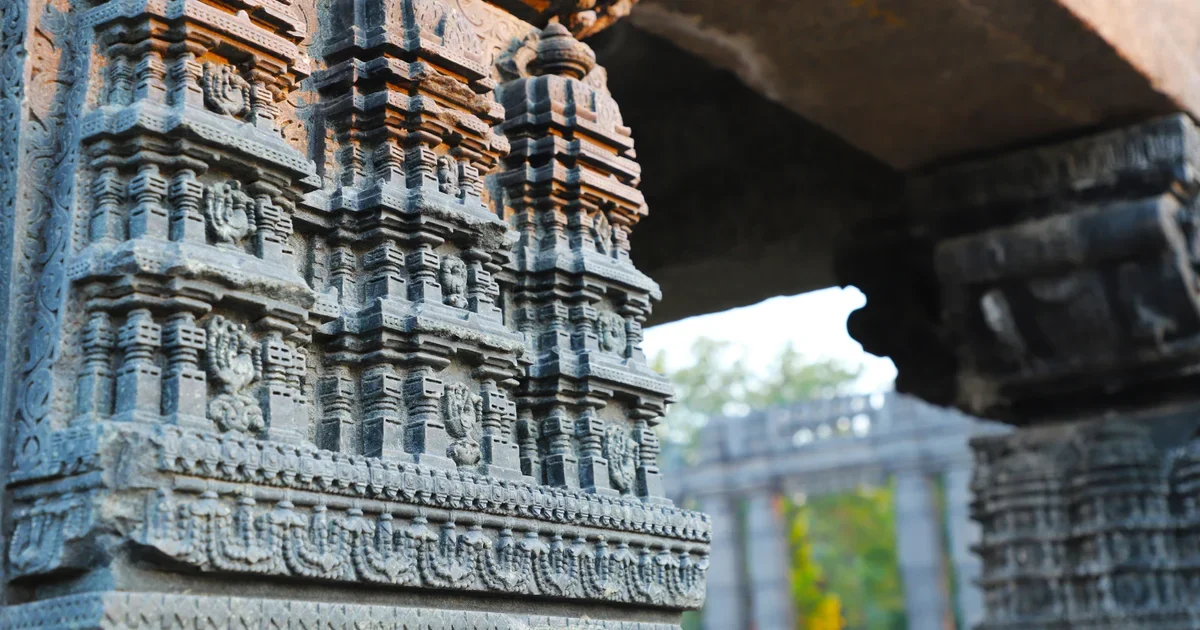
Walk through the ruins of Hampi, stand before the towering gopuram of Madurai Meenakshi, or look up at the spire of the Kandariya Mahadeva temple in Khajuraho, and you are encountering three distinct architectural languages - Nagara, Dravida, and Vesara - each developed over centuries by different dynasties, different schools of craftsmen, and different philosophical traditions. Understanding these three styles is not merely an art history exercise. It is the first step toward appreciating what India built, why so much of it is at risk, and what citizens and institutions must do to keep it alive. Just as India’s textile heritage from Banarasi to Kanjeevaram reflects the diversity of regional craft traditions, its temple architecture tells a parallel story of regional genius and civilisational ambition.
The Foundations: Why Temple Architecture Matters
The Hindu temple is not primarily a building. In the classical texts that governed its design - the Manasara, the Mayamata, the Vastu Shastra traditions - the temple is a cosmogram: a representation of the universe in stone. The central tower (shikhara in North Indian tradition, vimana in the South) symbolises Mount Meru, the cosmic axis around which the universe revolves. The innermost chamber (garbhagriha, literally “womb-house”) holds the deity in its most concentrated form. The worshipper who moves from the outer courtyard inward replicates a journey from the material world toward the sacred centre.
This cosmological framework was shared across all three major styles. What differed was the formal vocabulary in which each expressed it - the proportions of the tower, the treatment of the exterior walls, the organisation of subsidiary shrines, the relationship between horizontal and vertical emphasis. These differences were not random. They reflected distinct regional traditions, dynastic patronage patterns, available materials, and the influence of local craft guilds called sutradharas or sthapathis who transmitted knowledge through family lineages over generations.
Nagara Style: The North Indian Tower
The Nagara style dominated temple construction across the Indo-Gangetic plain, Rajasthan, Gujarat, Madhya Pradesh, and Odisha from roughly the fifth century CE onward. Its defining feature is the shikhara - a curvilinear tower that rises from the roof of the garbhagriha and tapers to a point crowned by an amalaka (a ribbed circular stone) and kalasha (a pot-shaped finial). The overall silhouette of the Nagara shikhara is vertical and curved, like a corn cob or a flame reaching upward.
Within the Nagara tradition, scholars identify several regional substyles. The Latina or rekha-prasada shikhara is the simplest form - a single vertical tower without subsidiary spires. The Sekhari style adds smaller towers (urushrings) clustered around the central shaft, giving the temple a more complex, clustered profile. The Bhumija style, developed primarily in Madhya Pradesh, organises these subsidiary elements in a grid-like pattern up the face of the tower, creating an effect that looks almost fractal when viewed from below.
Key Nagara Examples
- Kandariya Mahadeva, Khajuraho (Madhya Pradesh, c. 1025 CE): The tallest and most celebrated of the Chandela temples, rising 30.5 metres. Its exterior is covered with over 800 sculpted figures, including the erotic carvings that have made Khajuraho internationally famous. The carvings represent not obscenity but the full spectrum of human life that worshippers were expected to leave behind at the threshold of the sacred inner space.
- Lingaraja Temple, Bhubaneswar (Odisha, c. 1090 CE): A 55-metre shikhara and one of the finest examples of Kalinga architecture, a regional variant of Nagara. The temple complex contains over 50 subsidiary shrines. It remains an active place of worship, which means non-Hindu visitors are not permitted inside - a reminder that these are living religious sites, not museums.
- Sun Temple, Konark (Odisha, c. 1250 CE): Conceived as a gigantic chariot of the sun god Surya, with 24 carved stone wheels representing the hours of the day and seven carved horses pulling the structure. Though the central tower collapsed centuries ago, the remaining mandapa (hall) and its carvings are among the most extraordinary achievements of Indian sculpture. Konark is a UNESCO World Heritage Site.
- Dilwara Temples, Mount Abu (Rajasthan, 11th-13th centuries CE): Jain temples built in the Maru-Gurjara style, which merged Nagara structural forms with extraordinary marble interior decoration. The ceiling carving at the Vimal Vasahi temple is considered the finest example of decorative stone carving in India.
Dravida Style: The South Indian Pyramid
The Dravida style developed in peninsular India - Tamil Nadu, coastal Andhra, parts of Karnataka and Kerala - under the patronage of dynasties including the Pallavas, the Cholas, the Pandyas, and the Vijayanagara empire. Its most recognisable feature is not the vimana (the tower directly above the sanctum, which in Dravida style is relatively modest) but the gopuram - the enormous gateway towers that mark the entrances to the temple complex. In early Dravida temples, the vimana was taller than the gopurams. Over time, this relationship reversed: by the Vijayanagara period, gopurams could reach heights of 40 to 70 metres, while the vimana remained comparatively restrained.
The Dravida vimana has a distinctive pyramidal profile - a series of clearly articulated storeys (talas) stacked horizontally, each progressively smaller than the one below, creating a stepped pyramid topped by a barrel-vaulted or dome-like finial called a shikhara (using the term differently from North Indian usage) or stupi. Where the Nagara tower is a single organic curve, the Dravida tower is an explicit stacking of receding levels. This horizontal emphasis gives Dravida temples a different spatial logic: they spread outward through a sequence of concentric enclosure walls (prakaras), each entered through a gopuram, creating a spatial journey of ever-increasing intensity.
Key Dravida Examples
- Brihadeeswara Temple, Thanjavur (Tamil Nadu, 1010 CE): Built by the Chola king Rajaraja I, this is the most audacious structural achievement of early Dravida architecture. The vimana rises to approximately 66 metres, making it one of the tallest medieval temples in India. The capstone at the top weighs an estimated 80 tonnes and was raised into position using an earthen ramp reportedly over 6 kilometres long. The temple complex is a UNESCO World Heritage Site.
- Meenakshi Amman Temple, Madurai (Tamil Nadu, primarily 17th century CE): A working temple complex of extraordinary scale, with 14 gopurams, the tallest reaching 52 metres and covered in nearly 33,000 painted stucco sculptures. Madurai is the fullest expression of the late Dravida tradition’s emphasis on the gopuram as the principal architectural statement.
- Shore Temple, Mamallapuram (Tamil Nadu, c. 700-728 CE): One of the oldest surviving structural temples in South India and the earliest example of the developed Dravida vimana style. Built by the Pallava king Narasimhavarman II, it faces the sea and has been subject to significant weathering - a conservation crisis that makes it directly relevant to current heritage debates.
- Vittala Temple, Hampi (Karnataka, 15th-16th centuries CE): Built under the Vijayanagara empire, this temple complex contains the famous musical pillars - columns that produce distinct musical notes when tapped - and the iconic stone chariot shrine. Hampi is a UNESCO World Heritage Site and the ruins of a city that was, at its height in the early 16th century, one of the largest in the world.
Vesara Style: The Hybrid Tradition of the Deccan
The Vesara style - sometimes called the “mixed” or “hybrid” style - emerged in the Deccan plateau region under dynasties including the Chalukyas of Badami, the Rashtrakutas, the Western Chalukyas of Kalyani, and later the Hoysalas. It represents a genuine creative synthesis rather than a simple blending of northern and southern forms. Vesara temples borrow the stepped podium (jagati) and the elaborate wall treatment of Nagara temples while adopting the horizontal articulation and bracketing systems characteristic of Dravida construction. The result is a style that is immediately recognisable as neither purely northern nor southern.
The Hoysala variant of Vesara architecture, which flourished in 12th and 13th century Karnataka, takes the synthesis to an extreme of decorative intensity. Hoysala temples are built on a star-shaped plan - the walls and towers follow a jagged, stellate outline that multiplies the number of projecting surfaces available for sculpture. The exteriors are covered in continuous bands of carving arranged in horizontal registers: elephants at the base (representing stability), horses (representing speed and loyalty), foliage scrolls, narrative scenes from the epics, figures of deities and celestials, and, at eye level, the large devotional images that form the visual focus. The total effect, at temples like the Chennakesava at Belur or the Hoysaleswara at Halebidu, is overwhelming in its density and precision.
Key Vesara Examples
- Pattadakal temples (Karnataka, 7th-8th centuries CE): A UNESCO World Heritage Site containing ten temples that show both Nagara and Dravida forms side by side, built by the Chalukyas of Badami. The Virupaksha temple at Pattadakal, modelled on the Kailasanatha at Kanchipuram, is one of the finest early examples of Dravida architecture in the Deccan.
- Hoysaleswara Temple, Halebidu (Karnataka, 12th century CE): A twin temple dedicated to Shiva, with approximately 240 metres of sculpted frieze running around its exterior walls. It was never completed and was subsequently damaged by the Khalji raids of the early 14th century, yet what remains is considered the most extensive example of Hoysala carving anywhere.
- Chennakesava Temple, Belur (Karnataka, 12th century CE): Commissioned by King Vishnuvardhana of the Hoysala dynasty in 1117 CE, this temple took over a century to complete. Its entrance doorway is considered one of the finest examples of decorative metal and wood craftsmanship in Indian temple architecture. The temple remains in active worship.
- Kailasa Temple, Ellora (Maharashtra, 8th century CE): Technically a rock-cut temple rather than a structural one, the Kailasa at Ellora was commissioned by the Rashtrakuta king Krishna I and represents perhaps the single most ambitious sculptural enterprise in Indian history. Carved top-down from a single basalt cliff, it required the removal of approximately 200,000 tonnes of rock. It is a Vesara-influenced form built using cave architecture techniques.
Chola Bronze vs Pallava Stone: Two Parallel Traditions
Temple architecture and sculpture were not separate disciplines in classical India - they were two aspects of a single creative programme. The Pallava dynasty (approximately 3rd to 9th centuries CE) was responsible for some of the earliest experiments in Dravida stone sculpture: the shore temples and rathas (monolithic carved chariots) at Mamallapuram, the Kailasanatha temple at Kanchipuram. Pallava stone carving is characterised by its relative restraint, its precise anatomical modelling, and the elegant elongation of its figures.
The Cholas, who succeeded the Pallavas as the dominant power in Tamil Nadu from the 9th century CE onward, continued the Pallava stone tradition in their great temples but added another dimension entirely: the bronze icon. Chola bronze casting, using the lost-wax (cire perdue) process, produced a series of sculptures - Nataraja (Shiva as cosmic dancer), Ardhanarishvara (the androgynous form of Shiva), the various forms of Parvati and Vishnu - that represent the highest achievement of Indian metalwork. The Chola bronzes are distinguished by their fluidity, the integration of movement and stillness in a single figure, and the precision of their surface modelling.
Today, Chola bronzes are among the most coveted objects on the international art market - and among the most frequently stolen and trafficked. The Idol Wing of the Tamil Nadu Police has recovered hundreds of stolen bronzes over the past two decades, many from foreign museums and private collections. The return of these objects to their temples of origin is an ongoing diplomatic and legal effort that touches directly on questions of cultural sovereignty. Much like India’s endangered languages, the loss of these physical heritage objects represents an irreversible diminishment of civilisational memory.
ASI Conservation: The Gap Between Mandate and Reality
The Archaeological Survey of India (ASI) was established in 1861 under Alexander Cunningham and is currently responsible for the protection and conservation of over 3,600 centrally protected monuments across India. The list includes some of the most significant architectural sites in the world. The resources available to the ASI have historically been inadequate relative to this mandate.
Conservation failures at ASI sites have been documented consistently by researchers, independent journalists, and the Comptroller and Auditor General. Common problems include: delayed or chemically inappropriate restoration work (the use of Portland cement on ancient stone structures, which causes accelerated weathering, has been documented at multiple sites); inadequate staffing at remote monuments (some sites have a single caretaker for a large complex); poor drainage and water management leading to structural damage; encroachment by residential and commercial construction adjacent to protected zones; and the illegal removal of sculptures from less-visited sites.
France, by comparison, has a National Heritage Institute (Institut national du patrimoine) that trains heritage professionals in partnership with UNESCO. France also has a legal framework - the Malraux Law - that provides tax incentives for private investment in the restoration of historic buildings in protected urban zones. Germany’s Federal Government Commissioner for Culture and the Media funds restoration work on monuments through a dedicated annual budget that has grown steadily since reunification. Neither France nor Germany faces the scale of India’s heritage challenge, but both demonstrate what dedicated institutional infrastructure, adequately funded, can achieve.
Living Temple Politics: The Kashi Vishwanath Corridor and Beyond
India’s ancient temples are not merely heritage sites - they are active religious institutions with daily worship, annual festivals, large populations of priests and staff, and complex relationships to the urban fabric around them. This living character complicates conservation in ways that do not arise with purely archaeological sites. Recent years have seen several large-scale redevelopment projects around major temple complexes that have generated significant debate among heritage professionals and local communities.
The Kashi Vishwanath Corridor project in Varanasi, inaugurated in 2021, demolished a large number of historic buildings in the vicinity of the Vishwanath temple to create an expanded pilgrim corridor between the temple and the Ganga ghats. Heritage experts raised concerns about the demolition of 18th and 19th century structures that were themselves historically significant. Supporters argued that the project improved access and safety for millions of pilgrims annually. The debate illustrated a genuine tension that Indian cities and institutions will need to navigate repeatedly in coming decades: how to accommodate the living needs of active religious sites without destroying the historic context that gives them meaning.
Similar debates have arisen around the Somnath temple redevelopment in Gujarat, the Ram temple construction in Ayodhya, and various state government proposals for corridors around major South Indian temples. These are not questions with simple answers. But they require informed public participation - which means citizens need to understand both the architectural significance of what is at stake and the legitimate needs of living religious communities.
What You Can Do: Five Layers of Heritage Action
India’s architectural heritage cannot be preserved by specialists alone. It requires an engaged and informed citizenry at every level of public life. Here are five layers at which individual Indians can contribute to keeping this inheritance alive.
- Personal level: Visit at least one ASI-protected monument near you this year - not as a tourist, but as an informed visitor. Read about its architectural style before you go. The ASI website lists all centrally protected monuments. Several state archaeology departments also maintain their own lists of state-protected sites, many of which receive less attention. When you visit, document condition issues (crumbling masonry, encroachment, inadequate signage) with photographs and report them to the ASI’s online grievance portal.
- Community level: Many cities have local heritage walks run by organisations like INTACH (Indian National Trust for Art and Cultural Heritage), which has chapters across India. Join a walk. Bring neighbours. Heritage literacy builds broad civic support for heritage protection. Residential communities near protected monuments can form informal monitoring groups that flag maintenance lapses to the ASI regional office.
- Ward level: Urban local bodies have responsibility for the areas surrounding ASI-protected monuments, including roads, drainage, and encroachment removal. Raise questions at ward committee meetings about the state of heritage sites in your ward area. Ask what the ward’s plan is for preventing new encroachments adjacent to protected monuments.
- City level: Engage with INTACH and other civil society organisations working on heritage documentation and policy advocacy. Support calls for the ASI to adopt modern conservation standards - including the use of lime mortar rather than Portland cement - and for increased transparency in its project approvals. Heritage impact assessments for large infrastructure projects near protected sites should be public documents; advocate for this in your city.
- National level: The National Culture Fund (NCF) allows Indian companies to fund ASI conservation projects under corporate social responsibility provisions. Advocate with employers and local businesses to contribute. Write to your representative in the national legislature asking for increased ASI funding and the establishment of a dedicated heritage training institute on the model of France’s Institut national du patrimoine. The preservation of what India built over two millennia is a national responsibility that must be funded accordingly.
Conclusion: Architecture as Argument
The Nagara, Dravida, and Vesara traditions represent three of the most sophisticated architectural languages ever developed on the Indian subcontinent. They were the product of extraordinary intellectual effort - generations of mathematically precise manuals, guild traditions that passed technical knowledge through families across centuries, royal patrons who understood that buildings were permanent arguments about the nature of the cosmos and the legitimacy of power. These buildings are not relics. They are active statements, still being made, still drawing millions of worshippers and visitors, still encoding a civilisational memory that belongs to every Indian.
Preserving them requires the same combination of intellectual rigour, institutional investment, and civic engagement that built them. The sthapathis who carved the stone are gone. Their successors are the conservation scientists, the heritage lawyers, the engaged citizens who visit, document, advocate, and refuse to accept that loss is inevitable. India’s architectural heritage is not a burden. It is an asset of incalculable value - cultural, spiritual, economic, and diplomatic. The question is whether we are willing to do what it takes to hold it.
What you can do
- Share the evidenceSend this to one person who should know about this issue.Share on WhatsApp
- Give an afternoonTeach, mentor, clean up, or lend your professional skills.Ways to volunteer
- Tell us what's missingKnow a story, a fact we got wrong, or a solution worth spotlighting?Suggest a story
Politically neutral. Every claim sourced. Report a correction.

No comments yet