The Jallianwala Bagh Massacre, 13 April 1919
On 13 April 1919, British Indian Army troops opened fire on thousands of unarmed civilians at Jallianwala Bagh in Amritsar, killing hundreds. More than a century later, the event raises urgent questions about state accountability, colonial justice, and the citizen-led work of democratic maintenance.
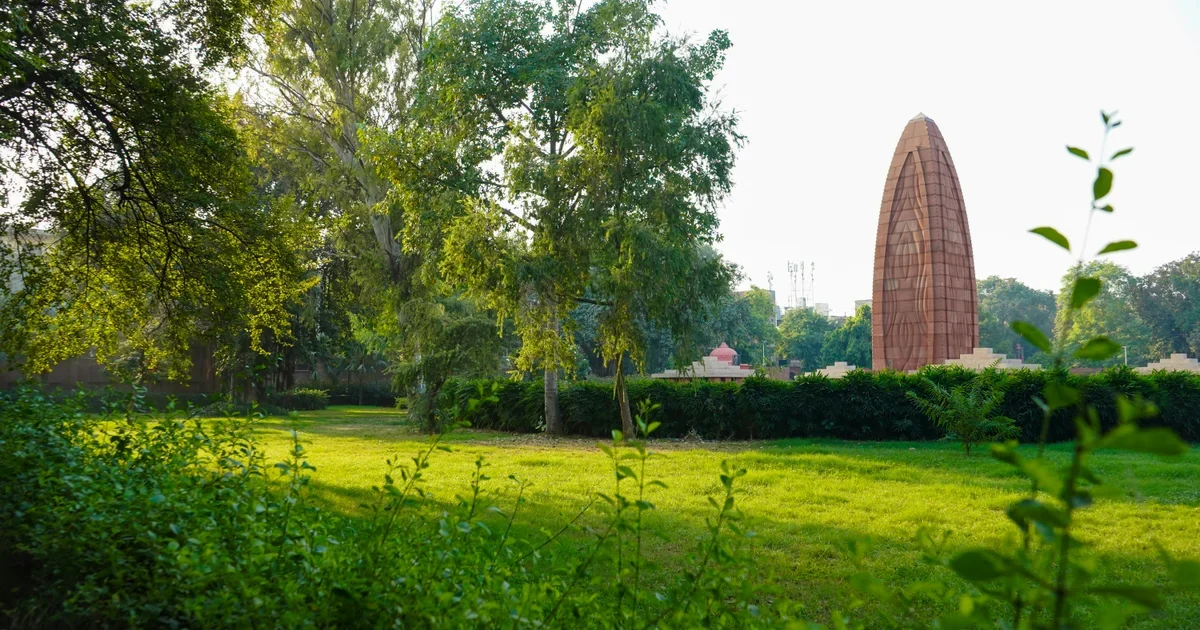
On 13 April 1919, in a walled public garden in Amritsar, Punjab, a British Indian Army officer ordered his troops to open fire on thousands of unarmed civilians who had gathered for a peaceful public meeting. In under ten minutes, the Jallianwala Bagh massacre ended hundreds of lives and changed the trajectory of India’s freedom movement forever. More than a century later, the event still carries lessons about power, accountability, and the long road to genuine reconciliation.
The World Before the Massacre: The Rowlatt Act and a City on Edge
To understand why thousands of people gathered at Jallianwala Bagh that spring day, we need to travel back to the aftermath of the First World War. India had sent over 1.5 million soldiers and labourers to fight for the British Empire. The promise - implied if not always stated - was that loyalty and sacrifice would be rewarded with a meaningful step toward self-governance. Instead, Britain delivered the Rowlatt Act.
Passed in March 1919, the Rowlatt Act allowed the colonial administration to imprison any person suspected of sedition or revolutionary activity without trial, without jury, and without the possibility of appeal. Indians called it the “Black Act.” Mahatma Gandhi, who had only recently returned from South Africa and was still establishing his national presence, declared it a moral affront and called for a nationwide hartal - a complete shutdown of all commercial activity.
Amritsar, a major commercial hub and the spiritual heart of Sikhism, responded with extraordinary solidarity. Shops shut. Trains stopped. On 9 April, two prominent local leaders - Dr Saifuddin Kitchlew and Dr Satya Pal - were arrested and deported from the city. When news of their arrest spread, angry crowds marched toward the civil lines to petition the Deputy Commissioner. British troops blocked their path and opened fire, killing several protesters. Violence erupted across parts of the city, and a British woman missionary was attacked by a mob.
Brigadier-General Reginald Dyer arrived in Amritsar on 11 April, assuming command of the garrison. His first act was to ban all public gatherings. His second was to order that any Indian walking along the lane where the missionary had been attacked must do so on all fours. This “crawling order” was not incidental cruelty - it was a deliberate statement of colonial domination. Dyer believed that exemplary punishment was the only language that subject peoples understood.
13 April 1919: What Happened in the Bagh
Baisakhi, the harvest festival and Sikh New Year, fell on 13 April. The date traditionally draws enormous crowds to Amritsar. Many of the people who entered Jallianwala Bagh that afternoon were not there to protest - they were pilgrims visiting the Golden Temple nearby, farmers from surrounding villages, and traders who had come for a fair. Some had not even heard of Dyer’s ban on gatherings. A public meeting was also underway, addressed by local leaders who wanted to discuss the ongoing protests.
By the time Dyer arrived at the Bagh’s narrow entrance with 90 Gurkha and Baluchi riflemen and two armoured cars (which could not fit through the entrance lane), between 15,000 and 20,000 people were inside. Jallianwala Bagh was not a park in the conventional sense. It was a large enclosed ground surrounded on all sides by the backs of houses and high walls. There were only a few narrow exits. The armoured cars carrying machine guns were left outside because the lane was too small for them to enter.
Dyer gave no warning. He gave no order to disperse. He positioned his troops at the only usable exit and commanded them to fire directly into the densest part of the crowd. They fired for approximately ten minutes - 1,650 rounds in total. People ran, climbed walls, jumped into a well at the centre of the garden. The well alone was said to contain 120 bodies when it was drained after the event.
“I fired and continued to fire until the crowd dispersed, and I consider this the least amount of firing which would produce the necessary moral and widespread effect it was my duty to produce.”
The official British tally placed the dead at 379 and the wounded at over 1,200. India’s independence movement, conducting its own inquiry, estimated the dead at over 1,000. Because Dyer ordered the area cleared immediately and imposed martial law, no independent accounting was possible in the immediate aftermath. The actual death toll remains disputed more than a century later, though most historians accept a figure between 400 and 600 dead, with many more wounded.
The Hunter Committee and the Failure of Colonial Accountability
The British government, under pressure from both the Indian press and liberal voices in Britain, established the Hunter Committee to investigate the massacre. Its findings, published in 1920, were a study in institutional equivocation. The majority report condemned Dyer’s firing as an error in judgement but stopped far short of holding him criminally liable. The minority report, written by the Indian members of the committee, called the massacre an “inhuman act” and recommended criminal prosecution. The minority was ignored.
Dyer was asked to resign his command - not dismissed, not tried. And then something extraordinary happened: the Morning Post, a conservative British newspaper, launched a public subscription to reward Dyer for his “brave” action. Over 26,000 pounds was raised - equivalent to several million rupees in today’s value - and presented to him as a “Sword of Honour.” The House of Lords passed a motion in his support. For many Indians who had hoped the Hunter Committee would deliver justice, this response settled the question of whether colonial law could police colonial power. It could not. This accountability failure echoes across other pivotal moments in India’s constitutional history - when India finally became a republic on 26 January 1950, the Fundamental Rights provisions were written explicitly as a safeguard against the unaccountable state power that Jallianwala Bagh had exposed.
Tagore Renounces His Knighthood
Rabindranath Tagore had been awarded the Nobel Prize in Literature in 1913 and knighted in 1915. He was among the most celebrated Indians in the world, beloved by the British literary establishment. On 31 May 1919, he wrote a letter to the Viceroy, Lord Chelmsford, returning his knighthood. The letter is worth reading in full, but its core argument was simple: he refused to hold an honour bestowed by a government that could respond to the murder of unarmed civilians with indifference.
“The time has come when badges of honour make our shame glaring in their incongruous context of humiliation, and I for my part wish to stand, shorn of all special distinctions, by the side of those of my countrymen who for their so-called insignificance are liable to suffer a degradation not fit for human beings.”
Tagore’s renunciation was a watershed moment in India’s cultural life. It signalled that the massacre was not merely a political grievance but a civilisational rupture - a moment at which the legitimacy of British rule became untenable for even the most moderate Indians to sustain.
Gandhi, Non-Cooperation, and the Movement the Massacre Ignited
Mahatma Gandhi’s response to Jallianwala Bagh was not immediate. He had initially urged calm and was deeply troubled by the violence that preceded the massacre on both sides. But the Hunter Committee’s findings and the British establishment’s effective exoneration of Dyer transformed his thinking. In 1920, Gandhi launched the Non-Cooperation Movement - the first mass civil disobedience campaign in Indian history - directly citing the government’s failure to deliver justice for the massacre as justification.
Millions of Indians surrendered British-granted titles, withdrew their children from government schools, boycotted British courts, and refused to buy British cloth. For the first time, the freedom movement was not the project of a small educated elite. It had roots in villages, in market towns, in the families of the farmers who had died in the Bagh. Decades later, the industrial disasters that followed independence - such as the Bhopal Gas Tragedy of December 1984 - would again test the same question: can India’s governance systems hold power accountable when large numbers of ordinary people suffer?
Udham Singh: The Long Shadow of Revenge
Among the survivors who witnessed the firing at Jallianwala Bagh as a young man was Udham Singh. Born in 1899 in Sunam, orphaned and raised in an Amritsar orphanage, Singh carried the memory of that day for over two decades. In 1940, in Caxton Hall, London, he shot and killed Sir Michael O’Dwyer - who had been Lieutenant Governor of Punjab in 1919 and had supported and approved of Dyer’s action. Singh was arrested, tried, and hanged in July 1940.
Udham Singh’s act was the act of a man broken by a wound that never healed. His story is not a model for political action. It is a reminder of what unresolved historical injustice does to people and to societies - it does not disappear; it goes underground and resurfaces. For this reason alone, the formal reconciliation that Britain has never offered matters: not merely as a symbolic gesture, but as a necessary acknowledgement of structural harm.
The Apology Gap: Britain’s Position in 2026
In 1997, Queen Elizabeth II visited Jallianwala Bagh and described the massacre as “a deeply distressing example of our past history.” In 2013, the then-Prime Minister visited and called it “a deeply shameful event in British history.” In 2019, on the centenary, the then-Prime Minister told the House of Commons that it was “a shameful scar on British Indian history.” In 2023, King Charles III expressed “profound sorrow.”
None of these statements constituted a formal apology. Each was carefully worded to express regret without admitting legal liability or opening the door to reparations. The British government’s consistent position has been that historical wrongs cannot be subject to formal apology without creating precedents that would extend to the entirety of the imperial project.
This position is worth examining. Germany has formally apologised for and paid reparations for crimes committed during the Third Reich. Australia has issued a formal national apology to its Indigenous peoples for the Stolen Generations. New Zealand has negotiated settlements with Maori communities for Treaty violations. The argument that a formal apology is legally or practically unworkable is not supported by comparable precedents - it is a political choice.
Country | Historical Injustice | Action Taken |
|---|---|---|
Germany | Holocaust and Nazi crimes | Formal state apology, ongoing reparations programme |
Australia | Stolen Generations (Indigenous children) | Formal national apology by Prime Minister Rudd, 2008 |
New Zealand | Treaty of Waitangi violations | Negotiated settlements via Waitangi Tribunal |
United Kingdom | Jallianwala Bagh massacre, 1919 | Expressions of “sorrow” - no formal apology as of 2026 |
What the Massacre Teaches Us About Governance
The governance lesson of Jallianwala Bagh is not simply that colonial rule was brutal - that much is documented across centuries. The deeper lesson is about accountability structures. Dyer was able to order the massacre because no institutional check existed that could hold him to account in real time. Martial law suspended normal legal processes. The press was censored. The Hunter Committee, when it finally sat, was composed in a way that made decisive action politically difficult. And the British public, when given the choice, chose to reward Dyer rather than condemn him.
This is not a story confined to 1919. Accountability gaps - where the people who exercise state power over large numbers of civilians are structurally insulated from the consequences of that power - are a recurring pattern in governance failures worldwide. The question Jallianwala Bagh poses to every subsequent generation is: what mechanisms do we have in place that would prevent a similar concentration of uncheckable power? And are those mechanisms actually being maintained?
India’s Constitution, drafted in the years following independence, reflected these lessons explicitly. The Fundamental Rights chapters, the independent judiciary, the provisions for democratic accountability - these were not abstract ideals. They were the institutional response to a lived history of what governance without accountability looks like. Protecting these structures is not a civic formality. It is the substance of the freedom that Jallianwala Bagh’s victims and survivors paid for.
The Memorial Today: Between Memory and Meaning
The Jallianwala Bagh memorial in Amritsar is one of the most visited historical sites in India. The well into which hundreds jumped to escape the firing is preserved. Bullet marks in the walls remain visible. The flame at the memorial burns continuously. In 2021, the renovated museum on the site was inaugurated, which has been the subject of some debate among historians who felt that the renovation altered the character of certain exhibits.
The memorial serves its most important function when it prompts visitors - particularly young visitors - not just to feel the weight of the past but to ask the living questions it raises. What does it mean for a state to be accountable to the people it governs? When do citizens have both the right and the responsibility to resist laws they believe are unjust? How should democracies handle historical injustices committed by predecessors? These are not questions with simple answers, but they are questions that Jallianwala Bagh demands we keep asking.
What You Can Do: Five Layers of Civic Action
History remembered passively remains history. History engaged actively becomes a foundation for better governance. Here are five layers at which every Indian citizen can translate the lessons of Jallianwala Bagh into present-day civic engagement.
- Personal level: Read the primary sources. The Hunter Committee report, Tagore’s letter returning his knighthood, and Gandhi’s writings from 1919-1920 are all publicly available. Understanding the event through its own documents, not just summaries, builds the kind of historical literacy that resists manipulation. Share what you learn with family members, particularly younger ones.
- Resident Welfare Association / community level: Organise a Jallianwala Bagh remembrance discussion in your housing society or neighbourhood, particularly around 13 April each year. Invite a local historian or school teacher. The goal is not to rehearse grievances but to use the event as a lens for discussing what democratic accountability means in your community today.
- Ward level: Use your ward councillor’s public accountability mechanisms - ward committee meetings, local area development forums - to raise questions about transparency in local governance. The specific form these mechanisms take varies by city and state, but most urban local bodies have some provision for citizen participation. Exercise it. The right to question those who hold power over you is precisely what Jallianwala Bagh’s victims were denied.
- City level: Engage with organisations that monitor local governance - civic watchdog groups, independent media outlets covering city administration, RTI (Right to Information) practitioners. The RTI Act is one of India’s most powerful accountability tools. Support the people and organisations that use it to ensure that state power remains visible and answerable.
- National level: Support the diplomatic and academic work of formal historical reckoning. Write to your elected representatives in the national legislature asking them to raise the question of a formal British apology for the Jallianwala Bagh massacre. Support Indian historians and institutions doing archival research on colonial-era records. The historical record is still being built, and citizen engagement with that process matters.
Conclusion: A Wound That Demands More Than Memory
Jallianwala Bagh is sometimes described as a turning point in Indian history - the moment that made independence inevitable. That framing, while not wrong, risks making the massacre feel safely remote, a catastrophe that served a purpose and can now be processed as a lesson learned. The families of those who died in the Bagh did not experience it as a turning point. They experienced it as a loss that no political outcome could restore.
What India’s democratic tradition owes to the memory of 13 April 1919 is not nostalgia or anger, but vigilance. Every institution designed to prevent the unaccountable exercise of state power - the independent judiciary, the free press, the right to protest, the right to information - carries in it the answer to the question that Dyer’s soldiers posed when they raised their rifles in that walled garden. The answer is: never again. And that answer requires active, continuous, citizen-led maintenance. The work of Jallianwala Bagh is not finished. It is the work of every generation of Indians who choose to govern themselves.
What you can do
- Share the evidenceSend this to one person who should know about governance.Share on WhatsApp
- Give an afternoonTeach, mentor, clean up, or lend your professional skills.Ways to volunteer
- Tell us what's missingKnow a story, a fact we got wrong, or a solution worth spotlighting?Suggest a story
Politically neutral. Every claim sourced. Report a correction.

No comments yet