How India Built the World's Largest Biometric Identity System
Aadhaar covers 1.39 billion Indians with biometric identity, processes 100 million authentications daily, and has saved 3.48 lakh crore in welfare delivery. How India built the world's largest digital ID system — and the privacy debate it created.
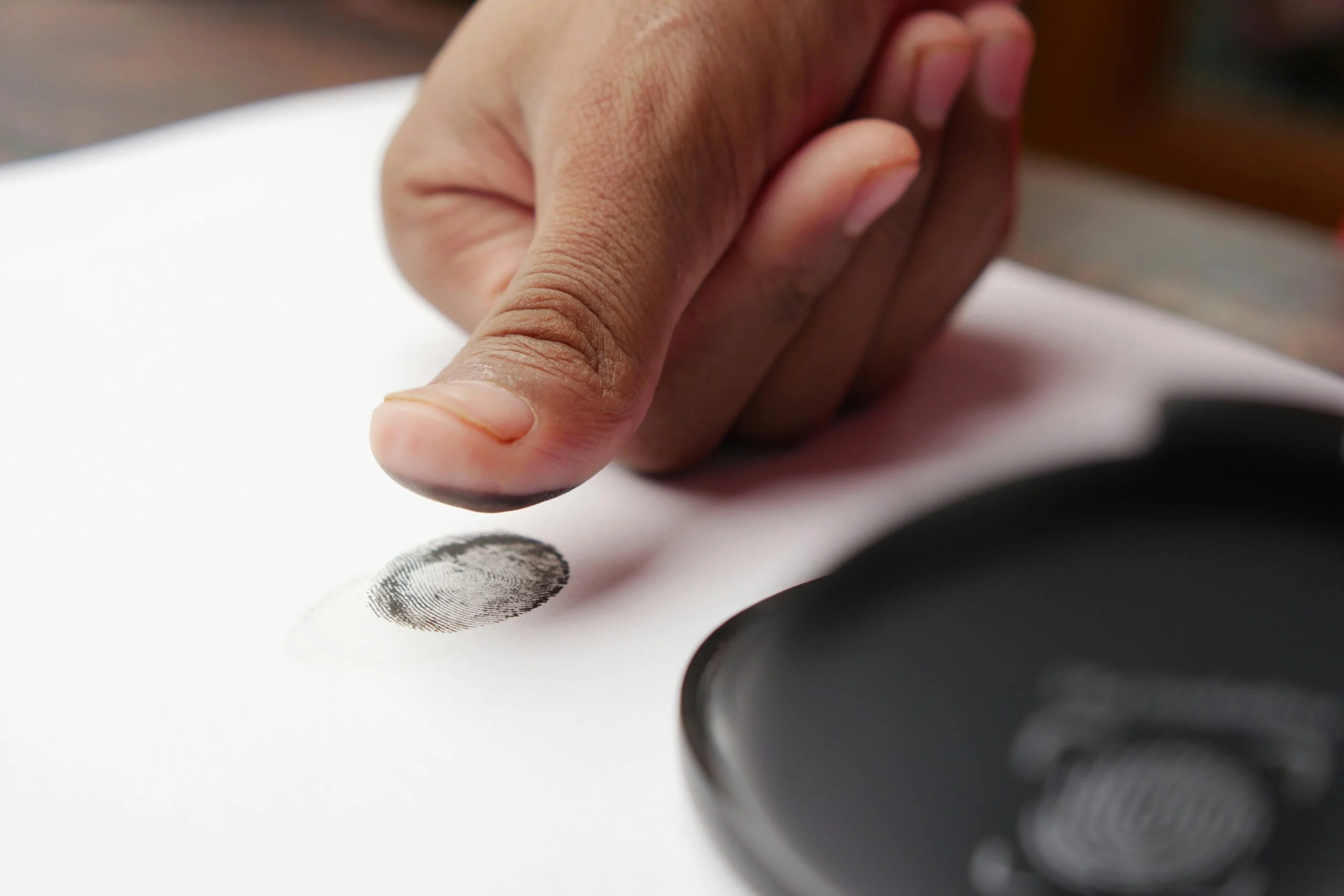
Aadhaar is a 12-digit unique identity number linked to an individual’s fingerprints, iris scans, and photograph. As of 2026, 1.39 billion Aadhaar numbers have been issued, covering 99.9 percent of India’s adult population and a growing share of children. It is the largest biometric identity system ever built, processing over 100 million authentication transactions daily. And it was created in just over a decade, in a country where hundreds of millions of people previously had no formal identification at all.
The Problem Aadhaar Was Built to Solve
Before Aadhaar, India had no universal identity infrastructure. Voter ID cards covered roughly 60 percent of the population but were unreliable, duplicates, ghost entries, and outdated records were common. Ration cards were tied to households, not individuals, and were rife with fraud. Passports required existing ID to obtain. The result: an estimated 400 million Indians had no credible proof of identity.
This identity gap created cascading problems. Government welfare benefits, subsidized food, cooking gas, employment guarantees, leaked massively because recipients could not be uniquely verified. The Planning Commission estimated in 2009 that 40 percent of subsidized grain under the Public Distribution System (PDS) was diverted before reaching intended beneficiaries. Fake beneficiaries, duplicate ration cards, and corrupt intermediaries siphoned billions annually.
Banks could not open accounts for people without ID. Insurance companies could not verify policyholders. Mobile phone SIM cards were registered with forged documents. The informal economy, where most Indians earned their livelihood, operated entirely outside any identity infrastructure.
How It Was Built: The UIDAI Story
The Unique Identification Authority of India (UIDAI) was established in 2009 under the Planning Commission, with Nandan Nilekani, co-founder of Infosys, appointed as its first chairman. Nilekani brought a technology entrepreneur’s approach to what was fundamentally a government infrastructure project: start lean, scale fast, and build for a billion users from day one.
Key technical decisions that defined Aadhaar’s architecture:
- Biometric deduplication: Every enrollment is checked against the entire existing database (1.3+ billion records) to ensure no person gets two Aadhaar numbers. The ABIS (Automated Biometric Identification System), built in partnership with multiple global biometric vendors, performs 1:N matching at a scale no other system in the world has attempted
- Minimal data: Aadhaar collects only four data points: name, date of birth, gender, and address. Plus biometrics (10 fingerprints, 2 iris scans, facial photograph). No religion, no caste, no income, no bank details. This was a deliberate design choice to prevent Aadhaar from becoming a surveillance database
- Open API architecture: Authentication, eKYC (electronic Know Your Customer), and eSign services are exposed as standardized APIs that any authorized entity can integrate. This turned Aadhaar from a static ID card into a real-time identity verification platform
- Registrar model: Instead of UIDAI enrolling everyone directly, it appointed registrars (state governments, banks, telecom companies, India Post) who used certified enrollment operators. This distributed model allowed enrollment to scale to 1 million people per day at peak capacity
The first Aadhaar number was issued on September 29, 2010, to Ranjana Sonawane, a resident of Tembhli village in Maharashtra’s Nandurbar district. Within five years, over 900 million numbers had been issued. By 2020, coverage reached 99 percent of adults.
The India Stack: Aadhaar as Platform
Aadhaar’s most significant impact has been as the foundation layer of India Stack, a set of interoperable digital public goods that together enable identity verification, digital payments, document storage, and consent-based data sharing. The key components:
Layer | Service | What It Enables |
|---|---|---|
Identity | Aadhaar (UIDAI) | Universal biometric identity verification |
Payments | UPI (NPCI) | Instant bank-to-bank mobile payments |
Documents | DigiLocker | Cloud-based verified document storage |
Data | Account Aggregator | Consent-based financial data sharing |
Verification | eKYC | Instant digital identity verification for banks, telecom, etc. |
Signing | eSign | Aadhaar-authenticated electronic signatures |
The combination of Aadhaar + UPI alone has transformed India’s economy. The Jan Dhan-Aadhaar-Mobile (JAM) trinity, bank accounts opened under Jan Dhan Yojana, linked to Aadhaar, and operated via mobile phones, has enabled Direct Benefit Transfer (DBT) that bypasses intermediaries and deposits welfare payments directly into beneficiary accounts.
Measurable Impact
- DBT savings: The government reports cumulative savings of over 3.48 lakh crore through Direct Benefit Transfers since 2014, by eliminating ghost beneficiaries and duplicate claims across 315 government schemes
- Financial inclusion: Jan Dhan accounts opened using Aadhaar eKYC grew from zero to 520 million accounts by 2025. For the first time, migrant workers, domestic helpers, and street vendors have bank accounts
- LPG subsidy reform: The PAHAL scheme linked cooking gas subsidies to Aadhaar. Before PAHAL, an estimated 35 million fake LPG connections existed. After Aadhaar-based verification, 8 crore duplicate or ghost connections were eliminated, saving over 90,000 crore
- PDS reform: States that implemented Aadhaar-based biometric authentication at ration shops (Andhra Pradesh, Telangana, Jharkhand) reported 10-40 percent reduction in grain diversion
- Telecom KYC: SIM card activation using Aadhaar eKYC reduced registration time from days to minutes and eliminated the market for forged identity documents in telecom. Over 1 billion SIM cards have been verified against Aadhaar
- COVID-19 vaccination: CoWIN, India’s vaccination platform, used Aadhaar for identity verification, enabling the administration of 2.2 billion vaccine doses with digital records tied to verified identities
The Privacy Controversy
Aadhaar’s most serious criticism centers on privacy and surveillance potential. The system collects biometric data from 1.39 billion people, and the UIDAI has the technical capability (though not the legal authority) to build a comprehensive surveillance infrastructure. Key concerns:
- No data protection law (until 2023): Aadhaar collected biometric data from a billion people before India had a comprehensive data protection law. The Digital Personal Data Protection Act 2023 now provides a framework, but enforcement is still being established through the Data Protection Board
- Authentication logs: Every time Aadhaar is used for authentication, a log is created at UIDAI. These logs, showing where, when, and for what purpose a person authenticated, could theoretically be used for tracking. UIDAI states that logs are stored for limited periods and are not shared without legal process
- Exclusion errors: Biometric authentication fails disproportionately for manual laborers (worn fingerprints), elderly people (fading biometrics), and disabled persons. When Aadhaar authentication is mandatory for accessing food rations, failure means hunger. Documented cases in Jharkhand and Rajasthan describe starvation deaths linked to Aadhaar authentication failures at PDS shops
- Mission creep: Originally designed for voluntary government benefit delivery, Aadhaar has been mandated for tax filing (PAN linkage), bank accounts, SIM cards, school enrollment, and more. The Supreme Court’s 2018 Puttaswamy judgment restricted mandatory Aadhaar linkage to government subsidies and tax filing, but compliance with these restrictions is uneven
Global Influence
Aadhaar has become a reference model for digital identity systems worldwide. The World Bank estimates that 1 billion people globally lack formal identification. Countries studying or adapting India’s approach include:
- Ethiopia: Launched a national digital ID program modeled on Aadhaar’s biometric enrollment process, targeting 90 million adults
- Philippines: The PhilSys national ID system, operational since 2022, uses biometric enrollment and an API-based authentication model inspired by Aadhaar
- Morocco, Sri Lanka, and Nigeria: All have consulted with UIDAI on digital identity architecture. Nigeria’s NIN (National Identification Number) system draws directly from Aadhaar’s registrar model
- G20 digital public infrastructure: India used its 2023 G20 presidency to promote Aadhaar, UPI, and DigiLocker as replicable digital public goods. The G20 New Delhi Declaration explicitly recognized DPI as a development accelerator
Aadhaar is simultaneously India’s most ambitious technological achievement and its most contentious civil liberties debate. It has saved lakhs of crores by eliminating welfare fraud. It has given financial identity to 500 million previously unbanked citizens. And it has created a biometric database of a billion people in a country where data protection enforcement is still maturing. The system works. The question is whether the safeguards around it will evolve as fast as its applications.
What you can do
- Share the evidenceSend this to one person who should know about this issue.Share on WhatsApp
- Give an afternoonTeach, mentor, clean up, or lend your professional skills.Ways to volunteer
- Tell us what's missingKnow a story, a fact we got wrong, or a solution worth spotlighting?Suggest a story
Politically neutral. Every claim sourced. Report a correction.



No comments yet