How India's Open Source Community Is Building Technology Solutions for Local Problems
Indian developers are building open source tools for local problems, from rural governance to education in 22 official languages.
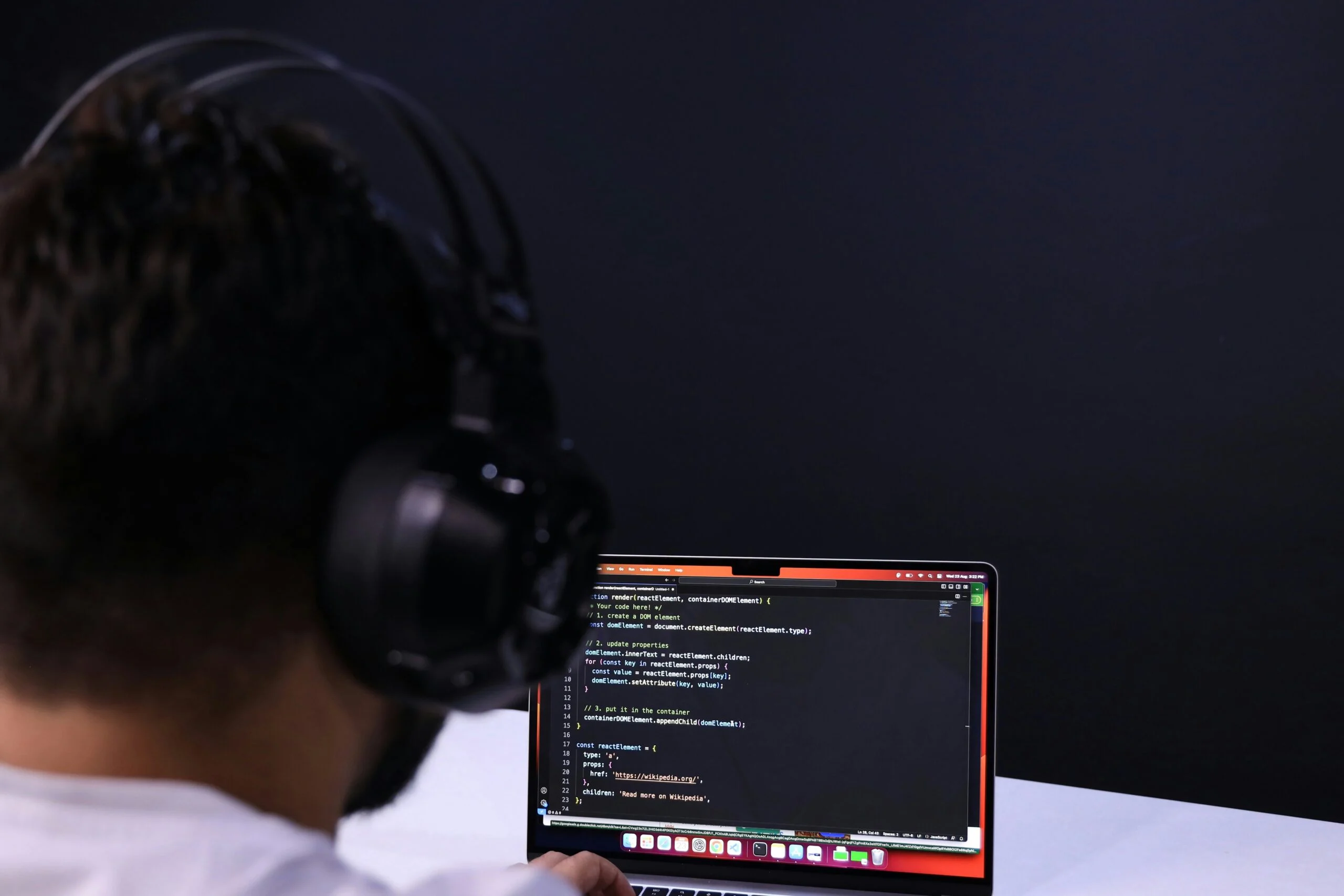
India is no longer just a consumer of technology built elsewhere. With over 13 million developers on GitHub and counting, the country has quietly become the second-largest contributor to open source projects worldwide, behind only the United States. But what makes India’s open source story truly remarkable is not the volume of contributions. It is the fact that Indian developers, communities, and institutions are increasingly building technology solutions that address uniquely Indian problems, from digitizing rural governance to making education accessible in 22 official languages.
India’s Rise as a Global Open Source Powerhouse
A decade ago, India’s relationship with open source was primarily one of consumption. Companies used Linux servers, developers relied on open source libraries, and students learned to code using freely available tools. But between 2018 and 2025, something fundamental shifted. Indian developers began contributing back at an unprecedented scale.
Today, India accounts for roughly 12-15% of all open source contributions on major platforms. Cities like Bengaluru, Hyderabad, Pune, and Chennai have become vibrant hubs where open source meetups draw hundreds of participants. The annual open source conferences held across India now attract thousands of developers, many of whom are first-generation programmers from small towns who discovered coding through freely available resources.
What is driving this surge? Several factors converge. India produces over 1.5 million engineering graduates annually. The widespread availability of affordable internet, thanks to the data revolution that brought 4G to even remote villages, means a 19-year-old in Patna has the same access to GitHub as someone in San Francisco. And the culture of jugaad (innovative problem-solving with limited resources) naturally aligns with the open source ethos of collaborative building.
Government Digital Infrastructure: Open Source at National Scale
Perhaps the most impactful demonstration of open source in India has come from the government’s own digital infrastructure projects. India has built what is arguably the world’s most ambitious open source technology stack for public service delivery.
The India Stack and Its Components
The India Stack, a collection of open APIs and digital infrastructure, has become a global reference model. At its foundation lies Aadhaar, the biometric identity system covering over 1.3 billion residents. While Aadhaar itself is not fully open source, many of the tools and APIs built around it are. The Aadhaar e-KYC APIs, authentication services, and integration libraries are available for developers to build upon, enabling everything from instant bank account verification to digital document signing.
The Unified Payments Interface (UPI), which processed over 12 billion transactions per month by late 2025, was built with open specifications that allow any bank or fintech company to integrate. This open approach is why a chai seller in a small town can accept digital payments through multiple apps seamlessly.
DIKSHA: Open Source Education at Scale
DIKSHA (Digital Infrastructure for Knowledge Sharing) is one of India’s most ambitious open source education projects. Built on the open source Sunbird platform, DIKSHA serves as the national platform for school education. It hosts over 500,000 pieces of educational content across subjects and grade levels, available in more than 30 languages and dialects.
What makes DIKSHA groundbreaking is its architecture. The Sunbird platform was designed to be modular so that any state government, NGO, or educational institution can fork and customize it. States like Maharashtra, Rajasthan, and Tamil Nadu have deployed their own versions with localized content, teacher training modules, and assessment tools. During the pandemic years, DIKSHA saw over 5 billion learning sessions, a scale that would have been impossible with proprietary software licensing.
CoWIN and Health Infrastructure
The CoWIN platform, which managed India’s massive vaccination drive, was another open source success story. The platform coordinated the administration of over 2.2 billion vaccine doses across more than 300,000 vaccination centres. Its open APIs allowed third-party apps to help citizens find available vaccine slots, and the platform’s architecture was later shared with other countries looking to digitize their vaccination programs.
Beyond CoWIN, the ABDM (Ayushman Bharat Digital Mission) is building an open health data infrastructure. Its open specifications for health records, facility registries, and consent frameworks are enabling a new generation of health-tech applications that can interoperate across hospitals, clinics, and pharmacies nationwide.
When technology is built openly, it becomes infrastructure that an entire nation can build upon, not just a product that one company profits from.
Community-Driven Solutions for Local Challenges
Beyond government projects, India’s open source community is tackling challenges that global tech companies have little incentive to solve. These grassroots projects are often born from personal frustration with problems that affect millions.
Language and Translation Tools
India has 22 officially recognized languages and hundreds of dialects, yet the internet remains overwhelmingly English-centric. Open source projects are working to change this. AI4Bharat, an initiative that emerged from IIT Madras, has built open source language models, translation tools, and speech recognition systems for Indian languages. Their IndicTrans models support translation across multiple Indian language pairs, and their datasets are freely available for researchers and developers.
The Indic NLP Library provides natural language processing tools for Indian languages, something that commercial offerings have historically neglected. Projects focused on Optical Character Recognition for scripts like Devanagari, Tamil, Bengali, and Gujarati are making it possible to digitize millions of pages of regional literature, government documents, and historical texts.
Agricultural Technology
Agriculture employs nearly 42% of India’s workforce, and open source tools are beginning to address the information asymmetry that has long disadvantaged small farmers. Open source soil mapping projects use satellite data and crowdsourced ground measurements to provide hyper-local soil health information. Weather prediction tools built on open data sources help farmers make planting and harvesting decisions.
Several open source crop disease identification apps use machine learning models trained on images of diseased plants common in Indian agriculture. A farmer can photograph a discoloured leaf and receive an instant diagnosis along with treatment suggestions, all without needing an internet connection, as the models run locally on basic smartphones.
Healthcare Access
Open source healthcare projects in India range from hospital management systems designed for resource-constrained settings to telemedicine platforms that connect rural patients with urban specialists. BAHMNI, an open source hospital management system, has been deployed in over 500 facilities across India and other developing countries. It handles everything from patient registration to billing, laboratory management, and electronic medical records, and it runs on modest hardware that small clinics can afford.
Sector | Key Open Source Projects | Impact Scale |
|---|---|---|
Education | DIKSHA/Sunbird, e-Pathshala tools | 500M+ learners reached |
Healthcare | BAHMNI, ABDM tools, CoWIN | 500+ hospitals, 2.2B vaccines managed |
Finance | UPI open specifications, Beckn protocol | 12B+ monthly transactions |
Agriculture | Crop disease AI, soil mapping, weather tools | Serving millions of farmers |
Language | AI4Bharat, IndicTrans, Indic NLP | 22+ languages supported |
Governance | eGov Foundation DIGIT, OpenCity | Hundreds of municipalities |
The IndiaOS Movement and Open Source Communities
The IndiaOS conference, along with events like FOSSMeet (organized by NIT Calicut), FOSS United meetups, and Hacktoberfest India chapters, has created a thriving ecosystem where developers connect, collaborate, and contribute. FOSS United, in particular, has been instrumental in building a sustainable open source community across India by organizing city-level meetups, funding projects, and advocating for open source adoption in government and education.
These communities serve a function beyond just code. They act as mentorship networks where experienced developers guide newcomers through their first pull requests. They create safe spaces for developers from non-metro cities, many of whom lack access to formal tech networks, to showcase their work and find collaborators. And they increasingly serve as alternative hiring pipelines, where companies discover talent through open source contributions rather than traditional campus recruitment.
Open Source in Indian Education: IITs and Beyond
India’s premier educational institutions have become significant contributors to the open source ecosystem. IIT Bombay’s FOSSEE (Free/Libre and Open Source Software for Education) project has promoted open source alternatives to expensive proprietary software in engineering education. They have developed spoken tutorials in Indian languages for tools like Python, Scilab, and LibreOffice, reaching millions of students who cannot afford commercial software licenses.
IIT Madras houses the AI4Bharat initiative and multiple open source research projects in AI and language processing. IIT Delhi has contributed to open source security tools and network infrastructure projects. IIT Kanpur has been involved in open source compiler and systems research. And the Indian Institute of Science (IISc) in Bengaluru has contributed to scientific computing libraries used worldwide.
Beyond the IITs, institutions like NIT Calicut (which has hosted FOSSMeet for over 15 years), IIIT Hyderabad (which has contributed significantly to language technology), and even newer institutions are making open source contribution a part of their curriculum. Several universities now accept open source contributions as valid academic projects, recognizing that building something used by thousands teaches more than a traditional thesis that sits on a shelf.
Startups Building on Open Source
A growing number of Indian startups are building their businesses around open source models. Companies like Hasura (which provides an instant GraphQL API engine), Appsmith (open source internal tool builder), Tooljet (low-code platform), and Chatwoot (customer support platform) have gained global traction while being founded and significantly developed in India.
These companies follow the open-core model: the core product is free and open source, while enterprise features, cloud hosting, and support are offered as paid services. This model has proven viable for attracting global users while building sustainable businesses. Hasura, for example, has raised significant funding and serves companies worldwide, while its core remains open source with thousands of community contributors.
The Beckn protocol, an open commerce specification developed in India, deserves special mention. It provides an open standard for decentralized commerce, allowing any buyer app to discover and transact with any seller app without intermediaries. The Open Network for Digital Commerce (ONDC), built on Beckn, aims to democratize e-commerce in India by breaking the monopoly of large platforms. This is open source thinking applied not just to software, but to market structure itself.
Challenges Facing India’s Open Source Ecosystem
Despite the momentum, India’s open source community faces real challenges that need addressing.
Funding and Sustainability
Most Indian open source projects run on volunteer effort and limited grants. Unlike in the US or Europe, where foundations, corporate sponsors, and government grants provide a financial safety net, Indian open source maintainers often burn out from unpaid work. The concept of paying for open source maintenance is still nascent in the Indian business ecosystem. Companies that save crores by using open source often contribute nothing back, not even a bug report.
Brain Drain
Many of India’s most talented open source contributors eventually move to positions at global tech companies, sometimes relocating abroad, sometimes working remotely for foreign firms. While this is a natural career progression, it means that community leadership and institutional knowledge are constantly being exported. Building sustainable local institutions that can retain and develop talent is crucial.
Recognition and Career Value
In many Indian companies and academic institutions, open source contributions are still not valued as meaningful professional achievements. A developer who maintains a widely-used open source library may find that their contributions count for less in performance reviews than shipping a proprietary feature. Changing this cultural perception, recognizing that open source work builds skills, reputation, and public good simultaneously, is an ongoing challenge.
Other Challenges Worth Noting
- Documentation gaps: Many Indian open source projects have sparse documentation, making it hard for new contributors to get involved.
- Language barriers: Most open source collaboration happens in English, which can be intimidating for developers more comfortable in regional languages.
- Infrastructure access: Developers in smaller cities may face unreliable internet, limited access to powerful hardware, and fewer opportunities for in-person collaboration.
- Licensing confusion: Many developers and companies in India are not well-versed in open source licensing, leading to unintentional violations or reluctance to adopt open source in commercial products.
How Students and Young Developers Can Get Involved
For students and early-career developers in India, open source offers an extraordinary opportunity to build skills, gain visibility, and make a real impact. Here is a practical roadmap.
- Start with documentation and testing. You do not need to be an expert coder to contribute. Many projects desperately need people to improve documentation, write tests, or triage bug reports. This is legitimate, valued contribution.
- Join local FOSS communities. FOSS United has chapters in most major cities. Attend meetups, participate in hackathons, and find mentors. In-person connections accelerate learning dramatically.
- Participate in structured programs. Google Summer of Code (GSoC), Outreachy, and MLH Fellowship provide stipends for open source contributions. Indian participants have consistently been among the largest national cohorts in GSoC.
- Build something that solves a problem you face. The most impactful open source projects come from genuine need. If you face a problem, chances are millions of others do too. Build the solution and open-source it.
- Contribute to Indian language projects. If you speak a regional language, you have a rare and valuable skill in the open source world. Translation, language model training data, and localization work are in high demand.
- Learn by reading code. Pick a well-maintained project you use regularly, clone it, and start reading the source code. Understanding how experienced developers structure large projects is an education no course can replicate.
State-Level Initiatives Supporting Open Source
Several Indian states have taken proactive steps to promote open source adoption in government and education.
Kerala has been the most consistent champion of open source in India. The state’s IT policy explicitly promotes Free and Open Source Software. The International Centre for Free and Open Source Software (ICFOSS), established by the Kerala government, supports open source research, training, and deployment. Kerala’s public education system has been using Linux-based IT infrastructure in schools for over a decade, making it one of the largest deployments of open source in education anywhere in the world.
Karnataka, home to Bengaluru’s thriving tech ecosystem, has seen organic open source growth driven by its startup and developer communities. The state government has also explored open source solutions for e-governance, and Bengaluru hosts some of India’s largest open source conferences and meetups.
Tamil Nadu has invested in building digital infrastructure on open platforms, with the state’s e-governance agency deploying several open source solutions for public services. The state has also been an active user of the DIKSHA platform with extensive Tamil-language content.
Telangana and Andhra Pradesh, through initiatives in Hyderabad, have supported open source through tech parks, incubators, and developer communities. The Telangana government’s use of open data platforms has been notable.
West Bengal and Odisha have explored open source solutions for governance, education, and healthcare delivery, often working with organizations like the eGovernments Foundation, whose DIGIT platform powers municipal services in hundreds of cities.
The Role of Open Source in Digital India
The Digital India initiative, which aims to transform the country into a digitally empowered society and knowledge economy, has open source at its philosophical core, even if this is not always explicitly stated. The emphasis on building digital public infrastructure that is interoperable, scalable, and accessible aligns naturally with open source principles.
Consider the stack that powers everyday digital life for hundreds of millions of Indians today: Aadhaar for identity, UPI for payments, DigiLocker for document storage, DIKSHA for education, ABDM for health records. Each of these systems either runs on open source or provides open APIs that allow an ecosystem of applications to be built on top. This is not accidental. It reflects a deliberate architectural choice, that digital infrastructure, like roads and railways, should be open for everyone to use and build upon.
This approach has given India a unique advantage. While many countries struggle with vendor lock-in, where a single company controls critical government infrastructure, India’s open approach means that multiple vendors can compete to build better solutions on the same open platform. This drives innovation, reduces costs, and prevents any single point of failure.
India's digital public infrastructure proves that open source is not just a development methodology, it is a governance philosophy that can deliver services at population scale.
Future Opportunities: Where India’s Open Source Community Can Lead
Looking ahead, several areas present enormous opportunities for India’s open source community to make outsized contributions.
- AI and Machine Learning for Indian Languages: With the global AI boom, there is urgent need for open source models trained on Indian language data. Current commercial AI models perform poorly on languages like Kannada, Odia, or Assamese. Indian developers are uniquely positioned to build these models and datasets.
- Climate and Environmental Tools: India faces acute climate challenges, from flooding in Assam to drought in Maharashtra. Open source environmental monitoring, early warning systems, and climate adaptation tools built for Indian conditions could save lives and livelihoods.
- Digital Public Goods for the Global South: India’s experience building digital infrastructure at scale is directly relevant to other developing nations. Exporting these open source solutions, adapted for local contexts, could be India’s most significant contribution to the global south.
- Open Source Hardware: As India builds semiconductor fabrication capabilities under the India Semiconductor Mission, open source hardware designs (like RISC-V processors) offer an opportunity to build indigenous computing capabilities without dependence on proprietary architectures.
- Decentralized Identity and Commerce: Building on ONDC and Beckn, India can pioneer open protocols for decentralized commerce that give small businesses and artisans direct access to markets without paying heavy platform commissions.
A Movement That Belongs to Everyone
India’s open source story is ultimately a story about democratization. It is about a country where a student in a tier-3 city can contribute code that powers government services used by a billion people. Where a farmer’s problem can inspire a machine learning model that helps millions of other farmers. Where technology is not something that happens to people, but something people build together.
The challenges are real, funding gaps, brain drain, cultural recognition. But the trajectory is unmistakable. With each passing year, more Indians are contributing to open source, more institutions are adopting it, and more problems are being solved through collaborative, transparent development.
For a country of 1.4 billion people, many of whom are coming online for the first time, open source is not just a software development methodology. It is a philosophy of shared progress, building in the open, for the benefit of all. And India, with its scale, its talent, and its unique challenges, is proving that this philosophy can work at the largest scale imaginable.
If you are a developer, student, educator, or simply someone who believes that technology should serve everyone, not just those who can afford it, India’s open source movement has a place for you. The code is open. The community is welcoming. And the problems worth solving have never been more urgent.
What you can do
- Share the evidenceSend this to one person who should know about this issue.Share on WhatsApp
- Give an afternoonTeach, mentor, clean up, or lend your professional skills.Ways to volunteer
- Tell us what's missingKnow a story, a fact we got wrong, or a solution worth spotlighting?Suggest a story
Politically neutral. Every claim sourced. Report a correction.



No comments yet