India's AI Infrastructure Push: What the $1.5B Investment Means for Tech Startups
India's $1.5 billion IndiaAI Mission is building GPU clusters, funding AI startups, and training a million developers. Here's what the government's AI infrastructure push means for Indian tech startups, developers, and the broader innovation ecosystem.
India Bets Big on Artificial Intelligence
In a landmark move that signals India’s determination to become a global AI powerhouse, the Indian government has committed approximately $1.5 billion (over ₹12,000 crore) toward building domestic AI infrastructure. This investment, announced under the IndiaAI Mission approved by the Union Cabinet in March 2024, is not just another government spending initiative - it represents a fundamental shift in how India positions itself in the global technology race.
The investment comes at a critical juncture. While the United States and China have poured hundreds of billions into AI research and infrastructure, India has historically relied on its software services expertise rather than building foundational AI capabilities. That equation is now changing, and the implications for Indian tech startups, developers, and the broader innovation ecosystem are significant.
Breaking Down the $1.5 Billion IndiaAI Mission
The IndiaAI Mission is structured around several key pillars, each designed to address a specific gap in India’s AI readiness:
1. GPU Infrastructure and Compute Capacity
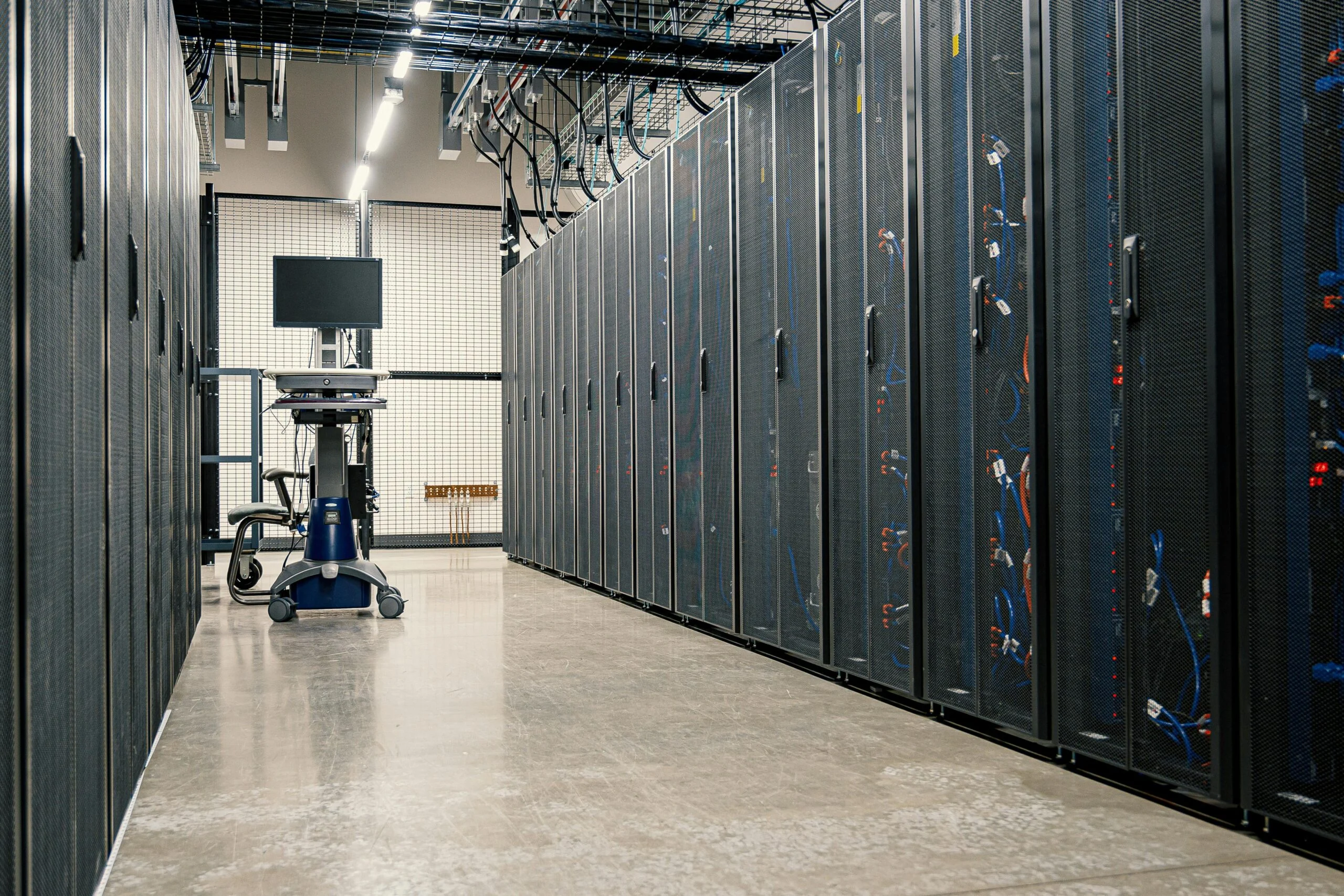
The largest chunk of the investment - roughly ₹4,564 crore - is directed toward building AI compute infrastructure. The government plans to establish a network of GPU clusters totaling over 10,000 GPUs across data centers in India. These clusters will be accessible to startups, researchers, and academic institutions through a cloud-based model.
This is particularly significant because access to high-performance computing has been one of the biggest barriers for Indian AI startups. Training large language models and running complex AI workloads requires GPU clusters that cost millions of dollars - resources that only well-funded companies could previously afford. The government-backed infrastructure aims to democratize this access.
Companies like Yotta Data Services, CtrlS, and Nxtgen Datacenter are among those building out GPU capacity in India. Yotta’s data center in Navi Mumbai already houses NVIDIA DGX SuperPOD systems, and expansion plans are underway to add thousands more GPUs specifically for AI workloads.
2. IndiaAI Innovation Centre
A dedicated IndiaAI Innovation Centre has been established with a budget of approximately ₹2,000 crore. This centre focuses on developing and deploying indigenous large language models (LLMs) and foundational AI models. The goal is to create AI models that understand Indian languages, cultural contexts, and local use cases - something that global models like GPT-4 or Claude often struggle with.
Projects already underway include multilingual AI models covering all 22 scheduled languages of India, AI tools for agriculture (crop disease detection, yield prediction), and healthcare applications (diagnostic AI for rural hospitals).
3. IndiaAI Datasets Platform
Recognizing that AI is only as good as the data it trains on, the mission includes building a unified AI datasets platform. This platform will aggregate non-personal, anonymized datasets from government departments, public sector organizations, and willing private contributors. The goal is to create India-specific training data that helps build more relevant and accurate AI applications for Indian users.
4. Skilling and Talent Development
About ₹500 crore is earmarked for AI skilling programs, aiming to train over 1 million Indians in AI and related technologies over the next five years. This includes partnerships with IITs, IIITs, NITs, and private institutions to create specialized AI curricula, along with scholarship programs targeting Tier 2 and Tier 3 city talent. This aligns with the broader goals of India’s National Education Policy 2020, which emphasizes technology-driven learning and skill development across all levels of education.
What This Means for Indian Tech Startups
For the estimated 3,000+ AI startups operating in India as of 2025, this government push creates several immediate and long-term opportunities.
Reduced Compute Costs
The most direct impact is on compute costs. Currently, an Indian startup training a moderately complex AI model might spend $50,000 to $200,000 on cloud GPU time with providers like AWS, Azure, or Google Cloud - with data flowing through servers located outside India. The IndiaAI compute platform promises subsidized access to domestic GPU clusters, potentially reducing costs by 40-60% for qualifying startups.
Early reports from the IndiaAI Compute Portal suggest that approved startups can access NVIDIA A100 and H100 GPU instances at rates significantly below market pricing. For bootstrapped founders and early-stage companies, this could be the difference between building a viable product and running out of runway.
New Market Opportunities
The government’s emphasis on AI for governance opens up a new customer base. Ministries and state governments are actively seeking AI solutions for:
- Agriculture: Precision farming, weather prediction, crop insurance automation
- Healthcare: Diagnostic tools for primary health centres, drug discovery assistance
- Education: Personalized learning platforms in regional languages
- Urban governance: Traffic management, waste management optimization, water distribution
- Legal tech: Case management, legal document summarization in Hindi and regional languages
The government procurement process for AI solutions is being streamlined through the GeM (Government e-Marketplace) portal, with a dedicated AI solutions category. Startups registered on this platform can bid for government AI contracts - a market estimated to be worth over ₹10,000 crore annually by 2027.
Funding and Accelerator Support
The IndiaAI Mission includes a startup financing component that provides grants of up to ₹5 crore for early-stage AI startups working on priority sectors. Additionally, the IndiaAI FutureDesign program connects startups with mentors from industry and academia, helping them refine their products for market readiness.
This government backing also sends a strong signal to private investors. Indian AI startups raised approximately $2.4 billion in 2024, according to data from Tracxn and Inc42. With government infrastructure now reducing one of the biggest cost barriers, investors are expected to become even more bullish on the sector.
How India’s AI Spending Compares Globally
To put India’s $1.5 billion commitment in context, it is worth looking at what other nations are investing:
- United States: The U.S. federal government allocated over $3 billion specifically for AI in 2024, while private sector investment exceeded $60 billion. The CHIPS and Science Act alone channels over $52 billion toward semiconductor and AI infrastructure.
- China: China’s government has committed an estimated $15 billion to AI development through 2025, with provincial governments adding billions more. Baidu, Alibaba, and Tencent have collectively invested tens of billions in AI infrastructure.
- European Union: The EU’s AI investment plan targets €20 billion annually in combined public and private investment through 2030.
- Saudi Arabia: The kingdom has allocated $40 billion through its Project Transcendence initiative focused on AI infrastructure.
- United Kingdom: The UK committed £1.5 billion to AI and computing infrastructure in its 2024 budget, with plans for a national AI Research Resource.
India’s $1.5 billion is modest compared to the U.S., China, or Saudi Arabia. However, the purchasing power parity advantage means that India gets significantly more per dollar in terms of talent, real estate, and operational costs. The real question is whether this initial investment can catalyze a multiplier effect through private sector participation. Much like how India’s reservation system was designed to level the playing field for historically disadvantaged communities, the IndiaAI Mission’s subsidized compute access aims to democratize technology opportunities for startups that lack the capital to compete with global giants.
Opportunities for Indian Developers
For the millions of software developers in India, the AI infrastructure push opens several doors:
AI/ML Engineering Roles
Demand for AI and machine learning engineers in India has surged by over 60% year-over-year according to multiple hiring platforms. Companies building on the IndiaAI infrastructure need professionals who understand GPU programming (CUDA, ROCm), model training and fine-tuning, MLOps, and data engineering. Salaries for experienced AI engineers at Indian startups now range from ₹25 lakh to ₹80 lakh per annum - a significant premium over traditional software roles.
Open Source Contributions
The IndiaAI Innovation Centre is committed to open-sourcing several of its foundational models and tools. This creates opportunities for developers to contribute to nationally significant AI projects, build reputation in the global open-source community, and gain hands-on experience with cutting-edge models. Projects like Bhashini (India’s language translation platform) and AI4Bharat (IIT Madras’s multilingual NLP initiative) are already accepting open-source contributions.
Building India-Specific AI Applications
Perhaps the most exciting opportunity is in building AI applications tailored to India’s unique challenges. Consider these areas where India-specific AI solutions are desperately needed:
- Voice-first AI: With over 500 million internet users who prefer voice interaction over text, voice AI in Indian languages is a massive untapped market.
- Agricultural AI: India has 150 million farming households. AI tools for soil analysis, pest detection, market price prediction, and supply chain optimization could transform livelihoods.
- Financial inclusion: AI-powered credit scoring for the 300+ million adults without formal credit history could unlock massive economic potential.
- Healthcare accessibility: India has roughly 1 doctor per 1,000 people. AI diagnostic tools that work in low-connectivity, rural settings could save lives at scale.
Challenges That Remain
Despite the optimism, significant challenges could slow India’s AI ambitions:
Execution and Bureaucracy
India’s track record with large-scale technology programs is mixed. While Aadhaar and UPI were resounding successes, other initiatives have been bogged down by bureaucratic delays, corruption, and poor implementation. The IndiaAI Mission needs strong execution leadership and transparent progress tracking to deliver on its promises.
Talent Retention
India produces world-class AI talent, but a significant portion leaves for opportunities in the U.S., Canada, and Europe. Unless the domestic ecosystem offers comparable opportunities in terms of compensation, research freedom, and career growth, the brain drain will continue. The government’s skilling initiative needs to be paired with efforts to retain top talent domestically.
Data Privacy and Regulation
The Digital Personal Data Protection Act, 2023 provides a framework for data governance, but its implementation rules are still being finalized. AI startups need regulatory clarity on what data they can use for training, how to handle cross-border data flows, and what compliance requirements apply. Uncertainty in this area can discourage investment and slow development.
Power and Sustainability
Running thousands of GPUs requires enormous amounts of electricity. India’s power grid is still heavily dependent on coal, and AI data centers could add significant carbon emissions. The government will need to pair its AI infrastructure push with renewable energy commitments to avoid criticism on sustainability grounds. Some new data center projects, like those in Tamil Nadu and Karnataka, are already being designed with solar and wind power integration.
What the Indian Tech Community Should Do Now
For anyone in India’s tech ecosystem - whether you are a startup founder, a developer, a researcher, or a student - here are actionable steps to capitalize on this moment:
- Register on the IndiaAI portal (indiaai.gov.in) to access compute resources, datasets, and funding opportunities.
- Explore government procurement through GeM for AI solution contracts. The barrier to entry for startups is lower than most people assume.
- Upskill in AI/ML - platforms like NPTEL, IIT Madras’s online courses, and Andrew Ng’s courses remain excellent starting points. Focus on practical implementation, not just theory.
- Build for India first. The biggest opportunity is in solving India-specific problems. Global markets can come later, but the domestic demand for AI solutions in healthcare, agriculture, education, and governance is immediate.
- Collaborate. Join AI communities like AI4Bharat, DataHack by Analytics Vidhya, or local AI meetup groups. The ecosystem grows faster when knowledge is shared.
The Bigger Picture
India’s $1.5 billion AI infrastructure investment is best understood not as a standalone initiative but as part of a broader digital transformation arc. The same country that built Aadhaar (the world’s largest biometric ID system), UPI (which processed 13 billion transactions in a single month in 2024), and the India Stack digital public infrastructure is now applying the same philosophy to AI - build foundational infrastructure, open it up, and let a billion people innovate on top of it.
If executed well, the IndiaAI Mission could do for artificial intelligence what UPI did for digital payments: create a public infrastructure layer that dramatically lowers the cost of building and deploying AI solutions, enabling thousands of startups and millions of developers to participate in the AI economy.
The investment is modest by global standards, but India’s advantages in talent, scale, and the urgent need for AI-driven solutions across its massive population create a unique opportunity. The next 2-3 years will be decisive. If the infrastructure is built on time, if the regulatory framework provides clarity, and if the talent pipeline delivers, India could emerge as one of the world’s most vibrant AI innovation hubs.
For Indian tech startups and developers, the message is clear: the infrastructure is being laid. The question is - what will you build on it?
What you can do
- Share the evidenceSend this to one person who should know about this issue.Share on WhatsApp
- Give an afternoonTeach, mentor, clean up, or lend your professional skills.Ways to volunteer
- Tell us what's missingKnow a story, a fact we got wrong, or a solution worth spotlighting?Suggest a story
Politically neutral. Every claim sourced. Report a correction.



No comments yet