Weaving Futures: How India's Handloom Revival Is Empowering Rural Women
Handloom weaving is rural India's second-largest employer after agriculture, and most weavers are women. This article looks at schemes, online markets and cooperatives behind its revival.
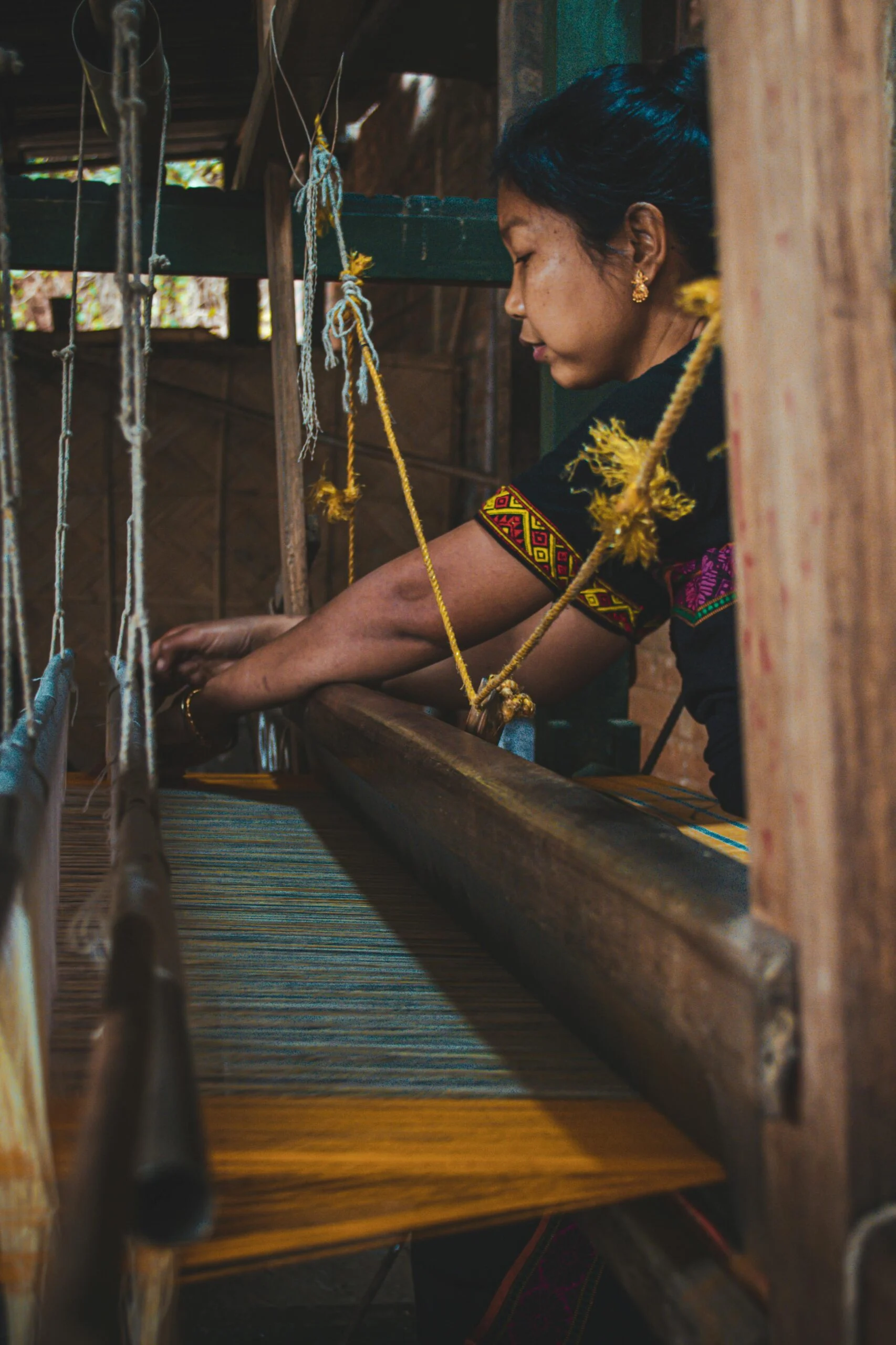
A Loom, a Legacy, and a New Beginning
In the narrow lanes of Chanderi in Madhya Pradesh, 42-year-old Fatima Bi sits at her wooden loom, her fingers moving with a precision inherited from five generations of weavers. For decades, women like her worked in silence - producing some of the world’s finest fabrics while earning barely enough to feed their families. Today, Fatima’s sarees sell on Amazon and Flipkart. She has a bank account in her own name, her daughter is studying engineering, and she leads a cooperative of 85 women weavers.
Fatima’s story is not an exception. Across India, a quiet but powerful revolution is unfolding - one that is placing the handloom at the centre of rural women’s economic liberation. Through a combination of government schemes, digital marketplaces, and grassroots cooperatives, millions of women artisans are finding their way from the margins of the economy to its mainstream.
India’s Handloom Heritage: A Sector in Crisis and Revival
India is the world’s largest producer of handloom fabrics, with an estimated 3.5 million handloom households spread across every state. The Fourth All India Handloom Census (2019-20) recorded roughly 31.45 lakh handloom worker households, of which over 72% of handloom weavers are women. This is not just a craft - it is the second-largest employer in rural India after agriculture.
Yet for decades, the sector was in decline. Competition from powerloom and mill-made textiles, middlemen who captured most of the value chain, and a lack of market access pushed millions of weavers into poverty. According to a parliamentary report, over 10 million handloom workers left the profession between 1995 and 2010. Weaver suicides in states like Telangana and Andhra Pradesh became disturbingly common.
The revival, when it came, was driven by an unlikely combination of forces: government policy, technology, and a new generation of conscious consumers who wanted to buy ethically made, sustainable products.
Government Schemes Lighting the Path
National Handloom Day and the Bunkar Mitra Helpline
The declaration of August 7 as National Handloom Day in 2015 was more than symbolic. It brought national attention to the handloom sector and became an annual focal point for policy announcements, exhibitions, and marketing drives. The date commemorates the Swadeshi Movement of 1905, which championed Indian-made textiles as a tool of self-reliance.
Alongside this, the Bunkar Mitra helpline (1800-208-9988) was launched as a toll-free service providing weavers with information on government schemes, yarn availability, market prices, and design inputs. For women weavers in remote areas with limited mobility, this helpline became a critical lifeline - connecting them to benefits they previously didn’t know existed.
National Handloom Development Programme (NHDP)
The NHDP provides financial assistance for looms, design development, raw material supply, and marketing support. Under this scheme, women weavers receive subsidised yarn, upgraded looms, and training in new designs and techniques. Block-level cluster development ensures that support reaches even the most remote weaving communities.
Mudra Loans and Stand-Up India
The Pradhan Mantri Mudra Yojana (PMMY) has been transformative for women weavers. Under the Shishu and Kishore categories, women artisans can access collateral-free loans of up to Rs 5 lakh. According to MUDRA data, over 70% of all Mudra loans have been disbursed to women borrowers, enabling them to purchase better raw materials, upgrade equipment, and hire helpers during peak demand.
The Stand-Up India scheme, which specifically supports women and SC/ST entrepreneurs, has helped several handloom cooperatives scale up from small household units to registered enterprises with proper GST registration and bank accounts.
ODOP and GI Tags
The One District One Product (ODOP) initiative has identified handloom products as flagship offerings in over 100 districts. This branding, combined with Geographical Indication (GI) tags for products like Banarasi silk, Chanderi sarees, Pochampally ikat, Kanchipuram silk, and Sambalpuri textiles, has added a premium value layer. GI-tagged products command 15-30% higher prices, and the certification process itself brings quality standards and traceability that build consumer trust.
E-Commerce: The Great Equaliser
If government schemes laid the foundation, e-commerce platforms built the highway. For the first time in Indian handloom history, a weaver in a village in Odisha can sell directly to a customer in Mumbai, Delhi, or even New York - without a middleman taking 40-60% of the value.
Amazon Karigar
Launched in 2016, Amazon Karigar is a dedicated programme for Indian artisans and weavers. It provides free onboarding, training in product photography and listing, and access to Amazon’s massive customer base. As of 2024, over 1.2 million artisan products are listed on the platform, and the programme has onboarded weavers from over 100 handloom clusters.
For women weavers, Amazon Karigar has been especially significant. The programme partners with NGOs and self-help groups (SHGs) to onboard women who may not be tech-savvy. Amazon provides imaging services, cataloguing support, and even handles logistics through its Fulfilment by Amazon (FBA) programme. Weavers report earning 2-3 times more than they did selling through local traders. Several NGOs championing women’s empowerment across India have been instrumental in connecting women artisans to these platforms.
Flipkart Samarth
Flipkart Samarth, launched in 2019, specifically targets artisans, weavers, and rural entrepreneurs from underserved communities. The programme waives commissions for the initial period, provides free cataloguing, and offers business insights through its seller dashboard. Flipkart has partnered with over 1.5 million artisans, many of them women-led SHGs from the handloom sector.
In 2023, Flipkart launched a dedicated “Handloom Hub” during National Handloom Day, featuring curated collections from weaver cooperatives. The initiative generated record sales and brought mainstream visibility to products from clusters in Assam, West Bengal, Tamil Nadu, and Odisha.
GoCoop: The Cooperative Marketplace
GoCoop occupies a unique space in the Indian handloom e-commerce ecosystem. Founded in 2012, it is India’s first online marketplace exclusively for handloom and handicraft cooperatives. What makes GoCoop different is its model: it works directly with weaver cooperatives, ensuring that a larger share of the sale price goes back to the artisans.
GoCoop has onboarded over 500 cooperatives from across India and provides end-to-end support - from digital literacy training to logistics management. The platform’s focus on cooperatives rather than individual sellers makes it particularly beneficial for women weavers who work collectively. Revenue is distributed transparently, and cooperatives retain 75-85% of the sale price - compared to 30-40% through traditional middlemen channels.
Other Digital Platforms
Beyond these three, platforms like Okhai (backed by the Tata Group), iTokri, Jaypore, and government-run portals like the India Handloom portal and GeM (Government e-Marketplace) have added more sales channels. The cumulative effect has been a fundamental shift in the handloom value chain - power is moving from middlemen to makers.
Cooperatives: Strength in Collective Action
The cooperative model has been the backbone of women’s empowerment in the handloom sector. By pooling resources, sharing risks, and bargaining collectively, women weavers have achieved what individual artisans could not.
SEWA’s Handloom Initiative
The Self-Employed Women’s Association (SEWA), founded by Ela Bhatt, has been a pioneer in organising women weavers. SEWA’s handloom programme in Gujarat covers over 15,000 women weavers who produce traditional Patola, Mashru, and Tangaliya fabrics. SEWA provides design inputs, quality control, marketing support, and access to finance. Through SEWA Trade Facilitation Centre, products reach international markets in the US, Europe, and Japan.
Women in SEWA cooperatives report not just higher incomes but also increased decision-making power within their families, higher rates of children’s education, and greater mobility. The cooperative becomes a social space as much as an economic one. Despite these advances, the gender pay gap in India remains a significant challenge that continues to affect women across all sectors, including traditional crafts.
Pochampally Ikat: A Cluster Success Story
The Pochampally ikat cluster in Telangana is a textbook case of how cooperative organisation can transform an entire community. Once on the verge of extinction, the cluster was revived through a combination of GI tagging, cooperative formation, and e-commerce integration. Today, Pochampally has over 5,000 active looms, and the village itself was recognised as a UNESCO tentative World Heritage Site in 2014 for its ikat weaving tradition.
Women weavers in Pochampally, who earlier earned Rs 50-80 per day, now earn Rs 300-500 per day. Many have become master weavers and trainers, passing on skills to the next generation while also innovating with new designs and colour palettes that appeal to urban consumers.
The Assam Success: Sualkuchi and Beyond
Assam’s Sualkuchi, known as the “Manchester of the East,” is home to thousands of women weavers producing the world-famous muga silk and pat silk. The Assam government’s Handloom and Textiles department has supported the formation of over 200 women-led weaver cooperatives in the state. These cooperatives have been connected to e-commerce platforms, and Assamese silk has seen a 40% increase in demand over the past five years.
Organisations like the North East Network (NEN) have played a critical role in training women weavers in Assam and Meghalaya in business skills, digital literacy, and quality standards. The result: women who once wove only for household use are now running profitable micro-enterprises.
Real Stories of Transformation
Lakshmi Devi, Varanasi
Lakshmi Devi, a 38-year-old weaver from Varanasi, lost her husband to illness in 2017. With three children and no savings, she joined a local SHG that was being trained by the Handloom Export Promotion Council (HEPC). Within a year, her products were listed on Amazon Karigar. Today, she earns over Rs 25,000 per month - five times what her family earned when her husband was alive. “The loom saved my family,” she says. “But it was the internet that saved my future.”
Radha Mahato, Bhagalpur
In Bihar’s Bhagalpur district, famous for Tussar silk, 45-year-old Radha Mahato leads a cooperative of 120 women weavers. With a Mudra loan of Rs 2 lakh, she purchased improved looms and hired a designer from NID (National Institute of Design) to create contemporary patterns. The cooperative’s products now sell on GoCoop and Jaypore, and it recorded a turnover of Rs 48 lakh in the last financial year. Radha was recognised at the National Handloom Day celebrations in 2023.
Meenakshi Sundaram’s Collective, Kanchipuram
In Kanchipuram, Tamil Nadu, the Meenakshi Weavers’ Collective - a group of 60 women - has broken into the premium wedding saree market that was traditionally dominated by male master weavers. Using social media marketing and Instagram to showcase their work, they receive direct orders from customers across India. Their average saree price is Rs 15,000-50,000, and they retain 80% of the sale price. “We no longer need a Seth (middleman) to tell us what our work is worth,” says the collective’s president, Selvi.
Challenges That Remain
Despite the progress, significant challenges persist. The handloom revival is real, but it is uneven - reaching clusters with better connectivity and existing organisation more than truly isolated communities.
Digital Divide
While e-commerce has been transformative, many women weavers in remote areas still lack basic digital literacy, smartphone access, and reliable internet connectivity. As we explored in our coverage of India’s rural digital divide, only 31% of rural women use the internet compared to 48% of rural men (NFHS-5 data). Bridging this gap requires sustained investment in digital skills training, affordable devices, and rural broadband.
Raw Material Costs
The rising cost of raw materials - especially cotton yarn and silk - squeezes margins for weavers. Yarn prices have increased by 30-40% since 2020 due to supply chain disruptions. Government yarn supply schemes exist but often suffer from delays and quality issues. Weavers need more reliable, timely access to quality raw materials at fair prices.
Design and Innovation
Many handloom products still rely on traditional designs that may not appeal to younger urban consumers. While organisations like NID and NIFT provide design support, the reach is limited. Scaling design interventions across India’s thousands of handloom clusters requires a decentralised approach - perhaps through local design mentors and digital design tools.
Competition from Powerloom Copies
One of the most persistent threats to handloom weavers is the proliferation of powerloom copies sold as handloom products. Despite the Handloom (Reservation of Articles for Production) Act and the Handloom Mark scheme, enforcement remains weak. Consumers often cannot distinguish between a handloom product and a powerloom copy, and the price difference makes fake products attractive. Stronger enforcement of the Handloom Mark and consumer education campaigns are needed.
The Road Ahead: From Survival to Prosperity
India’s handloom sector stands at an inflection point. The global sustainable fashion market is projected to reach $33.05 billion by 2025, and Indian handloom - with its inherent sustainability credentials (low carbon footprint, zero machine energy, natural fibres) - is perfectly positioned to capture a significant share.
What Needs to Happen
- Scale cooperative formation: Only a fraction of women weavers are organised into cooperatives. Government and NGO partnerships must prioritise forming and strengthening women-led cooperatives in underserved clusters.
- Invest in digital literacy: Targeted programmes to train women weavers in smartphone use, e-commerce listing, digital payments, and social media marketing can multiply the impact of existing platforms.
- Strengthen GI enforcement: Protecting GI-tagged products from counterfeits and powerloom copies is essential to maintaining the premium value that sustains weaver livelihoods.
- Build brand India Handloom globally: Initiatives like the Textile Ministry’s participation in international trade fairs and the “India Handloom” brand need to be scaled up, with cooperatives as direct participants - not just government agencies.
- Integrate with sustainable fashion: Partnerships with ethical fashion brands, both domestic and international, can create stable, high-value demand. Labels like “Fair Trade” and “Handloom Mark” must become consumer-facing and widely recognised.
Weaving a New India
The story of India’s handloom revival is ultimately a story about women - women who were invisible in the formal economy, who worked in their homes and earned through intermediaries, who had skills but no market, talent but no platform.
Today, through cooperatives, e-commerce, and supportive policy, these women are finding their voice and their value. They are not just preserving an ancient craft - they are reinventing it for the 21st century. They are not just weavers - they are entrepreneurs, leaders, and changemakers.
When Fatima Bi in Chanderi opens her Amazon seller dashboard on her smartphone, she is not just checking her sales. She is looking at a future she wove herself - thread by thread, order by order, dream by dream.
As consumers, allies, and citizens, we can support this movement by choosing handloom, asking where our textiles come from, and demanding transparency in the fashion supply chain. Every handloom purchase is a vote for a more equitable, sustainable, and beautiful India.
What you can do
- Share the evidenceSend this to one person who should know about this issue.Share on WhatsApp
- Give an afternoonTeach, mentor, clean up, or lend your professional skills.Ways to volunteer
- Tell us what's missingKnow a story, a fact we got wrong, or a solution worth spotlighting?Suggest a story
Politically neutral. Every claim sourced. Report a correction.

No comments yet