India's Water Crisis: State-by-State Solutions That Are Actually Working
India faces a severe water crisis, but some states are making progress. This article covers Rajasthan's johads, Tamil Nadu's rainwater harvesting rules and other working local solutions.
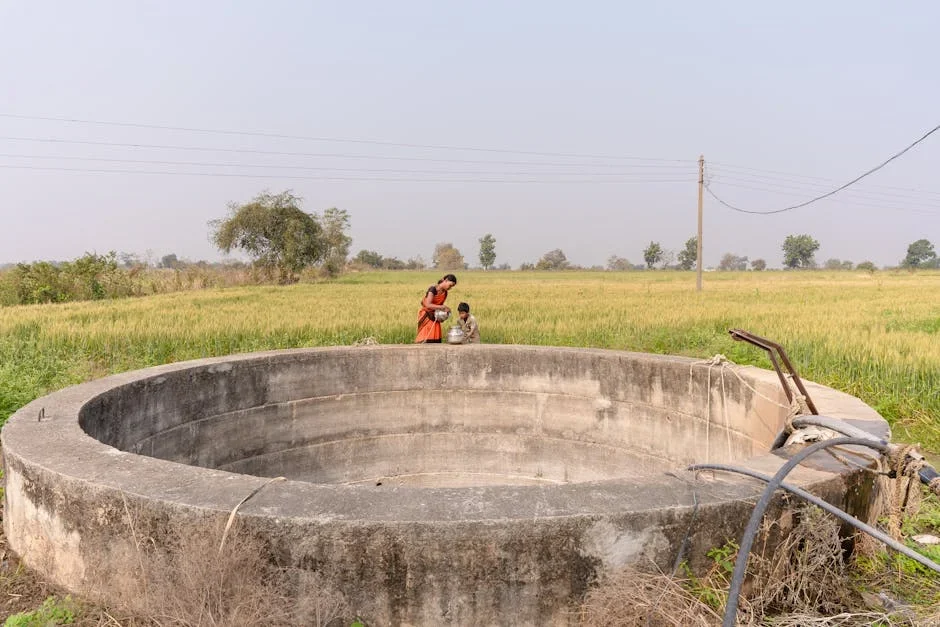
India is home to 18% of the world’s population but has access to only 4% of its freshwater resources. Over 600 million Indians face high to extreme water stress. By some estimates, 21 major cities could run out of groundwater in the coming years. The crisis is real, urgent, and worsening.
But here’s what rarely makes headlines: solutions are emerging. Across Indian states, communities, governments, and organizations are implementing water management strategies that actually work. These aren’t theoretical models, they’re proven approaches delivering measurable results on the ground.
The Scale of India’s Water Crisis
Before looking at solutions, let’s understand the challenge:
- Groundwater depletion, India is the world’s largest user of groundwater, extracting over 250 cubic kilometers annually
- River pollution, 70% of India’s surface water is contaminated
- Unequal distribution, Some regions get floods while others face drought, often in the same year
- Agricultural demand, Agriculture consumes 80% of India’s water, often through inefficient flood irrigation
- Urban pressure, Rapid urbanization is straining existing water infrastructure beyond capacity
But despair isn’t the answer. Action is. And across India, action is happening.
Rajasthan: Reviving Traditional Water Harvesting
Rajasthan, one of India’s driest states, has become a model for water revival through traditional techniques.
The Johad Revolution
Rajendra Singh, known as the “Waterman of India,” led a movement to revive traditional johads (earthen check dams) in Alwar district. Starting in 1985 with a single village, the initiative has built over 11,000 johads across Rajasthan.
Results:
- Five rivers that had gone dry have been revived
- Groundwater levels have risen by over 6 meters in many areas
- Over 1,000 villages now have year-round water access
- Agricultural productivity has increased significantly
The johad approach is beautifully simple: build small earthen dams across natural drainage paths to capture rainwater. The water percolates into the ground, recharging aquifers. No concrete, no heavy machinery, no government bureaucracy, just community effort and traditional knowledge.
Jal Bhagirathi Foundation
In the Thar Desert region, the Jal Bhagirathi Foundation works with village communities to build tankas (underground cisterns), nadis (village ponds), and other traditional water structures. They’ve helped over 600 villages improve water security through community-managed systems.
Tamil Nadu: Mandatory Rainwater Harvesting
Tamil Nadu was one of the first Indian states to make rainwater harvesting mandatory for all buildings. The 2001 legislation required every building, old and new, to have a rainwater harvesting system.
What Worked
- Groundwater levels in Chennai rose by 2-3 meters within two years of implementation
- Over 40,000 rainwater harvesting structures were installed in Chennai alone
- The model inspired similar legislation in other states
Lessons Learned
Enforcement was inconsistent initially. Buildings without systems faced water supply disconnection, which proved to be the most effective compliance tool. The lesson: mandates work when enforcement has teeth.
Chennai’s Water Metro
After the devastating 2019 water crisis where Chennai nearly ran dry, the city launched Water Metro, an ambitious project to create a secondary water grid using treated wastewater. This reuse-focused approach is a model for other Indian cities.
Maharashtra: The Paani Foundation Model
Actor Aamir Khan co-founded the Paani Foundation, which runs the Water Cup competition, a grassroots watershed management initiative across Maharashtra’s drought-prone districts.
How It Works
- Villages compete to do the most effective watershed work (trenching, bunding, percolation tanks) in 45 days
- Village committees plan and execute work using community labor (shramdan)
- Winners are recognized publicly, creating pride and motivation
Impact
- Over 6,000 villages have participated since 2016
- Many drought-prone talukas now have water availability through the summer months
- The competition format created a movement, villages that would never have worked on watershed management now compete for it
The genius of this approach is making water conservation a matter of community pride rather than government mandate.
Madhya Pradesh: The Atal Bhujal Yojana
India’s first dedicated groundwater management program launched in 2020, covering 8,220 gram panchayats across 229 blocks in seven states, with significant focus on Madhya Pradesh.
Community-Led Approach
Instead of top-down mandates, the program empowers village-level Water Security Plans:
- Communities assess their water budget
- They plan demand-side management (which crops to grow, when to irrigate)
- Supply-side interventions (recharge structures) are community-decided
Results So Far
- Improved groundwater monitoring in participating villages
- Shift toward less water-intensive crops in critical areas
- Increased community ownership of water resources
Karnataka: Managed Aquifer Recharge
Karnataka’s groundwater department has pioneered managed aquifer recharge (MAR) in the hard-rock regions of the Deccan Plateau.
Percolation Tanks and Check Dams
Over 50,000 percolation tanks and check dams have been constructed across the state. In districts like Chitradurga and Tumkur, groundwater levels have stabilized after years of decline.
Borewell Recharge
An innovative program encourages farmers to convert abandoned borewells into recharge points. Rainwater is channeled through filters into defunct borewells, directly recharging the aquifer. Cost-effective and technically simple.
Gujarat: The Sujalam Sufalam Model
Gujarat’s Sujalam Sufalam Jal Sanchay Abhiyan is a state-wide campaign to deepen and desilt existing water bodies before the monsoon season.
Scale of Impact
- Over 50,000 water bodies deepened since 2018
- Increased water storage capacity by billions of liters
- Community participation through voluntary labor
- Focus on existing infrastructure rather than building new structures
The approach is pragmatic: rather than building new reservoirs (expensive, slow, politically complex), clean and deepen what already exists.
Meghalaya: Living Root Bridges and Bamboo Drip Irrigation
Northeast India offers indigenous water management wisdom that deserves wider attention.
Living Root Bridges
The Khasi and Jaintia people of Meghalaya have grown living bridges from fig tree roots for centuries. These bridges are part of a broader relationship with water, communities have managed streams, springs, and watersheds through traditional practices that modern science is only now appreciating.
Bamboo Drip Irrigation
In Meghalaya’s hills, tribal communities have practiced bamboo drip irrigation for over 200 years. Water is channeled from springs through bamboo pipes directly to plant roots, achieving efficiency levels comparable to modern drip systems, without electricity, plastic, or imported technology.
What These Solutions Have in Common
Across these successful initiatives, common patterns emerge:
- Community ownership, Solutions work when communities lead, not just comply
- Traditional knowledge, Indigenous techniques, refined over centuries, often outperform expensive modern infrastructure
- Local adaptation, What works in Rajasthan won’t work in Meghalaya. Successful programs adapt to local geography, climate, and culture
- Demand management, Not just increasing supply, but using less through better crops, efficient irrigation, and reuse
- Government + community partnership, Neither top-down mandates nor purely grassroots efforts succeed alone. The best results come from partnership
What You Can Do
India’s water crisis is a collective challenge that needs collective action:
- Harvest rainwater at your home or building, even basic rooftop harvesting makes a difference
- Support organizations like Paani Foundation, Jal Bhagirathi, or Arghyam that fund water projects
- Demand accountability from local representatives on water management
- Reduce waste, Fix leaks, use water-efficient appliances, and avoid waste
- Spread awareness, Share success stories so communities elsewhere can learn and adapt
The Path Forward
India’s water crisis is severe, but it is not hopeless. The solutions profiled here prove that with the right approach, water security is achievable. It requires respecting traditional wisdom, empowering communities, investing in decentralized infrastructure, and treating water as the precious resource it is.
Every state in India has water challenges. But every state also has the potential for solutions. The question isn’t whether solutions exist, they do. The question is whether we scale them fast enough.
What you can do
- Share the evidenceSend this to one person who should know about this issue.Share on WhatsApp
- Give an afternoonTeach, mentor, clean up, or lend your professional skills.Ways to volunteer
- Tell us what's missingKnow a story, a fact we got wrong, or a solution worth spotlighting?Suggest a story
Politically neutral. Every claim sourced. Report a correction.

No comments yet