India's Education Revolution: How EdTech Is Reaching the Last Mile
How Indian EdTech companies, government programs like NEP 2020 and NIPUN Bharat, and grassroots innovators are bringing quality education to rural and remote communities through adaptive learning, offline-first tools, and mother-tongue content.
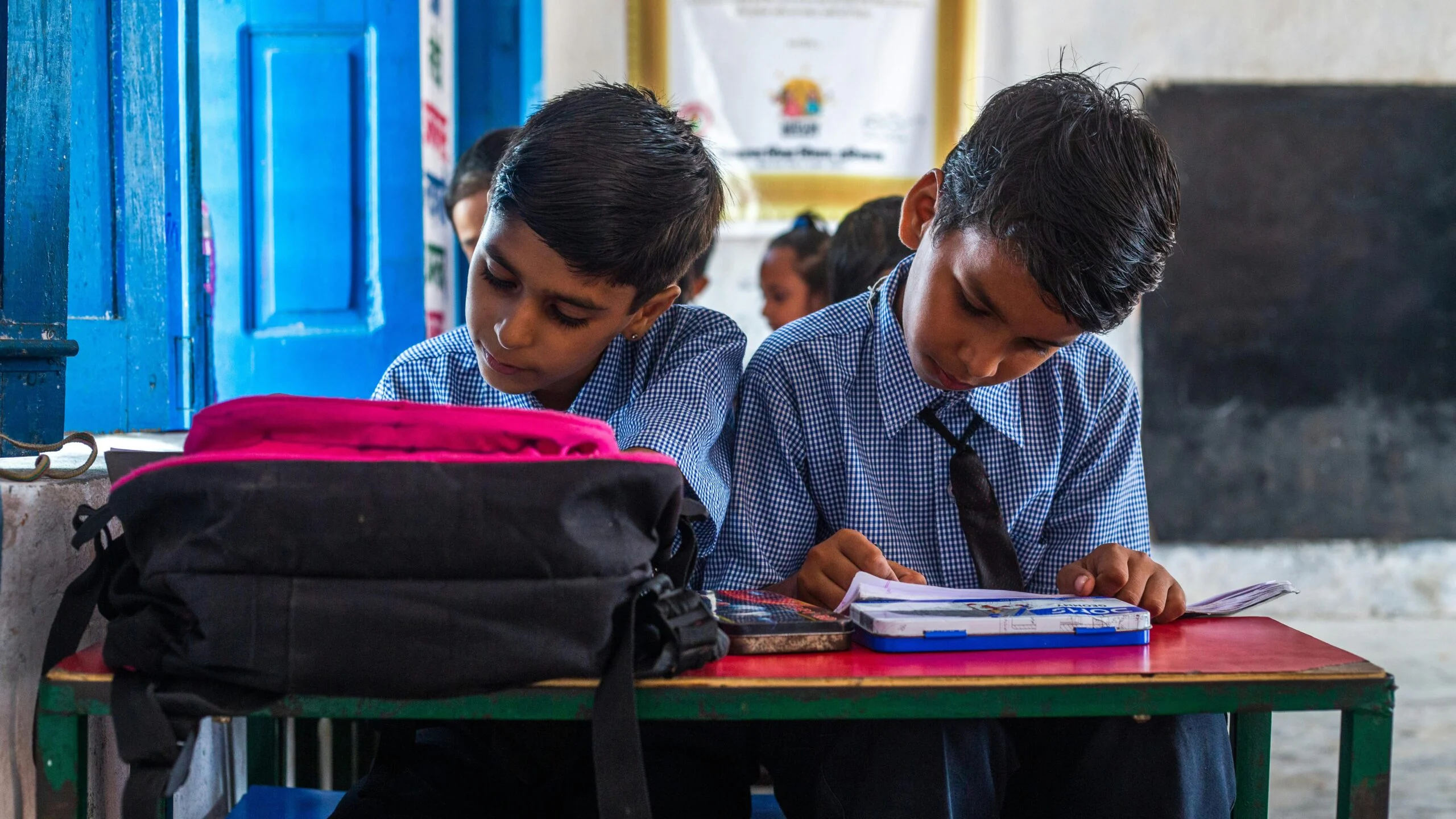
In a village school in Rajasthan’s Barmer district, a Class 7 student watches a mathematics lesson delivered by a teacher in Delhi through a tablet connected to a solar-powered WiFi router. Fourteen hundred kilometres away in Meghalaya, a tribal girl uses an offline learning app to study science in Khasi - her mother tongue - because the nearest school that teaches in Khasi is forty kilometres away. These are not pilot projects. They are part of a sweeping transformation in how education is reaching India’s most underserved communities, driven by a combination of technology, policy ambition, and grassroots innovation that is still in its early chapters.
The Scale of the Problem EdTech Is Trying to Solve
India’s education system serves more than 250 million school-age children and operates through 1.5 million schools, more than 45,000 colleges, and over 1,000 universities. The numbers look impressive on paper. The reality on the ground is more complicated.
The Annual Status of Education Report, published by the NGO Pratham each year, has consistently documented a foundational learning crisis: a large portion of students in government primary schools cannot read a basic paragraph or perform simple arithmetic by Class 5. Geography compounds the challenge. Children in tribal districts, hill regions, and drought-prone areas face irregular teacher attendance, crumbling infrastructure, single-teacher schools covering multiple grades, and a near-complete absence of content in their local languages.
The teacher shortage is acute in specific regions. Recruitment cycles for government teaching positions can take years. Schools in difficult terrains - the Sundarbans, the Northeast, central Chhattisgarh - report chronic teacher vacancies because postings there are unpopular. The COVID-19 pandemic exposed how completely school closures devastated learning continuity for children who had no alternative access to education. For urban middle-class families, the shift to online learning was disruptive. For rural families without smartphones, reliable power, or internet access, it effectively meant two years out of school.
This is the gap that India’s EdTech sector is now trying to fill - not just the premium test-preparation and tuition market that grabbed headlines during the pandemic boom, but the harder, slower work of reaching children and communities that the system has consistently failed to serve.
The EdTech Players Working at the Last Mile
The Indian EdTech market is often discussed in terms of its largest companies - BYJU’S, Unacademy, upGrad, Vedantu, PhysicsWallah. These platforms serve primarily urban and semi-urban students with reliable internet connections and families willing to pay subscription fees. The last-mile story involves a different set of players, many of them smaller, some of them non-profit, and most of them building technology that works within India’s real infrastructure constraints.
Pratham Education Foundation and Mindspark
Pratham, best known for its large-scale learning assessment work, runs Mindspark - an adaptive learning software that adjusts the difficulty of mathematics and language questions based on how each student responds. The system has been implemented in government and low-cost private schools across several states. Independent research, including a study published in the Journal of Development Economics, found that students using Mindspark for 4.5 months showed learning gains roughly equivalent to 0.37 standard deviations in mathematics and 0.23 standard deviations in Hindi - significant improvements in a short period, particularly for children who entered at very low learning levels.
The key design decision was to assess each child’s actual learning level rather than assume they were at grade level. A Class 6 student performing at a Class 2 level in mathematics is served content that meets them where they are. This approach, called Teaching at the Right Level, has been adopted in various forms by government programs in Haryana, Himachal Pradesh, and several other states.
Gram Tarang and Offline-First Vocational Training
Gram Tarang focuses on skill training for rural youth, particularly for manufacturing and construction sector jobs. The organization uses blended learning - video content preloaded on devices combined with in-person facilitation - that allows training to continue even in areas without consistent internet connectivity. The model has successfully placed thousands of rural youth in formal employment, demonstrating that digital learning tools can work for skill development beyond school education.
LEAD School and the Semi-Urban Tier 3 Market
LEAD School (now LEAD Group) took a different approach: partnering with existing affordable private schools in Tier 3 and Tier 4 cities and towns to upgrade their curriculum and teaching quality through technology. Rather than building new schools or competing with government institutions, LEAD works within the existing school system, providing curriculum, training, and tools. The company now works with thousands of schools across India and has demonstrated that technology-enabled curriculum improvement can reach cities and towns far below the radar of premium EdTech platforms.
Diksha and the Government’s Own Platform
The National Education Platform Diksha, launched by the Ministry of Education, is perhaps the most significant digital education infrastructure investment in India’s history. By 2023, Diksha had logged over 6 billion learning sessions and hosted content in more than 35 languages. Teachers use it to access lesson plans and training materials. Students access textbook-aligned content. During the pandemic, Diksha became the primary official channel through which government schools attempted to maintain some continuity.
Diksha’s reach is real but its depth of engagement has been debated. Access to the platform is one thing; meaningful learning through it is another. The platform’s value is as foundational infrastructure - a common digital layer on which states and districts can build context-specific content without rebuilding from scratch.
How Technology Is Reaching Rural Areas
Getting technology to rural communities is not simply a matter of building an app. It requires confronting three layers of challenge: connectivity, devices, and language. Each of these has produced creative responses from EdTech companies and government programs working at the last mile, and the effort to close the rural digital divide is central to all of them.
The Connectivity Workaround
BharatNet, the government’s initiative to connect all gram panchayats with optical fiber, has made progress but remains incomplete in many areas. In the interim, EdTech organizations working in rural settings have built offline-first products: content downloaded to a device when connected and usable without internet access until the next sync opportunity.
Some organizations use shared device models - a single tablet or device at a community center serves multiple students in a structured session, supervised by a local facilitator. This approach has been used effectively in the Tribal Development programs in Jharkhand, where Agastya Foundation operates mobile science labs that carry hands-on equipment and tablet-based content into villages on a scheduled basis. The lab arrives, students engage for a session, and it moves to the next village. Contact hours are limited, but the impact on curiosity and conceptual understanding has been documented in several studies.
Device Access and the Smartphone Bridge
India crossed 700 million smartphone users in 2023, with continued growth in rural areas driven by affordable 4G handsets and Jio’s data pricing. The smartphone has become the primary access device for digital learning in rural India, bypassing the need for dedicated tablets or computers. WhatsApp, already installed on almost every rural smartphone, has become an unlikely EdTech delivery channel.
Organizations like Karadi Path use WhatsApp to deliver reading instruction audio clips to parents, who play them at home for younger children learning to read. iSPIRT Foundation’s Digital Infrastructure for Education work has explored how common tools on existing devices - voice, photo, and video - can be building blocks for assessment and learning support without requiring students to download new apps or learn new interfaces.
Language as Infrastructure
India has 22 scheduled languages and hundreds of regional dialects. Most EdTech content is in English or Hindi, which serves only a portion of the country. For children whose home language is Bhojpuri, Tulu, Santali, or any of the tribal languages of central and northeastern India, content in English or even Hindi is a second or third language - an added barrier to learning.
Several organizations are working on this gap. Bangalore-based Sloka, which builds early childhood learning content, produces materials in multiple South Indian languages. Bhasha Research and Publication Centre works on content in Adivasi languages. Initiatives under the NIPUN Bharat program mandate foundational literacy and numeracy goals and have pushed states to develop or procure content in mother-tongue languages for the first three years of schooling.
AI translation and text-to-speech tools are beginning to accelerate this work. Microsoft’s AI for Cultural Heritage initiative has included work on low-resource Indian languages. Vendors working with NCERT and state boards are using machine translation with human review to produce regional language versions of digital content at costs that were previously not viable.
NEP 2020 and the Policy Framework Behind the Shift
The National Education Policy 2020 is the most significant reform of India’s education system since 1986. Its scale of ambition is difficult to overstate: it covers everything from early childhood care to higher education research, restructures the school curriculum framework, changes how teachers are trained, and sets targets for foundational literacy and numeracy that are far more specific than previous policy documents.
For EdTech and digital learning, NEP 2020 makes several commitments that directly shape what government and private organizations are now working toward:
- NIPUN Bharat (National Initiative for Proficiency in Reading with Understanding and Numeracy) – Launched in 2021 under NEP 2020, NIPUN sets a goal that all children complete Grade 3 with foundational literacy and numeracy skills by 2026-27. States are required to develop action plans, and technology-based assessments and learning tools are central to the implementation approach.
- ECCE (Early Childhood Care and Education) – NEP 2020 recognizes 3-6 years as critical learning years and sets standards for ECCE. Digital content development for this age group - playful, locally relevant, in regional languages - has become a priority for state governments and NGOs.
- Virtual Labs and Digital Content – The policy explicitly calls for virtual labs, interactive digital simulations, and an expanded digital content ecosystem to support teaching, particularly in subjects like science and mathematics where laboratory access is limited in many schools.
- Teacher Technology Literacy – NEP 2020 commits to training all teachers in basic technology use and online teaching methods. This is a prerequisite for EdTech tools to move from pilot to scale - teachers who do not know how to use a platform cannot integrate it into their classrooms.
- Open Educational Resources – The policy promotes open licensing for government-developed content, making it available for states, NGOs, and EdTech companies to build on without restrictive intellectual property constraints. Diksha operates largely on this principle.
Implementation of NEP 2020 varies significantly by state. States like Himachal Pradesh, Kerala, and Maharashtra have moved relatively quickly. Others are still in the planning phase. The policy provides a framework and mandate; it does not guarantee execution. But it has shifted the official vocabulary and created accountability structures that EdTech organizations can align with.
Success Stories: What Is Actually Working
Behind the policy documents and organizational overviews, specific programs and initiatives have produced results that deserve close attention. These are not proof that the problem is solved; they are evidence that particular approaches in particular contexts can work.
Haryana’s Teacher Training Transformation
The Haryana government’s work on teacher training illustrates how digital tools can change professional development at scale. The state moved teacher training from an annual residential model - expensive to run, disruptive to school schedules, often low-quality - to a continuous online system where teachers receive short training modules on their phones, practice in their classrooms, and share reflections with a facilitated peer group. The approach, supported by partners including Teach For India and state government teams, reached over 100,000 teachers within two years. More importantly, the content was tied to what teachers were actually struggling with in their classrooms rather than generic curriculum.
Andhra Pradesh and Digital School Integration
Andhra Pradesh’s Mana TV - government educational television that has broadcast curriculum-aligned lessons for government school students since the 1990s - has been integrated with digital platforms, allowing students to access archived lessons, take self-assessments, and earn certificates. The state’s school upgrading program has combined the physical consolidation of schools with digital infrastructure investment, adding computer labs, projectors, and internet connectivity. The approach shows how physical infrastructure decisions and digital investment need to be coordinated rather than treated as separate tracks.
Agastya Foundation’s Mobile Science Labs
Agastya Foundation has operated mobile science labs in rural India for over two decades. The organization has now integrated tablet-based content with its physical hands-on kits, allowing students to first explore a concept through interactive simulations and then reproduce it with physical equipment. The model has been independently evaluated multiple times, consistently showing positive effects on curiosity, conceptual understanding, and interest in pursuing education further. Over 20 million children have participated in Agastya programs, many of them in areas with no functioning science laboratory in their school.
Pathshala Fun School in Bihar
Pathshala Fun School, operating in Bihar - one of India’s states with the most severe foundational learning gaps - runs after-school learning programs using tablet-based content combined with trained local community educators. The program deliberately recruits educators from the communities it serves: young women and men from the same villages who are trained to facilitate learning sessions. This community-educator model solves two problems simultaneously: it provides employment to local youth while ensuring that children learn in an environment led by someone who speaks their language, knows their family, and understands their daily context. The program has expanded to thousands of centers across Bihar.
The Persistent Challenges
Honest assessment of EdTech’s impact at the last mile requires confronting what is not working as well as celebrating what is. Several challenges cut across programs and geographies:
The Scale-Up Problem
Many programs that work excellently in a single district face serious difficulties when scaled to a full state. What functions in a district with a committed collector and an engaged NGO partner may not transfer to a district where neither exists. Government systems operate at population scales that overwhelm the operational capacity of most NGOs. The gap between “this works in our 50 schools” and “this can work in 50,000 schools” is not bridged by technology alone - it requires management capacity, monitoring systems, and sustained political will that are harder to build than apps.
Teacher Resistance and Capacity
EdTech tools are only as effective as the teachers who implement them. In many schools, particularly in challenging geographies, teachers are themselves products of a system that under-invested in their training. Asking these teachers to integrate new digital tools into their practice without extensive, ongoing support is often unrealistic. The most successful programs treat technology as a tool that augments teacher capability rather than a substitute for teacher presence, and they invest as heavily in teacher training as in the technology itself.
Assessment That Measures Learning, Not Access
EdTech programs are frequently evaluated on access metrics - how many students enrolled, how many hours of content were accessed, how many devices were distributed. These metrics are easier to measure but do not tell us whether children learned. The programs that have produced the most convincing evidence of impact - Mindspark, Teaching at the Right Level, Agastya - have invested in rigorous learning assessments. This requires a different kind of institutional commitment than simply reporting on reach.
The Private EdTech Sector’s Last-Mile Incentive Gap
The largest EdTech companies in India are funded by venture capital, which expects returns. Serving communities with limited purchasing power does not generate the user growth or revenue that investors require. This structural misalignment means that the private EdTech sector’s resources are not naturally directed toward the last mile. The organizations that work at the last mile are typically NGOs and social enterprises focused on rural education, or government programs - all of which face their own funding and capacity constraints. A larger role for blended finance - commercial capital combined with government subsidies or philanthropic funding - is needed to close this gap.
The Road Ahead: What the Next Five Years Could Bring
Several trends suggest the next five years could see meaningful acceleration in EdTech’s last-mile reach, if the right conditions are created.
AI-powered personalization at lower cost – The cost of building adaptive learning systems has dropped dramatically with the arrival of large language models. Tools that previously required expensive engineering can now be built at a fraction of the cost. This opens the door to regional language adaptive learning at scale that was not economically viable three years ago. Several teams in India are now working on Hindi and regional language education tools built on top of open-source AI models.
BharatNet completion – If BharatNet connects the remaining gram panchayats - a goal the government has set for completion - the connectivity constraint that forces offline-first design will ease significantly. Schools and community centers in currently unconnected areas will gain stable internet access, enabling richer interactive content that currently requires too much bandwidth.
Vocational and skills EdTech growth – India has a massive demand for skilled workers in manufacturing, construction, healthcare support, and services. The expansion of vocational EdTech - using video, simulation, and assessment tools to train people outside formal institutions - could significantly improve economic mobility for young people who do not complete higher education. NASSCOM Foundation, Wadhwani Institute for Technology and Policy, and several state skill development missions are actively investing in this space.
State-level EdTech procurement at scale – Several state governments have begun structured procurement of EdTech platforms for government schools, moving beyond pilot projects to full-state implementations. Telangana’s Hyderabad-based EdTech ecosystem, Kerala’s IT@School infrastructure, and Rajasthan’s recent curriculum digitization work suggest that state-level political will to invest in EdTech can produce rapid scale when it exists. More states moving in this direction would significantly expand the market for organizations focused on public education.
Technology does not replace the teacher. It gives the teacher a way to meet every child where they actually are, not where the textbook assumes they should be.
Why This Matters Beyond Education
India’s demographic dividend - the potential economic benefit of having a large working-age population - depends entirely on whether that population is educated and skilled enough to participate productively in a modernizing economy. If the 250 million children in government schools do not receive a quality education, the demographic dividend becomes a demographic burden: a large, low-skilled workforce in an economy that increasingly rewards knowledge work.
EdTech reaching the last mile is not an education story alone. It is an economic story, a social mobility story, and a national competitiveness story. The children in Barmer’s tablet-connected classrooms and Meghalaya’s offline Khasi lessons are not just beneficiaries of educational innovation. They are part of the answer to whether India can translate its population size into sustained prosperity.
The organizations, government programs, and individual educators working to make that connection real - often with limited resources, in difficult conditions, without the visibility that India’s tech sector more broadly receives - deserve sustained attention and support. The work is harder than building a consumer app. The stakes are considerably higher.
Key EdTech Initiatives at a Glance
Initiative | Type | Focus Area | Reach |
|---|---|---|---|
Diksha | Government Platform | School education, teacher training | 6+ billion learning sessions |
NIPUN Bharat | Government Program | Foundational literacy and numeracy (Grade 1-3) | National, all states |
Mindspark (Pratham) | NGO-backed EdTech | Adaptive mathematics and language | Multiple states |
Agastya Foundation | NGO | Hands-on science for rural schools | 20+ million children |
LEAD Group | Social Enterprise | Curriculum upgrade for affordable private schools | Thousands of schools |
Gram Tarang | Social Enterprise | Vocational training for rural youth | Several states |
Pathshala Fun School | NGO | After-school learning in Bihar | Thousands of centers |
Does Your School or Organisation Work on Last-Mile Education?
Unite4India covers grassroots education initiatives, community learning programs, and innovative approaches to public school reform from across the country. If your school, NGO, or community program is doing work that deserves wider attention, we would like to hear your story. India’s education transformation is being built by thousands of people whose work rarely makes national news.
What you can do
- Share the evidenceSend this to one person who should know about this issue.Share on WhatsApp
- Give an afternoonTeach, mentor, clean up, or lend your professional skills.Ways to volunteer
- Tell us what's missingKnow a story, a fact we got wrong, or a solution worth spotlighting?Suggest a story
Politically neutral. Every claim sourced. Report a correction.



No comments yet