India's Groundwater Crisis: The Invisible Disaster Beneath Our Feet
India extracts 25% of the world's groundwater — more than any other country. With 1,186 over-exploited aquifer units, states like Punjab, Rajasthan, and Tamil Nadu face falling water tables, contamination, and farmer distress. Here's what's being done and what needs to change.
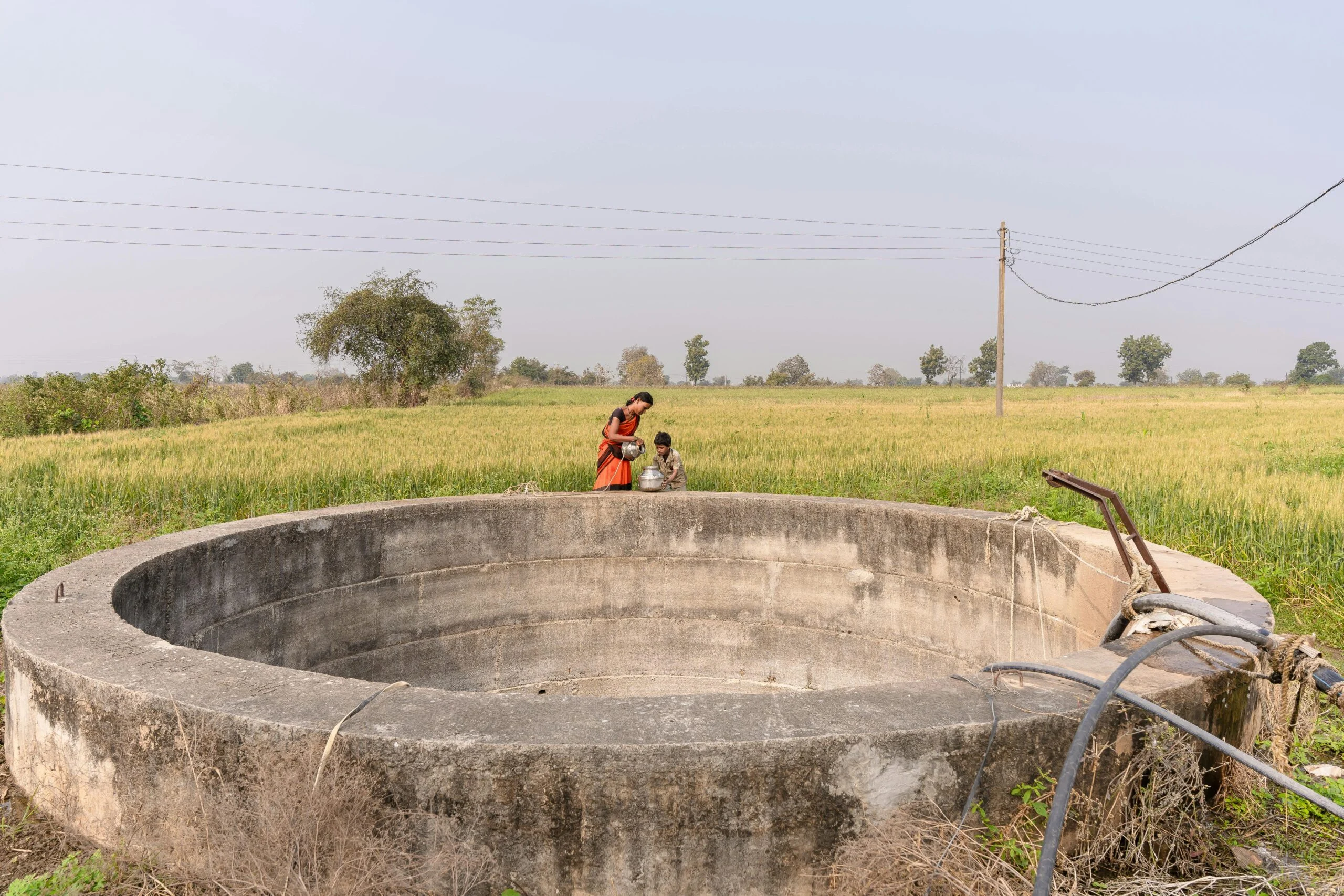
India uses more groundwater than any other country on Earth. More than China. More than the United States. An estimated 230 billion cubic meters extracted annually, roughly 25 percent of the global total. And the water table is falling. In states like Punjab, Rajasthan, and Haryana, farmers pump from depths that were unreachable a generation ago. This is not a future crisis. It is happening now, quietly, beneath our feet.
The Scale of Dependence
Groundwater supplies drinking water to 85 percent of India’s rural population and irrigates over 60 percent of the country’s farmland. India has an estimated 20 million tube wells and borewells, more than any other country. The Green Revolution of the 1960s and 70s, which transformed India from a food-deficit nation to a food-surplus one, was built on this groundwater infrastructure. High-yield wheat and rice varieties required reliable irrigation, and tube wells provided it where canals and dams could not reach.
The problem is that extraction has outpaced recharge for decades. The Central Ground Water Board (CGWB) classifies groundwater units into safe, semi-critical, critical, and over-exploited categories. As of their 2023 assessment, 1,186 of India’s 6,965 assessment units are over-exploited, meaning more water is pumped out each year than nature puts back. Another 313 are critical, teetering on the edge.
Where the Crisis Is Worst
Punjab: The poster state for groundwater depletion. The rice-wheat cycle, promoted by minimum support prices and free electricity for farm pumps, has drained aquifers across the state. In central Punjab districts like Sangrur, Barnala, and Mansa, the water table drops by an average of one meter per year. NASA’s GRACE satellite data has shown Punjab losing 17.7 billion cubic meters of groundwater between 2002 and 2008 alone. Wells that were 10 meters deep in the 1980s now need to go 60 meters or more.
Rajasthan: India’s driest state, where groundwater is often the only water source for entire districts. The Thar Desert region has pockets where fluoride contamination makes even the available groundwater unsafe. Jodhpur, Jaisalmer, and Barmer districts face both quantity and quality crises simultaneously.
Tamil Nadu: Chennai’s Day Zero crisis in 2019, when the city nearly ran out of water, was a groundwater story. Decades of unregulated borewell drilling for construction and industrial use collapsed the water table across the Chennai metropolitan area. Tanker water prices spiked tenfold. Companies told employees to work from home to reduce office water consumption.
Karnataka: Bengaluru, India’s tech capital, sits on hard rock geology with limited aquifer capacity. The city’s explosive growth since the 2000s has pushed borewells to 500 meters and beyond, depths where water is often brackish and contaminated with heavy metals. Multiple apartment complexes now depend entirely on private tankers.
Why India Pumps So Much
The groundwater crisis is not caused by careless individuals. It is the result of policy choices made over decades:
- Free or subsidized electricity for farm pumps, Punjab, Haryana, Tamil Nadu, and Andhra Pradesh provide free electricity to farmers for agricultural pumping. When electricity costs nothing, there is no economic signal to conserve water. Farmers pump as much as they can, as deep as they can
- Minimum Support Prices (MSP) for water-intensive crops, the government guarantees purchase prices for rice and wheat, both heavy water consumers. A farmer in Punjab has no economic reason to switch to millets or pulses that use a fraction of the water
- No effective regulation of borewell drilling, anyone with money can drill a borewell on their property. There is no national permit system, no quota on extraction, and no mandatory metering of groundwater use. The 2023 Ground Water Management and Regulation Bill attempted to address this but has not been passed
- Land ownership equals water ownership, Indian law treats groundwater as an easement attached to land. If you own the land above an aquifer, you can extract as much as you want. There is no concept of shared aquifer management at the community level
- Urbanization without water planning, cities expand faster than water infrastructure. Builders drill borewells for construction, apartments drill for domestic supply, and industries drill for process water, all drawing from the same shrinking aquifer with no coordination
The Human Cost
Groundwater depletion is not an abstract environmental metric. It destroys lives in specific, measurable ways:
Farmer debt and suicide: When a borewell runs dry, the farmer who invested 2 to 5 lakh rupees in drilling it loses that money entirely. In hard rock areas of Maharashtra, Karnataka, and Telangana, farmers often drill three or four borewells hoping to find water. Each failed attempt deepens debt. The National Crime Records Bureau reports that water-related crop failure is a contributing factor in a significant share of farmer suicides in these regions.
Women’s burden: In villages where wells have dried up, women and girls walk 2 to 5 kilometers daily to fetch water. This is not folklore, UNICEF surveys document it across Rajasthan, Madhya Pradesh, and Chhattisgarh. The time spent fetching water directly reduces school attendance for girls and economic productivity for women.
Water quality collapse: As aquifers deplete, the remaining water concentrates dissolved minerals. Fluoride contamination causes dental and skeletal fluorosis in 20 Indian states. Arsenic contamination affects millions in West Bengal, Bihar, and UP. These are not industrial pollution problems, they are geological consequences of pumping aquifers beyond their safe yield.
What Is Being Done
Despite the crisis, there are real success stories and emerging solutions:
Atal Bhujal Yojana (ABY): Launched in 2020 with $450 million in funding (half from the World Bank), ABY operates in 8,220 gram panchayats across 7 states. Its innovation is community-led groundwater management, villages create water budgets, measure extraction, and plan recharge. Early results in Gujarat and Rajasthan show water table stabilization in participating villages.
Managed Aquifer Recharge (MAR): Rajasthan’s johad revival, led by Rajendra Singh (the “Waterman of India”), has restored groundwater levels in over 1,000 villages in Alwar district. By rebuilding traditional earthen check dams, rainwater is captured and channeled underground instead of running off. Five rivers that had gone dry have started flowing again.
Micro-irrigation adoption: Gujarat and Andhra Pradesh have aggressively promoted drip and sprinkler irrigation through state subsidies. Drip irrigation uses 30 to 50 percent less water than flood irrigation while maintaining or increasing crop yields. Gujarat’s groundwater levels have stabilized in districts where micro-irrigation adoption exceeds 60 percent.
Crop diversification pilots: Haryana’s Mera Pani Meri Virasat scheme pays farmers 7,000 rupees per acre to switch from paddy rice to alternative crops like maize, pulses, and cotton. Early adoption has been modest but growing, with 96,000 acres diversified in the first two years.
Chennai’s recovery: After the 2019 crisis, Chennai mandated rainwater harvesting in all buildings, rejuvenated 210 water bodies, and deployed real-time borewell monitoring. The city’s groundwater levels recovered significantly by 2021, demonstrating that urban aquifer depletion is reversible with sustained intervention.
The Numbers at a Glance
Metric | Figure | Source |
|---|---|---|
Annual groundwater extraction | 230 billion cubic meters | CGWB 2023 |
Share of global extraction | 25% | World Bank |
Over-exploited assessment units | 1,186 of 6,965 | CGWB 2023 |
Rural population dependent on groundwater | 85% | NITI Aayog |
Farmland irrigated by groundwater | 60%+ | Ministry of Agriculture |
Estimated tube wells | 20 million+ | CGWB estimate |
States with fluoride-affected groundwater | 20 | BIS/CGWB |
ABY program coverage | 8,220 gram panchayats | Jal Shakti Ministry |
What Needs to Change
Experts broadly agree on the policy changes needed, even if political will remains the bottleneck:
- Meter and price groundwater extraction, free electricity for pumping must end. Metered, usage-based pricing would immediately incentivize conservation. Israel and Australia have demonstrated that water pricing works without destroying agriculture
- Reform MSP to favor water-efficient crops, if millets, pulses, and oilseeds received the same price support as rice and wheat, millions of hectares would naturally shift to lower water consumption
- Enforce borewell registration and permits, no new borewell should be drilled without a permit that includes a hydrogeological assessment. The technology for real-time groundwater monitoring exists. Deploying it at scale is a policy decision, not a technical challenge
- Scale community-led management, ABY’s participatory model works. It needs to expand from 8,220 panchayats to 250,000. Communities that manage their own aquifers consistently outperform top-down regulation
- Mandate urban aquifer protection zones, cities must map their aquifers, designate recharge zones, and prevent construction on them. Bengaluru’s lake encroachment is a cautionary tale of what happens when recharge zones are built over
India’s groundwater crisis is invisible because water tables are not visible. There is no dramatic flood or drought footage to broadcast. The disaster unfolds one meter at a time, one dry borewell at a time, one indebted farmer at a time. But the scale is staggering, a quarter of the world’s groundwater extraction concentrated in one country, with aquifers that took thousands of years to fill being emptied in decades. The solutions exist. The question is whether they will be implemented before the wells run dry.
What you can do
- Share the evidenceSend this to one person who should know about this issue.Share on WhatsApp
- Give an afternoonTeach, mentor, clean up, or lend your professional skills.Ways to volunteer
- Tell us what's missingKnow a story, a fact we got wrong, or a solution worth spotlighting?Suggest a story
Politically neutral. Every claim sourced. Report a correction.

No comments yet