India's Waste Warriors: The Rag Pickers Fighting for a Recycling Revolution
India's 4 million informal waste workers recover recyclables worth 40,000 crore annually, processing 30% of the country's waste. From Pune's SWaCH cooperative to Bengaluru's Hasiru Dala — how organizations are formalizing waste picker rights.
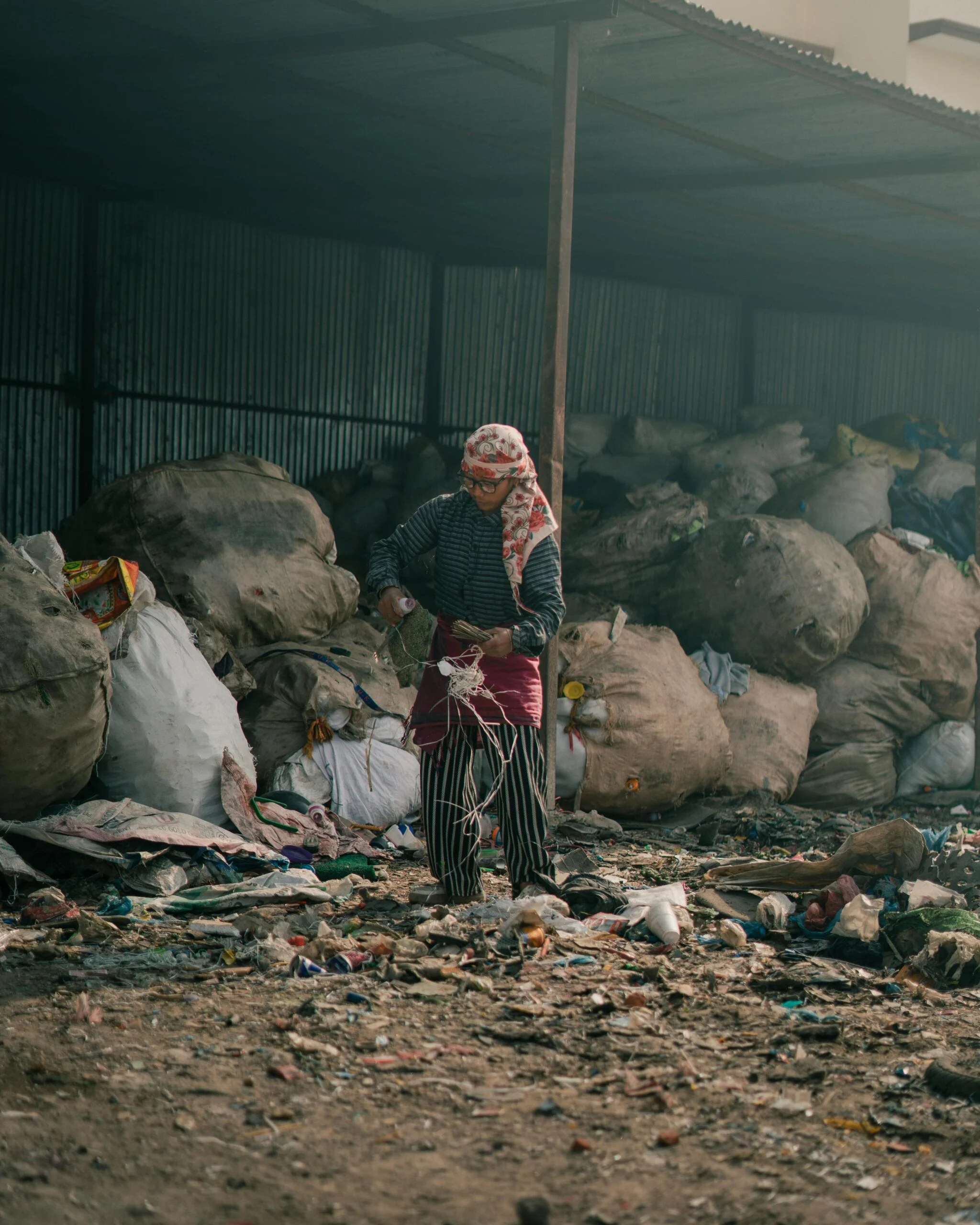
India generates 62 million tonnes of solid waste annually. Of that, only 43 million tonnes is collected, 12 million is treated or processed, and 31 million is dumped in landfills. But hidden in these grim statistics is a parallel economy that processes more recyclable material than any formal system: an estimated 4 million informal waste workers, rag pickers, kabadiwallas, and waste traders, who recover, sort, and sell recyclables worth over 40,000 crore rupees every year, saving municipalities billions in waste management costs while receiving almost nothing in return.
Who Are India’s Waste Workers
The informal waste sector in India operates at three levels. At the bottom are waste pickers who collect recyclables from streets, bins, and landfills. They earn 150 to 300 rupees per day sorting through mixed waste with bare hands, exposed to medical waste, sharp objects, toxic chemicals, and biological hazards. Most are Dalit women and children from marginalized communities. They have no contracts, no health insurance, no protective equipment, and no legal recognition as workers.
The middle layer consists of kabadiwallas, small-scale waste traders who buy sorted recyclables from waste pickers and aggregate them for sale to larger dealers. A typical kabadiwalla operates from a small shop or roadside setup, purchasing paper, plastic, metal, and glass at rates that fluctuate with global commodity prices. There are an estimated 1.5 million kabadiwallas across India.
At the top are scrap dealers and recycling aggregators who consolidate material from hundreds of kabadiwallas and sell to recycling factories. These operators handle volumes measured in tonnes per day and connect the informal collection system to the formal recycling industry. The entire chain, from picker to aggregator to factory, runs without government funding, without formal employment structures, and without the recognition it deserves.
The Numbers: What Informal Workers Actually Recycle
Material | Annual Recovery (estimated) | Recycling Rate |
|---|---|---|
Paper and cardboard | 5.5 million tonnes | 27% |
Plastics | 3.5 million tonnes | 60% of recyclable plastics |
Metals (ferrous) | 2.8 million tonnes | 70% |
Metals (non-ferrous) | 0.4 million tonnes | 85% |
Glass | 1.2 million tonnes | 40% |
E-waste (informal) | 0.8 million tonnes | 95% of total e-waste recycling |
Without informal waste workers, India’s recycling rate would collapse from an estimated 30 percent to under 5 percent. Municipal waste management systems are designed for collection and landfilling, not for material recovery. The informal sector does what municipalities cannot or will not do: extract value from mixed waste streams.
Health and Safety: The Human Cost
Working conditions for waste pickers are among the worst of any occupation in India. Studies by the Centre for Science and Environment (CSE) and Chintan Environmental Research document:
- Respiratory diseases: Chronic exposure to decomposing organic waste, burning plastics at landfills, and fine particulate matter causes asthma, bronchitis, and tuberculosis at rates 3-5 times higher than the general population
- Musculoskeletal injuries: Carrying 30-50 kg sacks of sorted waste daily causes spinal deformities, joint damage, and chronic pain. Most waste pickers report back and knee problems by age 40
- Needle-stick injuries and infections: Biomedical waste from hospitals mixed into municipal waste exposes pickers to hepatitis B, hepatitis C, and HIV. A 2019 study in Pune found that 12 percent of waste pickers tested positive for hepatitis B, versus 3 percent in the general population
- Chemical exposure: Informal e-waste recycling involves burning circuit boards to extract copper, melting lead solder, and acid-bathing components to recover gold. Workers, often children, inhale toxic fumes containing lead, mercury, cadmium, and dioxins
- Social stigma: Waste work is associated with “untouchability” and caste-based discrimination. Waste pickers report being denied entry to hospitals, having children excluded from schools, and facing violence from residents and police
Organizations Leading Change
SWaCH, Pune: India’s first wholly owned cooperative of waste pickers, SWaCH (Solid Waste Collection and Handling) integrates 3,500 waste pickers into Pune’s formal waste management system. Members receive ID cards, uniforms, protective equipment, and monthly payments from households. SWaCH serves 4.5 million residents and has been recognized by the UN as a model for inclusive waste management. The key innovation: waste pickers become authorized municipal service providers rather than informal scavengers.
Hasiru Dala, Bengaluru: This social enterprise has organized over 8,000 waste pickers into a cooperative model. Hasiru Dala provides members with health insurance, children’s education support, and access to the formal banking system. Their dry waste collection centers (DWCCs) process 300 tonnes of recyclables daily, and waste pickers earn 12,000-18,000 rupees monthly, significantly above the unorganized sector average.
Chintan Environmental Research, Delhi: Chintan has worked for over two decades on waste picker rights, policy advocacy, and e-waste management. Their Cool the Globe program employs waste pickers in segregated waste collection, providing formal employment and reducing landfill-bound waste by 70 percent in participating neighborhoods.
Kabadiwalla Connect, Chennai: A tech startup that digitizes the traditional kabadiwalla network. Their app connects households directly to kabadiwallas for doorstep recyclable pickup, providing kabadiwallas with consistent demand, fair pricing data, and digital payment integration. The platform has onboarded 5,000 kabadiwallas and processes 200 tonnes of recyclables monthly.
Alliance of Indian Wastepickers (AIW): A national network of waste picker organizations across 30 cities, AIW advocates for policy changes at the central and state level. Their lobbying contributed to the inclusion of informal waste workers in the Solid Waste Management Rules 2016, the first time Indian law formally recognized waste pickers’ role in waste management.
Policy Progress and Gaps
India’s Solid Waste Management Rules 2016 were a landmark. For the first time, the rules mandated source segregation of waste, recognized informal waste workers, and required municipalities to integrate them into formal waste management systems. Extended Producer Responsibility (EPR) rules for plastics (2022) and e-waste (2023) further formalized the role of collection agents and recyclers.
But implementation lags far behind policy:
- Source segregation: Mandatory since 2016, actually practiced in fewer than 20 percent of Indian cities. Without segregation at source, waste pickers must sort mixed waste at dumps, the most hazardous working condition
- Integration of waste pickers: Required by law but implemented meaningfully in only a handful of cities (Pune, Bengaluru, Indore). Most municipalities still treat waste pickers as encroachers rather than service providers
- EPR compliance: Plastic producers are required to collect and recycle a percentage of the plastic they sell. Actual compliance is estimated at 30-40 percent, with many producers paying fees to PROs (Producer Responsibility Organizations) that do little actual collection
- Landfill closure: India has 3,159 active dumpsites, most of which are unscientific open dumps. The Swachh Bharat Mission aims to remediate legacy dumpsites, but progress has been slow outside showcase projects like Delhi’s Ghazipur landfill capping
What Needs to Happen
- Formal registration and ID cards for all waste workers, waste pickers who can prove their occupation should receive government ID that entitles them to health insurance, accident coverage, and pension under the e-Shram portal
- Municipal contracts for waste picker cooperatives, instead of hiring private waste management companies, municipalities should contract waste picker cooperatives for door-to-door collection and dry waste processing. Pune’s SWaCH model proves this works at city scale
- Ban on manual landfill scavenging, no human being should sort waste at open dumps. Mechanized sorting facilities at transfer stations would move this work indoors, with ventilation, protective equipment, and decent working conditions
- Enforce source segregation with penalties, the 2016 rules mandate segregation but provide no enforcement mechanism. Linking waste segregation to property tax rebates (as Indore has done) or imposing fines for non-segregation (as Bengaluru attempted) would accelerate adoption
- E-waste formalization, 95 percent of India’s e-waste is recycled informally, often by children. Channeling e-waste through authorized recyclers with worker safety standards would protect the most vulnerable workers in the waste chain
India’s informal waste workers are the backbone of the country’s recycling economy. They recover materials worth tens of thousands of crores, save municipalities from landfill overflow, and reduce carbon emissions by keeping recyclables in the material cycle. They do this while earning poverty wages, breathing toxic air, and enduring social stigma rooted in caste discrimination. Recognizing them as essential workers, not in rhetoric but in policy, contracts, and social protection, is not charity. It is an acknowledgment of economic reality.
What you can do
- Share the evidenceSend this to one person who should know about this issue.Share on WhatsApp
- Give an afternoonTeach, mentor, clean up, or lend your professional skills.Ways to volunteer
- Tell us what's missingKnow a story, a fact we got wrong, or a solution worth spotlighting?Suggest a story
Politically neutral. Every claim sourced. Report a correction.

No comments yet