PT Usha to Neeraj Chopra: How Indian Athletics Found Its Golden Generation
From PT Usha's 0.01-second Olympic miss in 1984 to Neeraj Chopra's gold in 2021, Indian athletics has undergone a 37-year transformation. TOPS funding, Khelo India, foreign coaches, and private investment have produced a golden generation.
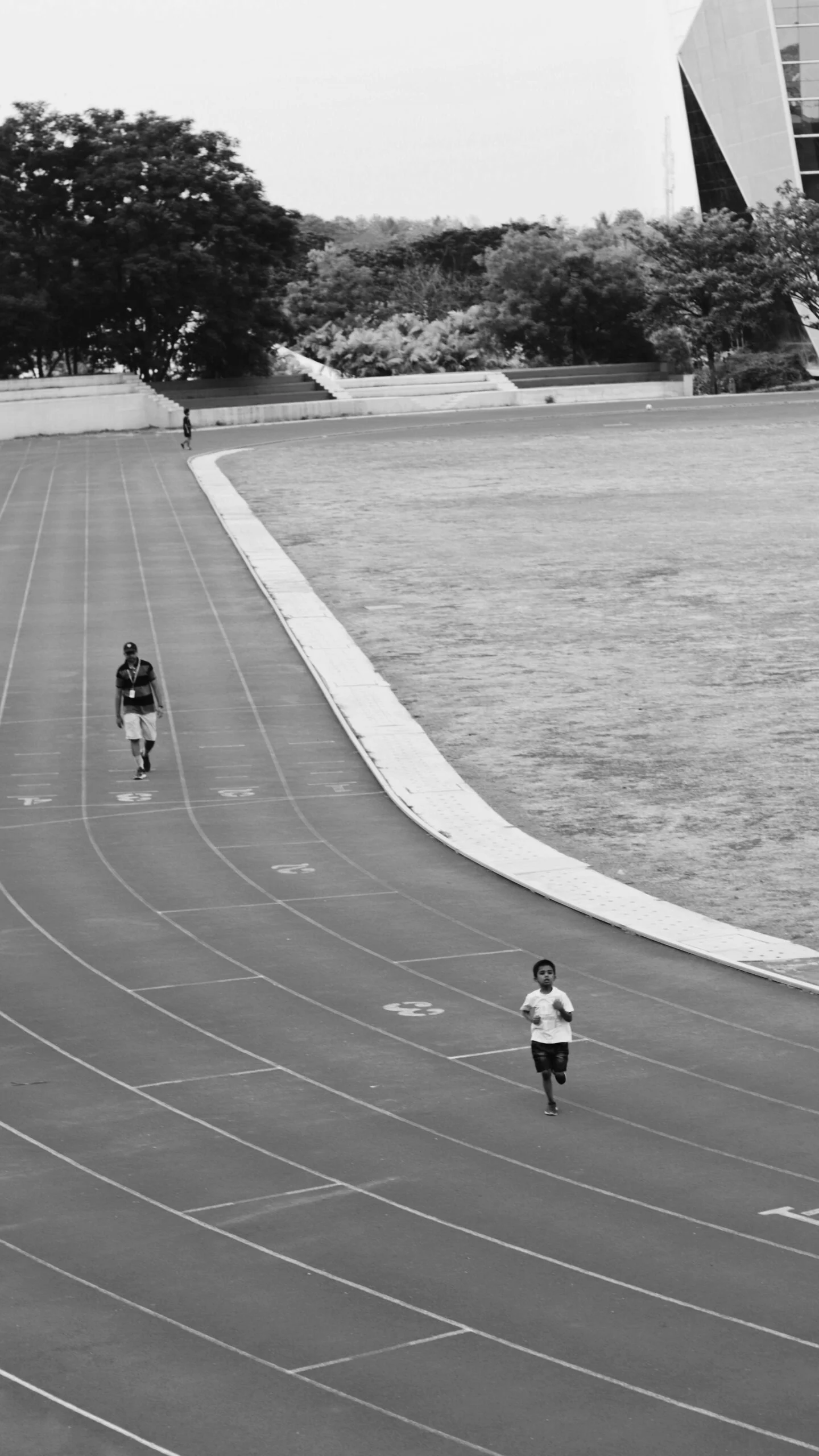
For decades, Indian athletics was defined by a single image: PT Usha missing the 400-meter hurdles bronze at the 1984 Los Angeles Olympics by one-hundredth of a second. That near-miss became a metaphor for Indian track and field, talented enough to compete, never quite breaking through. Then came Neeraj Chopra’s javelin gold at Tokyo 2020, and suddenly the metaphor shattered. India had an Olympic champion in athletics. And he was not alone. A generation of Indian athletes is rewriting the country’s track and field history.
The PT Usha Era: Excellence Without Infrastructure
Pilavullakandi Thekkeparambil Usha ran on mud tracks in Kerala before synthetic surfaces existed in India. She trained without a sports psychologist, without video analysis, without altitude camps. Her coach, OM Nambiar, worked with resources that would embarrass a high school program in developed countries. Yet she reached four Asian Games finals, won 11 Asian Games medals (including 4 golds at the 1986 Seoul Asiad), and came within 0.01 seconds of an Olympic medal.
Usha’s era (1980s-90s) produced individual excellence despite systemic failure. The Athletics Federation of India (AFI) was poorly managed. Government funding went primarily to cricket. Training facilities were primitive. Indian athletes who competed internationally did so through personal grit and the dedication of individual coaches, not because of any institutional support system.
After Usha, Indian athletics entered a long drought. Between 1990 and 2015, the country produced occasional Asian-level performers but no genuine world-class athletes in track and field. The talent pipeline ran dry because the system that was supposed to nurture it barely existed.
What Changed: The Infrastructure Revolution
India’s athletics resurgence did not happen by accident. Several structural changes converged between 2015 and 2020:
- TOPS (Target Olympic Podium Scheme): Launched in 2014 and expanded significantly under the Khelo India framework, TOPS provides identified athletes with customized training programs, international coaching, foreign training stints, sports science support, and financial grants up to 50 lakh per year. Neeraj Chopra, Avinash Sable, and Murali Sreeshankar were all TOPS beneficiaries
- Khelo India Games: Launched in 2018, this annual multi-sport event for under-17 and under-21 athletes created a structured talent identification pipeline that did not exist before. State governments began investing in sports infrastructure to win Khelo India medals, creating a competitive dynamic that lifted standards nationally
- Foreign coaches at SAI: The Sports Authority of India began hiring world-class coaches from Eastern Europe, Cuba, and the United States for athletics disciplines. Uwe Hohn (javelin, Germany), Galina Bukharina (race walking, Russia), and Scott Simmons (jumps, USA) brought training methodologies that Indian coaches had never been exposed to
- Private investment: The JSW Group, Adani Sportsline, Reliance Foundation, and GoSports Foundation began funding individual athletes and building world-class training facilities. The Inspire Institute of Sport in Vijayanagar, Karnataka (funded by JSW) provides Olympic-standard facilities including biomechanics labs, altitude training simulation, and recovery centers
- Synthetic tracks in every state: A decade ago, India had fewer than 20 synthetic running tracks. Today, every state has at least one, and major athletics centers in Patiala, Bengaluru, Bhopal, and Bhubaneswar have full-specification IAAF-certified facilities
Neeraj Chopra: The Breakthrough Moment
Neeraj Chopra’s gold medal at Tokyo 2020 (held in 2021) was not just a personal achievement. It was a proof of concept for India’s reformed sports development system. Chopra had been identified through the army sports system, received TOPS support for international training in Finland and Turkey, worked with biomechanics experts who optimized his throwing technique using 3D motion capture, and competed in European Diamond League events to gain experience against the world’s best.
His winning throw of 87.58 meters made him the first Indian to win an Olympic gold in athletics, and only the second individual Olympic gold medalist in Indian history after Abhinav Bindra (shooting, 2008). He followed it with the World Championship gold in Budapest (2023) with a throw of 88.17 meters, and a second Olympic medal (silver) at Paris 2024 with 89.45 meters.
Chopra’s significance extends beyond his personal medal count. He demonstrated that Indian athletes can win at the highest level in athletics, a sport where India had zero Olympic medals in over a century of participation. His success shifted the national conversation about Indian athletics from “why can’t we win?” to “who’s next?”
The Golden Generation: Beyond Chopra
Chopra is the most visible member of a broader cohort of Indian athletes performing at or near world-class levels:
Avinash Sable (3,000m steeplechase): From a farming family in Maharashtra, Sable has broken the Indian national record over 10 times. His time of 8:09.91 at the 2023 World Championships placed him in the final, the first Indian steeplechaser to achieve this. He trains at altitude in Ooty and has spoken publicly about how TOPS funding allowed him to compete in European circuits where he gained the racing experience necessary to break through.
Murali Sreeshankar (long jump): Sreeshankar’s personal best of 8.36 meters (achieved in 2022) would have won medals at multiple Olympic Games historically. A Commonwealth Games silver medalist, he represents India’s growing competitiveness in field events beyond javelin. An ACL injury in 2023 interrupted his trajectory, but his return to competition has been promising.
Jyothi Yarraji (100m hurdles): Yarraji broke the 13-second barrier in the 100m hurdles, a psychological and technical milestone for Indian sprinting. Her time of 12.78 seconds ranks her among the top Asian hurdlers and signals that Indian women’s sprinting is entering a new phase of competitiveness.
Parul Chaudhary (3,000m/5,000m steeplechase): Chaudhary qualified for the Paris 2024 Olympics in both the 3,000m steeplechase and 5,000m, a remarkable double qualification. Her steeplechase national record of 9:15.31 represents a dramatic improvement in Indian women’s distance running depth.
Race walking contingent: Indian race walkers have consistently medaled at Asian level and are closing in on global podiums. Priyanka Goswami (20km walk) and the men’s relay team have benefited from the systematic coaching program led by foreign experts at the SAI center in Bengaluru.
Key Milestones in Indian Athletics History
Year | Athlete | Achievement |
|---|---|---|
1960 | Milkha Singh | 4th in Olympic 400m (Rome), missed bronze by 0.1 seconds |
1984 | PT Usha | 4th in Olympic 400m hurdles (Los Angeles), missed bronze by 0.01 seconds |
2003 | Anju Bobby George | World Championship long jump bronze, India’s first WC athletics medal |
2018 | Hima Das | World U20 Championship 400m gold, first Indian to win a world track gold |
2021 | Neeraj Chopra | Olympic javelin gold (Tokyo), India’s first Olympic athletics medal |
2023 | Neeraj Chopra | World Championship javelin gold (Budapest) |
2024 | Neeraj Chopra | Olympic javelin silver (Paris), 89.45m personal best |
What Still Needs to Fix
- Sprinting remains weak: India has no male 100m runner under 10.10 seconds. The fastest Indian 100m time (10.18, by Amlan Borgohain) would not make an Olympic semifinal. Explosive speed events require genetics and early specialization that India’s system does not yet support at scale
- Women’s athletics depth: Beyond Yarraji and Chaudhary, Indian women’s athletics lacks depth in most events. The gap between the national record holder and the second-best athlete is often enormous, indicating individual talent rather than systemic strength
- Doping scandals: India has been among the countries with the highest number of anti-doping violations in athletics. NADA India has strengthened testing, but the perception problem persists and legitimate athletes suffer reputational damage
- School-level pipeline: Most Indian athletes are identified in their late teens rather than early childhood. Countries like Jamaica, Kenya, and the USA identify and develop sprinters and distance runners from age 10-12 through structured school sports programs. India’s school sports infrastructure remains inadequate outside a handful of sports academies
From PT Usha’s heartbreaking near-miss in 1984 to Neeraj Chopra’s gold in Tokyo 2021, Indian athletics has traveled a 37-year arc from individual heroism to institutional competence. The system that produces athletes today, TOPS funding, Khelo India identification, foreign coaching, private training centers, did not exist when Usha ran on mud tracks in Payyoli. The golden generation is real. The question is whether India can sustain and expand this system, or whether it remains dependent on individual outliers who succeed despite, rather than because of, the structure around them.
What you can do
- Share the evidenceSend this to one person who should know about this issue.Share on WhatsApp
- Give an afternoonTeach, mentor, clean up, or lend your professional skills.Ways to volunteer
- Tell us what's missingKnow a story, a fact we got wrong, or a solution worth spotlighting?Suggest a story
Politically neutral. Every claim sourced. Report a correction.

No comments yet