Why India Needs Electoral Reform: 5 Changes That Could Transform Democracy
India's democracy works at scale but needs structural reform. From campaign finance transparency to recall elections — five changes that could improve representation, accountability, and governance quality.
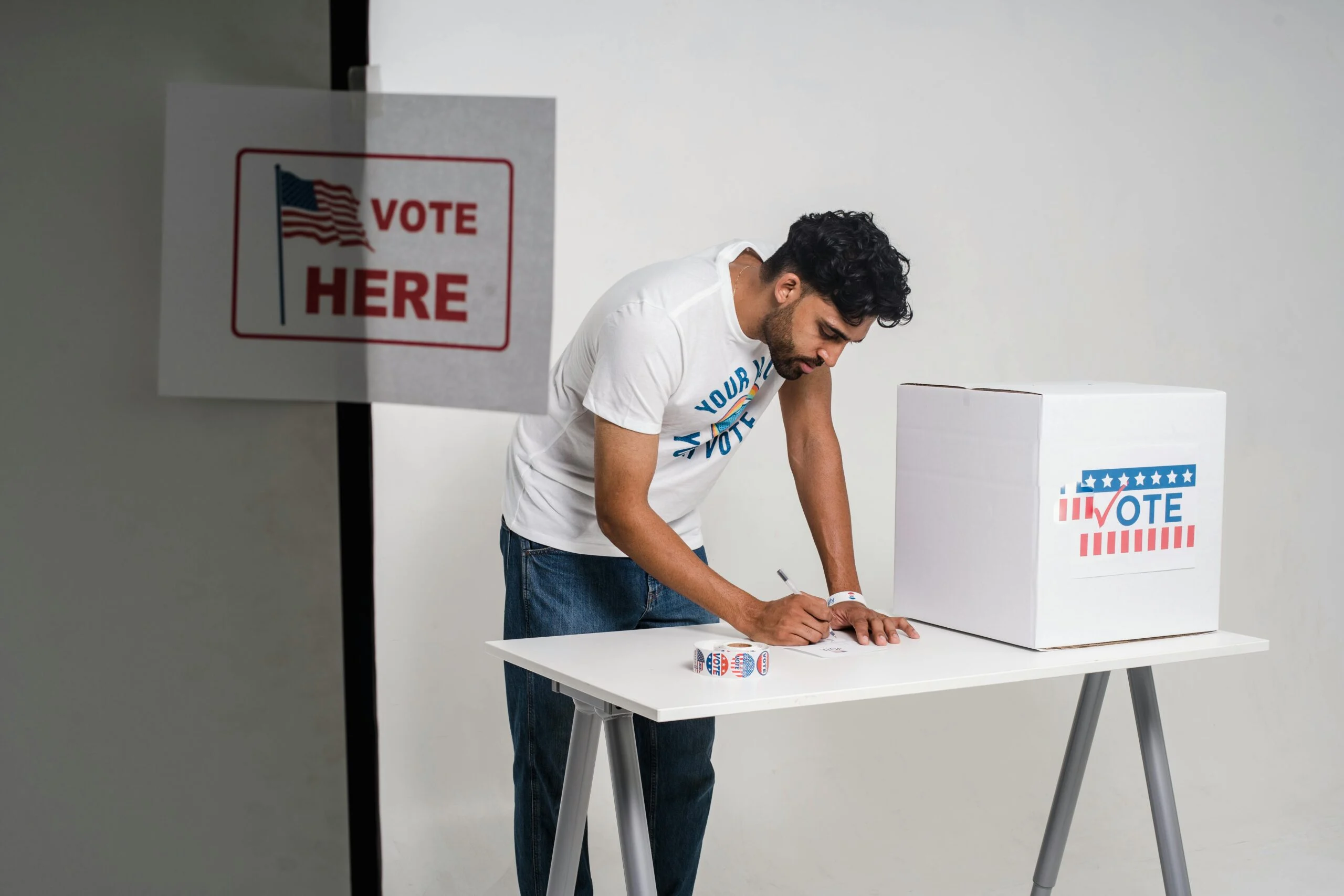
India is the world’s largest democracy. Over 960 million eligible voters. 1 million polling stations. Elections that take six weeks to conduct across a subcontinent. The machinery of Indian democracy is staggering in scale and largely functional in execution. But the rules governing who can run, how campaigns are funded, and how representatives are elected have not kept pace with the country’s evolution. Five structural reforms could fundamentally improve the quality of Indian democracy without requiring constitutional revolution.
1. Electoral Bonds Must Go: Make Political Funding Transparent
The Supreme Court struck down the Electoral Bond scheme in February 2024, calling it unconstitutional and a violation of voters’ right to information. The scheme, introduced in 2018, allowed anonymous donations to political parties through bearer instruments purchased from the State Bank of India. Between 2018 and 2024, electoral bonds worth over 16,000 crore rupees were purchased, with the ruling party receiving approximately 55 percent of total bond value.
The court’s verdict was clear: citizens have a right to know who funds their representatives. But striking down one scheme does not fix the underlying problem. India needs a comprehensive political finance framework that replaces opacity with accountability:
- Real-time disclosure: All donations above 20,000 rupees should be publicly disclosed within 48 hours on the Election Commission’s website. The current 75-day post-election reporting deadline is too late for voters to use the information
- State funding of elections: The Indrajit Gupta Committee (1998) and the Law Commission (2015) both recommended partial state funding to reduce parties’ dependence on corporate donors. A model based on Germany’s system, where parties receive per-vote public funding based on their electoral performance, would reduce the influence of large donors without eliminating private contributions entirely
- Digital audit trails: Every rupee received and spent by political parties should pass through audited bank accounts with mandatory GST-style returns. The technology exists, UPI and GST infrastructure already track financial flows at massive scale
2. One Nation, One Election: Synchronize the Electoral Calendar
India is perpetually in election mode. Between Lok Sabha elections, state assembly elections, municipal elections, and by-elections, the Model Code of Conduct (which restricts government policy announcements) is active somewhere in the country for a significant portion of every year. This creates governance paralysis, civil servants cannot make routine decisions during election periods, development projects stall, and the political class spends more time campaigning than governing.
The High Level Committee on Simultaneous Elections, chaired by former President Ram Nath Kovind, recommended in 2024 that Lok Sabha and all state assembly elections be held simultaneously, with local body elections within 100 days thereafter.
The arguments for synchronization are strong: reduced election expenditure (the 2024 Lok Sabha election alone cost an estimated 1.35 lakh crore when all party and government spending is included), less disruption to governance, reduced deployment of security forces, and lower voter fatigue. The arguments against are equally serious: it could disadvantage regional parties, require constitutional amendments to fix the terms of state assemblies, and create a presidential-style dynamic where state elections become referendums on the central government rather than local issues.
The practical path forward is phased implementation: cluster state elections into two groups held 2.5 years apart, rather than attempting a single nationwide election day. This captures most of the efficiency gains while preserving some separation between national and state political dynamics.
3. Decriminalize Politics: Bar Candidates with Serious Charges
In the 2024 Lok Sabha, 251 of 543 elected MPs, 46 percent, had declared criminal cases against them. Of these, 170 faced serious charges including murder, attempted murder, kidnapping, and crimes against women. This is not an anomaly. The proportion of MPs with criminal records has increased in every successive election since 2004.
The Supreme Court has repeatedly urged Parliament to clean up candidate selection. In 2020, the court directed political parties to publish the criminal records of candidates on their websites and explain why they chose candidates with criminal backgrounds. Parties comply with the letter of this order while ignoring its spirit, the explanation is invariably “the candidate has the best chance of winning.”
A workable reform: bar candidates charged with offenses carrying a sentence of 5 years or more, where charges have been framed by a court (not merely FIR-stage complaints, which can be politically motivated). This filters out serious criminal accusations while protecting against misuse. A similar system operates in the United Kingdom, where prisoners serving sentences of more than 12 months cannot stand for Parliament.
The Election Commission has supported this proposal. Political parties resist it because criminal candidates often bring money, muscle, and caste-based vote banks that clean candidates cannot match. Breaking this cycle requires either legislative action (unlikely, since legislators would be restricting their own colleagues) or a Supreme Court mandate.
4. Inner-Party Democracy: End the High Command Culture
Most Indian political parties function as private fiefdoms rather than democratic organizations. Party presidents serve indefinitely. Candidate selection is top-down, decided by a handful of leaders rather than through primaries or local committee processes. Internal elections, when held, are formalities with predetermined outcomes. The Election Commission requires parties to hold organizational elections but has no power to verify whether they are genuinely contested.
This high-command culture produces several pathologies: sycophancy replaces merit in candidate selection, leaders are accountable to the party boss rather than constituents, and parties cannot self-correct when leadership fails because there is no internal mechanism for change.
The reform: mandate genuinely contested internal elections as a condition for party registration. Require secret ballot voting for party office-bearers at district and state levels, with results reported to the Election Commission. Parties that fail to hold verified internal elections lose their registered party symbol, a penalty severe enough to enforce compliance. Germany’s Political Parties Act requires internal democratic processes and has been effective in maintaining party accountability.
5. Recall Elections: Give Voters a Safety Valve
Once elected, an Indian MP or MLA faces no accountability mechanism until the next election, which may be five years away. If a representative stops attending legislative sessions, switches parties for personal gain (despite the anti-defection law), or fails to deliver on explicit campaign promises, voters have no recourse. They can only wait.
Recall elections allow voters to remove an elected representative before the end of their term through a petition process. If a threshold of constituents (typically 25-50 percent of registered voters) sign a recall petition, a recall election is held where the representative must face a fresh vote of confidence.
Several countries operate recall systems: the United States (at state and local level), Switzerland, Venezuela, and parts of Canada. The UK introduced a limited recall mechanism in 2015 for MPs convicted of offenses or suspended from the House of Commons.
The risk in India is misuse, recall petitions could become tools for opposition parties to harass elected representatives with thin margins. Safeguards are essential: a high signature threshold (33 percent of registered voters), a mandatory cooling period of 2 years after election before recall can be initiated, and a requirement that the recall petition specifies concrete grounds (not merely political disagreement).
Even if rarely used, the existence of a recall mechanism changes behavior. Representatives who know they can be recalled have an incentive to maintain constituency engagement and legislative attendance that the current system does not provide.
Where These Reforms Stand
Reform | Status | Key Obstacle |
|---|---|---|
Campaign finance transparency | Electoral Bonds struck down (2024). No replacement framework yet | Political will, all major parties benefit from opacity |
Simultaneous elections | Kovind Committee report submitted. Constitutional amendment bill pending | Requires ratification by 50% of state legislatures |
Decriminalization | SC directives issued. No legislative action | Legislators would be restricting their own colleagues |
Inner-party democracy | EC guidelines exist. No enforcement mechanism | Party leadership controls the reform process |
Recall elections | Not formally proposed at national level | No political constituency for this reform among parties |
India’s democratic infrastructure, the Election Commission, electronic voting machines, voter registration systems, and the constitutional framework, is fundamentally sound. The problem is not the machinery but the rules governing who operates it and how they fund their campaigns. These five reforms would not create a perfect democracy. No democracy is perfect. But they would create a system where voters know who funds their representatives, where criminals face barriers to entry, where parties function as democratic organizations, and where elected officials remain accountable between elections. The question is not whether these reforms are needed. It is whether any political establishment will implement changes that constrain its own power.
What you can do
- Share the evidenceSend this to one person who should know about this issue.Share on WhatsApp
- Give an afternoonTeach, mentor, clean up, or lend your professional skills.Ways to volunteer
- Tell us what's missingKnow a story, a fact we got wrong, or a solution worth spotlighting?Suggest a story
Politically neutral. Every claim sourced. Report a correction.


No comments yet