Why Indian Athletes Need Better Grassroots Support: A State-Level Analysis
India produces world-class athletes despite its sports system, not because of it. A state-by-state look at what is working, what is failing, and what it would take to build a real grassroots pipeline.
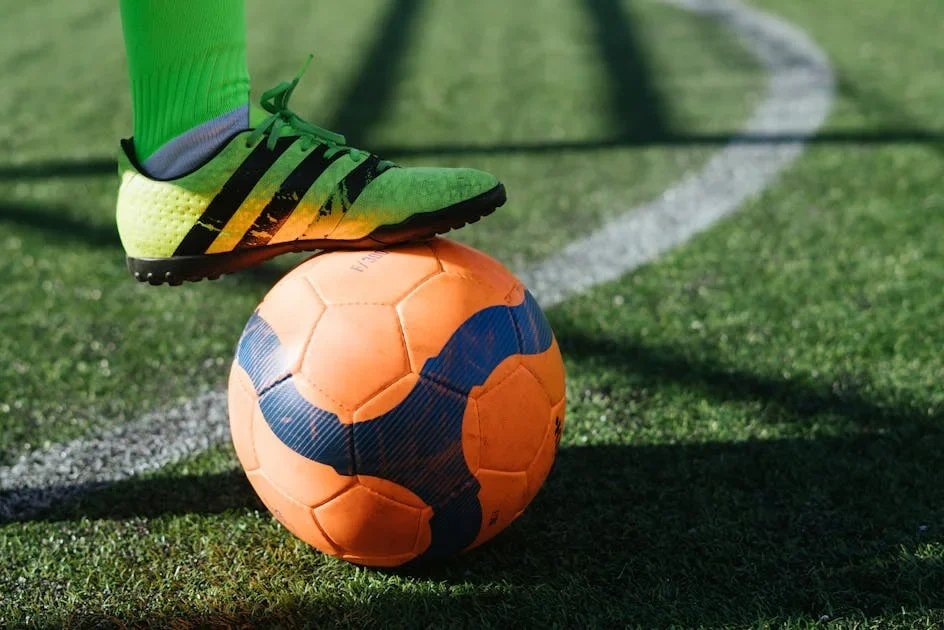
India Wins Medals Despite the System, Not Because of It
When Neeraj Chopra threw the javelin to Olympic gold, a billion people celebrated. What most did not see was the years of struggle before that moment, training on borrowed equipment, traveling hours for a decent facility, and competing without basic nutrition support.
India has 1.4 billion people but consistently finishes behind countries with a fraction of its population in the Olympic medal tally. The problem is not talent. India produces world-class athletes in almost every sport. The problem is what happens between discovering talent and reaching the podium.
India spent approximately 2,500 crore on sports development in the 2025-26 Union Budget. That sounds like a lot until you compare it.
Country | Population | Annual Sports Budget (approx) | Olympic Medals (Paris 2024) |
|---|---|---|---|
USA | 340 million | $16 billion | 126 |
China | 1.4 billion | $7 billion | 91 |
Australia | 26 million | $1.2 billion | 53 |
India | 1.4 billion | $300 million | 6 |
Australia, with less than 2% of India’s population, wins nearly 9 times more medals. The difference is not genetics. It is infrastructure, coaching, and a pipeline that catches talent early and nurtures it systematically.
Sports development in India is heavily dependent on which state you are born in. Some states invest seriously in grassroots sports. Others treat it as an afterthought.
States Leading the Way
Haryana consistently produces the most Olympic and Commonwealth Games medalists relative to its population. The state has a strong wrestling and boxing tradition, backed by government rewards that actually motivate athletes. Haryana announced 6 crore for Olympic gold medalists and has one of the highest per-capita sports budgets.
Odisha transformed its sports landscape in under a decade. The state government sponsors the Indian hockey team, built the Kalinga Stadium complex, and hosts international events. Odisha proved that political will directly translates to sporting success.
Kerala has the highest density of sports academies per capita. The state’s school-level athletic programs feed directly into state and national teams. Athletics, football, and volleyball have deep grassroots presence.
States Falling Behind
Uttar Pradesh, India’s most populous state with 240 million people, has produced disproportionately few international athletes. Despite recent investments in the Lucknow sports city project, the district-level infrastructure remains almost nonexistent.
Bihar has virtually no international-standard sports facilities outside Patna. Talented athletes from rural Bihar often migrate to Haryana or Delhi for training, losing years in the process.
Madhya Pradesh and Rajasthan have vast rural populations with strong physical culture but minimal organized sports programs. Kabaddi and wrestling talent exists but rarely gets professional coaching.
1. No Early Talent Identification
Countries like China and Australia run nationwide talent identification programs in schools. Trained scouts visit every school, test children for physical attributes, and invite promising ones to state academies. India has no equivalent system. Talent is discovered by accident, a local coach notices someone, a family pushes a child, or an athlete simply refuses to quit.
2. Coaching Quality at District Level
India has fewer than 10,000 certified sports coaches for a country of 1.4 billion. Most district-level coaches are former athletes with no formal coaching education. Compare this to Australia, which has over 40,000 accredited coaches for 26 million people.
3. Facilities Beyond Metro Cities
International-standard tracks, pools, and gymnasiums exist in a handful of cities. Athletes in smaller towns train on dirt tracks, in public parks, and with improvised equipment. A runner in Bhiwani does not have access to the same facilities as one in Delhi, even though Bhiwani has produced more boxers per capita than anywhere in India.
4. Nutrition and Sports Science
Elite athletes need dietitians, physiotherapists, sports psychologists, and recovery specialists. Most Indian athletes at the grassroots level have none of these. They train hard but without the science that separates good from great.
5. Financial Support for Families
In many families, a child pursuing sports means one less person earning income. Countries with strong sports pipelines provide stipends or scholarships that cover living expenses, not just training fees. India’s support is inconsistent and often arrives too late.
Despite the systemic gaps, several initiatives show that the model can work when executed properly.
Khelo India, The central government’s flagship program identifies and supports 1,500 talented athletes annually with scholarships of 5 lakh per year for 8 years. Athletes who come through Khelo India have won medals at Asian and Commonwealth Games.
JSW Sports and private academies, Corporate-backed sports programs like Inspire Institute of Sport in Bellary have produced Olympic-level athletes in wrestling, boxing, and athletics. These academies provide everything, coaching, nutrition, accommodation, education, that government programs struggle to deliver consistently.
State reward systems, Haryana, Odisha, and Manipur now offer government jobs and significant cash rewards for medal winners. This creates a visible incentive that motivates the next generation.
Community wrestling and boxing traditions, India’s strongest Olympic sports come from regions with deep cultural traditions in those disciplines. Haryana’s wrestling akharas, Manipur’s boxing culture, and Mizoram’s football academies show that grassroots culture produces results when given minimal support.
India does not need to outspend the USA or China. It needs smarter allocation and consistent execution.
- School-level testing, Implement basic physical fitness testing in every government school. Identify children with exceptional speed, endurance, strength, or coordination by age 10-12.
- District sports centers, Build one well-equipped multi-sport facility in every district headquarters. India has 780 districts. Even a basic facility with a track, gym, and swimming pool would transform access.
- Coach certification program, Partner with SAI and international bodies to certify 50,000 coaches over the next 5 years. Place trained coaches in every district center.
- Family support stipends, Provide monthly stipends to families of identified talented athletes, similar to Khelo India but reaching 10x more athletes.
- Focus on strengths, Instead of spreading thin across all sports, invest deeply in disciplines where India already has cultural and competitive advantages: wrestling, boxing, badminton, shooting, weightlifting, hockey, and athletics.
Every Indian Olympic medal is a story of individual determination overcoming systemic neglect. Imagine what happens when the system actually starts helping.
What you can do
- Share the evidenceSend this to one person who should know about this issue.Share on WhatsApp
- Give an afternoonTeach, mentor, clean up, or lend your professional skills.Ways to volunteer
- Tell us what's missingKnow a story, a fact we got wrong, or a solution worth spotlighting?Suggest a story
Politically neutral. Every claim sourced. Report a correction.
No comments yet