Where Does Your Tax Money Go? Understanding India's Budget
A plain-language guide to the Union Budget: where the government's money comes from, where it goes, and how social sector spending compares with global benchmarks.
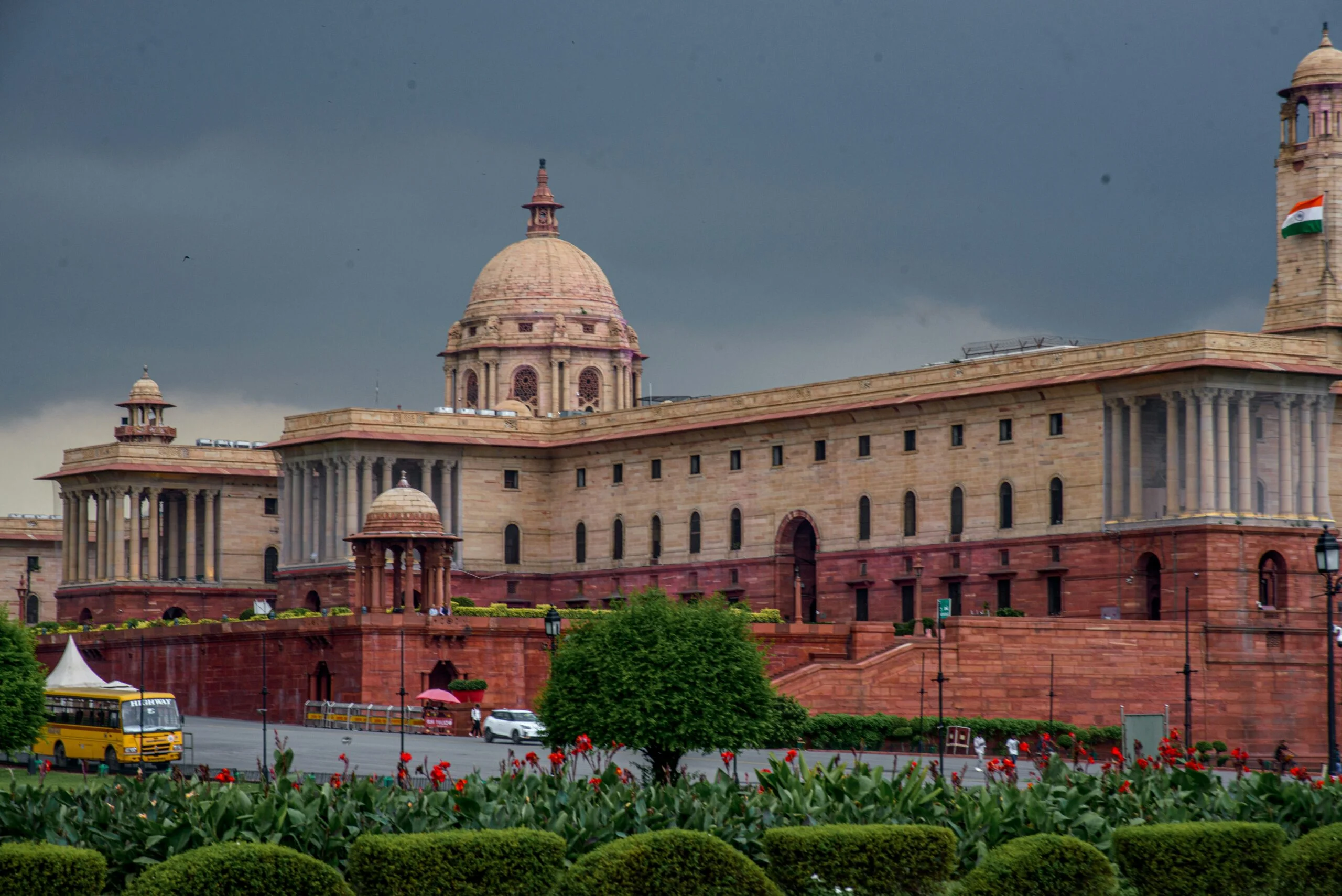
The Union Budget Decoded for the Common Citizen
Every year, usually on February 1st, the Finance Minister of India stands before Parliament and presents the Union Budget. Television channels broadcast it live, newspapers devote entire supplements to it, and stock markets swing on every sentence. But for the average citizen-the salaried employee, the small business owner, the farmer, the student-the Union Budget often feels like a dense, impenetrable document filled with jargon and enormous numbers.
Yet the budget is arguably the most important document the government produces each year. It is a statement of intent, a plan of action, and, most importantly, an accounting of how your money-collected through taxes on your income, purchases, and economic activity-is spent. Understanding the budget is not just an exercise in financial literacy. It is an act of democratic citizenship.
This article aims to decode the Union Budget in plain language. We will look at where the government’s money comes from, where it goes, how India’s social sector spending compares to global benchmarks, and how you, as a citizen, can track every rupee.
Revenue Budget vs Capital Budget
The Union Budget is divided into two broad parts:
- Revenue Budget: This covers the government’s day-to-day income and expenditure. Revenue receipts include taxes (income tax, GST, corporate tax) and non-tax revenue (dividends from PSUs, fees, fines). Revenue expenditure includes salaries of government employees, interest payments on debt, subsidies, and grants to states. The key feature of revenue expenditure is that it does not create any assets.
- Capital Budget: This deals with longer-term investments. Capital receipts include loans raised by the government (market borrowings, small savings), while capital expenditure covers spending on infrastructure-roads, railways, defence equipment, and other assets that yield returns over many years.
The Fiscal Year and Parliament’s Role
India’s fiscal year runs from April 1 to March 31. The budget is presented in Parliament typically on February 1, debated over several weeks, and must be approved by the Lok Sabha (the lower house) before it can take effect. The Rajya Sabha (upper house) can discuss the budget but cannot reject or amend money bills. This process is enshrined in Articles 112 to 117 of the Indian Constitution.
Before the budget takes effect, the government seeks a “Vote on Account”-essentially permission to spend for a limited period-so that government operations do not halt while Parliament debates the full budget.
To understand spending, we must first understand earnings. In the Union Budget for FY 2024-25, the government estimated total receipts of approximately Rs 45.03 lakh crore (revised estimates). Here is a breakdown of the major sources:
Tax Revenue
- Goods and Services Tax (GST): The single largest source of indirect tax revenue. The Centre’s share of GST collection was estimated at approximately Rs 10.68 lakh crore for FY 2024-25. GST replaced a patchwork of indirect taxes in 2017 and is shared between the Centre and states.
- Income Tax: Personal income tax has been growing rapidly, contributing approximately Rs 11.87 lakh crore in budget estimates for FY 2025-26. The number of individual taxpayers has risen significantly, partly due to better compliance driven by digital systems like e-filing and the Annual Information Statement (AIS).
- Corporate Tax: Companies pay tax on their profits. Corporate tax was estimated at around Rs 10.42 lakh crore for FY 2025-26. A significant rate cut in 2019 (from 30% to 22% for existing companies and 15% for new manufacturing) initially reduced collections but aimed to boost investment.
- Customs Duty: Taxes on imports. While not the largest revenue source (estimated at around Rs 2.33 lakh crore), customs duties serve a dual purpose: generating revenue and protecting domestic industries.
- Excise Duty: Primarily levied on petroleum products (petrol and diesel are not under GST), excise collections were estimated at approximately Rs 3.35 lakh crore.
Non-Tax Revenue
This includes dividends from public sector undertakings (PSUs) and the Reserve Bank of India, spectrum auction proceeds, fees and fines, and interest on loans given by the Centre. Non-tax revenue was estimated at approximately Rs 3.97 lakh crore for FY 2025-26.
Borrowings
When the government’s expenditure exceeds its revenue, it borrows the difference. This gap is called the fiscal deficit. For FY 2025-26, the fiscal deficit target was set at 4.4% of GDP, reflecting a path of gradual fiscal consolidation from the pandemic-era peak of 9.2% in FY 2020-21. Borrowings fund a significant chunk of government spending-and this is where the debt sustainability debate becomes critical, which we will address later.
In FY 2025-26, the government’s total expenditure was budgeted at approximately Rs 50.65 lakh crore. Let us trace where this money flows:
Interest Payments
The single largest expenditure item. The government was estimated to spend approximately Rs 12.15 lakh crore on interest payments in FY 2025-26-roughly 24% of total expenditure. This is money that goes directly to servicing past debt and creates no new services or infrastructure. It is, in a sense, the cost of yesterday’s borrowing.
Defence
India’s defence budget was approximately Rs 6.81 lakh crore for FY 2025-26, covering salaries, pensions, equipment procurement, and operational costs. India is the world’s fourth-largest military spender, though as a percentage of GDP (approximately 1.9%), it is lower than many comparable nations.
Subsidies
Three major subsidies dominate:
- Food Subsidy: Approximately Rs 2.05 lakh crore. This funds the National Food Security Act, which provides subsidised grain to approximately 81.35 crore beneficiaries through the Public Distribution System (PDS). The Pradhan Mantri Garib Kalyan Anna Yojana (PMGKAY), which provided free foodgrains during COVID-19, has been extended.
- Fertiliser Subsidy: Approximately Rs 1.68 lakh crore. This keeps fertiliser prices affordable for farmers. India imports a large share of its fertilisers, making this subsidy vulnerable to global price shocks, as seen during the Russia-Ukraine conflict when fertiliser costs spiked.
- Fuel/Petroleum Subsidy: Approximately Rs 11,925 crore. This has declined significantly since the deregulation of diesel and petrol prices and the shift towards direct benefit transfer (DBT) for LPG subsidies under the Ujjwala scheme.
Central Sector and Centrally Sponsored Schemes
The government runs hundreds of schemes-from PM Awas Yojana (housing) to Jal Jeevan Mission (tap water) to Ayushman Bharat (health insurance). These are funded either entirely by the Centre (Central Sector schemes) or shared between Centre and states (Centrally Sponsored Schemes). The total allocation for major schemes runs into several lakh crores annually.
Transfers to States
A significant portion of Central tax revenue is transferred to states based on the recommendations of the Finance Commission. The 15th Finance Commission recommended that 41% of the divisible pool of central taxes be devolved to states. These transfers are crucial for states, which bear the primary responsibility for education, health, law and order, and agriculture.
This is where the rubber meets the road for ordinary citizens. Social sector spending covers education, health, rural development, housing, water supply, sanitation, and social protection programmes. Here is how India fares on the key metrics:
Education
India spends approximately 2.9% of GDP on education (combining Centre and state spending). The National Education Policy (NEP) 2020 set a target of 6% of GDP-a goal that India has never achieved. In absolute terms, the Centre’s allocation for the Education Ministry in FY 2025-26 was approximately Rs 1.28 lakh crore, covering schemes like Samagra Shiksha Abhiyan, PM SHRI Schools, and the Mid-Day Meal programme (now PM Poshan). However, the bulk of education spending happens at the state level, where quality varies enormously. According to the Annual Status of Education Report (ASER) 2023, foundational literacy and numeracy remain serious challenges in rural India, underscoring that spending levels alone do not guarantee outcomes.
Health
Public health expenditure in India stands at approximately 2.1% of GDP, against the National Health Policy 2017 target of 2.5% of GDP by 2025. The Centre’s health budget for FY 2025-26 was approximately Rs 99,858 crore. Key programmes include Ayushman Bharat–Pradhan Mantri Jan Arogya Yojana (PM-JAY), which provides health insurance cover of Rs 5 lakh per family to approximately 12 crore poor families, and the National Health Mission (NHM). India’s out-of-pocket health expenditure-what citizens pay directly from their pockets-remains among the highest in the world at approximately 39.4% of total health expenditure (down from over 62% two decades ago, but still very high).
MGNREGA
The Mahatma Gandhi National Rural Employment Guarantee Act guarantees 100 days of wage employment per year to rural households. The allocation for MGNREGA in FY 2025-26 was approximately Rs 60,000 crore. While this is a significant sum, actual demand often exceeds allocation, and delayed wage payments remain a persistent issue. According to data from the Ministry of Rural Development, the average number of person-days generated per household was around 48-50 days-well below the 100-day guarantee.
Food Subsidy
As mentioned, the food subsidy allocation was approximately Rs 2.05 lakh crore. The National Food Security Act (NFSA) is one of the world’s largest food security programmes, covering roughly two-thirds of India’s population. The shift to using Aadhaar-based identification has improved targeting but has also raised concerns about exclusion of genuine beneficiaries due to authentication failures.
PM Awas Yojana (Housing)
The government allocated approximately Rs 79,000 crore for PM Awas Yojana in FY 2025-26, covering both urban and rural components. The scheme aims to provide pucca houses with basic amenities to eligible families. Under PMAY-Gramin, over 2.95 crore houses have been completed, while PMAY-Urban 2.0 targets an additional 1 crore urban houses.
Looking at the trajectory of social sector spending over the past 10 years reveals a mixed picture:
- Nominal increases: In absolute terms, allocations for education, health, and rural development have increased year-on-year. For example, the health budget has roughly doubled from approximately Rs 46,000 crore in FY 2015-16 to nearly Rs 1 lakh crore in FY 2025-26.
- As a share of GDP: However, as a percentage of GDP, the increases have been modest. Education spending has hovered between 2.8% and 3.1% of GDP, while health spending has inched up from 1.2% to 2.1% of GDP. These are improvements, but they fall short of stated targets.
- Inflation-adjusted spending: When adjusted for inflation, real per-capita spending on social sectors has grown, but not as dramatically as nominal figures suggest. With consumer price inflation averaging 5-6% annually, a nominal increase of 8-10% in a scheme’s budget translates to a real increase of only 2-4%.
- COVID-19 impact: The pandemic saw a massive spike in food and health spending (free foodgrains distribution, vaccine procurement) but also a contraction in other social sector budgets as resources were redirected. MGNREGA spending surged to Rs 1.11 lakh crore in FY 2020-21 as reverse migration created enormous rural demand.
A fact often lost in budget discussions is that states collectively spend far more on social sectors than the Centre. Education, health, water supply, and sanitation are primarily state subjects under the Constitution. According to RBI data on state finances:
- States account for approximately 60-65% of total government spending on education and approximately 65-70% on health.
- The Centre’s role is largely that of a policymaker, standard-setter, and co-funder through Centrally Sponsored Schemes.
The Role of Finance Commission Transfers
The Finance Commission, constituted every five years under Article 280 of the Constitution, determines how Central tax revenues are shared with states. The 15th Finance Commission (2021-26) recommended that 41% of the divisible pool of Central taxes be transferred to states. In addition to this formula-based devolution, the Centre provides grants for specific purposes-disaster management, local bodies, and health. These transfers are a lifeline for poorer states like Bihar, Uttar Pradesh, and Jharkhand, which have limited own-tax revenue capacity. The tension between Centre and states over fiscal federalism-who controls how much, and who decides where it is spent-is a recurring theme in Indian public finance.
India’s subsidy bill is enormous, and the debate over subsidies is fierce. Two broad philosophical positions dominate:
Targeting
The argument for targeting is that subsidies should reach only those who truly need them. The shift from universal PDS to a targeted system, the move from LPG subsidies to DBT, and the use of Aadhaar-linked identification are all manifestations of this approach. Proponents argue that targeting saves money and reduces leakage. Critics counter that means-testing is expensive, error-prone, and often excludes the most vulnerable-those without documentation, digital access, or awareness of bureaucratic processes.
Universalism
Universal programmes-like the NFSA covering 67% of the population, or proposals for universal basic income-argue that broad coverage avoids exclusion errors and is administratively simpler. The trade-off is higher fiscal cost. Economists like Jean Dreze have argued that the administrative cost of targeting often exceeds the savings it generates, and that universal programmes build wider political constituencies for social spending, making them more durable.
The reality is that India uses a hybrid approach. Some subsidies are near-universal (food), some are targeted (LPG via PM Ujjwala), and some are self-targeted (MGNREGA, where the low wage rate ensures that only those who genuinely need work show up).
India’s social sector spending, while large in absolute terms, is modest by international comparison:
- Brazil: Spends approximately 9.5% of GDP on social protection programmes, including Bolsa Familia (now Auxilio Brasil), universal healthcare through SUS, and robust public pension systems. Brazil’s public health system, while imperfect, provides universal coverage.
- South Africa: Spends approximately 5.2% of GDP on social grants alone, reaching nearly 18 million beneficiaries. The country’s social grant system is considered one of the most effective anti-poverty tools in the developing world.
- China: Has dramatically increased social spending over the past two decades, with public expenditure on education at approximately 4% of GDP and health at approximately 3%. China’s investments in rural infrastructure and poverty alleviation (lifting nearly 800 million people out of extreme poverty since 1978) have been historically unprecedented.
- India: Combined social sector spending (Centre plus states) is estimated at approximately 7-8% of GDP, but this includes everything from education to rural roads. On specific metrics-health spending per capita, education spending as a share of GDP, social protection coverage-India trails behind most comparable developing nations.
According to ILO data, India spends approximately 1.4% of GDP on social protection (excluding health), compared to a global average of 12.9% and a developing country average of approximately 5.6%. This gap has real consequences: higher infant mortality, lower learning outcomes, greater vulnerability to economic shocks, and deeper poverty traps.
Every discussion about increasing social spending inevitably runs into the fiscal deficit question. The fiscal deficit-the gap between what the government earns and what it spends-must be financed through borrowing. India’s fiscal deficit peaked at 9.2% of GDP in FY 2020-21 (during COVID-19) and has been gradually consolidated to a target of 4.4% of GDP for FY 2025-26, with a medium-term target of below 4.5%.
Why the Deficit Matters
- Debt servicing: Higher deficits mean more borrowing, which means more interest payments. India already spends nearly 24% of its budget on interest payments. Every rupee spent on interest is a rupee not available for schools, hospitals, or roads.
- Crowding out: When the government borrows heavily from domestic markets, it competes with the private sector for funds, potentially raising interest rates and reducing private investment. This is the “crowding out” effect, though its extent is debated among economists.
- Inflation risk: Excessive deficit spending can fuel inflation, which disproportionately hurts the poor-exactly the people social spending is meant to help.
- Credit ratings: International credit rating agencies (Moody’s, S&P, Fitch) monitor India’s fiscal deficit. A deterioration could lead to a rating downgrade, increasing the cost of external borrowing.
The Counter-Argument
As Nobel laureate Amartya Sen has repeatedly argued, India’s underinvestment in human capabilities is itself a form of fiscal imprudence.
Many economists argue that in a developing country with enormous unmet needs, fiscal austerity can be counterproductive. Investment in health, education, and infrastructure generates long-term returns-a healthier, more educated workforce is more productive. The question is not whether to spend, but how to spend wisely.
The central conclusion from this analysis is stark: India underspends on social sectors compared to global averages, compared to peer nations, and compared to its own stated targets.
Metric | Current Spending | Target / Global Avg | Gap |
|---|---|---|---|
Education (% of GDP) | 2.9% | 6% (NEP target) | Half the target |
Health (% of GDP) | 2.1% | 2.5% (NHP 2017) | Below target |
Social Protection (% of GDP) | 1.4% | 12.9% (global avg) | Fraction of average |
The result is that Indian citizens bear a disproportionate burden privately-paying for private schools because government schools are underfunded, paying for private healthcare because public hospitals are overcrowded, and depending on informal family networks because formal social protection is inadequate.
This is not just a fiscal issue; it is a development issue. Countries that invested early and substantially in human capital-South Korea, Taiwan, China-achieved rapid and sustained economic growth. India’s demographic dividend-its large, young working-age population-will only yield results if that population is healthy, educated, and skilled. Underspending on social sectors is, in the long run, an economic strategy that undermines itself.
As citizens, we have both the right and the tools to track where our money goes. Using the Right to Information (RTI) Act and digital transparency platforms, any citizen can demand accountability. Here are the key resources:
Budget Documents
The Ministry of Finance publishes all budget documents on indiabudget.gov.in. Key documents include the Budget at a Glance (a summary), the Expenditure Budget (detailed ministry-wise allocations), the Receipts Budget, and the Finance Bill. The Economic Survey, released a day before the budget, provides context and analysis.
Public Financial Management System (PFMS)
Available at pfms.nic.in, the PFMS tracks fund flows from the Centre to implementing agencies in real time. You can check how much money has been released for a specific scheme in your state or district. This is a powerful transparency tool, though navigating it requires some persistence.
Comptroller and Auditor General (CAG)
The CAG of India (cag.gov.in) audits government accounts and publishes reports highlighting irregularities, wastage, and performance gaps. CAG reports on schemes like MGNREGA, Ayushman Bharat, and PM Awas Yojana provide independent assessments of whether money was spent effectively. These reports are tabled in Parliament and are available online.
Parliamentary Committees
Standing Committees and the Public Accounts Committee (PAC) of Parliament examine budget allocations and audit reports. Their proceedings and reports, available on the Parliament of India website, offer valuable oversight insights.
For readers who want to dig deeper, here are the most authoritative sources on India’s public finances:
- Union Budget Documents (indiabudget.gov.in): The primary source for all budget data, including budget estimates, revised estimates, and actuals for previous years.
- Reserve Bank of India (rbi.org.in): The RBI’s annual publication, “State Finances: A Study of Budgets,” provides comprehensive data on state-level spending. The RBI Handbook of Statistics is another invaluable resource.
- PRS Legislative Research (prsindia.org): PRS provides accessible, non-partisan analysis of every Union Budget, state budget, and major legislation. Their budget primers and scheme-level analysis are excellent starting points for citizens.
- Accountability Initiative, Centre for Policy Research (accountabilityindia.in): This research group tracks government expenditure on social sector schemes through its “Budget Briefs” series, which provides scheme-level analysis of allocations, releases, and utilisation.
- Centre for Budget and Governance Accountability (cbgaindia.org): CBGA analyses the Union Budget from the perspective of marginalised communities, focusing on adequacy and equity of social sector allocations. Their annual “Numbers That Count” publication is a valuable resource.
- World Bank and IMF: For international comparisons, the World Bank’s World Development Indicators database and the IMF’s Government Finance Statistics provide standardised cross-country data on government spending.
- National Statistical Office (mospi.gov.in): The NSO publishes data on household consumption, poverty, employment, and social indicators that provide the ground-level reality against which budget allocations should be assessed.
The Union Budget is not just a financial document-it is a reflection of national priorities. When we see that interest payments consume nearly a quarter of all spending, or that health expenditure remains stubbornly below 2.5% of GDP, or that education spending has never come close to the promised 6% of GDP, these are not merely statistics. They are choices-choices about what kind of society we want to build and who bears the cost of building it.
Understanding these choices is the first step towards influencing them. Every citizen who reads a budget document, who tracks scheme expenditure on PFMS, who asks their elected representative about spending priorities, is participating in the most fundamental exercise of democracy: holding power accountable for how it uses public resources.
Your tax money is not an abstract concept. It builds roads or pays interest. It funds a child’s midday meal or services old debt. It equips a soldier or subsidises a farmer’s fertiliser. The budget tells you exactly which of these it chose-and by how much. The question is whether you are reading it.
What you can do
- Share the evidenceSend this to one person who should know about governance.Share on WhatsApp
- Give an afternoonTeach, mentor, clean up, or lend your professional skills.Ways to volunteer
- Tell us what's missingKnow a story, a fact we got wrong, or a solution worth spotlighting?Suggest a story
Politically neutral. Every claim sourced. Report a correction.


No comments yet