Why India Needs Electoral Reforms Now
Electoral reforms India urgently needs: from state funding of elections and decriminalisation of politics to regulating deepfakes and digital campaigns. A deep dive into why India's democratic machinery is under strain and the structural changes required to protect free and fair elections.
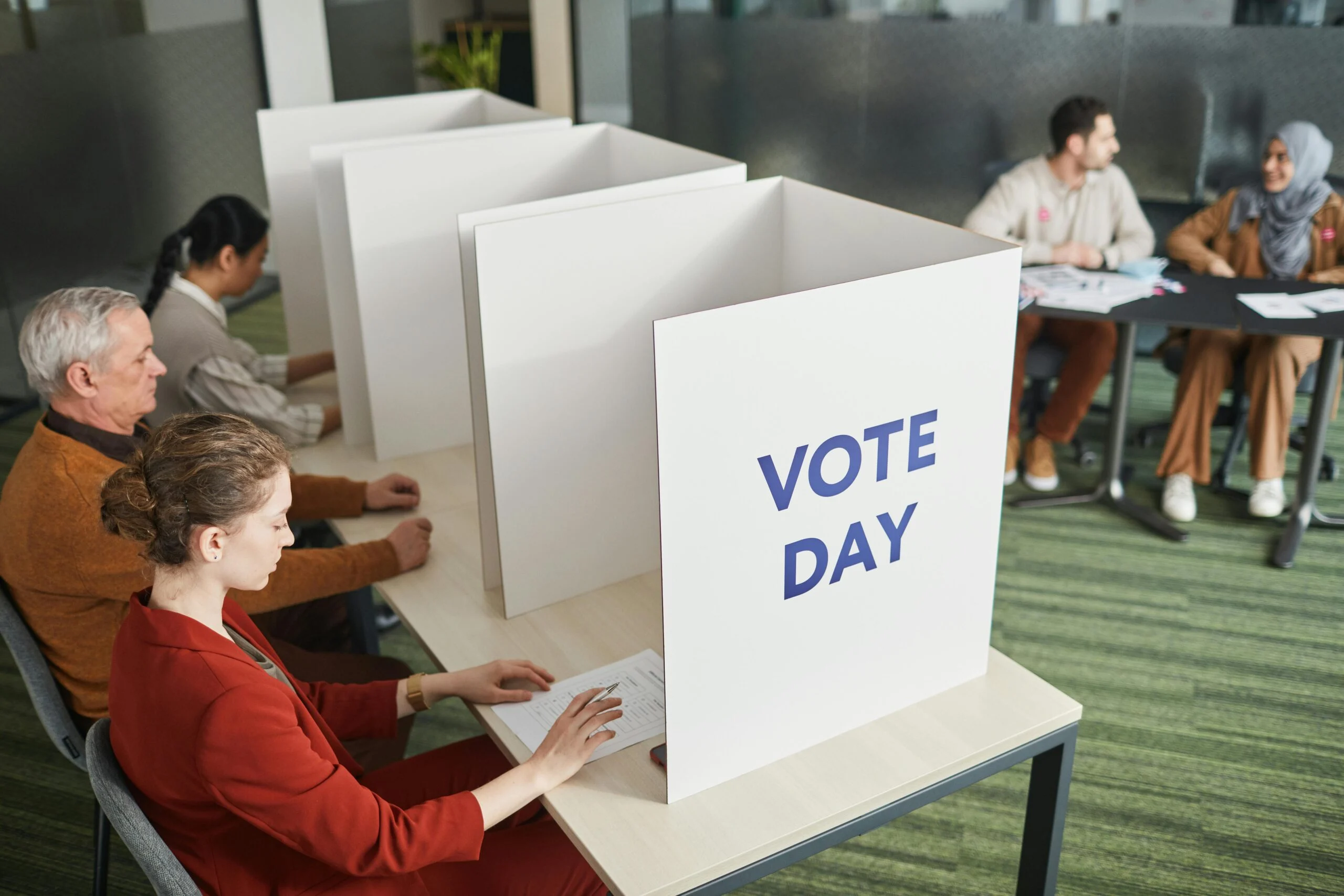
Opinion | Electoral reforms India must pursue to protect its democratic foundation from money power, criminalisation, and the rising tide of misinformation.
India’s Democratic Machinery Is Under Strain
India is the world’s largest democracy. That statement has been repeated so many times that it has almost become a cliche, a comfortable label rather than a living, breathing commitment. Yet beneath the pride of free and fair elections lies a system that is increasingly buckling under the weight of money power, criminal influence, misinformation, and competitive populism. The question is no longer whether India needs electoral reforms. The question is whether we can afford to delay them any further.
Elections are the cornerstone of democratic governance. They are the mechanism through which citizens hold their leaders accountable, express their aspirations, and shape the direction of their nation. But when elections are captured by wealth, when candidates with serious criminal charges walk into Parliament, when voters are manipulated by deepfakes and paid news, and when political parties compete not on policy but on who can promise more freebies, the very foundation of democracy begins to crack.
This article examines the structural challenges facing India’s electoral process, evaluates the reforms that are urgently needed, acknowledges the improvements that have been made, and argues that the time for comprehensive electoral reform is now.
The Corrupting Influence of Money Power
Perhaps the most visible and pervasive challenge to India’s electoral integrity is the role of money. Indian elections have become staggeringly expensive affairs. According to data compiled by the Association for Democratic Reforms (ADR), the average winning candidate in the 2019 Lok Sabha elections spent between Rs 20 crore and Rs 40 crore on their campaign. Some estimates place the total expenditure of the 2019 general elections at over Rs 60,000 crore, making it one of the most expensive elections in the world at the time.
These figures are deeply troubling for several reasons. First, they create an enormous barrier to entry for ordinary citizens who may have the talent, integrity, and vision to serve in public office but lack the financial resources to mount a competitive campaign. When the cost of contesting an election is measured in tens of crores, politics becomes the preserve of the wealthy, the well-connected, and those willing to accept funding from questionable sources.
Second, the sheer volume of money flowing into elections inevitably raises questions about quid pro quo arrangements. When a candidate spends Rs 30 crore to win a seat that pays a fraction of that amount in salary, it is reasonable to ask where the money came from and what was promised in return. The now-defunct electoral bonds scheme, which allowed anonymous donations to political parties, only deepened these concerns. Before it was struck down by the Supreme Court in February 2024, the electoral bonds scheme had channelled over Rs 16,000 crore to political parties, with the identity of donors hidden from public scrutiny.
Third, money power distorts the level playing field that is essential for meaningful democratic competition. Wealthier candidates can afford more advertising, more ground-level mobilisation, more sophisticated data analytics, and more extensive patronage networks. This creates a self-reinforcing cycle where political power attracts money, and money secures political power. The result is a system that increasingly serves the interests of the donor class rather than the electorate.
The Election Commission of India (ECI) sets expenditure limits for candidates, currently Rs 95 lakh for Lok Sabha constituencies in larger states and Rs 75 lakh in smaller states. However, these limits are widely understood to be a fiction. Actual spending routinely exceeds the official limits by a factor of ten or more, with the excess channelled through party expenditure, third-party campaigns, and off-the-books spending that is virtually impossible to track.
The Criminalisation of Politics
If money power is the most visible challenge, the criminalisation of politics is perhaps the most dangerous. The 17th Lok Sabha, elected in 2019, saw 43 percent of its members facing criminal charges, according to ADR analysis. This was not a sudden development but the continuation of a long-term trend. The proportion of MPs with criminal cases has risen steadily from 24 percent in 2004 to 30 percent in 2009, 34 percent in 2014, and 43 percent in 2019.
Among these, a significant number face serious charges including murder, attempted murder, kidnapping, robbery, and crimes against women. The fact that nearly half of India’s parliamentarians have criminal cases pending against them is not just a statistical anomaly. It is a fundamental challenge to the rule of law and the moral authority of the legislature.
Several factors contribute to this trend. Political parties often field candidates with criminal backgrounds because they have the financial resources to fund their own campaigns, the muscle power to mobilise voters, and in some cases, a Robin Hood-like popularity in their constituencies. The slow pace of the Indian judicial system means that cases can drag on for years or even decades without resolution, allowing accused persons to continue contesting and winning elections while their cases remain pending.
The Supreme Court has repeatedly expressed concern about this trend. In 2020, the Court directed political parties to publish the criminal records of their candidates prominently and explain why they chose to field candidates with criminal backgrounds rather than those with clean records. However, compliance with this directive has been inconsistent, and the fundamental problem remains unaddressed. Parties continue to prioritise winnability over integrity, and voters, often lacking viable alternatives, continue to elect candidates with serious criminal charges.
The consequences of criminalisation extend far beyond the individual cases. When legislators themselves face criminal charges, it undermines public faith in the justice system, normalises impunity, and creates perverse incentives for entering politics as a means of securing legal protection rather than serving the public interest.
The Misinformation Menace
The digital revolution has transformed Indian elections in ways that were unimaginable even a decade ago. Social media platforms like WhatsApp, Facebook, Instagram, YouTube, and X (formerly Twitter) have become the primary battleground for political communication, reaching hundreds of millions of voters directly and bypassing traditional media gatekeepers. While this has democratised political discourse in some ways, it has also created unprecedented challenges related to misinformation, disinformation, and manipulation.
The 2024 general elections saw the widespread use of deepfake technology, where artificial intelligence was used to create convincing but entirely fabricated video and audio content of political leaders saying things they never actually said. These deepfakes were circulated widely on social media and messaging platforms, often before fact-checkers could identify and debunk them. The potential for deepfakes to influence voter behaviour, inflame communal tensions, and undermine trust in authentic political communication is enormous and growing.
Paid news, where media coverage is purchased by candidates or parties and presented as genuine journalism, remains a persistent problem despite guidelines issued by the Press Council of India and the ECI. The line between advertising and editorial content has become increasingly blurred, particularly in regional media markets where the financial pressures on media organisations are acute.
Social media manipulation through coordinated networks of fake accounts, automated bots, and paid trolls has become a sophisticated industry. These networks are used to amplify certain messages, suppress others, harass opponents and critics, and create a false impression of public sentiment. The IT cells of major political parties have become powerful operations, employing hundreds or even thousands of people to manage the party’s social media presence and attack its opponents.
The regulatory framework for dealing with these challenges remains woefully inadequate. The ECI’s Model Code of Conduct, designed for an era of physical rallies and newspaper advertisements, struggles to keep pace with the speed and scale of digital campaigning. Social media platforms, while making some efforts to combat misinformation, have been criticised for inconsistent enforcement of their own policies and for prioritising engagement and profit over the integrity of democratic processes.
The Freebies Dilemma: Populism Without Accountability
Indian elections have increasingly become auctions of promises, with political parties competing to offer the most generous package of free goods and services to voters. Free electricity, free water, free laptops, free bicycles, free cooking gas, direct cash transfers, loan waivers, and a host of other promises have become standard features of election manifestos across the political spectrum. The impact of such populist promises is felt acutely in areas already under stress - from debt-ridden farmers in Vidarbha to underfunded schools struggling to implement ambitious education reforms like NEP 2020.
This trend of competitive populism raises serious concerns about fiscal responsibility and long-term economic sustainability. When parties promise freebies without explaining how they will be financed, they are essentially writing cheques on the future income of taxpayers and future generations. States that have aggressively pursued freebie-driven politics have often found themselves in severe fiscal distress, with rising debt levels, declining capital expenditure, and deteriorating public services.
The Supreme Court has taken note of this issue, with the then Chief Justice of India N.V. Ramana in 2022 describing freebies as a “serious issue” that could push the country towards economic ruin. The Court constituted a committee to examine the issue and recommend reforms, but progress has been slow. The fundamental challenge is political: no party wants to unilaterally disarm in the freebie war for fear of losing elections to a rival that continues to make extravagant promises.
It is important to distinguish between legitimate welfare spending, which is essential in a country where hundreds of millions still live in poverty, and irresponsible populism that prioritises short-term electoral gains over long-term development. The challenge is to create institutional mechanisms that enforce fiscal transparency and accountability in election promises without undermining the democratic right of parties to propose the policies they believe are best for the country.
The Reforms India Urgently Needs
State Funding of Elections
The most transformative reform that India could undertake is the introduction of state funding of elections. If the primary corruption of the electoral process flows from the need for candidates and parties to raise enormous sums of money from private donors, then reducing that dependence through public funding would address the problem at its source.
Several democracies around the world, including Germany, Sweden, Canada, and Japan, have implemented various forms of state funding for political parties and election campaigns. These models vary in their specifics but share the common objective of reducing the influence of private money on politics, levelling the playing field for smaller parties and less wealthy candidates, and enhancing transparency and accountability in political finance.
In India, the Indrajit Gupta Committee (1998) recommended state funding of elections, and the Law Commission in its 255th Report (2015) also supported the idea, though with caveats about the need for simultaneous reforms in political party regulation and financial transparency. The challenge lies in designing a system that is workable in the Indian context, where the number of political parties is enormous, the cost of elections is high, and the risk of state funding being misused or captured is real.
A phased approach, beginning with partial state funding for verified expenses like media advertising and travel, combined with strict expenditure limits and independent auditing, could be a practical starting point. The key is to reduce the dependence of candidates and parties on private donors without creating a system where public money is wasted or abused.
Decriminalisation of Politics
Addressing the criminalisation of politics requires a multi-pronged approach. First, the pace of judicial proceedings involving sitting legislators and electoral candidates must be dramatically accelerated. The Supreme Court’s 2017 directive for the establishment of special courts to try cases against MPs and MLAs within one year was a step in the right direction, but implementation has been uneven and the backlog remains enormous.
Second, there is a strong case for barring candidates who face charges for serious offences, framed by a court of competent jurisdiction, from contesting elections. The current rule, which only disqualifies convicted persons, allows candidates with the most serious charges to contest and win elections while their trials drag on indefinitely. A carefully designed bar, with safeguards against politically motivated prosecutions, could significantly reduce the entry of criminally accused persons into the legislature.
Third, political parties must be held accountable for their candidate selection. The Supreme Court’s 2020 directive requiring parties to explain why they fielded candidates with criminal backgrounds was a welcome initiative, but it needs to be strengthened with penalties for non-compliance and requirements for genuine internal democracy in candidate selection.
Regulation of Digital Campaigns and Social Media
The regulatory framework for digital campaigning needs a fundamental overhaul. This should include mandatory disclosure of spending on social media advertising by political parties and candidates, with a centralised database that allows voters and researchers to track who is spending how much on what messages. Platforms should be required to label political advertising clearly and provide tools for voters to understand who is targeting them and why.
The use of deepfakes and other forms of synthetic media in political campaigns should be specifically prohibited, with meaningful penalties for violations. The ECI should develop technical capabilities, in partnership with technology companies and academic institutions, to detect and respond to deepfakes and other forms of digital manipulation in real time.
Social media platforms should be required to implement robust measures to combat coordinated inauthentic behaviour, including networks of fake accounts and automated bots used for political manipulation. Transparency reports on political content moderation during election periods should be mandatory.
The One Nation One Election Debate
The proposal for simultaneous elections to the Lok Sabha and all state assemblies, commonly known as One Nation One Election, has been a subject of intense debate. Proponents argue that it would reduce the enormous cost of frequent elections, minimise the disruption caused by the constant imposition of the Model Code of Conduct, allow governments to focus on governance rather than perpetual electioneering, and reduce the strain on security forces and administrative machinery.
Critics counter that simultaneous elections would undermine federalism by conflating national and state issues, disadvantage regional parties, require complex constitutional amendments, and potentially concentrate power in ways that are unhealthy for a diverse democracy. The Ram Nath Kovind committee, constituted by the government in 2023, recommended simultaneous elections, but the proposal continues to face significant political and constitutional opposition.
Regardless of one’s position on the merits, the debate around One Nation One Election highlights a broader truth: the current electoral calendar, with elections happening somewhere in the country almost every year, creates a permanent campaign mode that is detrimental to governance and policy-making. Even if simultaneous elections prove impractical, reforms to reduce the frequency of elections and the disruption they cause deserve serious consideration.
Inner-Party Democracy
Perhaps the most neglected area of electoral reform is the internal functioning of political parties themselves. Indian political parties are, by and large, highly centralised organisations where decisions about candidate selection, policy positions, and party strategy are made by a small leadership group, often a single leader or family. The lack of inner-party democracy means that the democratic choices available to voters are pre-filtered by undemocratic processes within the parties themselves.
Reforms should mandate transparent and democratic processes for candidate selection, leadership elections, and policy deliberation within political parties. Parties should be required to hold regular organisational elections, publish audited financial statements, and demonstrate compliance with their own constitutions. The ECI should be empowered to enforce these requirements, with the ultimate sanction of deregistration for persistent non-compliance.
Acknowledging Progress: What Has Improved
It would be unfair and inaccurate to suggest that nothing has been done to improve India’s electoral process. The Election Commission of India, despite the challenges it faces, has implemented several important reforms over the years that deserve recognition.
The introduction of Voter Verified Paper Audit Trail (VVPAT) machines alongside Electronic Voting Machines (EVMs) has addressed concerns about the integrity of electronic voting by providing a physical paper record that voters can verify. The expansion of the VVPAT system to cover all polling stations by the 2019 general elections was a significant logistical and technical achievement.
The strengthening of voter identification requirements, including the linkage of voter IDs with Aadhaar numbers, has helped reduce duplicate and fraudulent registrations. The Systematic Voters’ Education and Electoral Participation (SVEEP) programme has made meaningful contributions to voter awareness and turnout, particularly among marginalised communities.
The electoral bonds scheme, while deeply flawed in its opacity, represented at least an attempt to move political funding from cash to banking channels. Its striking down by the Supreme Court in February 2024, on the grounds that it violated the right to information, was itself a landmark moment that reinforced the principle that voters have a right to know who is funding their political parties.
The ECI’s use of technology for election monitoring, including the cVIGIL app that allows citizens to report Model Code of Conduct violations in real time, and the use of webcasting and CCTV in polling stations, has enhanced transparency and accountability in the conduct of elections.
These improvements are real and important, but they address symptoms rather than the structural causes of electoral dysfunction. The reforms discussed above, including state funding, decriminalisation, digital regulation, and inner-party democracy, go to the root of the challenges facing Indian democracy and require political will of a different order.
The Path Forward: Building Political Will
The greatest obstacle to electoral reform in India is not a lack of ideas or analysis. Numerous committees, commissions, and judicial pronouncements have identified the problems and proposed solutions. The obstacle is political will. The parties that benefit from the current system are the ones that would need to reform it, and turkeys do not vote for Christmas.
This is why civil society, media, and citizens must play a central role in building the pressure for reform. Organisations like ADR, Common Cause, and others have done invaluable work in bringing transparency to political finance and criminal records. Judicial activism, while no substitute for legislative action, has pushed the boundaries of what is possible within the existing legal framework.
Ultimately, however, the impetus for reform must come from the voters themselves. When citizens begin to demand transparency, accountability, and integrity from their elected representatives and the parties they belong to, when they refuse to accept that criminal charges, unlimited spending, and digital manipulation are simply the cost of doing democracy, the political calculus will shift. Parties will reform when reforming becomes electorally advantageous and not reforming becomes electorally costly.
India’s democratic experiment is one of the great achievements of the modern world. A country of extraordinary diversity, with more than 1.4 billion people speaking hundreds of languages and practising dozens of religions, has sustained a democratic system for more than seven decades. This is not something to take for granted. It is something to protect, nurture, and strengthen.
Conclusion: Ideas Must Win, Not Money
A democracy is only as strong as its elections. When elections are free, fair, and fought on the basis of ideas and policies, they produce governments that are legitimate, accountable, and responsive to the needs of the people. When elections are captured by money, muscle, and manipulation, they produce governments that serve narrow interests and undermine public trust.
India stands at a crossroads. The challenges facing its electoral process are serious but not insurmountable. The reforms needed are well understood and well documented. What is required is the collective will, of political parties, civil society, the judiciary, the media, and above all, the citizens, to demand and deliver a system where ideas, not money, win elections.
The stakes could not be higher. India’s demographic dividend, its economic aspirations, its social harmony, and its standing in the world all depend on the quality of its democratic governance. And the quality of its democratic governance depends, in the final analysis, on the quality of its elections. Electoral reform is not a luxury or an academic exercise. It is an urgent necessity for a nation of 1.4 billion people who deserve a democracy worthy of their aspirations.
Views expressed are of the editorial team and are based on publicly available data and reports from organisations including the Association for Democratic Reforms (ADR), the Election Commission of India, the Law Commission of India, and decisions of the Supreme Court of India.
What you can do
- Share the evidenceSend this to one person who should know about governance.Share on WhatsApp
- Give an afternoonTeach, mentor, clean up, or lend your professional skills.Ways to volunteer
- Tell us what's missingKnow a story, a fact we got wrong, or a solution worth spotlighting?Suggest a story
Politically neutral. Every claim sourced. Report a correction.



No comments yet