One in Four Justice Jobs Is Empty: Police, Courts and Prisons by the Numbers
Across India's police forces, judiciary and prisons, roughly one in four sanctioned posts is vacant. Every complaint about slow investigation, delayed trials and overcrowded jails runs back to that single number.
In this story
India’s justice system is usually discussed as a question of law: which statute applies, what the court held, whether a provision is fair. Underneath the law sits a staffing table, and that table is roughly a quarter empty.
Across police, judiciary and prisons taken together, about one in four sanctioned positions is unfilled. These are posts the state has already created, budgeted and agreed are necessary. They are simply not occupied.
Where the gaps sit
The vacancy is not evenly spread, and its location determines what breaks.
- Judiciary. High courts have run with roughly 309 vacancies against about 1,122 sanctioned judgeships, near 28 per cent. India has about 15 judges per ten lakh people against a recommended 50.
- Police. Sanctioned strength is itself below the international benchmark of about 222 police per lakh population, and actual strength sits well below sanctioned.
- Prisons. Staffing gaps in a system already running above capacity, which limits everything from escorting prisoners to hearings to basic supervision.
Each of these is usually reported as a separate story. They are one story, because the three institutions form a single chain and a blockage anywhere backs up the whole of it.
A complaint is investigated by a police force short of officers, tried by a court short of judges, and its accused held in a prison short of staff. The delay is cumulative.
What a vacancy looks like from the street
Numbers of this kind stay abstract until they are translated into what a citizen encounters.
An investigating officer in a district police station may be carrying dozens of active cases at once, alongside law and order duty, court appearances, VIP security, and paperwork. Under that load, a case without pressure behind it receives the attention left over, which is close to none. That is why complainants without influence report that nothing happens, and why the same station can move quickly when someone influential is involved. It is not always corruption. Sometimes it is triage.
A judge carrying an impossible docket manages it by granting adjournments, because there is no hearing time available to actually finish matters. Every adjournment is individually reasonable and collectively fatal, which is how 5.39 crore cases accumulate.
A prison short of escort staff cannot produce every prisoner in court on the listed date, so hearings are lost for reasons that have nothing to do with the case. That contributes directly to the 72.6 per cent of prisoners awaiting trial.
Why posts stay empty
It is not that nobody wants these jobs. Police recruitment routinely attracts applicants in the lakhs for a few thousand posts, and judicial service examinations are heavily contested.
The posts stay empty because the recruitment process does not complete. An advertisement is issued, an exam is held, a result is challenged, a stay is granted, a roster is disputed, and years pass between the notification and any appointment. We traced that pipeline in the years India’s job aspirants lose in between, and the justice system is one of its worst affected employers.
Judicial appointments carry an additional constraint. Higher judiciary appointments run through a collegium process involving proposals, consultations and government concurrence, where a name can sit unresolved for a long time without any formal rejection. The result is vacancies that nobody has decided to leave open.
The reform that was ordered and never arrived
Police reform in India has a specific and slightly extraordinary history. In 2006 the Supreme Court issued binding directions to states covering fixed tenure for senior officers, a board to handle transfers and postings insulated from political direction, separation of investigation from law and order duty, and an independent complaints authority.
Two decades later, compliance across states is partial at best. Many states passed legislation that formally responded while retaining the political control the directions were designed to remove.
The separation of investigation from law and order is the most consequential unimplemented piece. An officer who is simultaneously responsible for crowd control, protection duty, and investigating a burglary will always deprioritise the burglary, because the other two produce immediate consequences if neglected.
The people who are there
A vacancy discussion can read as though the staff who do turn up are the problem. They are carrying the gap.
A constable in most Indian states works shifts that routinely exceed twelve hours, frequently without a weekly day off, often living in barracks away from family, with leave that gets cancelled whenever there is a festival, an event, or a visiting dignitary. Police suicide and stress figures reflect that. The public sees an officer who is brusque at a counter. Behind the counter is a person on day eleven without a break covering the duties of the two colleagues whose posts were never filled.
The same applies inside prisons, where a warder supervising far more inmates than the sanctioned ratio intended cannot do the job as designed, and in courts, where staff process a docket built for a bench that is not fully constituted.
This matters for reform politics. Vacancy is usually framed as citizens versus an unresponsive system. On this particular issue the staff and the public want the same thing, which makes it one of the few justice reforms with no natural opponent other than the finance department.
What states get right when they try
The spread between states is wide enough to be instructive. States that keep vacancy low do a small number of unglamorous things consistently: they hold recruitment on an annual cycle rather than in occasional large drives, they defend the process well enough that it survives challenge, and they fill support posts alongside the visible ones.
Independent justice rankings measure exactly this and publish it state by state, which is why the comparison is worth making locally. A neighbouring state with similar income and a much better filled police force is the most persuasive argument available, because it removes the excuse that the problem is national and therefore nobody’s responsibility in particular.
What would change it
Treat vacancy as a published performance measure
Filled versus sanctioned strength, published quarterly per state and per district for police, courts and prisons. Where this is measured and compared publicly, it moves. Where it appears only in an annual report, it does not.
Time bound recruitment cycles
A rule that recruitment must complete within a fixed period of the advertisement, with the reason for any breach recorded publicly. Delay currently costs the recruiting body nothing.
Separate investigation from law and order
Already directed by the Supreme Court in 2006. Implementing it would improve investigation quality more than any new law on any offence.
Fill the support posts, not only the visible ones
A judge without a stenographer, a court without a process server, and a station without a records clerk all run slower. Support vacancies are cheaper to fill and rarely counted.
What you can do about it
- Ask for the numbers. Sanctioned and filled strength for your district police, courts and prison is public information and rarely requested.
- Read the justice rankings. Independent reports rank states on exactly these measures, and comparison between neighbouring states is the argument that moves state governments.
- Treat vacancy as the story. When a local case stalls, the question worth asking is how many officers that station has against sanction.
- Support police reform as a citizen issue. It is usually framed as an internal matter for governments. It determines whether your complaint is investigated.
India does not need to decide whether it wants a functioning justice system. It already decided, wrote the posts into the budget, and then left a quarter of them empty.
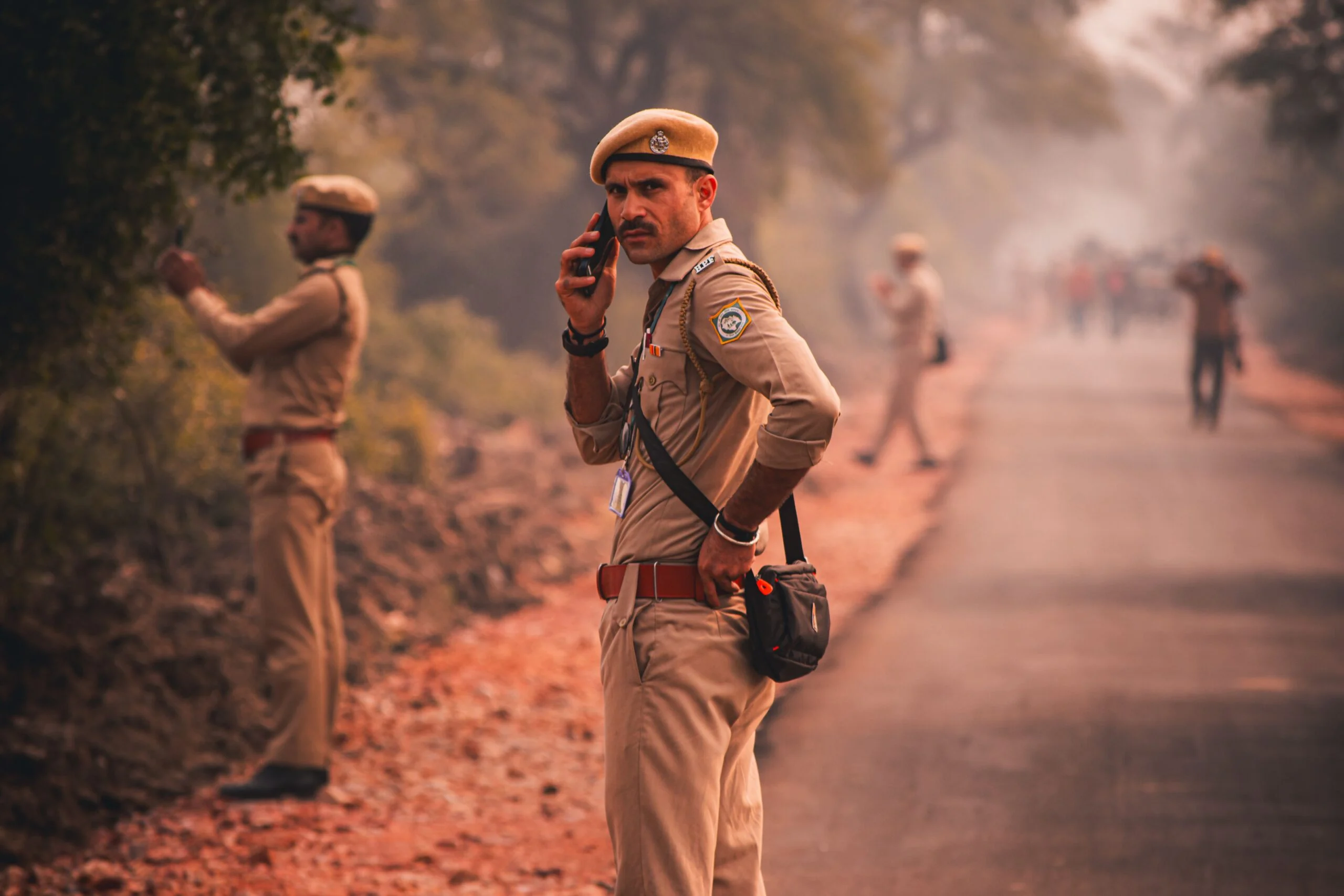
Featured photo by Tanay Agrawal on Pexels.
Sources: vacancy and staffing data via the India Justice Report and Drishti IAS.
What you can do
- Share the evidenceSend this to one person who should know about governance.Share on WhatsApp
- Give an afternoonTeach, mentor, clean up, or lend your professional skills.Ways to volunteer
- Tell us what's missingKnow a story, a fact we got wrong, or a solution worth spotlighting?Suggest a story
Politically neutral. Every claim sourced. Report a correction.


No comments yet