The Essential Guide to Community Radio Empowering Rural India
With over 300 licensed community radio stations operating across India, a grassroots broadcast revolution is reaching the villages, tribal belts, and farming communities that mainstream media consistently overlooks — in their own languages, on their own terms.
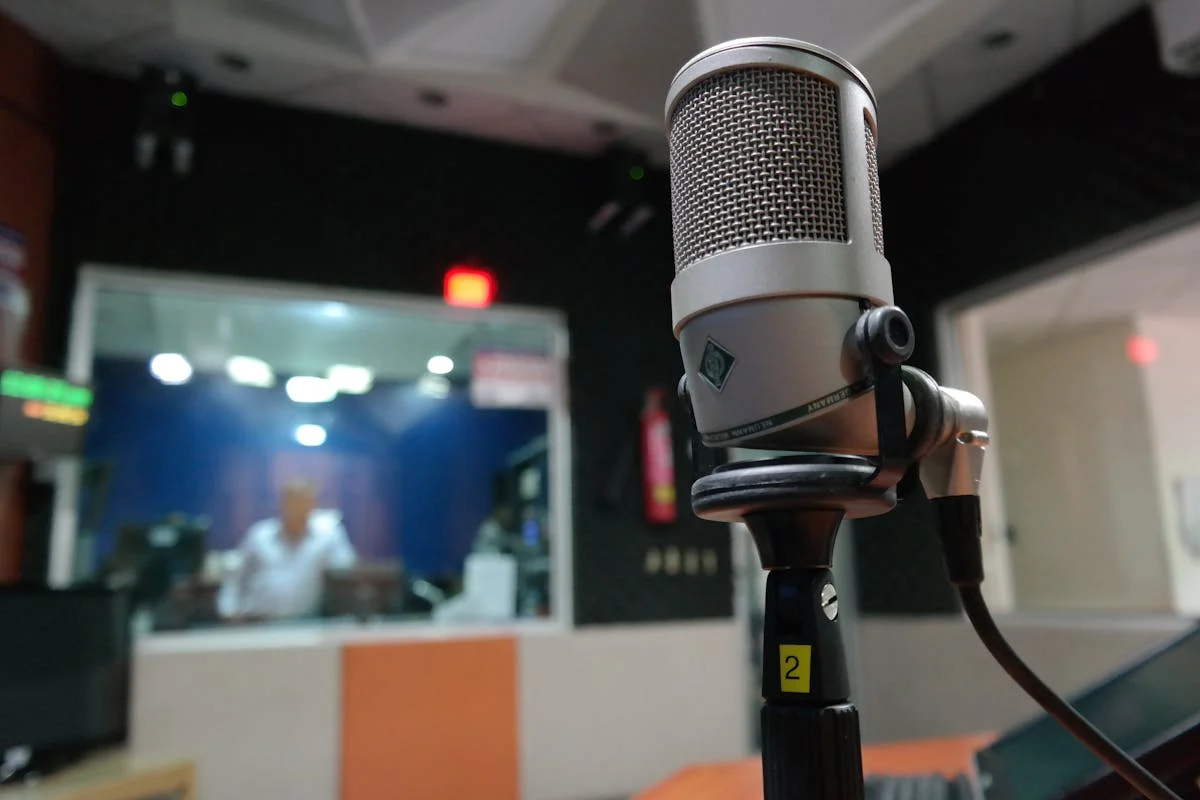
Deep in the Bundelkhand region of Uttar Pradesh, a farmer named Ramesh listens every morning to a broadcast in his native Bundeli dialect. The voice on the radio tells him which crops to plant this season, warns him about an approaching dry spell, and reminds him about a government subsidy he might be missing. The station is Radio Bundelkhand - one of more than 300 community radio stations now operating across rural India - and for Ramesh, it is more reliable than any smartphone app, more accessible than any government office, and more trusted than any television channel he has never been able to afford.
Community radio has quietly become one of the most powerful tools for rural empowerment in India. While the country’s media landscape is dominated by satellite news channels and urban-centric digital platforms, a grassroots broadcast movement has been building for two decades - reaching the villages, forest communities, fishing hamlets, and tribal belts that mainstream media consistently overlooks. This article traces that story: how community radio stations came to be, what they actually do on the ground, how they are transforming lives across gender, caste, and occupation lines, and what obstacles still stand in the way of their full potential.
The Origins of Community Radio in India
India’s community radio movement has roots in a 1995 Supreme Court ruling that declared airwaves a public resource, not the exclusive property of the state. That ruling cracked open the door. But it took nearly a decade of advocacy, policy debate, and pilot experiments before the government formally established a Community Radio Policy in 2006. Under that policy, any educational institution, civil society organisation, or agricultural body could apply for a licence to operate a low-power FM station serving a specific local area - typically a radius of about 10 to 15 kilometres.
The early adopters were universities and NGOs. Anna Community Radio (Anna CR), run by Anna University in Chennai, became one of the country’s first licensed stations and helped establish a model for how academic institutions could serve surrounding communities. Stations like Sangham Radio in Andhra Pradesh, launched by the Deccan Development Society, showed that a community-run station could give a genuine voice to Dalit women and marginalised farmers who had never seen their realities reflected in any medium.
By 2010, the Ministry of Information and Broadcasting had issued dozens of licences. By 2020, the number had crossed 250. Today, more than 300 licensed community radio stations operate across India, with concentrations in states like Odisha, Maharashtra, Tamil Nadu, Rajasthan, and Uttar Pradesh - though coverage remains uneven, and many licences have been issued without the funding or training needed to sustain them.
What Makes Community Radio Different
Commercial FM stations sell advertising. All-India Radio serves national policy objectives. Community radio does neither. Its mandate is hyper-local: to broadcast content produced by and for a specific community, in its own language or dialect, addressing its own concerns. Licences are non-commercial, meaning stations cannot carry advertisements from outside their broadcast zone, though they can accept local sponsorship. Content must be at least 50 percent locally produced. The result is a medium that is, by design, accountable to its listeners in a way no other broadcast format can be.
“Community radio is not radio for communities. It is radio by communities. That distinction is everything.”
Vinod Pavarala, UNESCO Chair on Community Media, University of Hyderabad
Farmer Advisories: The Most Direct Impact
Ask any researcher who has studied community radio in India what its single most documented impact is, and the answer is almost always the same: agricultural information. India has roughly 700 million people who depend directly or indirectly on farming for their livelihoods. Most of them are smallholders with less than two hectares of land. Their decisions - what to plant, when to sow, which inputs to use, where to sell - determine whether their family eats well or struggles.
For these farmers, timely, accurate, local information is worth more than almost anything else. A commercial radio station in Lucknow or Bhopal has no reason to broadcast granular advisories about the soil conditions in a specific block of Vidarbha or a specific cluster of villages in Marathwada. A community radio station based there has every reason to do exactly that.
Radio Bundelkhand: A Case Study in Agricultural Service
Radio Bundelkhand, operating at 90.4 FM from Chitrakoot in Uttar Pradesh, is one of the most-cited examples of agricultural community radio in India. The station broadcasts in Bundeli, a dialect spoken by millions of people in the Bundelkhand region who often find standard Hindi broadcasts confusing or alienating. Its programming is built around the agricultural calendar.
During the kharif season, the station broadcasts daily weather summaries sourced from the India Meteorological Department, translated into Bundeli idiom that farmers actually use. It runs call-in shows where listeners can ask questions directly to locally based agronomists. It broadcasts market prices from the nearest mandis so farmers know whether to sell today or wait. It has run programmes specifically on drought-resistant crop varieties suited to the region’s erratic rainfall - a concern that has become increasingly urgent as climate variability intensifies across central India.
Studies conducted by the community media research group at the University of Hyderabad found that listeners to Radio Bundelkhand reported significantly higher awareness of government agricultural schemes compared to non-listeners in similar villages. More concretely, several listener communities reported switching to less water-intensive crops after hearing multi-episode series on drought adaptation - a behavioural shift that directly affects food security in a region that has faced severe drought conditions in multiple recent years.
Beyond Agronomy: Livelihoods and Market Access
Agricultural advisories represent only one dimension of what community radio does for rural livelihoods. Across India, stations have built programming around the full spectrum of rural economic life: fishermen hearing about sea conditions and weather warnings before they go out; weavers learning about design trends and fair-trade buyers; MGNREGA workers finding out whether their job cards have been processed and payments credited; migrants calling in from cities to stay connected to their home villages. India’s rural-to-urban migration has accelerated in recent years, and for families separated across distances, community radio remains one of the few threads of shared connection.
Alfaz-e-Mewat, run by Vikas Samvad and operating in Mewat district of Haryana, has built a reputation for economic programming that addresses the specific livelihood concerns of the region’s Muslim farming community - a group that has historically been underserved by both government extension services and commercial media. Its programming on poultry farming, dairy cooperatives, and government scheme eligibility has been credited by local NGOs with measurable increases in scheme uptake.
Women’s Health and Gender Empowerment on Air
Perhaps no domain better illustrates the transformative potential of community radio than women’s health. Rural India carries some of the world’s worst maternal and child health indicators. Anaemia rates among women and adolescent girls remain catastrophically high. Institutional delivery rates, despite years of policy push, are still far below urban norms in many tribal and remote areas. The reasons are multiple: distance from health facilities, cost of transport, cultural resistance, lack of awareness about entitlements, and - crucially - silence. Topics like menstruation, reproductive health, domestic violence, and nutritional needs are simply not discussed in most rural public spaces.
Community radio creates a space where these topics can be raised. The intimacy of radio - heard privately through a small speaker or earphone - makes it possible to discuss subjects that would be impossible to address in a village meeting or at a public health camp. And when the voice on the radio belongs to a woman from the same community, speaking in the same dialect, the effect is multiplied.
Nalini Radio and the Menstrual Health Taboo
Nalini Radio, operated by the Mann Deshi Foundation in Mhaswad, Maharashtra, broadcasts to some of the poorest and most drought-affected communities in the state. Its programming for women is built around real conversations - interviews with local women, call-in discussions with ASHAs (Accredited Social Health Activists), and drama serials that address topics including early marriage, anaemia, safe delivery, and the right to refuse sterilisation without consent.
The station has run dedicated series on menstrual health, a topic so taboo in many of the villages it serves that girls were dropping out of school at puberty simply for lack of any information about what was happening to their bodies, let alone access to sanitary products. After airing a multi-week series that included interviews with gynaecologists, testimonials from local women who had switched to low-cost cloth pads, and practical guidance on hygiene - station coordinators reported listener feedback indicating that mothers were having conversations with their daughters that they had never had before.
Women as Producers, Not Just Listeners
One of the most significant features of the community radio model is that it actively builds women’s capacity as content producers, not just passive recipients of health messaging. Stations like Sangham Radio and Radio Namaskar (Odisha) have trained women from Dalit and Adivasi communities to research, script, record, and broadcast their own programmes. This is not simply a matter of representation - it is an economic and political transformation. Similar to how Indian women entrepreneurs are redefining business across Tier-2 cities, women community radio producers are building skills and confidence that ripple far beyond their immediate role. Women who learn to operate recording equipment, manage a broadcast schedule, and conduct interviews with government officials develop skills and confidence that extend far beyond the studio.
UNESCO’s 2014 assessment of community radio gender outcomes in South Asia found that in stations where women constituted more than 40 percent of the production team, programming was measurably more responsive to women’s health, safety, and economic needs - and listenership among women was substantially higher. The feedback loop between women producers and women listeners created content that genuinely served community needs rather than following assumptions made by outside “experts.”
Local Language Content: The Deepest Form of Inclusion
India has 22 officially scheduled languages and hundreds of dialects, many of which have no written script and no presence in any mainstream broadcast medium. The country’s dominant media - national news channels, OTT platforms, even much of All-India Radio - operates in a handful of languages that together reach perhaps half the population well and the other half poorly or not at all.
Community radio can broadcast in Gondi, Korku, Kui, Tulu, Mizo, Bodo, Kokborok, Dogri - in the specific dialect spoken by the 10,000 people who live within its broadcast radius. This linguistic specificity is not a marginal benefit. For communities whose languages have been historically suppressed, whose children are taught in a language not spoken at home, and who navigate government systems that demand literacy in a language they were never formally taught, hearing their own language on the radio carries enormous significance - both practical and psychological.
Preserving Oral Traditions and Cultural Memory
Beyond the practical utility of local language broadcasting, community radio has emerged as an important tool for cultural preservation. Adivasi and tribal communities across India maintain rich oral traditions - songs, stories, ritual chants, agricultural knowledge encoded in verse - that are at risk of disappearing as younger generations migrate to cities and adopt dominant cultural norms.
Stations like Radio Manav Rachna in Faridabad and Namma Dhwani in Budikote, Karnataka have built archives of local music, folklore, and oral history. Namma Dhwani, one of India’s first community media centres, has recorded hundreds of hours of folk songs from the Kannada-speaking rural communities it serves - material that would otherwise exist only in the memories of elderly community members and would be lost within a generation. Broadcasting these recordings does double duty: it preserves them and it communicates to younger listeners that their cultural heritage has value.
Navigating Government Services in the Mother Tongue
The practical value of local language content is perhaps most visible in how community radio helps communities navigate government services. Schemes like PM-KISAN, Pradhan Mantri Awas Yojana, the National Food Security Act, and MGNREGA are theoretically available to some of India’s poorest citizens - but the gap between formal entitlement and actual access is enormous, and it is often a language gap as much as anything else.
A community radio station that explains in simple, local dialect how to register for a scheme, what documents are needed, how to file a complaint if a payment does not arrive, and who to contact at the block office - performs a public service of incalculable value. It does the work that government extension workers are often unable or unwilling to do. Several stations have also established “janta ki awaz” (people’s voice) programmes specifically for airing grievances about scheme non-delivery. This kind of civic engagement parallels the broader trend of India’s youth redefining community service - and community radio often provides the platform through which young people first discover their civic voice., creating a form of informal accountability journalism that operates entirely within the community.
Anna CR: The University Radio That Became a Community Institution
Anna Community Radio, broadcasting at 90.4 FM from the campus of Anna University in Chennai, occupies a unique position in India’s community radio landscape. As one of the country’s first licensed stations and the first established by an engineering university, it helped define what university-based community radio could look like - and demonstrated that academic institutions could serve surrounding non-academic communities with genuine relevance.
The station’s coverage area extends into the dense urban neighbourhoods around the Anna University campus, including areas with significant working-class and migrant populations. Its programming has evolved considerably since its founding, incorporating content on urban health, legal rights, vocational training opportunities, and local civic issues alongside the educational content one might expect from a university station.
Anna CR is also one of the few community radio stations in India that has invested seriously in training journalists - not just presenters - to investigate and report on local issues. Students from the university’s communication department have produced investigative features on topics ranging from water quality in local reservoirs to safety conditions in nearby factories, giving community radio in Chennai a credibility as a journalism institution as well as a community service.
The University-Community Radio Model
The university-based station model has both advantages and limitations. Universities bring technical resources, trained staff, and institutional continuity. They can survive funding gaps that would destroy an NGO-run station. They can attract national and international research partnerships. On the other hand, the community served by a university station is not always the community it broadcasts to - there is a genuine risk that academic priorities override community ones, and that programming becomes more about student learning than listener service.
Anna CR has navigated this tension more successfully than many similar stations, partly because of explicit policies requiring listener feedback mechanisms and community advisory boards. Its experience offers important lessons for the dozens of other university-run stations that have followed, and for regulators thinking about how to structure licence conditions that genuinely protect community interest.
Challenges and Structural Constraints
The picture painted above is a real one, but it is not complete without an honest account of the constraints under which community radio operates in India. The sector faces significant structural, regulatory, and financial challenges that limit its reach and sustainability.
Funding: The Chronic Crisis
Community radio stations in India cannot carry national advertising. They can seek local sponsorship from businesses within their broadcast area, but in many rural and tribal areas, there is simply no local commercial economy with the capacity to sustain a media operation. Many stations depend on donor funding - from foundations, from international organisations like UNESCO, from CSR budgets of larger corporations - which is inherently unpredictable.
The Prasar Bharati community radio support scheme provides some financial assistance, but amounts are modest and bureaucratic processes are slow. Several stations that built strong community followings have had to go dark because of funding gaps that ran only a few months. This is a structural failure of the policy framework, not a failure of the stations themselves.
Licensing Delays and Regulatory Friction
Despite a formal policy framework, obtaining a community radio licence in India remains a slow and uncertain process. Applicants report waiting years for spectrum allocation decisions. The Ministry of Information and Broadcasting processes applications through channels that involve multiple agencies, including the Ministry of Home Affairs (which has security clearance responsibilities), creating delays that have sometimes stretched beyond five years.
These delays effectively exclude many communities that could benefit most from community radio - particularly in tribal areas and border regions where spectrum politics are most sensitive. The sector’s advocates have repeatedly called for a streamlined, time-bound licensing process with a dedicated clearance window, but reform has moved slowly.
Spectrum Limitations and Content Restrictions
Community radio stations in India are limited to low-power FM transmission - a radius of roughly 10 to 15 kilometres - which is appropriate for genuinely local service but creates difficulties for communities spread across larger geographic areas. Stations cannot relay each other’s content, which prevents the formation of community radio networks that might achieve economies of scale in content production. The restriction on news programming (community stations can broadcast public interest information but technically are not authorised to broadcast news in the same way commercial stations are) creates ambiguity about coverage of local civic affairs - a restriction that many stations navigate carefully but that creates legal uncertainty.
The Digital Future: WhatsApp, Podcasts, and Convergence
The rise of affordable smartphones and cheap mobile data has created a genuinely new landscape for community media in India - one that community radio stations are beginning to navigate with considerable creativity. The conventional assumption that radio and digital media are competing formats turns out to be wrong. For many community stations, the two are powerfully complementary.
Stations that have built strong listener relationships over years of FM broadcasting are now using WhatsApp groups to extend those relationships into two-way communication. Listeners who previously had no way to respond to a broadcast beyond calling in during a live programme can now send voice notes, photographs, and video clips that become raw material for the next broadcast. This transforms community radio from a one-to-many medium into something closer to a true community dialogue platform.
Several stations have begun producing short podcast episodes - summaries of their most popular programmes, recordings of interviews, compilations of listener messages - that travel far beyond the FM broadcast radius. These podcasts can be shared on WhatsApp chains, reaching family members who have migrated to cities, diaspora communities abroad, and researchers and policymakers who would never have heard the original broadcast.
Reaching the Unreached During COVID-19
The COVID-19 pandemic was a moment of crisis that also revealed the remarkable resilience and adaptability of community radio. During lockdowns, when all government offices, health centres, and community gathering spaces were shut, community radio stations remained on air. They broadcast critical health information in local languages - information about symptoms, isolation, when to seek care, and later about vaccine availability and registration processes. In several instances, stations arranged live connections with district health officers so that listeners could ask questions directly.
Radio Bundelkhand broadcast round-the-clock during the peak lockdown periods, adding special programming on mental health (an area of near-total silence in mainstream rural broadcasting), debt relief for farmers, and how to access emergency food rations. Several stations reported record listenership during this period - a reminder that the demand for trusted, local, real-time information is enormous, and that community radio uniquely meets it when no other medium can.
What India’s Community Radio Movement Needs Next
The community radio movement in India has demonstrated its value beyond reasonable doubt. What it needs now is not more demonstrations but structural support that matches its demonstrated potential.
- A dedicated community media fund that provides multi-year core funding to established stations, modelled on successful programmes in South Africa, Canada, and Australia, where government funding of community media is treated as a public good investment rather than charity.
- Streamlined licensing with a maximum 12-month processing time, a single-window clearance mechanism, and transparent criteria for denial that applicants can appeal.
- Network formation rights that allow community stations to share content and coordinate programming across a region without violating the current prohibition on networking - enabling collaborative content production that individual stations cannot afford alone.
- News broadcasting rights clearly extended to community stations, with appropriate responsibility frameworks, so that stations can report on local governance, scheme delivery, and civic affairs without legal ambiguity.
- Mandatory inclusion of community radio in government information dissemination frameworks, so that when a new scheme is launched, a new health advisory issued, or a natural disaster approaches, community stations are part of the official communication chain rather than an afterthought.
None of these are radical proposals. They draw on well-established international models and on recommendations that India’s own community radio organisations have been making for years. What they require is the political will to treat community media as infrastructure - as essential to rural India as roads, electricity, and water - rather than as a welfare programme that tolerates a few dozen enthusiastic NGOs making noise in the countryside.
The Voices That Matter Most
Every policy argument for community radio eventually comes back to the same thing: the people it serves. Not abstractions about media plurality or development communication theory, but specific people making specific decisions about their lives, helped or not helped by the information they can access.
It is the woman in Mhaswad who heard a radio drama about domestic violence, recognised her own situation for the first time, and found the courage to ask her ASHA worker about her options. It is the Adivasi farmer in Odisha who heard a programme about forest rights and went to the district collector’s office for the first time in his life to claim a title that was legally his. It is the schoolteacher in Bundelkhand who recorded her students singing folk songs for Radio Bundelkhand and watched those children, for the first time, understand that their language and their stories were worth broadcasting.
India has built 300 community radio stations. In a country of 640,000 villages, that is a beginning. The infrastructure exists, the policy framework exists, the demonstrated impact exists, and - most importantly - the communities exist, waiting to speak and to be heard.
What community radio ultimately offers rural India is not information delivery. It is voice. And in a democracy, voice is not a luxury.
How You Can Support Community Radio in India
If you believe in the power of community voices, there are concrete ways to support the movement:
- Support organisations like the Community Radio Forum of India (CRFI), which advocates for policy reform and provides training and networking support to member stations.
- Donate to or volunteer with a station in your region. Many stations welcome support for content production, translation, or technical maintenance.
- Advocate with your local MP or state legislators for budget allocation to community media within government information and communication schemes.
- If you work in journalism, academia, or civil society, collaborate with community stations on content that they could not produce alone.
- Share this story. The silence around community radio - the fact that most urban Indians know almost nothing about a movement of 300 stations serving millions of their fellow citizens - is part of what keeps it underfunded and undervalued.
Community radio is one of India’s most quietly effective development tools. It deserves to be heard - and supported - far more loudly than it has been.
What you can do
- Share the evidenceSend this to one person who should know about poverty.Share on WhatsApp
- Back what worksVolunteer time or skills with groups doing this work.Ways to volunteer
- Tell us what's missingKnow a story, a fact we got wrong, or a solution worth spotlighting?Suggest a story
Politically neutral. Every claim sourced. Report a correction.


No comments yet