How India's Self-Help Groups Became the World's Largest Microfinance Network
How 90 million Indian women across 10 million Self-Help Groups built the world’s largest microfinance network through NABARD, DAY-NRLM, and collective savings.
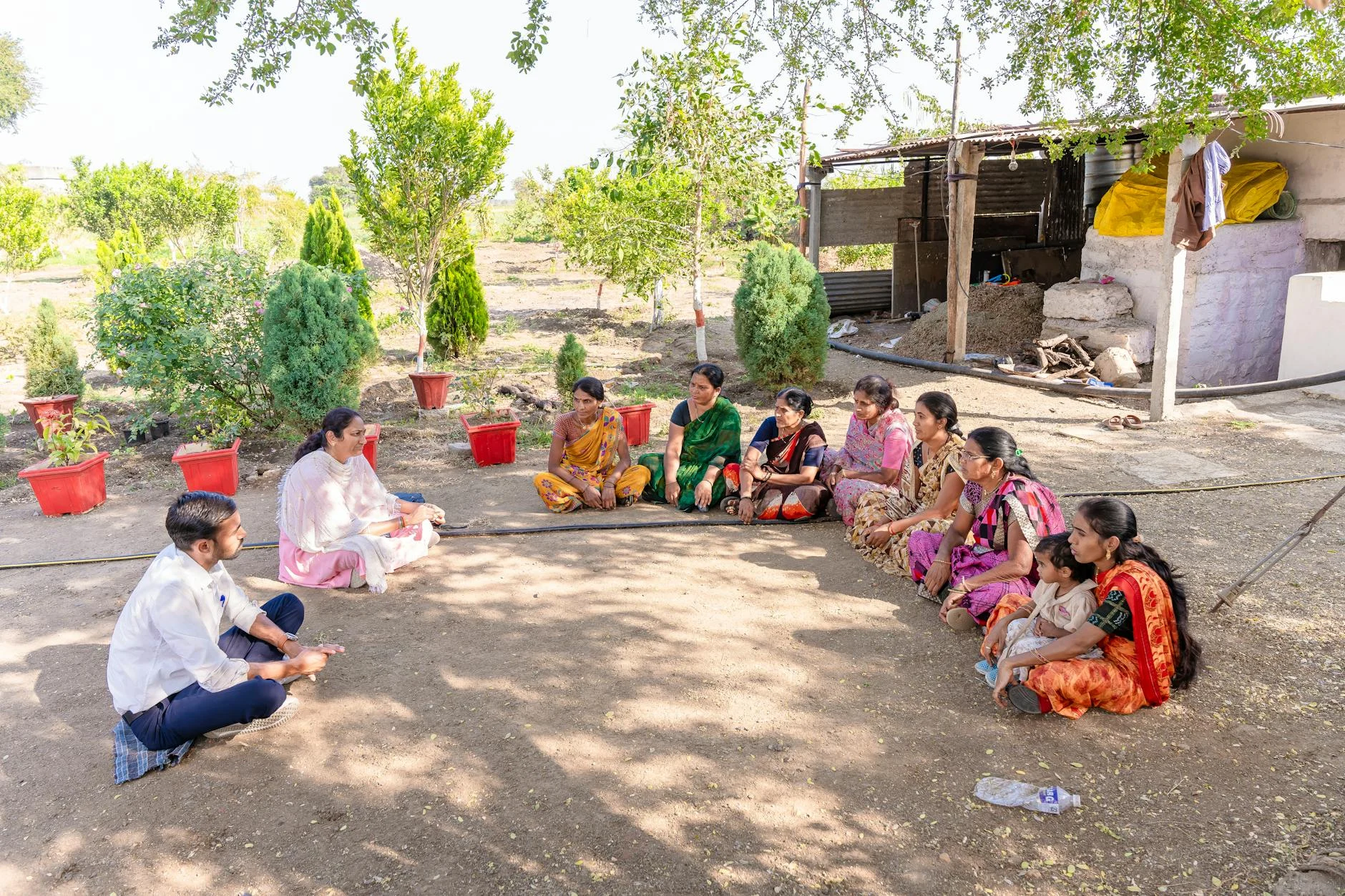
Ninety million women. Ten million groups. A combined loan portfolio worth trillions of rupees. India’s Self-Help Group movement is not just the world’s largest microfinance network - it is one of the most significant social experiments of the twentieth century, quietly reshaping rural India from the ground up.
The Origin Story: From MYRADA to a National Movement
The story begins in the early 1980s in Karnataka, where a development NGO called MYRADA (Mysore Resettlement and Development Agency) was struggling with a problem. It had taken large loans from international donors to lend to poor rural communities, but the formal group-lending model it had inherited was failing. Repayment was erratic. Conflicts broke out. Borrowers felt no real ownership over the process.
MYRADA’s team made a pragmatic pivot. Instead of imposing top-down credit structures, they began facilitating small informal groups - mostly women - who already had social ties, shared savings habits, and a natural reason to trust one another. These groups pooled their own savings first, lent to each other from that pool, and only later approached banks for external credit. The results were striking: repayment improved, conflicts fell, and women who had never handled money formally began negotiating with bank managers.
NABARD - the National Bank for Agriculture and Rural Development - was watching. In 1992, it launched the Self-Help Group - Bank Linkage Programme (SHG-BLP), formally connecting informal savings groups with the mainstream banking system. This single policy decision transformed a local experiment into a national institution. By the turn of the millennium, India had more than 2 million SHGs. By 2010, the number crossed 7 million. Today, it stands at over 10 million groups, with more than 90 million women members.
“The SHG movement did not originate in a government ministry or a policy paper. It grew from the ground, through the practical wisdom of women who understood that collective action could unlock what individual effort could not.”
NABARD Annual Report on SHG-BLP
How Self-Help Groups Actually Work
The mechanics of an SHG are intentionally simple. A group of 10 to 20 women - ideally from the same village or neighbourhood, roughly similar in economic standing - comes together regularly, usually once a week or fortnight. Each member contributes a fixed savings amount, often as little as Rs 10 to Rs 100 per meeting, into a common fund.
This internal corpus is then lent out to members in need - for medical emergencies, agricultural inputs, school fees, or small business needs. Crucially, the interest on these internal loans stays within the group, growing the common fund further. Members vote on who gets a loan, what interest rate to charge, and what repayment terms apply. Peer accountability replaces the collateral that banks demand but poor women rarely have.
The Three Stages of SHG Growth
- Stage 1 - Formation (0-6 months): Group forms, savings habits are established, simple internal lending begins. The SHG learns bookkeeping and conducts elections for office-bearers.
- Stage 2 - Bank Linkage (6-18 months): The group opens a savings account with a local bank, often a Regional Rural Bank (RRB) or cooperative. After proving financial discipline, the group receives its first external loan - typically 4 to 8 times the group’s internal savings corpus.
- Stage 3 - Maturation and Enterprise: Groups graduate from consumption loans to livelihood and enterprise loans. Some form Cluster Level Federations or Village Organisations, gaining economies of scale and political voice.
The elegance of this model lies in what it does not require. No collateral. No credit history. No guarantor. Social capital - the trust built through years of living side by side - acts as the only underwriting mechanism. And remarkably, it works: SHG repayment rates to banks consistently exceed 95 percent, far outperforming individual retail loans in the formal sector.
NABARD’s SHG-Bank Linkage Programme: Scale That Defies Comparison
The SHG-Bank Linkage Programme (SHG-BLP) that NABARD administers has no real parallel in the world. As of March 2024, NABARD’s annual Status of Microfinance in India report documents the following scale:
Metric | 2020 | 2024 |
|---|---|---|
Total SHGs linked to banks | 6.3 million | 7.6 million |
SHGs with outstanding bank credit | 4.8 million | 5.5 million |
Total bank credit outstanding | Rs 1.10 lakh crore | Rs 2.49 lakh crore |
Total savings with banks | Rs 31,218 crore | Rs 55,768 crore |
Women members | 70 million | 90+ million |
To put the credit outstanding figure in perspective: Rs 2.49 lakh crore is approximately USD 30 billion. This is credit flowing directly to rural women who, a generation ago, had no access to formal finance at any interest rate. The average loan size per SHG is around Rs 4.5 lakh - meaningful capital for small agricultural operations, cattle rearing, handloom businesses, or petty trade.
The programme operates through an elaborate institutional architecture. NABARD provides refinance to commercial banks, regional rural banks, and cooperative banks that lend to SHGs. NGOs and government departments serve as Self-Help Promoting Institutions (SHPIs), facilitating group formation and capacity building. Village-level federations aggregate the voice and financial power of individual groups. It is a three-tier system - group, federation, apex body - that has been replicated in dozens of countries. India has a long history of such cooperative credit models - the dairy cooperative network, for instance, proved decades earlier that collective pooling can transform rural livelihoods at national scale.
State Leaders: Andhra Pradesh, Tamil Nadu, and Kerala
The SHG movement has not spread uniformly across India. Three southern states account for a disproportionate share of SHG membership, savings, and credit - and each has developed its own institutional model.
Andhra Pradesh: The Velugu and Society for Elimination of Rural Poverty (SERP) Model
Andhra Pradesh (before its 2014 bifurcation) became the most aggressive proponent of the SHG model, through the Velugu programme launched in 2000 and later through SERP - the Society for Elimination of Rural Poverty. The state created an institutional pyramid: SHGs at the base, Village Organisations (VOs) at the village level, and Mandal Samakhyas at the sub-district level. By 2010, Andhra Pradesh had more than 1.1 million SHGs, covering virtually every poor rural household in the state.
The state’s model went further than just credit. SHGs were mobilised for social campaigns - reducing child marriage, preventing domestic violence, running public distribution system monitoring committees, and negotiating lower fertiliser prices with dealers. Women who had never spoken in a public forum began addressing gram sabhas and standing for panchayat elections. However, the AP model’s dark chapter came in 2010, when an over-indebtedness crisis triggered by multiple competing MFIs led to a wave of farmer and borrower suicides - a critical warning about what happens when the SHG framework is distorted by aggressive commercial lending.
Tamil Nadu: The Mahalir Thittam and Kudumbashree-Inspired Approach
Tamil Nadu’s SHG movement began with the Mahalir Thittam (Women’s Scheme) in 1989, making it one of the earliest state-sponsored SHG programmes in India. The state’s Tamil Nadu Corporation for Development of Women (TNCWD) has consistently ranked among the top SHPI institutions by group quality and graduation rates. Tamil Nadu SHGs are particularly strong in urban areas - a characteristic that distinguishes the state from the predominantly rural SHG pattern seen in Andhra Pradesh and Bihar.
Kerala: Kudumbashree
Kerala’s Kudumbashree programme, launched in 1998, is arguably the most holistic SHG-linked poverty alleviation programme in India. Operating under the State Poverty Eradication Mission, Kudumbashree organises women into Neighbourhood Groups (NHGs) - the equivalent of SHGs - which are federated into Area Development Societies (ADS) and Community Development Societies (CDS) at the panchayat level.
What sets Kudumbashree apart is its integration with local governance. The CDS is formally recognised as a sub-committee of the gram panchayat, giving women’s groups direct institutional access to local government planning and budgets. Kudumbashree groups run more than 55,000 micro-enterprises, collectively employing lakhs of women in agriculture, catering, cleaning services, handicrafts, and construction. In 2023, Kudumbashree’s turnover exceeded Rs 3,000 crore.
DAY-NRLM: When the Central Government Took Ownership
The National Rural Livelihoods Mission (NRLM), launched in 2011 and later renamed Deendayal Antyodaya Yojana - NRLM (DAY-NRLM), marked the central government’s formal commitment to institutionalising the SHG framework at national scale. Unlike earlier poverty programmes that ran parallel to the SHG system, DAY-NRLM was designed specifically to build and strengthen SHGs as its implementation vehicle.
The mission’s target was ambitious: mobilise 100 million rural poor households into SHGs by 2024. As of 2025, DAY-NRLM has mobilised approximately 90 million women across 10 million SHGs, falling marginally short but representing an extraordinary achievement in scale of organised poverty intervention. The programme operates in all 36 states and union territories, across approximately 700 districts and 6,000 blocks.
Key DAY-NRLM Interventions
- Community Investment Fund (CIF): Grant funds provided to village-level federations to on-lend to SHG members at subsidised rates, reducing dependence on moneylenders charging 5-10% per month.
- Interest Subvention: SHG members who repay loans on time receive interest subvention that effectively reduces their borrowing cost to 4-7% per annum - competitive with formal sector personal loans.
- Lakhpati Didi Target: The Modi government’s 2024 target of creating 3 crore “Lakhpati Didis” - women earning Rs 1 lakh or more annually from SHG-linked livelihoods - gave the programme a concrete output metric.
- Bank Mitras and Banking Correspondents: SHG women trained as banking correspondents, extending last-mile financial access in villages with no brick-and-mortar bank branch.
- Market Linkages: DAY-NRLM has facilitated linkages between SHG producers and retail chains, government procurement systems, and export buyers - moving SHGs from subsistence production to market participation.
Women’s Empowerment: Beyond the Credit Narrative
The SHG movement’s impact on women’s empowerment is one of the most studied and debated topics in development economics. The evidence, drawn from dozens of impact evaluations across multiple states, is nuanced but broadly positive.
A landmark study by Duflo and Chattopadhyay (2004), published in the Quarterly Journal of Economics, found that women’s SHG participation in West Bengal and Rajasthan was significantly correlated with increased political participation and confidence in engaging with public institutions. More recent work by Rao and Datta (2022) for the World Bank found that sustained SHG membership of five or more years was associated with 23% higher household incomes, significantly lower rates of domestic violence, and children - particularly girls - being 18% more likely to complete secondary school.
The mechanisms are not purely financial. SHG meetings serve as a protected space where women can discuss issues that are otherwise silenced - domestic violence, alcoholism, land rights, child marriage. Many SHG graduates have gone on to become full-time women entrepreneurs building businesses in Tier-2 cities, carrying the confidence and financial discipline learned in their groups into the wider market. Many SHGs have become the de facto first responder system in rural India for social emergencies. In multiple states, SHG networks have been the primary vehicle for delivering government schemes - subsidised LPG under Ujjwala Yojana, insurance under PMSBY and PMJJBY, and nutrition interventions under the Integrated Child Development Services (ICDS).
“Before joining the group, I never entered the bank. The manager’s chair seemed like a throne. Now I sit across from him and tell him what my group needs.”
SHG Member, Warangal district, Telangana
Rural Credit Revolution: Filling the Gap Left by Formal Banking
For most of independent India’s history, the rural credit market was dominated by informal moneylenders charging interest rates of 36 to 120 percent per annum. The nationalisation of banks in 1969 and the subsequent priority sector lending mandates were intended to change this - and did so, partially. But the “last mile” problem persisted. Banks were present in towns; moneylenders were present in villages.
SHGs broke this impasse in a way that direct government lending had failed to do. By aggregating small depositors and borrowers, SHGs gave banks a cost-effective channel to reach rural households they could not serve individually. The average cost of delivering a rupee of credit through the SHG channel is significantly lower than the cost of direct retail lending, because the SHG absorbs the origination, monitoring, and recovery costs that banks would otherwise bear.
The impact on rural credit access has been transformative. A 2019 survey by NABARD found that 53% of rural households in India had at least one member in an SHG - a penetration rate that exceeds formal bank account ownership in many districts. In the most SHG-dense states - Andhra Pradesh, Telangana, Tamil Nadu, Kerala, Odisha - the share rises above 70%.
Digital Transformation: SHGs in the 21st Century
The SHG movement is undergoing a rapid digital transformation, driven by three forces: the Jan Dhan Yojana’s success in opening bank accounts for the previously unbanked, the proliferation of low-cost smartphones with UPI payment capability, and the government’s push to deliver subsidies and benefits directly to SHG accounts.
Digital Finance Integration
Under DAY-NRLM’s digital initiatives, SHG passbooks have been digitised on a centralised platform - the National Rural Livelihoods Management System (NRLMS). Over 5 million SHGs now maintain digital records of savings, loans, and repayments accessible through both a web interface and a mobile app. This digitisation has dramatically reduced transaction costs, improved audit trails, and allowed state missions to identify dormant groups or those at risk of default in near real time.
The Banking Correspondent model, in which trained SHG women act as human ATMs for their communities, has been further strengthened through the SHG-Banking Correspondent (SHG-BC) programme. Over 300,000 SHG members now serve as BCs, collectively handling more than Rs 1,500 crore in monthly transactions in villages with no bank branch within 5 kilometres.
SHG Brands and E-Commerce
Several state missions have launched umbrella brands for SHG products. Kerala’s Kudumbashree operates an extensive network of branded micro-enterprises. Odisha’s Mission Shakti has partnered with Reliance Retail and Amazon India to list SHG products on national e-commerce platforms. The Government of India’s Open Network for Digital Commerce (ONDC) has a dedicated SHG seller onboarding pathway, connecting rural producers directly to urban consumers without intermediaries.
In 2023, India Post and DAY-NRLM launched a joint initiative to use India Post’s 155,000-strong post office network as a sales and logistics channel for SHG products, potentially giving rural women producers access to a distribution network that no private company matches in depth and geographic reach.
Challenges: Political Interference, Over-Indebtedness, and Quality Dilution
For all its achievements, the SHG movement carries serious structural vulnerabilities that practitioners, policymakers, and critics have been flagging for two decades.
Political Capture and Elite Diversion
In states where SHGs have become a significant source of credit and social influence, political parties have sought to capture them. In Andhra Pradesh, Telangana, and Tamil Nadu, SHG federations have been functionally aligned with ruling parties, using the groups as voter mobilisation platforms and directing loan benefits toward politically connected households. Research by the International Food Policy Research Institute (IFPRI) has documented systematic evidence of elite capture in SHGs - instances where better-off members disproportionately access group funds or external loans, contrary to the model’s founding purpose.
Over-Indebtedness
The 2010 Andhra Pradesh microfinance crisis remains the most dramatic demonstration of what happens when credit delivery is decoupled from genuine financial literacy and borrower protection. As commercial MFIs poured into AP competing to lend to the same SHG members who already held multiple loans, a debt trap emerged. The subsequent state ordinance that effectively shut down MFI lending overnight caused credit supply to collapse and triggered a sector-wide crisis across India.
The Reserve Bank of India’s 2011 Malegam Committee recommendations and the subsequent NBFC-MFI regulatory framework were direct responses to this crisis, introducing borrower protection norms, loan limits, and credit bureau requirements that still govern the sector. But over-indebtedness remains a latent risk wherever SHG members borrow from multiple sources simultaneously without adequate credit bureau coverage.
Quality vs. Quantity Tension
With the DAY-NRLM’s numerical targets for group formation, there is persistent tension between quantity and quality. Surveys by the Centre for Microfinance at IFMR have found that 20-30% of SHGs in government programmes are “dormant” - groups formed on paper to meet targets but not meeting regularly or conducting genuine financial transactions. These groups consume SHPI resources, create misleading headline statistics, and crowd out resources that could strengthen active groups.
Global Recognition: A Model the World Is Studying
India’s SHG-Bank Linkage Programme has attracted sustained international interest as a scalable model for financial inclusion in low-income settings. The World Bank, UNDP, the Asian Development Bank, and bilateral aid agencies from Germany (GIZ), the UK (FCDO, formerly DFID), and the United States (USAID) have all funded programmes that study, document, or adapt the Indian SHG model for application in sub-Saharan Africa, Southeast Asia, and Central America.
The model has been formally adopted, with local adaptations, in Ethiopia (the Women’s Development Fund), Kenya (the Savings and Internal Lending Communities model), Cambodia, Rwanda, and parts of Bangladesh - though Bangladesh’s better-known Grameen Bank model actually predates and runs parallel to India’s SHG approach with a different architecture.
In 2022, NABARD and the United Nations Capital Development Fund (UNCDF) signed a memorandum of understanding specifically to export the SHG-BLP methodology to developing countries in Asia and Africa. The NABARD manual on SHG formation, available in seven Indian languages plus English, is now used by development practitioners across 14 countries.
What the Numbers Mean for India’s Future
The numbers behind India’s SHG movement are not merely statistics - they represent a quiet transformation in the texture of rural life. When 90 million women meet weekly to discuss money, lend to each other, and collectively negotiate with banks and government officials, something structural shifts in the distribution of economic and social power.
Consider what the SHG model has accomplished that top-down programmes have repeatedly failed to do: it has created a self-sustaining credit infrastructure that does not depend on government subsidy for day-to-day operations. The groups generate their own capital, manage it collectively, and bear the consequences of their lending decisions. This accountability loop - largely absent from government-directed credit programmes - is the source of the movement’s durability.
The challenges ahead are real. Digital inclusion within the SHG system is patchy - smartphone ownership and reliable connectivity remain obstacles in the most remote districts. Climate change is disrupting the agricultural livelihoods that SHG credit primarily supports. And the political instrumentalisation of SHGs remains a persistent threat to their integrity as community institutions.
But the foundation is solid. India has built, over four decades of patient institutional work, a network of 10 million small groups with collective financial intelligence, social trust, and growing market connections. No other country has done this at this scale. The SHG movement is not a pilot. It is not an experiment. It is the infrastructure of rural India’s economic future.
Frequently Asked Questions
Who started Self-Help Groups in India?
The SHG concept in India originated with MYRADA, an NGO in Karnataka, in the early 1980s. NABARD formalised and scaled the model through the SHG-Bank Linkage Programme launched in 1992. The central government institutionalised SHGs as a poverty alleviation mechanism through the National Rural Livelihoods Mission (NRLM) in 2011.
How many members does an SHG have?
A standard SHG has 10 to 20 members - the range recommended by NABARD and DAY-NRLM guidelines. Groups smaller than 10 lack sufficient collective financial power; groups larger than 20 become difficult to manage and lose the intimate accountability that makes the model work.
What is the SHG-Bank Linkage Programme?
The SHG-Bank Linkage Programme (SHG-BLP), administered by NABARD, is the formal mechanism through which banks extend credit to SHGs. Under the programme, SHGs first build an internal savings corpus, then receive a bank loan typically equivalent to 4 to 8 times their savings. The programme has disbursed over Rs 2.49 lakh crore in cumulative credit to date.
Why is the repayment rate for SHG loans so high?
SHG loan repayment rates consistently exceed 95 percent because of peer accountability. When a group member fails to repay, it affects the entire group’s creditworthiness and future access to loans. Social pressure within a small, socially connected group is far more effective than any formal legal enforcement mechanism for small-value rural loans.
Join the Conversation
India’s Self-Help Group movement is a living, evolving institution - and one of the most powerful demonstrations that communities, given the right enabling conditions, can build financial infrastructure from scratch. Whether you work in development, finance, policy, or community organising, the SHG model has lessons worth studying.
At Unite4India, we document and celebrate exactly these kinds of ground-up social innovations. Explore our coverage of community-led development models, women’s empowerment initiatives, and rural economic transformation across India.
What you can do
- Share the evidenceSend this to one person who should know about poverty.Share on WhatsApp
- Back what worksVolunteer time or skills with groups doing this work.Ways to volunteer
- Tell us what's missingKnow a story, a fact we got wrong, or a solution worth spotlighting?Suggest a story
Politically neutral. Every claim sourced. Report a correction.
No comments yet