Holi's Hidden Power: How a Festival Suspends India's Caste System
Holi erases visible markers of caste for a few hours. This article explains how the festival's ritual inversion briefly suspends social hierarchy.
The One Day Nobody Asks Your Surname
In most of India, your surname is your social security number. It tells people your caste, your community, your place in the hierarchy. It determines who invites you home, who eats with you, who marries you. This invisible architecture shapes daily interactions across 1.4 billion lives.
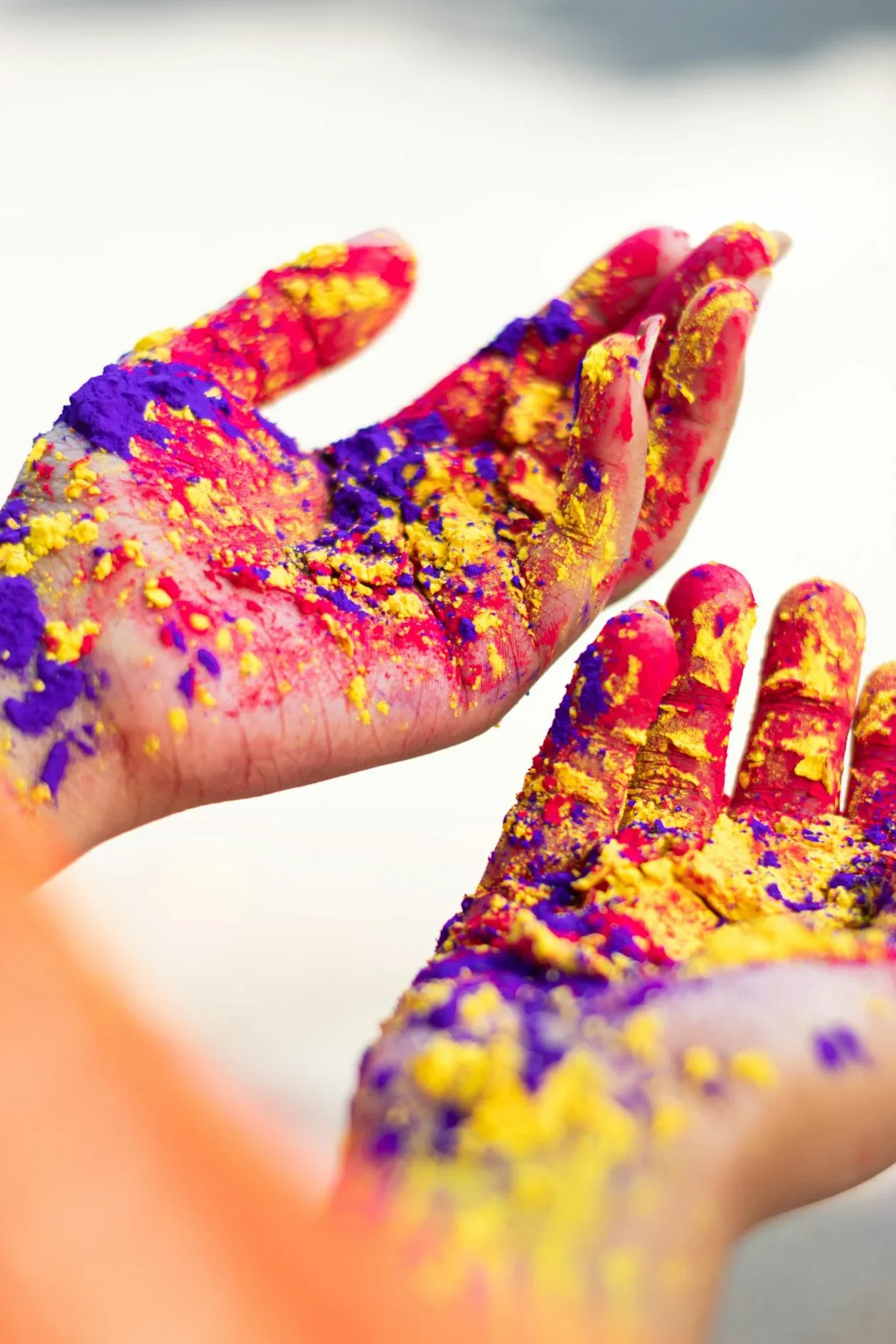
Then Holi arrives, and for a few chaotic, colourful hours, nobody can tell who is who. A Sharma covered in pink gulal looks exactly like a Paswan covered in pink gulal. A Brahmin drenched in green water is indistinguishable from a Dalit drenched in green water. The visual markers of caste, clothing, cleanliness, posture, distance, are erased by colour.
This isn’t accidental. It’s the festival’s oldest and most radical function.
The Anthropology of Disorder
Anthropologists have a term for what Holi does: “ritual inversion.” It’s a temporary period where social hierarchies are deliberately turned upside down. The servant smears colour on the master’s face. The young drench the old. Women chase men with sticks (lathmar Holi in Barsana). The poor enter the rich person’s courtyard uninvited.
Victor Turner, the anthropologist who studied ritual across cultures, called this “communitas”, a fleeting state of social equality that emerges when normal structures are suspended. India’s caste system is among the world’s most rigid social hierarchies. Holi is India’s most powerful mechanism for temporarily breaking it.
The question unite4india readers should ask: if a festival can create communitas, why can’t daily life?
What Holi Originally Meant
The earliest references to Holi (7th century CE) describe it as a fertility festival marking the spring harvest. But by the medieval period, it had evolved into something more socially radical. The Bhakti movement poets, Kabir, Tulsidas, Surdas, Mirabai, used Holi as a metaphor for divine love that transcends caste and class.
Surdas wrote about Krishna playing Holi with gopis of all backgrounds. Kabir used the festival to mock caste pride: “Holi khele Raghuveera, awadh mein Holi khele Raghuveera“, even Ram plays Holi, so who are you to stand apart?
The Bhakti poets understood something powerful: festivals create spaces where social criticism becomes possible under the cover of joy. You can’t preach equality and expect people to listen. But you can drench them in colour and make them experience it.
Modern Holi: Where Caste Still Shows
The romantic view of Holi as a caste equalizer needs honesty. In practice, modern Holi celebrations are often segregated:
- Colony celebrations, Urban housing societies celebrate within their gates. The domestic workers, security guards, and delivery riders outside those gates are not invited. The class barrier that mirrors caste operates through geography.
- Rural dynamics, In many villages, Dalits and upper-caste families still celebrate separately. The “colour mixing” happens within caste clusters, not across them. A 2023 study in Uttar Pradesh found that inter-caste Holi play declined compared to 30 years ago in some districts.
- Digital Holi, Urban middle-class celebrations increasingly happen at ticketed “Holi parties” costing ₹1,000-5,000 per person. Price becomes the new caste filter. The eco-friendly Holi movement itself has a class dimension, organic colours cost ten times more than synthetic.
- Gender violence, Holi’s suspension of boundaries has a dark side. The festival is used as cover for sexual harassment, with unwanted touching and colour-throwing directed at women and minorities. “Bura na mano, Holi hai” (don’t mind, it’s Holi) has become a phrase that excuses violation.
Where Holi Still Works
Despite these realities, there are places and moments where Holi’s equalising power remains genuine:
Barsana and Nandgaon (UP), The Lathmar Holi tradition inverts gender power. Women beat men with sticks while men try to shield themselves. It’s theatrical, but it creates a visible public spectacle of women asserting physical dominance, rare in rural UP.
Shantiniketan (West Bengal), Rabindranath Tagore created Basanta Utsav at Visva-Bharati specifically to be an inclusive spring celebration. Students of all backgrounds dance, sing, and play with colour together. It remains one of India’s most genuinely cross-community Holi celebrations.
Phalen (Rajasthan), The Stone Holi (Patther Maar Holi) involves communities pelting stones at each other, a ritual mock-battle that transcends caste lines. Participants need each other for their “team” regardless of surname.
Urban neighbourhoods with mixed demography, In older city localities (mohallas) where families of different castes have lived as neighbours for generations, Holi still creates genuine inter-caste play. These are the spaces where cricket’s levelling effect and Holi’s ritual inversion work together.
What a Festival Can Teach Policy
India has spent 75 years trying to dismantle caste through law: abolishing untouchability (Article 17), reservation in education and government jobs, the SC/ST Prevention of Atrocities Act, anti-discrimination provisions. These are necessary. They’ve saved lives and created opportunities.
But legal equality hasn’t produced social equality. Caste discrimination persists in marriages, housing, workplaces, and daily social interactions. You can legislate that everyone is equal. You cannot legislate that they feel equal.
This is what Holi does that law cannot: it creates an embodied experience of equality. When you’ve physically touched someone across caste lines, smeared colour on their face, been drenched by their bucket, the psychological distance shrinks. Even if temporarily.
The lesson for policy isn’t that we need more festivals. It’s that India needs more shared physical spaces and experiences where caste becomes invisible:
- Public spaces, Parks, playgrounds, community centres where mixing is natural, not forced
- Shared meals, Community kitchens like the langar tradition that feeds everyone from the same plate
- Sport, Where the team matters more than the surname
- Schools, Common schools (not segregated by economic class) where children grow up together
The Uncomfortable Truth
Holi proves that Indians can treat each other as equals. It also proves that they choose not to for the other 364 days.
The festival’s power is real. But using it as evidence that “India has no caste problem”, as some do, is as dishonest as pointing to IPL to argue India has no class problem. Temporary communitas is not permanent change.
The real question Holi raises is this: if the desire for equality is strong enough to create a festival around it, what would it take to make that equality last beyond one day?
India doesn’t lack the desire for a casteless society. It lacks the structures, the spaces, and the daily practices that make it real. Holi shows the destination. The 364-day journey there is what still needs building.
What you can do
- Share the evidenceSend this to one person who should know about social justice.Share on WhatsApp
- Give an afternoonTeach, mentor, clean up, or lend your professional skills.Ways to volunteer
- Tell us what's missingKnow a story, a fact we got wrong, or a solution worth spotlighting?Suggest a story
Politically neutral. Every claim sourced. Report a correction.


No comments yet