Love in the City vs Village: Why Urban India Doesn't Care About Your Surname
In Bangalore, nobody asks your caste on a date. In a Haryana village, it determines who you can marry. A ground report on how economics, not tradition, shapes who India loves.
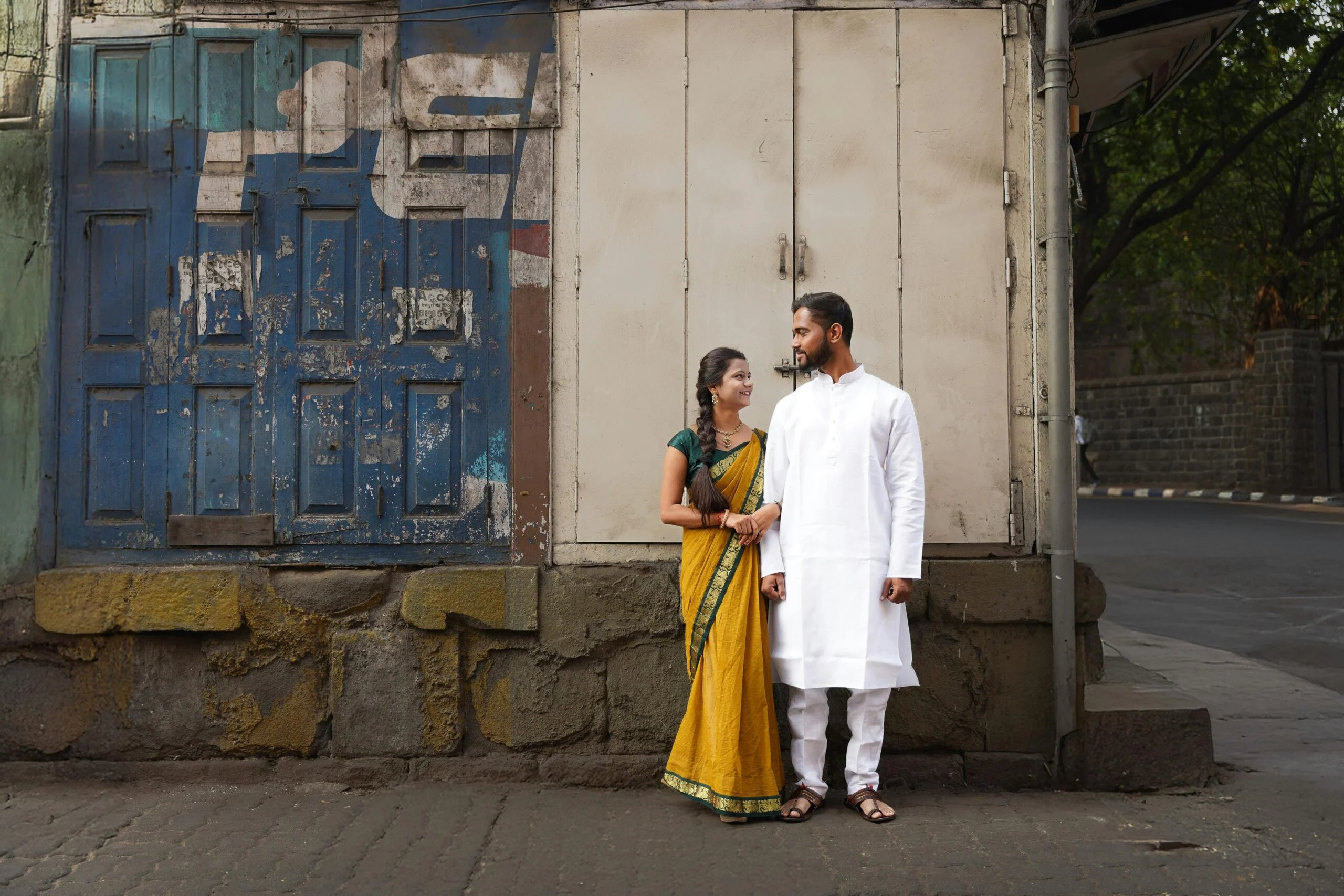
A Coffee Shop in Koramangala, and a Panchayat Under a Banyan Tree
Priya is a 28-year-old product manager at a Bangalore startup. Arjun is a 30-year-old backend developer at the same company. They met during a sprint retrospective, started dating three months later, and moved in together last year. Priya is Iyer. Arjun is Jatav. If you just had to Google what those mean, you are already proving the point of this article.
When they told their parents, there was a pause. Priya’s mother asked what Arjun’s father did. “Senior manager at Bharat Electronics,” Priya said. The pause ended. The wedding is in March.
Now drive 2,000 kilometers north to a village in Haryana’s Jhajjar district. Sunita, 22, and Mahesh, 24, grew up three houses apart. She is Jat. He is Dhanak. They fell in love in college, the kind that runs on a state-route bus to Rohtak. When Sunita’s father found out, he didn’t beat her or threaten Mahesh. He did something worse: he explained. If she married outside caste, the panchayat would cut the family off. No one would lend them a tractor at sowing time. No one would show up for her brother’s wedding. The family’s application for a loan through the cooperative society would mysteriously stall. Sunita understood. She married a man chosen by her family that December.
Same country. Same generation. Two entirely different realities. The question is: why?
The Dating App Test: What People Actually Filter For
If you want to know what a society truly values, don’t read its scriptures. Read its dating filters.
On Bumble and Hinge in Indian metros, the filters that matter are education, profession, height, and whether someone drinks. Caste is not a filter option, and nobody is petitioning for it to be added. On Shaadi.com, the oldest matrimonial platform in India, caste filters still exist. But internal data reported by Economic Times shows that among users aged 22 to 30 in Mumbai, Delhi, and Bangalore, fewer than 30 percent apply caste as a filter. The filters that have grown? Income bracket. Company name. Degree type.
The market does not lie. When young urban Indians spend their own money finding a partner, they are filtering for economic compatibility, not caste purity. This is not idealism. This is pragmatism. In a city where your landlord, your boss, and your neighbors do not know or care about your caste, it simply stops being a useful sorting mechanism. It is like filtering for landholding in a city of renters.
The Money Test Nobody Wants to Take
Here is a thought experiment that separates honest people from performative ones.
Ask an urban, educated parent: “Would you accept your daughter marrying a Dalit IAS officer?” Watch them say yes, probably enthusiastically. Now ask: “Would you accept her marrying a Brahmin who drives an auto?” Watch the hesitation. The silence says everything.
What we call caste prejudice in cities has largely been replaced by class prejudice. The packaging changed; the mechanism did not. But here is the crucial difference: class is permeable. A Dalit engineer at Google and a Brahmin engineer at Google attend the same standup meetings. Their children will go to the same school. Within a generation, the distinction is invisible. Caste, in its village form, is designed to be permanent. Class, in its urban form, is designed to be escaped.
The youth unemployment crisis complicates this picture, of course. When young people cannot find jobs, they cannot achieve the economic independence that dissolves caste barriers. Unemployment does not just deny income. It denies the freedom to choose who to love.
Why Villages Enforce: The Economics of Caste Compliance
To understand why caste still dictates marriage in rural India, forget culture. Follow the money.
A village economy in much of north India operates on interlocking caste-based networks. The dominant caste typically controls land, water access, and political representation at the panchayat level. Other castes participate in this economy through understood roles: who works whose fields, who gets credit from the local cooperative, who is invited to ceremonies that double as business networking events.
An inter-caste marriage is not just a social disruption. It is an economic one. It signals that a family is willing to break from the network. And networks, by definition, punish defection. The “punishment” is rarely dramatic violence (though that happens, and it is covered extensively in our ground report from Uttar Pradesh). More often, it is quiet exclusion. The tractor is not available at sowing time. The invitation to the cooperative meeting is lost. The loan application gathers dust.
This is not tradition defending itself. This is an economic cartel defending its structure. The language of honor and purity is a marketing layer on top of a resource-allocation system. The village enforces caste in marriage for the same reason any cartel enforces rules: because defection makes the system unworkable.
Data from the Census of India and the India Human Development Survey (IHDS) consistently shows that inter-caste marriages are three to five times more common in urban areas than rural ones. The gap is not about awareness. Village Indians watch the same TV shows and scroll the same Instagram reels as city Indians. The gap is about the cost of defection.
The Digital Divide in Love
There is a less discussed dimension here: access to alternatives. In a city, if your community ostracizes you, you have ten other communities to join. You have colleagues, college friends, neighbors from different states, online communities. The digital divide matters here too. Urban Indians with reliable internet access can build social networks that exist entirely outside caste. Rural Indians, even those with smartphones, often find that their digital networks mirror their physical ones. The WhatsApp group is the village, digitized.
Dating apps need critical mass to work. In a city of ten million, there are enough people to match across every possible axis. In a town of twenty thousand, the app just shows you the same people your parents would have picked, minus the astrology.
The Generational Forgetting
Something is happening in urban India that has no precedent in the history of the subcontinent: young people are forgetting their caste.
Not renouncing it. Not rejecting it as an act of protest. Simply not knowing it. Ask a 23-year-old in Pune what her gotra is, and there is a decent chance she will need to call her grandmother. Ask her sub-caste, and you might get a shrug. This is not a political statement. It is an information gap. When a piece of knowledge is not useful in daily life, it drops out of active memory.
This is the most powerful engine of change, and it runs on complete indifference rather than activism. You cannot enforce a caste hierarchy on people who do not know what caste they belong to. The Ambedkarite project of annihilating caste may find its most effective ally not in political movements, but in the sheer forgetfulness of young urban professionals who have more urgent things to remember, like their Jira tickets.
Organizations working on women’s empowerment have noted this pattern too. Economic independence does not just change what women can do. It changes what they are willing to accept. A woman with a salary does not need her father’s panchayat connections. She has her own.
The Solution Nobody Wants to Hear
Every few months, a well-meaning campaign launches to “end caste discrimination” through awareness drives, street plays, or social media hashtags. These are noble efforts, and they matter for the people who participate in them. But they are treating the symptom.
The cure is boring. It is jobs. It is cities. It is education. It is broadband.
When a young person from a rural Dalit family gets a degree, moves to Hyderabad, gets a job at a consulting firm, and marries a colleague whose caste they never bothered to ask about, no awareness campaign made that happen. An economy made that happen. An apartment lease in a building where nobody cares about your surname made that happen.
India has roughly 400 million people living in urban areas where caste is fading as a marriage criterion, and 900 million in rural and semi-urban areas where it is not. The gap will close, but it will close through urbanization, industrialization, and education, not through lectures.
The most radical thing India can do for inter-caste love is not a campaign. It is a factory. A college. A broadband tower. A job letter that says “your skills qualify you,” because no job letter has ever asked for your gotra.
What This Means
Priya and Arjun in Bangalore are not brave. They are not making a statement. They are simply living in a context where caste has lost its economic teeth. Sunita and Mahesh in Jhajjar are not cowardly or brainwashed. They are trapped in a system where defection carries a price they cannot afford.
The difference between these two stories is not culture, values, or awareness. It is infrastructure. It is economics. It is the distance between a panchayat that controls your water supply and a municipal corporation that does not know your name.
India’s relationship with caste in relationships is changing. But it is changing from the bottom of a balance sheet, not from the top of a soapbox. And that, strangely, is the most hopeful thing about it. Because economies grow. Soapboxes just get louder.
What you can do
- Share the evidenceSend this to one person who should know about social justice.Share on WhatsApp
- Give an afternoonTeach, mentor, clean up, or lend your professional skills.Ways to volunteer
- Tell us what's missingKnow a story, a fact we got wrong, or a solution worth spotlighting?Suggest a story
Politically neutral. Every claim sourced. Report a correction.



No comments yet