India's Reservation System Explained: History, Debate, and Data
India's reservation system explained: history from the Poona Pact to the EWS quota, current SC/ST/OBC percentages, key data on representation gaps, and the strongest arguments for and against affirmative action.
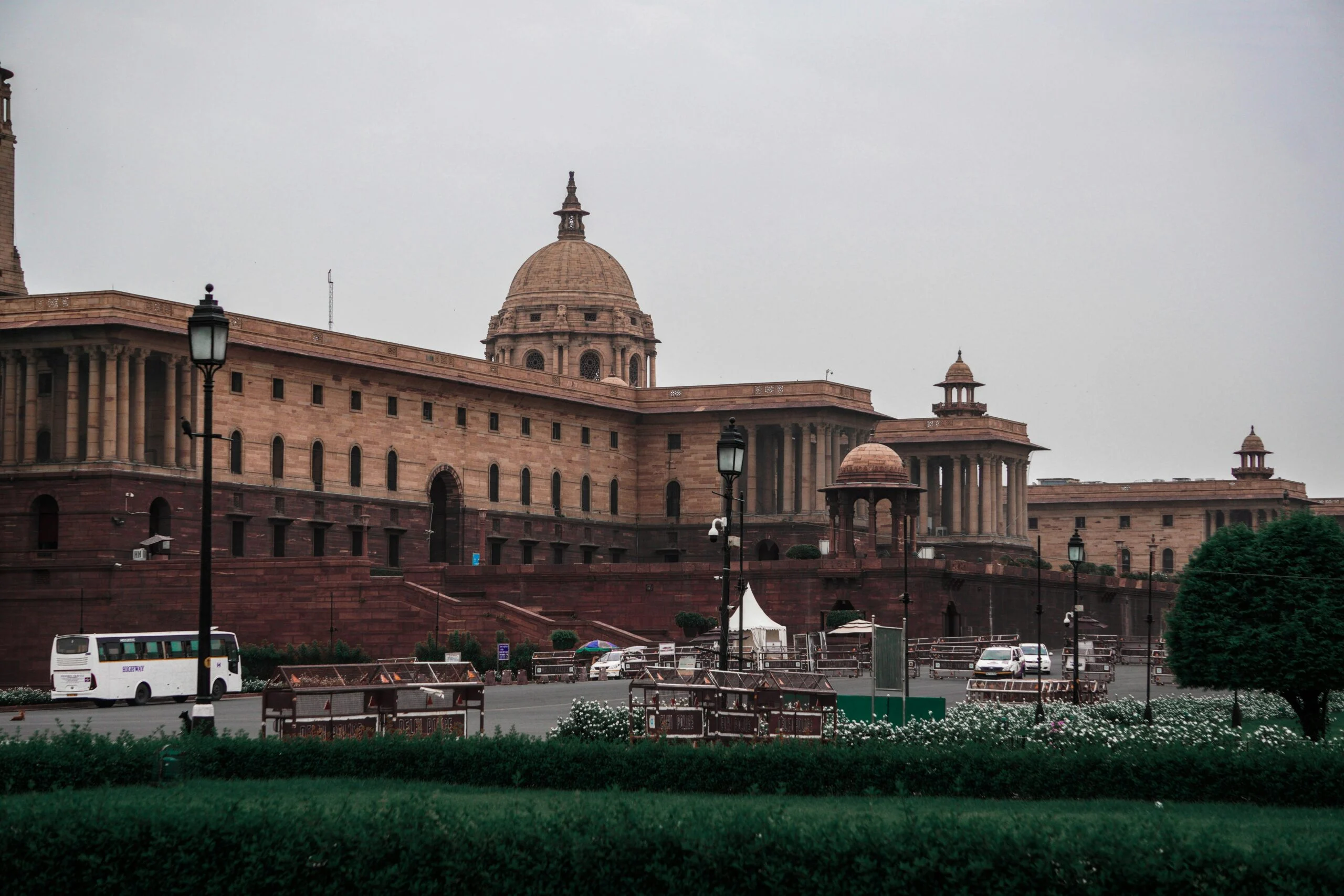
India’s reservation system is one of the world’s largest affirmative action programmes. It reserves a share of seats in public education, government jobs, and legislative bodies for historically disadvantaged communities. The policy has lifted millions out of generational exclusion - and sparked one of the country’s most enduring debates. This explainer lays out what reservation is, how it came to be, what the numbers say, and where the arguments stand today.
1. What Is Reservation?
Reservation is India’s form of affirmative action. The government sets aside a fixed percentage of positions - in colleges, universities, public-sector jobs, and elected legislatures - for members of communities that have faced centuries of social, educational, and economic disadvantage.
The groups that benefit from reservation are defined in the Indian Constitution. They include Scheduled Castes (SC), Scheduled Tribes (ST), Other Backward Classes (OBC), and, since 2019, Economically Weaker Sections (EWS) of society. Each group receives a specific percentage of reserved seats, and these percentages vary between the central government and individual state governments.
Reservation is not a poverty-alleviation scheme, though poverty and caste disadvantage often overlap. Its primary goal is adequate representation - ensuring that communities historically shut out of power, education, and employment have a fair share of those opportunities. The logic is straightforward: if a group was denied access to schools, land, and public office for hundreds of years, simply removing the legal barriers does not instantly produce equality. Reservation is the mechanism through which the state actively corrects that imbalance.
It is important to understand that reservation does not lower the bar for qualification. Candidates must still meet minimum eligibility criteria - pass examinations, hold required degrees, clear interviews. What reservation does is create a separate pool of seats so that eligible candidates from disadvantaged groups are not competing against a centuries-old head start enjoyed by dominant communities.
Reservation did not appear overnight. It grew out of more than a century of social reform, political struggle, and constitutional design. Here is the timeline that matters.
Pre-Independence Roots
The idea of reserving seats for oppressed castes predates Indian independence. In the early 1900s, the princely states of Mysore, Kolhapur, and Baroda introduced reservations for non-Brahmin communities. The colonial government, too, experimented with “communal representation” - separate electorates for different religious and caste groups - though its motives were more about managing colonial control than delivering justice.
The single most important pre-independence event was the Poona Pact of 1932. The British Prime Minister Ramsay MacDonald had announced a “Communal Award” granting separate electorates to Dalits (then called Depressed Classes). Dr. B.R. Ambedkar, the foremost leader of the Dalit movement, initially supported the idea because separate electorates would give Dalits direct political power. Mahatma Gandhi opposed it, arguing it would permanently divide Hindu society, and went on a fast unto death in Pune’s Yerwada jail.
The resulting compromise - the Poona Pact - replaced separate electorates with reserved seats within a joint electorate. Dalits would vote alongside other Hindus, but a fixed number of seats in provincial and central legislatures would be reserved exclusively for Dalit candidates. This model of “reserved seats within a common electorate” became the template for India’s entire reservation architecture.
Constitutional Foundations (1950)
When the Constitution of India came into force on 26 January 1950, reservation was woven into its fabric. The key provisions include:
- Article 15(4): Allows the state to make special provisions for the advancement of socially and educationally backward classes, and for Scheduled Castes and Scheduled Tribes.
- Article 16(4): Permits reservation in government jobs for any backward class of citizens that is not adequately represented in state services.
- Article 46: Directs the state to promote the educational and economic interests of weaker sections, particularly SC and ST communities, and protect them from social injustice and exploitation.
- Article 340: Empowers the President to appoint a commission to investigate the conditions of backward classes and recommend steps for their improvement - including reservations.
- Articles 330 and 332: Reserve seats for SC and ST communities in the Lok Sabha (lower house of Parliament) and State Legislative Assemblies, respectively.
The framers of the Constitution - led by Dr. Ambedkar, who chaired the Drafting Committee - understood that formal legal equality would be hollow without active intervention to lift communities that had been oppressed under the caste system for thousands of years. Reservation was envisioned as a time-bound corrective, originally set for ten years, but it has been extended by constitutional amendments every decade since, reflecting the persistence of caste inequality.
The Mandal Commission (1980–1990)
For the first four decades after independence, central government reservation applied mainly to Scheduled Castes and Scheduled Tribes. Other Backward Classes - a vast and diverse group of castes considered socially and educationally disadvantaged but not as severely as SC/ST - did not have reservation at the central level, though many states provided it.
That changed with the Mandal Commission. Appointed in 1979 under Article 340 and chaired by B.P. Mandal, the commission surveyed caste-based backwardness across India. Its 1980 report identified 3,743 castes as “Other Backward Classes” and recommended 27% reservation for OBCs in central government jobs and educational institutions.
The report gathered dust until 1990, when Prime Minister V.P. Singh announced its implementation. The decision triggered massive protests - most visibly, self-immolations by upper-caste students - and became a defining political moment. The Supreme Court upheld OBC reservation in the landmark Indra Sawhney v. Union of India (1992) case, but with conditions: it imposed a 50% ceiling on total reservation and introduced the concept of a “creamy layer” - OBC families above a certain income threshold would be excluded from reservation benefits.
The 103rd Amendment and EWS Quota (2019)
In January 2019, Parliament passed the 103rd Constitutional Amendment, introducing 10% reservation for Economically Weaker Sections (EWS) - essentially, poor members of communities that do not already qualify for SC, ST, or OBC reservation. This was a significant shift because, for the first time, reservation was extended on the basis of economic status alone, rather than caste or social backwardness.
The amendment also pushed total reservation at the central level beyond the 50% cap laid down in the Indra Sawhney judgment. In November 2022, the Supreme Court upheld the EWS quota in Janhit Abhiyan v. Union of India by a 3:2 majority, though two dissenting judges argued that economic criteria alone could not justify reservation under the Indian Constitution’s framework.
At the central government level - covering institutions like the Indian Institutes of Technology (IITs), central universities, and Union Public Service Commission (UPSC) recruitment - the reservation breakdown is as follows:
- Scheduled Castes (SC): 15%
- Scheduled Tribes (ST): 7.5%
- Other Backward Classes (OBC): 27%
- Economically Weaker Sections (EWS): 10%
This adds up to 59.5% of seats reserved at the central level, with the remaining 40.5% open to all candidates regardless of category (often called the “general” or “unreserved” category). Note that candidates from reserved categories can also compete for unreserved seats - reservation provides an additional pathway, not a restriction.
State-Level Variations
Individual states set their own reservation percentages, and the variation is enormous:
- Tamil Nadu: 69% total reservation - the highest in the country. This has been protected by inclusion in the Ninth Schedule of the Constitution, shielding it from judicial review on grounds of exceeding the 50% cap.
- Maharashtra: Approximately 52%, though attempts to add a Maratha reservation quota have faced legal challenges and are currently being adjudicated.
- Chhattisgarh: 72% (including a 32% OBC quota), upheld by a state commission but challenged in court.
- Rajasthan, Madhya Pradesh, Karnataka: Each has reservation between 49% and 56%, calibrated to state-specific caste demographics.
The Supreme Court’s 50% cap, established in the Indra Sawhney case, applies as a general principle but has been circumvented by some states through legislative and constitutional mechanisms. Whether such exceptions are sustainable remains a live legal question.
Legislative Reservation
Separate from jobs and education, the Constitution reserves seats in the Lok Sabha and state assemblies for SC and ST candidates. As of the most recent delimitation, 84 Lok Sabha seats are reserved for SC candidates and 47 for ST candidates (out of 543 total). These reservations have been extended every ten years since 1950 - most recently by the 104th Amendment in 2020, which extended them until 2030. Notably, there is no legislative reservation for OBCs at the national level, though several states reserve seats in local self-government bodies (panchayats and municipalities) for OBC candidates. For more on India’s democratic processes and the need for reform, see our analysis of why India needs electoral reforms now.
Much of the reservation debate is driven by assertion rather than evidence. Here are seven data points that ground the discussion in reality.
Fact 1: Caste-Based Representation Gaps Persist
Despite seven decades of reservation, SC and ST communities remain under-represented in senior government positions. Data from the Department of Personnel and Training shows that while SC and ST employees are well-represented in Group C and Group D (lower-level) government posts, their share drops significantly in Group A (senior administrative) roles. SC officers hold roughly 13–14% of Group A positions against a 15% quota, and ST officers hold about 6% against a 7.5% quota. For OBCs, the gap is wider - they hold roughly 21% of Group A posts against a 27% quota. At the very top - Secretary-level and above - the dominance of historically privileged communities is even more pronounced.
Fact 2: Higher Education Enrolment Has Grown - But Unevenly
According to the All India Survey on Higher Education (AISHE), SC students constituted about 15.3% and ST students about 6.1% of total higher education enrolment in 2021-22. These numbers are close to their population shares and represent a significant improvement over earlier decades. However, in premier institutions - the IITs, IIMs, AIIMS, and central universities - the picture is different. Dropout rates among SC and ST students remain higher, and their representation in postgraduate and doctoral programmes is lower than at the undergraduate level. Enrolment alone does not capture the full story; completion rates and access to top-tier institutions matter just as much. The Right to Education Act has expanded access to schooling, but the pipeline from basic education to higher education remains leaky for marginalised communities.
Fact 3: The Creamy Layer Concept Applies Only to OBCs
The “creamy layer” is a income-and-status threshold above which OBC families are excluded from reservation benefits. The current creamy layer ceiling is Rs 8 lakh per annum of gross annual income (revised periodically). The rationale is that affluent OBC families no longer need the leg-up that reservation provides, and their inclusion would crowd out genuinely disadvantaged OBC candidates. Crucially, the creamy layer concept does not apply to SC and ST reservation. The Supreme Court has consistently held that SC/ST backwardness is rooted in social stigma - untouchability and tribal exclusion - which persists regardless of individual wealth.
Fact 4: Reserved Seats Often Go Unfilled
A persistent problem in the reservation system is the backlog of unfilled reserved posts, particularly in higher-level positions and specialised roles. Government reports have documented thousands of vacancies in reserved posts across central ministries and departments. When reserved posts go unfilled, the intended beneficiaries receive no benefit, and the vacancies sometimes get “de-reserved” - converted into general category posts - further widening the representation gap.
Fact 5: Reservation in Promotions Is Contested
The question of whether reservation should apply to promotions - not just initial recruitment - has been one of the most legally contested aspects of the system. The 85th and 86th Constitutional Amendments enabled reservation in promotions for SC and ST employees, but the Supreme Court has placed conditions on its implementation, requiring the government to demonstrate backwardness, inadequacy of representation, and administrative efficiency. Many states have struggled to implement promotion-based reservation consistently.
Fact 6: Sub-Categorisation Is a Growing Demand
Within each reserved category, benefits have not been evenly distributed. Among OBCs, a small number of dominant castes have captured a disproportionate share of reserved seats, leaving the most marginalised OBC communities with little benefit. A similar pattern exists within the SC category. The Rohini Commission, appointed in 2017, was tasked with examining sub-categorisation of OBCs - dividing the 27% OBC quota into sub-quotas for more and less advantaged OBC groups. In August 2024, the Supreme Court ruled in the State of Punjab v. Davinder Singh case that states have the power to sub-categorise SC and ST communities for the purpose of granting differentiated reservation, opening the door for more targeted policies.
Fact 7: India’s Reservation System Is Not Unique
While India’s system is the largest in scale, affirmative action exists worldwide. The United States has race-based affirmative action in university admissions (though the Supreme Court restricted it in 2023). Malaysia reserves places for Bumiputera (ethnic Malays and indigenous groups). South Africa has Black Economic Empowerment policies. Brazil uses racial quotas in public universities. What makes India’s system distinctive is its constitutional foundation, its scale (covering hundreds of millions of people), and its direct linkage to the caste system - a form of inherited social hierarchy found nowhere else in the world at comparable depth.
Few policy issues in India generate as much heat as reservation. The debate cuts across caste, class, region, and generation. Here are the strongest arguments on each side, presented fairly.
Arguments in Favour of Reservation
1. Historical Discrimination Demands Active Correction
The caste system subjected SC, ST, and other backward communities to thousands of years of exclusion from education, property, and social dignity. Dalits were denied entry to schools and temples. Adivasis (tribal communities) were pushed to geographic and economic margins. This was not random misfortune - it was a structured, hereditary system of oppression enforced by religious sanction, social custom, and, at times, law. The effects of that exclusion do not disappear simply because the Constitution declared equality in 1950. Reservation is the mechanism through which the state actively bridges the gap between formal equality and substantive equality. The persistence of practices like manual scavenging - where Dalits are forced into the most degrading work - shows how deeply caste-based discrimination remains embedded in Indian society.
2. The Representation Gap Is Real
Data consistently shows that SC, ST, and OBC communities are under-represented in positions of power, wealth, and influence - from corporate boardrooms to university faculties to the higher judiciary. Without reservation, the structural advantages enjoyed by historically dominant castes - better schools, social networks, inherited wealth, cultural capital - would continue to reproduce inequality generation after generation. Reservation is not charity; it is a corrective to a playing field that remains deeply uneven.
3. Constitutional Mandate
Reservation is not a policy whim. It is embedded in the Constitution’s text and structure. The Preamble commits India to justice - social, economic, and political. Article 14 guarantees equality, but the Supreme Court has held that “equality” includes the power to treat unequals unequally in order to achieve real equality. Articles 15(4), 16(4), and 46 explicitly authorise reservations. Opposing reservation is, in a meaningful sense, opposing the Constitution’s own design for social transformation.
4. Reservation Has Delivered Results
Imperfect as it is, reservation has produced a substantial SC/ST/OBC middle class that did not exist before independence. IAS officers, doctors, engineers, professors, and entrepreneurs from reserved categories are visible proof that the policy works. Without reservation, these individuals - many first-generation professionals in their families - would have faced near-insurmountable barriers to entry.
Arguments Against Reservation (or for Reform)
1. Merit Concerns
The most common objection is that reservation compromises “merit” - that candidates who score lower on competitive examinations are admitted or hired ahead of higher-scoring general category candidates. Supporters of reservation counter that “merit” is not a neutral concept: it reflects access to coaching, quality schooling, nutrition, and social capital - all of which are distributed unequally along caste lines. Nevertheless, the perception that reservation dilutes quality in institutions and public services remains widespread, particularly among upper-caste communities.
2. Caste Entrenchment
Critics argue that reservation, rather than weakening caste identity, has entrenched it. Because access to benefits depends on caste certification, individuals and communities have strong incentives to emphasise - even exaggerate - their caste identity. Political mobilisation increasingly revolves around demands for inclusion in reserved categories (as seen with the Jat, Patidar, and Maratha agitations). The paradox is that a policy designed to transcend caste may be deepening caste consciousness. For a ground-level exploration of how caste operates in contemporary India, see our report on caste in modern India.
3. Intra-Category Inequality (The “Creamy Layer” Problem)
Within each reserved category, a relatively affluent and well-connected sub-group tends to capture most of the benefits. Among OBCs, the creamy layer exclusion is meant to address this, but its income threshold is widely seen as too generous. Among SCs, dominant sub-castes - such as Jatavs in Uttar Pradesh or Malas in Andhra Pradesh - have disproportionately benefited, while the most marginalised Dalit sub-castes see little improvement. Sub-categorisation is one proposed solution, but it introduces its own political and administrative complexities.
4. No Exit Strategy
The Constitution originally envisioned reservation as a temporary measure - ten years for legislative reservation, with the expectation that social transformation would eventually make it unnecessary. More than seven decades later, reservation has expanded in scope and beneficiaries. Critics ask: what are the conditions under which reservation would no longer be needed? Without clear benchmarks, the policy risks becoming permanent without periodic evaluation of its effectiveness.
5. Private Sector Is Untouched
Reservation applies to government jobs and public educational institutions. As the Indian economy has shifted toward the private sector - which now employs far more people than the government - the policy’s reach has narrowed. Diversity data from India’s largest private companies shows significant under-representation of SC, ST, and OBC individuals in management and leadership roles. Whether and how to extend reservation to the private sector is a hotly debated question, with industry groups opposing mandates and social justice advocates calling for at least voluntary targets.
Q1: Does reservation apply to the private sector?
No. As of now, reservation is legally mandated only in government jobs, public-sector undertakings, and government-funded educational institutions. There is no law requiring private companies to reserve posts for SC, ST, OBC, or EWS candidates. Some states have attempted to introduce private-sector reservation - Haryana passed a law in 2020 reserving 75% of private-sector jobs (up to a salary threshold) for state residents, but it was struck down by the Punjab and Haryana High Court. The broader question of caste-based reservation in private employment remains unresolved. Several committees have recommended voluntary diversity initiatives, but mandatory quotas in the private sector face strong legal and political resistance.
Q2: What is the creamy layer, and does it apply to all reserved categories?
The creamy layer is an income-based exclusion threshold that applies only to OBCs. OBC families with a gross annual income above Rs 8 lakh (as of the most recent revision) are classified as “creamy layer” and are not eligible for OBC reservation benefits. The purpose is to ensure that reservation reaches the genuinely disadvantaged within the broad OBC category, rather than being captured by its wealthier members. The creamy layer concept does not apply to SC or ST reservation. The Supreme Court has ruled that the social stigma of caste - particularly untouchability - persists regardless of economic status, so economic exclusion criteria are not appropriate for SC/ST categories. For EWS reservation, the eligibility criteria are themselves economic (family income below Rs 8 lakh and limited asset holdings), so a separate creamy layer concept does not apply.
Q3: Can total reservation exceed 50%?
The Supreme Court set a general 50% cap on reservation in the 1992 Indra Sawhney case, reasoning that reservation is an exception to the equality principle and should not become the rule. However, this cap has been breached in practice. Tamil Nadu’s 69% reservation is protected by the Ninth Schedule. The central government’s own reservation now totals 59.5% after the addition of the EWS quota. Several states have passed laws exceeding 50%, and the legal challenges to these laws are ongoing. The 50% cap is a judicial guideline, not a constitutional provision, so it can be modified by constitutional amendment - though any such amendment would itself be subject to judicial review under the “basic structure” doctrine.
Q4: How are SC and ST communities determined?
The President of India, under Articles 341 and 342 of the Constitution, notifies the list of Scheduled Castes and Scheduled Tribes for each state through a Presidential Order. Once notified, the list can only be modified by an Act of Parliament - the President or state governments cannot add or remove communities unilaterally. The criteria for inclusion are based on historical social disabilities (for SCs, primarily untouchability and extreme social exclusion) and distinct cultural identity, geographical isolation, and economic backwardness (for STs). Individuals must obtain a caste certificate from the relevant state authority to avail of reservation benefits, and false claims can lead to criminal prosecution and termination of employment.
Q5: How is reservation different from a scholarship?
Reservation and scholarships address different barriers. A scholarship provides financial support - it helps a student who has already gained admission to pay for tuition, books, and living expenses. Reservation, on the other hand, addresses the access barrier itself - it ensures that a student from a disadvantaged community has a seat available in the first place. Without reservation, a Dalit student might never get admitted to a medical college, no matter how many scholarships are available. Without scholarships, a reserved-category student who gains admission might not be able to afford to attend. The two policies are complementary, not interchangeable. India operates both: reservation for access, and schemes like the Post-Matric Scholarship for SC/ST students for financial support. For more on how India’s education system is evolving, see our explainer on NEP 2020 and what’s changing in Indian education.
India’s reservation system is neither a simple handout nor a perfect solution. It is a constitutionally mandated response to one of human history’s most enduring systems of social hierarchy. The data shows that it has expanded access and created new pathways for millions - but also that representation gaps persist, benefits are unevenly distributed within categories, and the policy’s relationship to a rapidly changing economy needs rethinking.
What the debate needs is less heat and more light - less rhetoric about “merit versus reservation” and more honest engagement with data, history, and the lived realities of caste in modern India. Whether you support reservation, oppose it, or want it reformed, understanding how it actually works is the first step toward a more informed conversation.
The facts are clear: caste-based inequality has not been eliminated. The question is not whether corrective action is needed, but what form it should take, how it should be targeted, and how its outcomes should be measured. That conversation - rooted in evidence rather than emotion - is one India urgently needs.
What you can do
- Share the evidenceSend this to one person who should know about social justice.Share on WhatsApp
- Give an afternoonTeach, mentor, clean up, or lend your professional skills.Ways to volunteer
- Tell us what's missingKnow a story, a fact we got wrong, or a solution worth spotlighting?Suggest a story
Politically neutral. Every claim sourced. Report a correction.
No comments yet