Digital India's Forgotten Half: The Rural Digital Divide
India's digital revolution has transformed urban life, but over 65 crore rural Indians remain on the wrong side of a growing digital divide — excluded from online education, digital payments, healthcare, and government services that increasingly assume internet access.
What Is the Digital Divide?
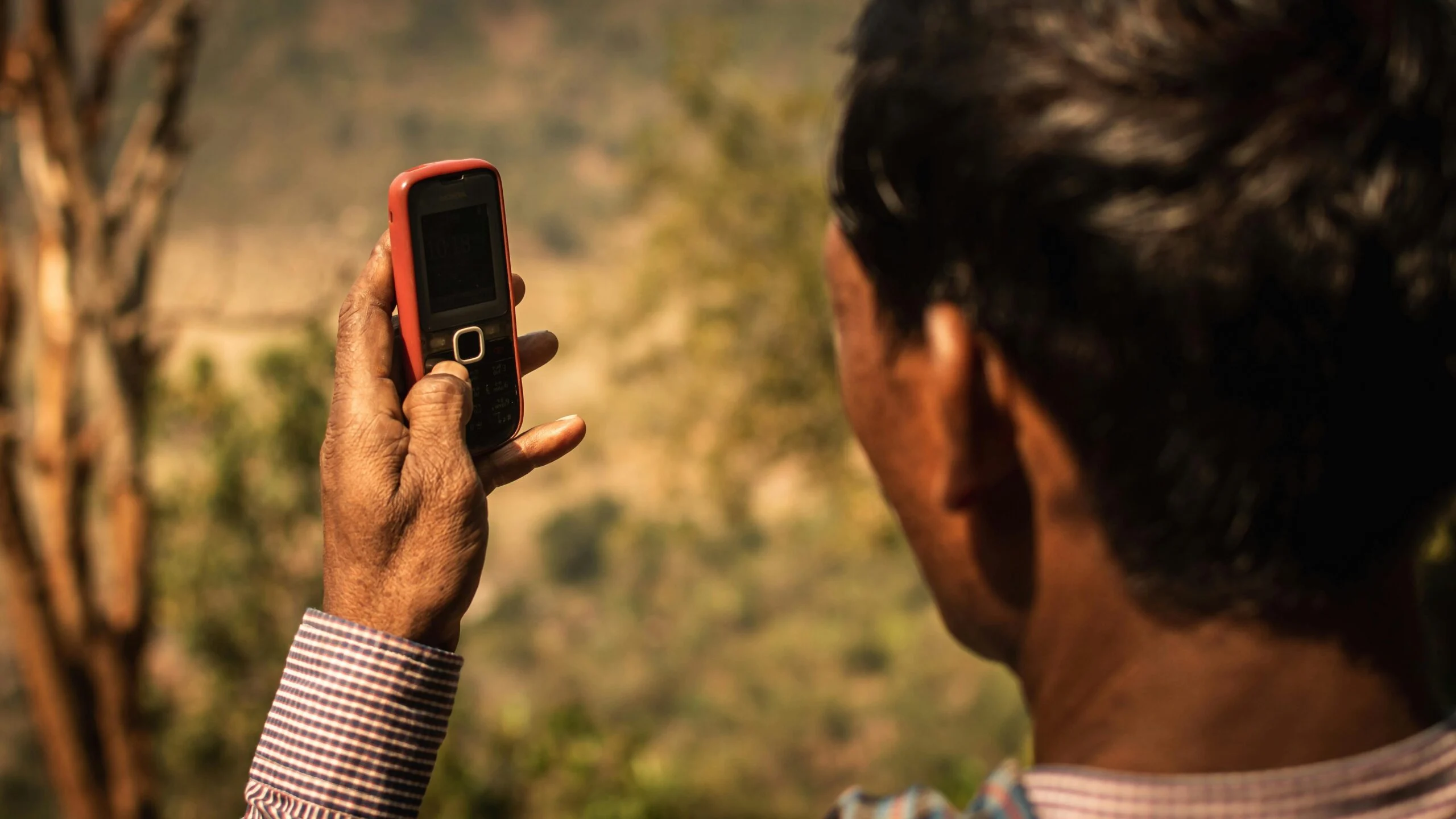
India stands at a paradox. It is the world’s largest connected democracy, with over 80 crore internet users. It runs the world’s most successful digital payments system in UPI. Its Aadhaar biometric identity platform covers 1.4 billion people. And yet, for hundreds of millions of Indians - predominantly rural, poor, female, and non-English-speaking - the digital revolution might as well be happening on another planet.
The digital divide refers to the gap between those who have meaningful access to digital technologies - the internet, smartphones, computers, and the skills to use them - and those who do not. In India, this divide does not merely mirror existing inequalities of caste, class, gender, and geography. It actively deepens them. As more and more of India’s economy, governance, education, and healthcare migrate online, those without digital access are not simply left behind - they are pushed further behind.
This is not a fringe issue. It concerns roughly half of India’s population. And it is arguably the single most important infrastructure challenge the country faces in the coming decade.
The Numbers: A Tale of Two Indias
The data paints a stark picture of digital inequality across multiple dimensions - geography, income, gender, and language. As our analysis of India’s education crisis in 10 numbers shows, the digital divide in education is one of the most damaging dimensions of this inequality.
Metric | Urban | Rural | Gap |
|---|---|---|---|
Internet penetration | 67% | 31% | 36 percentage points |
Smartphone ownership | ~65% | ~25% | 40 percentage points |
Male mobile internet use | 57% | 24 percentage points | |
Female mobile internet use | 33% | ||
English speakers | ~10% (but 89% of web content is English) |
Urban vs Rural Internet Penetration
According to the Telecom Regulatory Authority of India (TRAI), urban internet penetration stands at approximately 67%, while rural penetration languishes at around 31%. This means that roughly two out of every three urban Indians are connected, but barely one in three rural Indians can say the same. Given that nearly 65% of India’s population lives in rural areas, this gap translates into hundreds of millions of unconnected citizens.
The Internet and Mobile Association of India (IAMAI) and Kantar’s ICube reports have consistently shown that while rural internet users are growing in absolute numbers, the rate of growth has slowed, and the quality of access - speed, consistency, and the ability to perform meaningful tasks online - remains far inferior to urban areas.
Device Ownership
Internet access requires a device, and here the divide is equally sharp. According to the National Statistical Office (NSO) survey data and multiple IAMAI reports, only about 25% of rural households own a smartphone. Many rural users who are counted as “internet users” access the web sporadically through shared devices - a family member’s phone, a neighbour’s device, or a Common Service Centre. This kind of access is fundamentally different from the always-on, personal-device connectivity that urban Indians take for granted.
The Gender Gap
The GSMA Mobile Gender Gap Report has consistently found one of the world’s widest gender digital divides in India. Approximately 57% of Indian men use mobile internet, compared to only 33% of Indian women. In rural areas, this gap is even wider. Women are 36% less likely than men to use mobile internet in India - a gap driven by affordability, social norms, safety concerns, and deliberate restriction of women’s access by families.
The Language Barrier in Numbers
Perhaps the most overlooked dimension of India’s digital divide is linguistic. An estimated 89% of all internet content is in English, according to various web analytics studies. Yet only about 10% of Indians speak English, and far fewer are comfortable reading and writing it. While Hindi and regional language content has grown significantly - driven partly by voice search, YouTube, and social media - the vast majority of useful informational content, government portals, educational resources, and professional tools remain English-first or English-only.
Launched in 2015 by Prime Minister Narendra Modi, the Digital India programme was an ambitious vision to transform the country into a “digitally empowered society and knowledge economy.” Its three core pillars were: digital infrastructure as a utility to every citizen, governance and services on demand, and digital empowerment of citizens.
On several fronts, Digital India has delivered impressive results. UPI has become the world’s most successful real-time payments platform, processing over 10 billion transactions per month. Aadhaar has provided a universal identity layer. DigiLocker, UMANG, and the GeM (Government e-Marketplace) portal have digitised various government functions. CoWIN, the COVID vaccination platform, was built and deployed at remarkable speed.
But these successes have a common thread: they disproportionately benefit those who are already connected. For the unconnected half, Digital India’s promise remains largely aspirational. The programme’s infrastructure rollout, particularly in rural areas, has been slower and more uneven than planned.
BharatNet: The Backbone That Is Still Being Built
The centrepiece of Digital India’s rural connectivity ambitions is BharatNet (originally the National Optical Fibre Network), a project to connect all of India’s approximately 2.5 lakh gram panchayats with high-speed broadband via optical fibre.
Conceived in 2011 and launched in 2012, BharatNet has been through multiple phases, missed deadlines, restructured contracts, and budget revisions. The original target of connecting all panchayats by 2016 was pushed to 2019, then to 2023, and continues to face delays.
As of recent government data, optical fibre has been laid to over 1.9 lakh gram panchayats, and equipment has been installed in roughly 1.7 lakh. But laying fibre is not the same as providing usable broadband. Many connected panchayats report that the equipment is non-functional, speeds are inadequate, or there is no last-mile connectivity to actually deliver the broadband to homes, schools, and health centres.
The project has also struggled with execution challenges - difficult terrain in the Northeast and hilly regions, right-of-way issues, contractor performance problems, and the fundamental challenge of maintaining infrastructure in remote areas with limited technical support. BharatNet remains one of the world’s most ambitious rural broadband projects, but its incomplete execution means that the backbone of rural digital access is still very much a work in progress.
Why the Digital Divide Matters: Everything Is Going Online
The digital divide would be concerning even as a matter of abstract equity. But it becomes urgent - even dangerous - when we consider how rapidly India’s essential services are migrating to digital-first or digital-only models.
Digital Payments and Financial Inclusion
UPI has revolutionised payments in India, but its adoption is overwhelmingly urban and semi-urban. Rural India still runs largely on cash. As businesses, vendors, and even government subsidy disbursements increasingly assume digital payment capability, those without smartphones or internet connectivity face practical exclusion from the emerging economy. Direct Benefit Transfer (DBT), which routes subsidies and welfare payments through Aadhaar-linked bank accounts, requires recipients to navigate digital systems they may not understand.
Education
From DIKSHA (the national digital education platform) to SWAYAM, NPTEL, and thousands of EdTech platforms, education is increasingly going online. Digital classrooms, recorded lectures, online assignments, and competitive exam preparation are all predicated on reliable internet access and a personal device. Students without these are competing with one hand tied behind their back.
Healthcare and Telemedicine
The Ayushman Bharat Digital Mission aims to create a digital health ecosystem with electronic health records, telemedicine, and online appointment systems. Telemedicine, which surged during COVID, has the potential to bring specialist medical advice to villages without doctors. But telemedicine requires a video-capable device and stable internet - precisely what most rural Indians lack.
Government Services
From applying for ration cards and passports to filing RTI applications, checking land records, and accessing court orders, government services are increasingly digitised. The push toward e-governance is well-intentioned, but when digital access is assumed rather than ensured, it creates a new form of bureaucratic exclusion.
If the digital divide was an abstract policy concern before 2020, the COVID-19 pandemic turned it into a humanitarian crisis. The pandemic forced a sudden, nationwide shift to digital-first everything - and the unconnected were catastrophically left behind.
Online Education and Lost Learning
When schools closed and classes moved online, an estimated 50% of Indian students could not access online education, according to UNICEF and ASER (Annual Status of Education Report) surveys. In rural India, the figure was even higher. Children walked kilometres to find mobile signals, climbed hills for network coverage, and shared single phones among multiple siblings. Many simply dropped out.
The ASER 2021 report found that while smartphone access in rural households increased during the pandemic (from 36% in 2018 to 67% in 2021), this was driven by desperation - families going into debt to buy devices for children’s education.
Even then, availability of a smartphone did not mean the child could use it for learning; data costs, network coverage, and digital literacy remained barriers.
Digital-First Lockdown Services
During lockdowns, registering for food assistance, booking vaccination slots on CoWIN, applying for emergency relief, and even obtaining e-passes for movement all required digital access. Migrant workers, daily wage labourers, and rural populations - the people who most needed these services - were the least equipped to access them digitally.
COVID did not create the digital divide. But it demonstrated, with brutal clarity, that the divide is not merely an inconvenience - it is a mechanism of exclusion from basic rights and services.
The Affordability Barrier: Cheap Data, Expensive Devices
India is often celebrated for having some of the cheapest mobile data in the world, thanks largely to the disruption caused by Jio’s entry in 2016. And indeed, data prices in India are a fraction of what they cost in most countries. But cheap data alone does not solve the access problem.
A basic smartphone costs between Rs 5,000 and Rs 8,000 - a significant expenditure for a family earning Rs 10,000-15,000 per month, which is common in rural India. A device capable of running modern apps, video calls, and educational platforms costs considerably more. For families with multiple children needing devices for school, the cost is prohibitive.
Beyond the device, there are ongoing costs: data recharges, repairs (cracked screens, battery replacements), and electricity for charging. In parts of rural India, electricity supply remains erratic. The Saubhagya scheme has brought electricity connections to nearly all households, but connection does not mean reliable supply. Power cuts of 8-12 hours daily are common in many rural areas, making it difficult to keep devices charged - let alone run a Wi-Fi router.
Charging infrastructure is a quietly critical issue. In urban India, charging a phone is trivial. In a village with intermittent power, it becomes a logistical challenge. Some villagers walk to nearby towns or markets to charge their phones, effectively limiting their device usage to a few hours a day.
The Language Barrier: Whose Internet Is It?
India has 22 officially recognised languages and hundreds of dialects. Yet the internet - particularly the informational, educational, and transactional internet - remains overwhelmingly English. Government portals, banking interfaces, educational platforms, and app interfaces are often English-first, with regional language options that are incomplete, poorly translated, or difficult to navigate.
Progress is being made. Google’s Indian language initiatives, voice-based search and assistants, and the growth of regional language content on YouTube, ShareChat, and other platforms have expanded the non-English internet significantly. The Bhashini platform, an AI-powered language translation initiative by the government, aims to break language barriers in digital services.
But there is a difference between consuming entertainment content in Hindi or Tamil and being able to fill out a government form, understand a bank statement, navigate a health portal, or verify information online in one’s own language. The transactional and informational internet - the internet that actually empowers - remains far less accessible in Indian languages than the entertainment internet.
Digital Literacy: The Skill Gap Behind the Access Gap
Even when people have devices and connectivity, the question remains: can they use digital tools meaningfully and safely? Digital literacy - the ability to navigate the internet, use apps, identify scams, protect personal data, and critically evaluate online information - is a massive gap in India.
The government’s Pradhan Mantri Gramin Digital Saksharta Abhiyan (PMGDISHA) aimed to make 6 crore rural households digitally literate. While the programme has trained millions, the quality and depth of training has been questioned. Teaching someone to open an app is not the same as teaching them to identify a phishing message, understand privacy settings, or evaluate health misinformation on WhatsApp.
The consequences of low digital literacy are severe. Rural and semi-urban users are disproportionately vulnerable to online scams, digital fraud, and misinformation. UPI fraud, fake loan apps, phishing calls, and WhatsApp misinformation campaigns prey precisely on users who are new to the internet and lack the critical thinking frameworks to navigate it safely. For many first-time internet users, their earliest online experiences involve being defrauded or misled - which understandably makes them distrustful of digital services.
The gender dimension of India’s digital divide deserves special attention because it is driven not just by infrastructure and affordability gaps but by deeply entrenched social and patriarchal norms.
In many rural and semi-urban households, women are actively prevented from using mobile phones - particularly smartphones with internet access. Families cite concerns about women accessing “inappropriate content,” communicating with men outside the family, or wasting time on social media. Khap panchayats in parts of Haryana, Rajasthan, and western Uttar Pradesh have even issued edicts against women using mobile phones.
Research by the GSMA and LIRNEasia has documented how women’s phone use is monitored, controlled, and restricted by male family members. Women are less likely to own their own phone, less likely to have a phone with internet capability, and less likely to use their phone for anything beyond voice calls. When women do use the internet, they often do so furtively, borrowing devices and using them for limited periods.
This gender digital divide has profound implications. Women who cannot access the internet independently cannot access maternal health information, apply for government schemes targeted at women, use digital financial services, access online education, or participate in the digital economy. Closing the digital divide without specifically addressing the gender gap will only entrench existing inequalities.
Common Service Centres: The Village-Level Digital Access Model
Common Service Centres (CSCs) are one of India’s most important - and underappreciated - digital inclusion initiatives. Operated under the Ministry of Electronics and Information Technology (MeitY), CSCs are physical kiosks, typically run by local entrepreneurs called Village Level Entrepreneurs (VLEs), that provide digital services to rural citizens.
There are over 5 lakh CSCs across India, offering services ranging from Aadhaar enrolment and banking to insurance, bill payments, telemedicine consultations, and government scheme applications. For millions of rural Indians who cannot navigate digital platforms themselves, the CSC - and its operator - serve as the crucial human bridge to the digital world.
The CSC model has genuine strengths. It creates local employment, provides a trusted intermediary for digital services, and does not require the end user to own a device or have digital skills. However, the model also has limitations. Service quality varies enormously depending on the VLE’s competence and integrity. There have been reports of VLEs charging unauthorised fees, providing incomplete services, or acting as gatekeepers rather than enablers. The model also does not build individual digital capability - it creates dependence on an intermediary.
Nonetheless, CSCs represent a pragmatic acknowledgment that universal personal digital access is not achievable in the short term, and that intermediated digital access is better than no access at all.
What Needs to Change: A Roadmap for Digital Inclusion
Closing India’s digital divide is not a single problem with a single solution. It requires coordinated action across multiple fronts. Organisations already working on the ground - such as the best education NGOs bridging gaps in rural India - demonstrate that meaningful change is possible when resources and commitment align.
Last-Mile Connectivity
BharatNet must be completed and, critically, made functional. Laying fibre to a panchayat office is meaningless if there is no working Wi-Fi hotspot, no maintenance support, and no affordable last-mile service provider. Public Wi-Fi models, such as PM-WANI (Prime Minister Wi-Fi Access Network Interface), need to be scaled rapidly, particularly in rural marketplaces, schools, health centres, and panchayat offices.
Affordable Devices
India needs a serious strategy for putting affordable, capable smartphones in the hands of the unconnected. This could involve subsidised device schemes (like the Jio Phone model but at scale), device financing through microfinance institutions, refurbished device programmes, and reduced import duties on components for entry-level smartphones. The goal should be a capable smartphone at Rs 3,000 or less.
Local Language Content and Interfaces
Every government portal, every banking interface, and every essential service app must work fully and fluently in all 22 scheduled languages. The Bhashini initiative is a step in the right direction, but it needs to move from pilot to production at scale. AI-powered translation and voice interfaces can dramatically improve accessibility for non-English speakers.
Digital Literacy at Scale
Digital literacy programmes need to go beyond basic device operation to include digital safety (identifying scams and fraud), information literacy (evaluating online content), financial digital literacy (using UPI and banking apps safely), and rights awareness (understanding data privacy and digital rights). These programmes must specifically target women, the elderly, and marginalised communities.
Gender-Specific Interventions
Closing the gender digital divide requires confronting patriarchal norms head-on. Women-specific digital literacy programmes, women-led CSCs, SHG (Self-Help Group) based digital training, and community awareness campaigns about women’s right to digital access are all essential. Policy interventions such as subsidised devices for women under government schemes could also accelerate change.
Reliable Electricity
Digital access is impossible without reliable power. Investments in rural electrification must focus not just on connections but on hours of supply. Solar charging stations in villages, battery swap programmes, and community charging infrastructure can mitigate the power gap in the near term.
The data and analysis in this article draw on reports and data from the following authoritative sources:
- TRAI (Telecom Regulatory Authority of India) - Quarterly performance indicator reports on telecom and internet subscribers, urban-rural breakdowns.
- GSMA Mobile Gender Gap Report - Annual analysis of the gender digital divide across low- and middle-income countries, with specific India data.
- IAMAI-Kantar ICube Reports - Periodic surveys of internet adoption, usage patterns, and demographics in India.
- National Statistical Office (NSO) - Household surveys on digital access, device ownership, and consumption patterns.
- Ministry of Electronics and Information Technology (MeitY) - Data on BharatNet progress, CSC network, Digital India programmes, and Bhashini.
- ASER (Annual Status of Education Report) - Pratham Foundation’s annual surveys on learning outcomes and digital access among children.
- UNICEF India - Reports on the impact of the digital divide on children’s education, particularly during COVID-19.
- World Bank Digital Development Reports - Comparative data on digital access, affordability, and digital economy readiness.
Conclusion: Digital India Cannot Be Half an India
India’s digital achievements over the past decade are real and remarkable. UPI, Aadhaar, and the broader Digital India ecosystem have leapfrogged legacy systems in ways that many developed nations envy. But these achievements risk becoming instruments of exclusion if the other half of India - the rural, the poor, the female, the non-English-speaking - is not brought along.
The digital divide is not a technology problem. It is a political, economic, social, and cultural problem that manifests through technology. Closing it requires not just laying more fibre and distributing more devices, but fundamentally rethinking who the digital ecosystem is built for and whether it serves the most vulnerable as effectively as it serves the most privileged.
India cannot build a $5 trillion economy on the backs of half its citizens while leaving the other half in a pre-digital world. It cannot claim to be a digital democracy when hundreds of millions cannot access the digital tools of democratic participation. And it cannot call itself inclusive when its fastest-growing systems of governance, commerce, education, and healthcare are accessible only to those who happen to live in the right place, speak the right language, belong to the right gender, and own the right device.
The digital divide is not inevitable. It is a policy choice. And India has the resources, the talent, and the institutional capacity to close it - if it chooses to make that a priority.
What you can do
- Share the evidenceSend this to one person who should know about digital india.Share on WhatsApp
- Give an afternoonTeach, mentor, clean up, or lend your professional skills.Ways to volunteer
- Tell us what's missingKnow a story, a fact we got wrong, or a solution worth spotlighting?Suggest a story
Politically neutral. Every claim sourced. Report a correction.

No comments yet