From Farm to Fork: How India's Agricultural Tech Revolution Is Changing Rural Lives
India's agritech revolution is transforming 150 million farming households through digital mandis, precision farming, crop insurance apps, and farmer advisory platforms. From eNAM connecting 1,361 markets to AI-powered pest detection, technology is reshaping centuries-old agricultural practices and putting more power in farmers' hands.
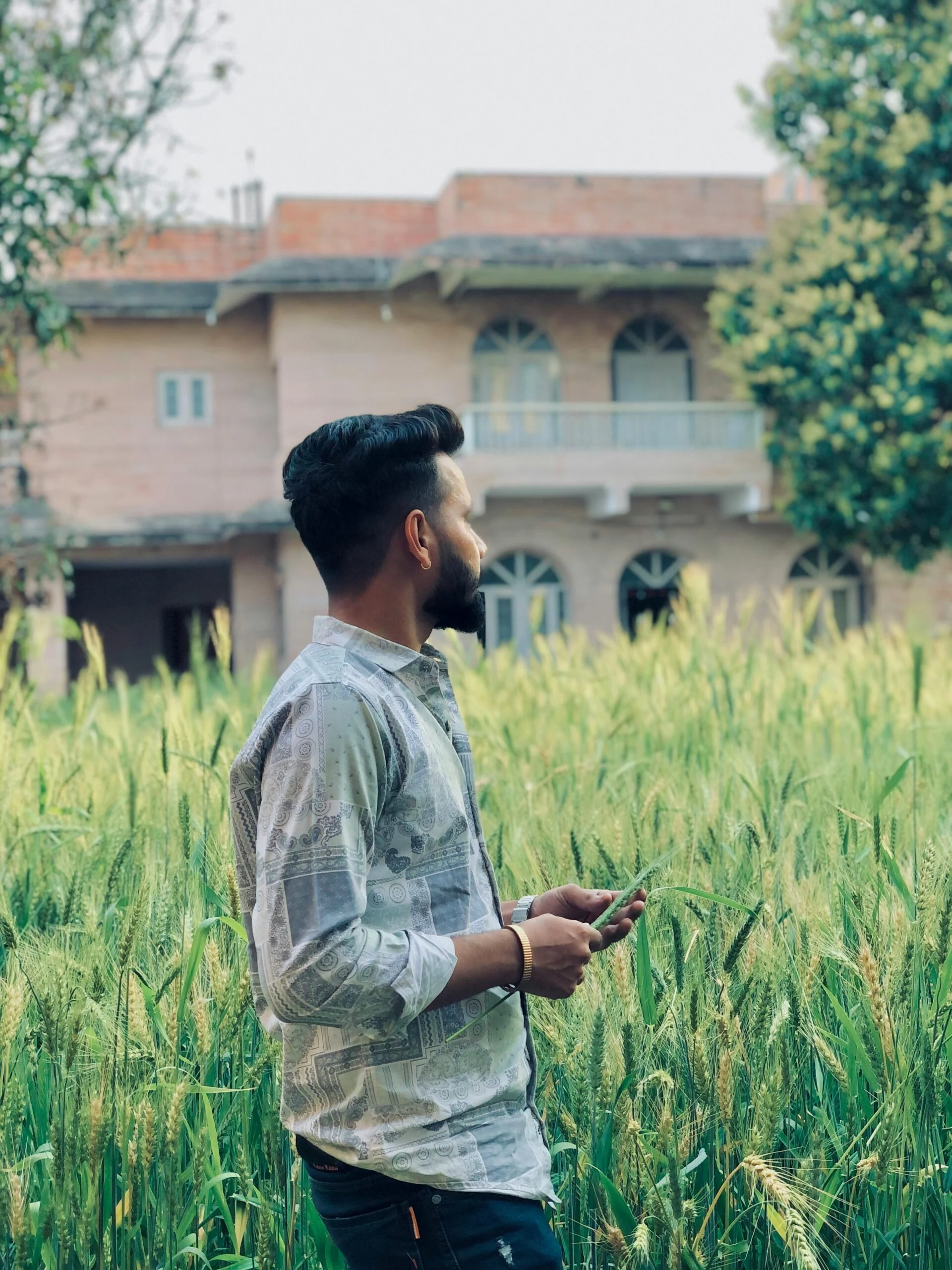
In a dusty village in Maharashtra’s Vidarbha region, Ramesh Patil checks his smartphone before heading to his cotton fields. The app tells him soil moisture levels are adequate, no pest alerts have been flagged, and the minimum support price for his crop has been updated on the electronic National Agriculture Market. Five years ago, Ramesh relied entirely on word-of-mouth from middlemen who often shortchanged him. Today, technology has fundamentally altered how he farms, sells, and plans for the future.
Ramesh’s story is not unique. Across India, a quiet but powerful agricultural technology revolution is transforming the lives of over 150 million farming households. From satellite-guided crop monitoring to blockchain-powered supply chains, India’s agritech ecosystem has grown into one of the most dynamic in the world, attracting billions in investment and reshaping centuries-old farming practices.
The Scale of India’s Agricultural Challenge
Agriculture remains the backbone of India’s economy and society. According to the Ministry of Agriculture and Farmers Welfare, the sector employs approximately 42% of the country’s workforce and contributes around 18% to India’s GDP. India is the world’s largest producer of milk, pulses, and spices, and the second-largest producer of rice, wheat, fruits, and vegetables. Yet despite this enormous output, Indian agriculture has long been plagued by structural inefficiencies that keep farmer incomes low and productivity below global benchmarks.
The average Indian farm is just 1.08 hectares, according to the Agriculture Census. Fragmented landholdings, unpredictable monsoons, limited access to credit, and a labyrinthine supply chain with multiple intermediaries have historically eroded farmer margins. The National Sample Survey Office found that nearly 52% of agricultural households in India are indebted, with an average outstanding loan of over Rs 74,000. Post-harvest losses alone account for an estimated Rs 92,651 crore annually, according to a study by the Indian Council of Agricultural Research.
It is precisely these deep-rooted challenges that have created fertile ground for technological intervention. India’s agritech sector has emerged as a response to systemic gaps that traditional policy measures alone could not bridge.
The Rise of India’s Agritech Ecosystem
India’s agritech ecosystem has experienced explosive growth over the past decade. According to a report by Bain & Company and India’s AgFunder, Indian agritech startups raised over $4 billion in cumulative funding between 2014 and 2024. The number of active agritech startups in India crossed 3,000 by 2024, up from fewer than 500 in 2015, making it one of the fastest-growing agritech markets globally.
Several converging factors have powered this growth. Smartphone penetration in rural India crossed 50% by 2024, according to the Telecom Regulatory Authority of India. The cost of mobile data in India is among the lowest in the world, averaging under Rs 15 per GB. The government’s push for digital infrastructure through initiatives like BharatNet, which aims to connect over 250,000 gram panchayats with broadband, has created the digital highway on which agritech solutions travel. These connectivity efforts are part of a broader push to build smart villages that close the urban-rural technology divide across the country.
Digital Mandis: Eliminating the Middleman
One of the most transformative developments in Indian agriculture has been the digitization of agricultural markets, or mandis. The electronic National Agriculture Market, commonly known as eNAM, launched in 2016 by the Government of India, has connected over 1,361 mandis across 23 states and 3 Union Territories as of January 2026. The platform has facilitated trade worth over Rs 3.24 lakh crore and registered more than 1.77 crore farmers and 2.39 lakh traders.
eNAM allows farmers to check commodity prices across multiple markets in real time, eliminating information asymmetry that middlemen traditionally exploited. A farmer in Madhya Pradesh can now see what cotton is fetching in Gujarat or Telangana before deciding where to sell. The platform supports online bidding, electronic payments, and quality assaying, bringing transparency to a system that was notoriously opaque.
Beyond eNAM, private platforms have further disrupted the agricultural marketplace. Companies like DeHaat, Ninjacart, and WayCool Foods have built direct farm-to-business supply chains that connect farmers directly with retailers, restaurants, and food processing companies. DeHaat, which operates across 15 states, serves over 2.5 million farmers through a network of micro-entrepreneurs who provide seeds, fertilizers, crop advisory, and market linkage, all through a single integrated platform.
“The biggest revolution in Indian agriculture is not a new seed variety or fertilizer. It is information. When a farmer knows the real price of their crop across markets, the entire power dynamic shifts.”
Shashank Kumar, Co-founder and CEO, DeHaat
Precision Farming: Data-Driven Agriculture
Precision agriculture, which uses data analytics, sensors, drones, and satellite imagery to optimize farming decisions, has found significant traction in India. Companies like CropIn, SatSure, and Fasal are deploying AI and machine learning models that analyze weather patterns, soil health, and crop growth stages to provide actionable recommendations to farmers.
CropIn, founded in Bengaluru, has digitized over 16 million acres of farmland across 56 countries. Its SmartFarm platform uses satellite imagery and AI to monitor crop health in real time, predict yields, and detect early signs of pest infestation or disease. The company’s technology has helped reduce crop losses by up to 20% for partnered farms, according to its impact reports.
SatSure, another Bengaluru-based startup, uses satellite data, weather models, and ground-truth information to provide risk assessments for agricultural lending. Banks and insurance companies use SatSure’s analytics to evaluate crop health and yield estimates before disbursing loans, reducing the risk of defaults and enabling more farmers to access formal credit. The platform has assessed over 50 million acres of farmland to date.
Fasal, which focuses on horticulture, deploys IoT sensors in farms that monitor soil moisture, temperature, humidity, and leaf wetness in real time. The data feeds into an AI engine that sends precise irrigation and spray advisories to farmers via a mobile app. According to Fasal’s published data, their system has helped farmers reduce water usage by 30% and increase yields by up to 40% in crops like grapes, pomegranates, and tomatoes.
Government Initiatives in Precision Agriculture
The Indian government has also invested heavily in digital agriculture infrastructure. The Soil Health Card scheme, launched in 2015, has issued over 23.5 crore soil health cards to farmers, providing them with detailed analysis of soil nutrient status and recommendations for appropriate fertilizer use. The scheme has been credited with reducing unnecessary fertilizer application, saving farmers money while improving soil health.
The India Digital Ecosystem of Agriculture, known as IDEA, is an ambitious framework launched by the Ministry of Agriculture to create a federated farmers’ database with unique IDs for every farmer, linked to their land records, crop data, and entitlements. When fully operational, IDEA will serve as the backbone for delivering targeted agricultural services, from subsidies to advisory to insurance, directly to farmers’ phones. This kind of open digital infrastructure echoes the spirit of Indian developers building technology for public good across multiple sectors.
Crop Insurance Goes Digital
Crop insurance has historically been one of the most contentious aspects of Indian agriculture. Traditional insurance schemes were plagued by delayed claim settlements, cumbersome paperwork, and disputes over crop loss assessment. The Pradhan Mantri Fasal Bima Yojana, launched in 2016, has been a step forward, but it is the integration of technology that is truly revolutionizing the space.
Under PMFBY, satellite imagery, drone surveys, and smartphone-based crop cutting experiments are now used to assess crop damage rapidly and objectively. The scheme has insured over 5.5 crore farmer applications annually, covering more than 55 million hectares. Claims worth over Rs 1.55 lakh crore have been paid out since the scheme’s inception, with the average claim settlement time dropping from months to weeks in states that have adopted technology-driven assessment.
Startups like Gramcover and WRMS (Weather Risk Management Services) are using parametric insurance models that trigger automatic payouts based on predefined weather parameters, such as rainfall falling below a certain threshold or temperatures exceeding critical levels. This eliminates the need for manual crop loss assessment entirely, ensuring farmers receive compensation within days of a weather event rather than waiting months for a claims adjuster to visit their field.
- Gramcover: Processes over 10 lakh insurance policies annually using AI-driven micro-insurance models
- WRMS: Provides weather-indexed insurance covering over 20 million farmers across 28 states
- Skymet: Operates India’s largest weather monitoring network with 5,500+ automatic weather stations used for insurance claim validation
- Dvara E-Registry: Digitizes and aggregates farmer data to enable targeted micro-insurance products
Farmer Apps: Advisory at the Fingertips
The proliferation of farmer-facing mobile applications has arguably had the most direct impact on rural lives. The government’s Kisan Suvidha app, available in multiple Indian languages, provides farmers with information on weather forecasts, market prices, plant protection measures, input dealers, soil health data, and cold storage locations, all in a single application.
The Meghdoot app, developed by the India Meteorological Department, delivers location-specific weather advisories and agromet forecasts that help farmers plan sowing, irrigation, and harvesting schedules. The Pusa Krishi app from the Indian Agricultural Research Institute disseminates information about new crop varieties, farming technologies, and resource conservation practices developed by IARI scientists.
In the private sector, apps like AgroStar, BigHaat, and Plantix have built massive user bases by combining advisory services with input marketplace functionality. AgroStar, which has raised over $100 million in funding, operates a toll-free helpline and a video-based advisory platform where agronomists address farmer queries in regional languages. The company serves over 10 million farmers across Gujarat, Rajasthan, Maharashtra, and Madhya Pradesh.
Plantix, developed by German company PEAT, uses AI-powered image recognition to diagnose crop diseases from smartphone photos. A farmer can simply photograph a diseased leaf, and the app identifies the disease and recommends treatment within seconds. The app has been downloaded over 30 million times, with a significant portion of its user base in India.
Drones and Robotics in Indian Agriculture
The Indian government’s liberalized drone regulations, introduced through the Drone Rules 2021 and the subsequent Production Linked Incentive scheme for drone manufacturing, have opened up enormous possibilities for agricultural drones. The Kisan Drone initiative, announced in the 2022-23 Union Budget, subsidizes drone deployment for crop assessment, land records, and spraying of pesticides and nutrients.
Companies like Garuda Aerospace, IoTechWorld Avigation, and Marut Drones have emerged as leaders in the agricultural drone space. Garuda Aerospace, valued at over Rs 1,000 crore, has deployed drones in over 26 states for crop spraying, reducing the time required to spray one acre from approximately one hour (manual) to just 10 minutes. The company claims this reduces pesticide usage by up to 30% through precision application while also eliminating direct human exposure to chemicals.
Marut Drones, based in Hyderabad, has partnered with state governments including Telangana and Andhra Pradesh for large-scale drone-based crop health monitoring. Their drones capture multispectral imagery that identifies nutrient deficiencies, water stress, and pest infestations at a field level, enabling targeted intervention rather than blanket spraying.
Impact Numbers at a Glance
Technology | Reach | Key Impact |
|---|---|---|
eNAM (Digital Mandi) | 1,361 mandis, 1.77 crore farmers | Price transparency, reduced middlemen |
Soil Health Cards | 23.5 crore cards issued | Optimized fertilizer use, cost savings |
PMFBY (Crop Insurance) | 5.5 crore applications/year | Rs 1.55 lakh crore claims paid |
Kisan Drones | 26+ states | 30% less pesticide, 6x faster spraying |
Precision Farming (CropIn) | 16 million acres | 20% reduction in crop losses |
Farmer Apps (AgroStar) | 10 million+ farmers | Real-time advisory in local languages |
Fintech Meets Agriculture: Credit and Payments
Access to affordable credit remains one of the biggest barriers for Indian farmers. Traditional banks have been wary of agricultural lending due to perceived high risk and lack of reliable data. Agrifintech startups are bridging this gap by using alternative data sources, including satellite imagery, transaction histories, and crop performance data, to create credit scores for farmers who lack conventional financial records.
Samunnati, a Chennai-based agri-enterprise, has deployed over Rs 14,000 crore in agricultural credit to farmer producer organizations and agribusinesses. The company uses data analytics to assess creditworthiness and provides customized financial products, from pre-harvest credit for inputs to post-harvest loans against warehouse receipts. Jai Kisan, another agrifintech startup, provides digital lending to rural India, having facilitated over Rs 1,500 crore in loans with a focus on farm equipment financing.
The UPI revolution has also penetrated rural markets. According to the National Payments Corporation of India, over 40% of UPI transactions now originate from Tier 3 and below towns. Farmers increasingly use digital payments for purchasing inputs, receiving crop payments, and accessing government subsidies through Direct Benefit Transfer. The PM-KISAN scheme, which provides Rs 6,000 per year to eligible farmer families, has transferred over Rs 3.04 lakh crore directly to bank accounts since its launch, with digital payment infrastructure ensuring the money reaches beneficiaries without leakage.
Cold Chain and Post-Harvest Technology
India’s cold chain infrastructure has long been inadequate for a country that produces over 300 million tonnes of fruits and vegetables annually. According to the National Centre for Cold-chain Development, India needs approximately 3.5 million tonnes of additional cold storage capacity and over 52,000 pack houses to reduce post-harvest losses to acceptable levels.
Startups are addressing this gap with innovative solutions. Ecozen Solutions has developed solar-powered cold storage units called Ecofrost that can operate off-grid, making cold storage viable in remote rural areas without reliable electricity. The company has deployed over 1,000 units across India, extending the shelf life of perishable produce by 5 to 21 days and enabling farmers to sell at better prices instead of resorting to distress sales immediately after harvest.
Tessol, another cold chain startup, has developed phase-change material-based refrigeration units that can be charged in just 4 hours and maintain temperatures for up to 12 hours without electricity. Their technology is deployed in last-mile delivery vehicles, ensuring that farm produce reaches urban markets without breaking the cold chain.
Challenges and the Road Ahead
Despite remarkable progress, India’s agritech revolution faces significant challenges. Digital literacy in rural India remains uneven. While smartphone ownership has increased, many older farmers struggle with app-based interfaces, and women farmers, who constitute over 75% of the agricultural labor force according to Oxfam India, are disproportionately excluded from digital tools due to lower smartphone ownership and digital literacy rates. As we have explored in our coverage of India’s rural digital divide, the gap between urban and rural access to technology remains one of the country’s most pressing challenges.
Language remains a barrier. Although many apps support Hindi and a few regional languages, India’s linguistic diversity means that farmers in states like Manipur, Mizoram, or tribal regions of Odisha often find existing solutions inaccessible. Internet connectivity, despite improvements through BharatNet, remains spotty in remote and hilly regions.
Data privacy is another emerging concern. As more farmer data is collected by private companies and government platforms, questions about consent, ownership, and potential misuse of agricultural data need to be addressed through robust data governance frameworks. The proposed Digital Agriculture Mission 2021-2025 has acknowledged this need, but implementation of data protection measures has been slow.
The sustainability of agritech business models is also under scrutiny. Many startups operate on thin margins in a price-sensitive market, and the path to profitability requires achieving scale that is often difficult in India’s fragmented agricultural landscape. Consolidation in the sector is likely as smaller players either merge with larger platforms or exit.
What Needs to Happen Next
- Vernacular-first design: Agritech solutions must be built in local languages from the ground up, not translated as an afterthought
- Gender-inclusive technology: Targeted programs to ensure women farmers have equal access to smartphones, digital literacy training, and agritech platforms
- Interoperability: Government platforms like eNAM, Soil Health Cards, and PMFBY need seamless data sharing to provide farmers with a unified digital experience
- Last-mile infrastructure: Continued investment in rural broadband, electricity, and cold chain capacity
- Data governance: Clear regulations on farmer data ownership, consent, and usage by private companies
A Future Where Technology Serves Every Farmer
India’s agritech revolution is still in its early chapters. The foundation has been laid: digital infrastructure is expanding, smartphone adoption is growing, and a vibrant startup ecosystem is channeling capital and talent into solving agriculture’s hardest problems. Government programs like eNAM, PMFBY, and the Digital Agriculture Mission are providing the institutional scaffolding on which private innovation can build.
The true measure of this revolution, however, will not be in investment rounds raised or apps downloaded. It will be in whether the farmer in Vidarbha gets a fair price for her cotton, whether the fisherfolk in Kerala can predict storms before they set sail, and whether a tribal family in Jharkhand can insure their single acre of paddy without navigating a bureaucratic maze.
Technology alone will not solve all of agriculture’s problems. It cannot fix land reform, cannot control monsoons, and cannot substitute for political will. But when combined with the right policies, accessible design, and genuine commitment to inclusion, technology can be the most powerful tool India has ever deployed in service of its farming communities. The farm-to-fork revolution is underway. The question is whether it will reach every fork in every village.
If you know a farmer using technology to transform their livelihood, or if you work in the agritech space and want to share your story, we would love to hear from you. Share your experience in the comments below or reach out to the Unite4India community. Together, we can amplify the voices of India’s agricultural innovators.
What you can do
- Share the evidenceSend this to one person who should know about digital india.Share on WhatsApp
- Back what worksVolunteer time or skills with groups doing this work.Ways to volunteer
- Tell us what's missingKnow a story, a fact we got wrong, or a solution worth spotlighting?Suggest a story
Politically neutral. Every claim sourced. Report a correction.


No comments yet