Should India Ban Social Media for Teens?
India is debating whether to ban social media for teens under 16, following Australia's landmark ban. But is prohibition the real answer, or is the deeper crisis one of digital literacy, parental awareness, and a rural-urban divide that no legislation can fix?
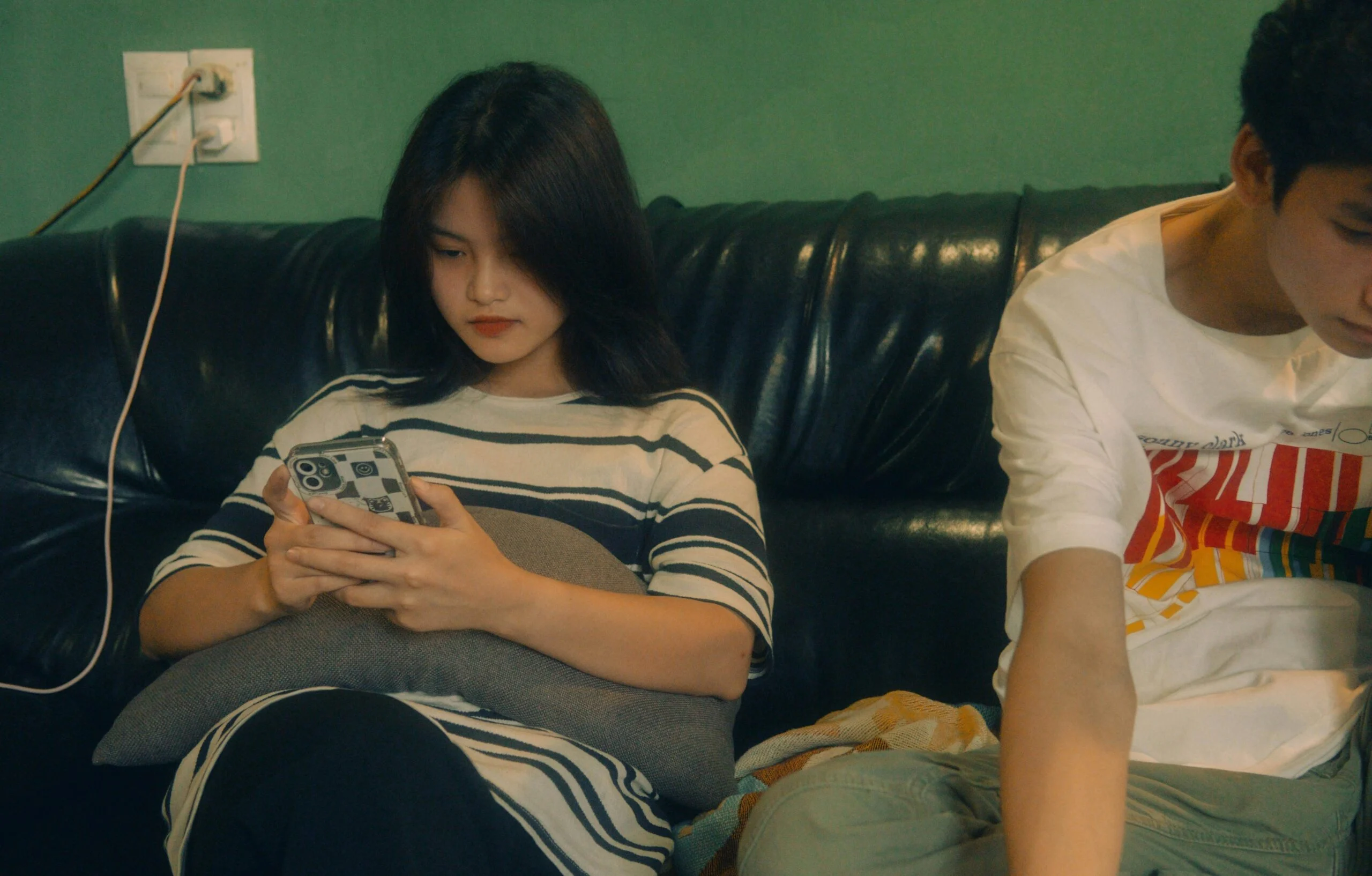
In January 2026, when a prominent ally of Prime Minister Narendra Modi proposed banning social media for users under 16, India found itself at the centre of a global debate that has already reshaped policy in Australia, drawn regulatory attention across the European Union, and forced Silicon Valley into defensive postures it has not assumed since the Cambridge Analytica scandal. But beneath the headlines lies a far more uncomfortable question that neither politicians nor tech companies want to address: Is a ban even the right solution for a country where 500 million people use WhatsApp, where cheap Jio data plans put smartphones in the hands of eight-year-olds in rural Bihar, and where most parents themselves cannot distinguish a phishing link from a government notice?
This Week’s Tragedy: Three Sisters in Ghaziabad
As this article was being published, India woke up to a devastating reminder of why this debate matters. On February 4, 2026, three sisters - Nishika (16), Prachi (14), and Pakhi (12) - jumped from the 9th floor of their apartment building in Ghaziabad, Uttar Pradesh, in the early hours of the morning. All three died.
The sisters left behind an eight-page suicide note addressed to their parents: “Mummy-Papa Sorry.” Preliminary investigations reveal that the girls had become deeply absorbed in an online task-based Korean game. Their father, reportedly struggling with Rs 2 crore in debt, had sold their smartphones to pay an electricity bill. The confiscation of their phones appears to have been one of the triggering factors.
Police are investigating the online gaming addiction angle. What is already clear is this: three children are dead, and somewhere in the intersection of digital addiction, family financial stress, isolation, and a complete absence of mental health support, the system failed them in every way possible.
This is not an abstract policy debate. These are real children. And the Ghaziabad tragedy underscores the central argument of this article - that neither a ban nor inaction is sufficient. What India needs is a serious, funded, long-term investment in digital literacy, parental education, and adolescent mental health.
Sources: The Week, Zee News, Republic World
The Trigger: Australia’s Under-16 Social Media Ban
In late 2024, Australia became the first major democracy to pass legislation banning children under 16 from accessing social media platforms. The Online Safety Amendment (Social Media Minimum Age) Act imposed fines of up to AUD 49.5 million on platforms that failed to prevent underage access. The law received bipartisan support, fuelled by mounting evidence of cyberbullying, eating disorders linked to Instagram and TikTok, and a youth mental health crisis that saw adolescent depression rates climb 40 percent in a single decade.
By early 2026, the ripple effects reached New Delhi. Bloomberg and the Japan Times reported on Indian lawmakers proposing similar restrictions, with a BJP ally formally recommending that India follow Australia’s model. The proposal instantly polarised opinion - digital rights advocates called it authoritarian overreach, child psychologists called it long overdue, and parents across the country quietly wondered whether they had already lost the battle for their children’s attention.
The Case FOR Banning Social Media for Indian Teens
1. The Mental Health Crisis Is Real and Measurable
India’s National Crime Records Bureau (NCRB) data reveals a disturbing trend: student suicides rose to over 13,000 in 2022, a 70 percent increase over the previous decade. While attributing this entirely to social media would be reductive, multiple studies - including research from NIMHANS (National Institute of Mental Health and Neurosciences) in Bengaluru - have found strong correlations between excessive social media use and anxiety, depression, and sleep disorders among Indian adolescents aged 13 to 17.
A 2023 study published in the Indian Journal of Psychiatry surveyed 4,500 students across five states and found that 62 percent of heavy social media users (4+ hours daily) reported symptoms of anxiety, compared to 23 percent of light users. Among girls, the disparity was even more pronounced - 71 percent of heavy users reported body image concerns directly tied to Instagram and Snapchat content.
“We are seeing children as young as 11 presenting with clinical anxiety that can be directly traced to their online interactions. The platforms are designed to be addictive - asking a child to self-regulate on Instagram is like asking them to moderate their own sugar intake in a candy factory.”
- Dr. Shyam Bhat, Psychiatrist, Bengaluru
2. Cyberbullying Has Reached Epidemic Proportions
According to a 2024 report by the Cyber Peace Foundation, India ranks among the top five countries globally for cyberbullying incidents involving minors. Roughly 37 percent of Indian teenagers reported experiencing online harassment, with platforms like Instagram, Snapchat, and increasingly Telegram being the primary vectors. Unlike traditional bullying, cyberbullying follows children into their homes, their bedrooms, and their sleep - there is no escape.
The anonymity features of platforms such as Ask.fm and the disappearing-message functionality of Snapchat have created environments where bullying can occur without accountability. For many parents, the first indication of a problem comes too late - sometimes only after a child has already self-harmed.
3. Data Privacy and Predatory Advertising
Indian children are not just consumers of social media - they are the product. Platforms collect vast amounts of behavioural data from underage users, often in violation of their own terms of service. India’s Digital Personal Data Protection Act (DPDPA), passed in 2023, includes provisions for verifiable parental consent for users under 18, but enforcement remains patchy at best. A ban would provide a cleaner regulatory framework than attempting to enforce consent mechanisms on platforms designed to circumvent them.
The Case AGAINST Banning Social Media for Indian Teens
1. Bans Do Not Work - They Drive Behaviour Underground
Digital rights organisations including the Internet Freedom Foundation (IFF) and the Centre for Internet and Society (CIS) have consistently argued that age-based bans are technically unenforceable and socially counterproductive. Australia’s own eSafety Commissioner has acknowledged that determined teenagers will find ways around age verification - VPNs, fake IDs, and borrowed accounts are already common among Australian teens months before the ban even takes full effect.
In India, the challenge is exponentially greater. With over 800 million internet users and no centralised digital identity verification system linked to age (Aadhaar does not reliably verify age for minors), enforcing a ban would require either invasive biometric checks or reliance on self-declaration - the same system that currently allows millions of underage users to access platforms unimpeded.
Banning social media for teens is like banning books from libraries because some of them contain difficult content. The answer is not less access — it is better guidance.
2. Social Media Is Also a Lifeline
For millions of Indian teenagers - particularly those in rural areas, small towns, and marginalised communities - social media is not merely entertainment. It is a window to educational content, career opportunities, creative expression, and communities of belonging that do not exist in their physical environment. LGBTQ+ teens in conservative households, Dalit students seeking mentorship, girls in patriarchal settings finding female role models - for these young people, a social media ban would close doors rather than protect them.
YouTube alone has become India’s largest informal education platform, with millions of students preparing for competitive exams through free content. Instagram and LinkedIn have enabled teenage entrepreneurs in tier-2 and tier-3 cities to build businesses and personal brands. Cutting off access to these platforms at the age when career aspirations are forming could widen the very opportunity gaps in youth employment that Digital India seeks to close.
3. The Slippery Slope of State Control
India already has a complex relationship with internet regulation. The country has imposed more internet shutdowns than any other democracy - over 700 between 2012 and 2023, according to the Software Freedom Law Centre. Critics argue that a social media ban for minors could set a precedent for broader content restrictions, normalising state intervention in online spaces under the guise of child protection.
The IT Rules of 2021 and the proposed Digital India Act already grant the government significant powers over online platforms. Adding an age-based ban to this arsenal, without robust privacy safeguards and independent oversight, raises legitimate concerns about mission creep.
The Real Problem: India’s Digital Literacy Gap
Here is what neither side of the debate wants to fully confront: India does not have a social media problem. India has a digital literacy crisis masquerading as a social media problem.
When Jio launched in 2016 and effectively gave hundreds of millions of Indians their first affordable internet access, the country leapfrogged from minimal connectivity to near-universal smartphone penetration in under five years. But digital literacy did not keep pace. According to the National Statistical Office, only 38 percent of Indian households with internet access have even basic digital literacy skills. In rural areas, that figure drops to 22 percent.
This means that the parents being asked to supervise their children’s online behaviour are often less digitally literate than the children themselves. A 2024 survey by LocalCircles found that 54 percent of Indian parents could not name three social media platforms their children used, and 67 percent had never checked their child’s phone or online activity. Among parents in rural areas, 78 percent reported having no understanding of privacy settings, content filters, or screen-time management tools.
| Metric | Urban India | Rural India | National Average |
|---|---|---|---|
| Internet penetration | 67% | 37% | 52% |
| Basic digital literacy | 56% | 22% | 38% |
| Parents who monitor online activity | 48% | 22% | 33% |
| Teens with own smartphone | 71% | 43% | 55% |
| Teens who use social media daily | 84% | 61% | 72% |
| Awareness of parental controls | 39% | 11% | 24% |
The Jio Revolution’s Unintended Consequences
Reliance Jio’s disruption of India’s telecom market was hailed as a democratic revolution - and in many ways, it was. At its peak, Jio was adding over 10 million subscribers per month, and its rock-bottom data prices (as low as Rs 2.5 per GB) made India the cheapest country in the world for mobile data. But this rapid democratisation of access happened without a corresponding investment in digital education.
The result is a country where a 12-year-old in a village in Uttar Pradesh can access the same platforms as a 12-year-old in San Francisco, but without any of the contextual education, parental oversight, or institutional support that might help the American child navigate those spaces more safely. The smartphone became the great equaliser of access - but not of understanding.
What Other Countries Are Doing - And What India Can Learn
Australia: The Outright Ban
Australia’s approach is the most aggressive globally - a blanket ban on under-16s, with enforcement responsibility placed on platforms rather than families. The law mandates age verification technology, though the specific methods remain under development. Early indications suggest biometric age estimation (using facial analysis) may be deployed, raising its own privacy concerns.
European Union: The Regulatory Approach
The EU’s Digital Services Act (DSA) takes a different path. Rather than banning access, it mandates platform accountability - requiring algorithmic transparency, prohibiting targeted advertising to minors, and imposing heavy fines for non-compliance. The EU approach assumes that the problem is not access but exploitation, and it targets the business models rather than the users.
United States: The Patchwork
The US lacks a federal approach, resulting in a patchwork of state laws. Utah and Arkansas have passed legislation requiring parental consent for minors to access social media. California’s Age-Appropriate Design Code Act mandates privacy protections for children. The federal Kids Online Safety Act (KOSA) has been debated but not passed at the time of writing. Meta, TikTok, and Snapchat have all introduced teen-specific features, though critics argue these are insufficient.
South Korea and Japan: Digital Wellness
South Korea’s “Shutdown Law” (now repealed) previously restricted gaming access for under-16s between midnight and 6 AM. The country has since shifted toward digital wellness education integrated into school curricula. Japan has similarly focused on education over restriction, with its 2024 digital citizenship guidelines emphasising media literacy from age 6.
- Australia: Outright ban - platforms must prevent access for under-16s
- EU: Regulate platforms - ban targeted ads to minors, require algorithmic transparency
- US: State-level patchwork - parental consent laws, privacy protections
- South Korea: Education-first - digital citizenship in school curricula
- Japan: Media literacy focus - guidelines from age 6
- China: Time limits - under-18s restricted to 2 hours/day on platforms
What India Actually Needs: A Five-Point Framework
Banning social media for Indian teens might generate headlines. It will not solve the problem. Here is what a serious, evidence-based approach would look like:
1. Mandatory Digital Literacy in Schools
India’s National Education Policy (NEP) 2020 mentions digital literacy but treats it as an afterthought. Digital citizenship - including online safety, privacy awareness, critical evaluation of information, and healthy screen habits - should be a mandatory, graded subject from Class 5 onwards. Not as an add-on to computer science, but as a core life skill on par with financial literacy.
2. Parent Education at Scale
No child protection strategy works without informed parents. The government should mandate parental digital literacy workshops through schools - not as optional sessions that 10 percent of parents attend, but as required engagement tied to school enrollment, parent-teacher meetings, and community outreach. Organisations like the IT for Change Foundation and Pratham have developed scalable models for exactly this kind of intervention.
3. Platform Accountability, Not User Punishment
Following the EU model, India should mandate that platforms operating in the country disable algorithmic content recommendation for users under 18, prohibit targeted advertising to minors, implement robust age-gating mechanisms, and provide transparent parental control tools. The Digital Personal Data Protection Act already provides the legal framework - it needs enforcement teeth.
4. Invest in Age-Appropriate Indian Platforms
Rather than banning global platforms, India should invest in creating safe, age-appropriate digital spaces for children and teenagers. The success of platforms like Koo (before its closure) showed that India can build homegrown social technology. A government-backed initiative to create moderated, educational social platforms for different age groups could provide safer alternatives without restricting access entirely.
5. Strengthen Mental Health Infrastructure
India has approximately 0.3 psychiatrists per 100,000 people - one of the lowest ratios in the world. Even if social media were banned entirely, the mental health crisis among Indian youth would persist because the support systems simply do not exist. Expanding school counselling services, training teachers in mental health first aid, and destigmatising help-seeking behaviour are essential complements to any digital regulation.
The Uncomfortable Truth About Parenting in the Digital Age
Perhaps the most uncomfortable aspect of this debate is what it reveals about parenting in modern India. Many of the loudest voices calling for a ban are parents who have, by their own admission, handed smartphones to their children as digital babysitters. The Indian Academy of Pediatrics reports that the average Indian child receives their first unsupervised smartphone access at age 8 - three years before the minimum age of most social media platforms.
Calling for a government ban is, for many parents, an outsourcing of responsibility. It is far easier to demand that the state restrict access than to set boundaries at home, learn how privacy settings work, or have difficult conversations about online predators, body image, and misinformation. This is not to blame parents - many are genuinely overwhelmed and under-equipped. But a ban that lets parents off the hook without building their capacity to parent in a digital world is a band-aid on an arterial wound.
“The question is not whether children should be on social media. The question is whether we, as a society, have equipped them - and their parents - to navigate it. Right now, the answer is clearly no. But a ban does not change that answer. Education does.”
- Dr. Anuradha Sovani, Child Psychologist, Mumbai
The Misinformation Angle: A Problem Bans Cannot Solve
India’s struggles with social media are not limited to teen mental health. The country has faced a persistent crisis of misinformation - particularly on WhatsApp, which has over 500 million users in India. From lynchings triggered by viral child kidnapping rumours to the flood of health misinformation during COVID-19, the spread of false information through social platforms has had real, deadly consequences.
Banning teens from social media would not address this misinformation ecosystem. In fact, it could make things worse - by delaying the age at which young people develop critical media literacy skills, a ban could produce 16-year-olds who enter the unmoderated digital world with even less capacity to evaluate the information they encounter. Early, supervised exposure with structured education is a more effective inoculation than belated, unsupervised access.
India’s Unique Challenges Make Copy-Paste Policy Dangerous
What works in Australia - a wealthy, homogeneous nation of 26 million with high institutional trust and robust digital infrastructure - cannot be transplanted to India. The scale alone is staggering: India has over 350 million internet users under the age of 25. The diversity of languages (22 official, 780+ spoken), the urban-rural digital divide, and the varying levels of state capacity mean that a one-size-fits-all ban would be enforced unevenly at best and become another tool of arbitrary authority at worst.
- Scale: India has 14x Australia’s population and 350M+ young internet users
- Infrastructure: No centralised age verification system exists
- Enforcement: India’s IT enforcement capacity is already stretched thin
- Diversity: 22 official languages make uniform policy implementation nearly impossible
- Economics: Many families share devices, making individual age-gating impractical
- Precedent: India’s history of internet shutdowns raises concerns about expanding state control
Where Do We Go From Here?
The debate over banning social media for Indian teens is not really about social media. It is about what kind of digital society India wants to build. A society that responds to every technological challenge with prohibition is a society that will always be playing catch-up. A society that invests in education, builds robust institutions, holds platforms accountable, and equips its citizens - including its youngest citizens - to navigate complexity with agency and discernment is a society that can lead the global conversation rather than follow it.
India has already proven - from how digital platforms reshaped social norms to UPI - that it can build world-class digital public infrastructure - UPI, Aadhaar, and DigiLocker are proof of concept. The same ambition, scale, and innovation need to be directed at digital literacy and online safety. Not as an afterthought to regulation, but as the foundation upon which all regulation rests.
The answer to “Should India ban social media for teens?” is: India should do something far harder and far more effective than a ban. It should educate, empower, and equip an entire generation to use these tools wisely - and hold the companies that build them to a standard worthy of the world’s largest democracy.
Key Takeaways
- Australia’s under-16 social media ban has triggered a global debate, including in India
- The Ghaziabad tragedy of February 4, 2026 - where three sisters aged 12, 14, and 16 died after jumping from the 9th floor, reportedly linked to online gaming addiction - underscores the urgency of this issue
- India’s teen mental health crisis is real - but a ban alone will not solve it
- The deeper issue is a massive digital literacy gap, especially in rural India
- Parents are often less digitally literate than their children, limiting supervision
- Enforcement of an age-based ban in India would face unique challenges of scale and infrastructure
- A five-point framework - education, parent support, platform accountability, safe alternatives, and mental health investment - offers a more sustainable path
- Copy-pasting Australian policy to Indian context ignores fundamental differences in scale, diversity, and digital infrastructure
What do you think? Should India ban social media for teens, or invest in digital literacy instead? Share your perspective in the comments below - and if this article made you think, share it with someone who needs to read it.
Sources: National Crime Records Bureau, Indian Journal of Psychiatry, Cyber Peace Foundation, TRAI, National Statistical Office, LocalCircles, Internet Freedom Foundation, World Health Organization, Australian eSafety Commissioner, European Commission Digital Services Act, The Week, Zee News, Republic World.
What you can do
- Share the evidenceSend this to one person who should know about digital india.Share on WhatsApp
- Give an afternoonTeach, mentor, clean up, or lend your professional skills.Ways to volunteer
- Tell us what's missingKnow a story, a fact we got wrong, or a solution worth spotlighting?Suggest a story
Politically neutral. Every claim sourced. Report a correction.

No comments yet