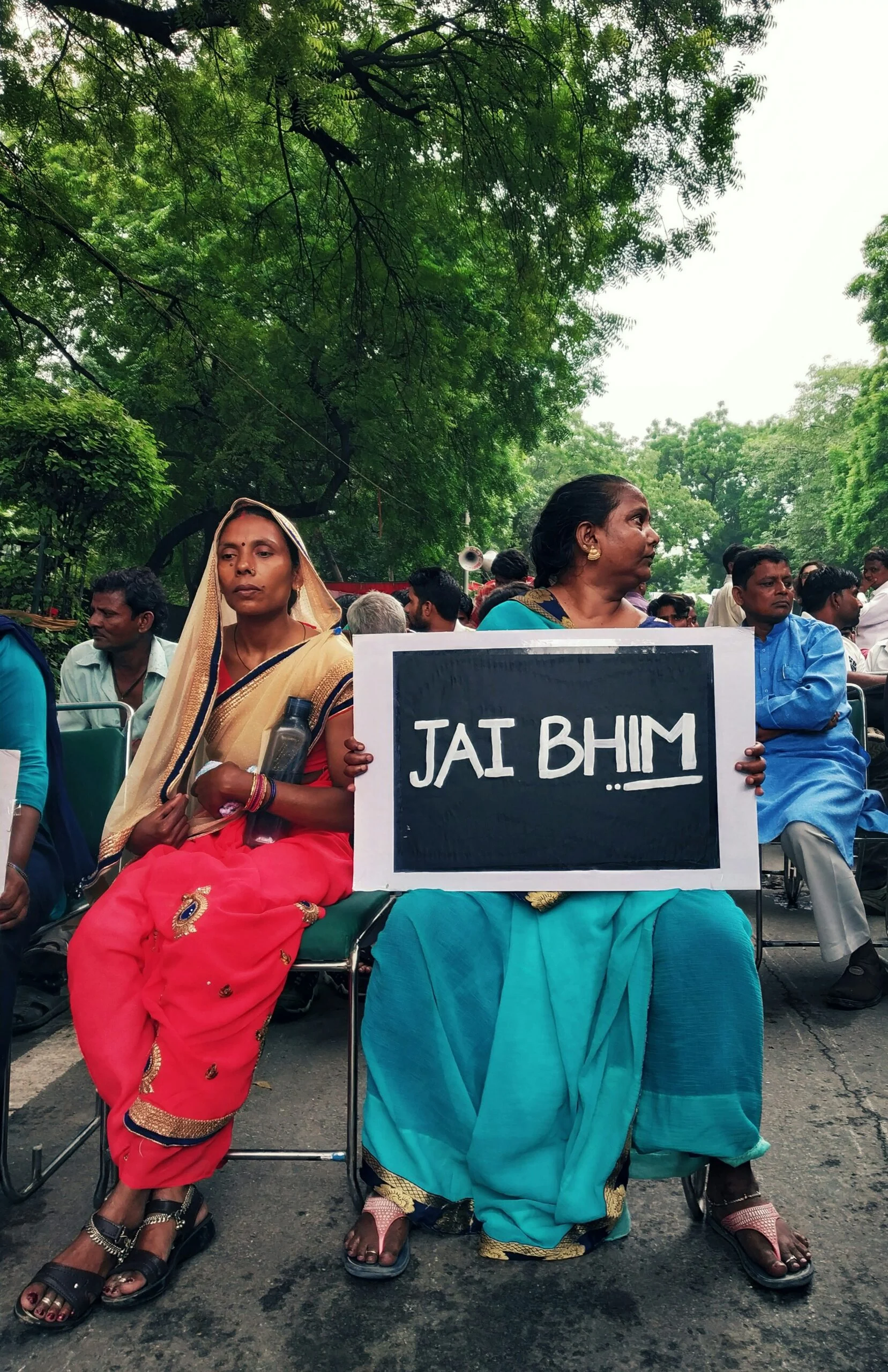
Irom Sharmila: The Woman Who Fasted for 16 Years Against AFSPA
Irom Chanu Sharmila fasted for 5,778 days in protest of the Armed Forces Special Powers Act. Her fast ended in 2016; AFSPA remains. This is her story and what the law she fought still does in India's Northeast.
Irom Chanu Sharmila, a poet from Manipur, refused food and water for 5,778 days between November 2000 and August 2016 in protest of a single Indian law: the Armed Forces (Special Powers) Act, 1958, or AFSPA. She was arrested repeatedly for attempted suicide, kept alive by a nasal feeding tube in a Manipur hospital, and transformed from a 28-year-old activist into the single most visible face of opposition to one of the most controversial statutes on the Indian books. She ended the fast in 2016. AFSPA remains in force across significant parts of Manipur, Nagaland, Arunachal Pradesh, and Jammu and Kashmir.
Her story is important not only for what she did but for what it says about the cost of protesting a structure that the Indian state has chosen, over and over again across multiple governments, to preserve. I have watched the retellings of her fast shift over the years, from heroic narrative in the 2000s to a quieter, more ambivalent framing in the 2020s, and I think the ambivalent framing is closer to what actually happened. This is an essay about both the fast and the law it failed to repeal, and about what the failure tells us about the Indian state’s priorities.
The Malom massacre
On November 2, 2000, ten civilians were shot dead at a bus stop in Malom, a village in Manipur’s Imphal East district, by personnel of the Assam Rifles. Among the dead were a 62-year-old grandmother and a 17-year-old boy who had won a bravery award from the Indian government just months earlier, for rescuing a child from drowning. The Assam Rifles said the civilians were killed in a cross-fire with militants. Witnesses said there was no cross-fire at all, the civilians were simply shot while waiting for a bus.
Under AFSPA, the Assam Rifles personnel could not be prosecuted without prior sanction from the central government. No sanction was granted. No one was prosecuted. The Malom massacre joined a long list of civilian killings in the Northeast for which AFSPA provided legal impunity, and it joined an even longer list of incidents that did not make national news because the national press in 2000 rarely paid attention to Manipur.
Irom Sharmila, then 28 years old and known locally as a young poet and human rights worker, began her fast on November 5, 2000. Her demand was simple: repeal AFSPA. Not amendment, not partial rollback, repeal. She did not ask for the military to leave Manipur. She asked for the law that gave the military legal impunity to be taken off the books.
What AFSPA actually says
The Armed Forces Special Powers Act, 1958, applies to areas designated as “disturbed” by the central or state government. In those designated areas, a commissioned officer, warrant officer, non-commissioned officer, or any other person of equivalent rank in the armed forces is empowered to do four things that go well beyond normal police powers:
- Fire upon or use force, even to the causing of death, against any person acting in contravention of any law or order prohibiting the assembly of five or more persons or the carrying of weapons
- Arrest without warrant any person against whom a reasonable suspicion exists that they have committed a cognizable offence
- Enter and search without warrant any premises
- Stop, search, and seize any vehicle or vessel
And critically, Section 6 of the Act provides that no prosecution shall be instituted against any person for anything done under the Act except with the previous sanction of the central government. That sanction is rarely granted. In the cases where it has been sought, it has been denied in the overwhelming majority of instances, and the applications themselves have in some cases taken years to process.
Human Rights Watch, Amnesty International, and a series of Indian commissions including the Justice Jeevan Reddy Committee of 2005 and the Justice Verma Committee of 2013 have documented the impunity that Section 6 creates. The Jeevan Reddy Committee, commissioned by the UPA government specifically to examine AFSPA, recommended the outright repeal of the Act. The recommendation was not implemented. The report itself is a useful reference document for anyone using the Right to Information Act to request incident records in AFSPA-notified regions, though most RTI applications filed for such records are refused on national security grounds.
The sixteen-year fast
Sharmila’s fast began as a hunger strike. Under Section 309 of the Indian Penal Code, attempted suicide was then a criminal offence, a provision that has since been partially decriminalized but which remained the basis for her repeated arrests throughout the fast. She was arrested within days of starting the protest, charged with attempted suicide, and force-fed through a nasal tube at the Sajiwa Jail hospital in Imphal.
The legal machinery that followed was a continuous loop. Section 309 charges carried a maximum one-year sentence. She was released after a year, restarted her fast within hours, was rearrested, force-fed again, held another year, released again. This pattern repeated, with minor variations, for sixteen years. She wrote poetry, she read voraciously, she met with visitors including dignitaries and journalists, and she did not eat or drink.
For most of her fast, the nasal tube kept her alive. She never wavered in her insistence that AFSPA be repealed, never accepted solid food, and never returned to her family’s home. The fast became one of the longest documented hunger protests in modern political history, and international human rights organizations cited her case as a reference point for discussions of political protest and state response throughout the 2000s and 2010s.
Why she ended the fast, and what happened next
In August 2016, Sharmila announced she would end her fast. She said she had come to believe that hunger strike alone could not achieve her goal, that the Indian state had clearly decided to simply wait her out, and that she would instead contest elections to pursue AFSPA repeal through political office. The reasoning was practical. Sixteen years of protest had produced international attention and one committee report. They had not produced repeal.
The decision was controversial among her supporters. Some felt she had abandoned the cause. Others felt she had correctly recognized that 16 years of moral authority without political power had not moved the needle. I think the second reading is right, but I also think the choice came at an enormous personal cost, because what happened next was brutal.
She contested the 2017 Manipur Legislative Assembly elections as the candidate of a party she had founded, the People’s Resurgence and Justice Alliance. She received 90 votes. Ninety. After 16 years of internationally recognized protest, standing in her home state, on the specific issue she had defined her life by. The result is one of the cruelest data points in the modern Indian political record.
It does not mean Manipuris did not care about AFSPA, they did and do. It means that the political infrastructure to translate moral authority into electoral weight did not exist for her. She was a saint without a party, without a funded campaign organization, without the local political networks that determine who wins seats in a state where voting often follows clan and community lines. Sharmila later married a British human rights activist and moved to Bangalore. She returned to activism and social enterprise in a quieter key, and lives largely out of the spotlight today.
AFSPA since 2016
The Indian government has partially withdrawn AFSPA from parts of Northeast India in stages since 2015, from several districts of Tripura, Meghalaya, and Arunachal Pradesh. In April 2022, the central government announced significant reductions of AFSPA-notified areas in Assam, Manipur, and Nagaland, and there was, briefly, a sense that the law might finally be on its way out.
The full Act, however, remains in force in large parts of Manipur, including much of the Imphal valley, throughout the hill districts of Nagaland, in Arunachal Pradesh districts bordering Myanmar, and in Jammu and Kashmir. Civilian killings continue to occur in AFSPA-notified areas. Prosecutions of military personnel under the Act remain extremely rare. The Supreme Court, in a 2016 judgment in the Extra Judicial Execution Victim Families Association case, held that AFSPA does not provide absolute immunity and that allegations of extrajudicial killings can be investigated. The ruling did not trigger mass prosecutions.
The press coverage of AFSPA has waxed and waned with other Northeast stories. Grassroots media in the region, including some of the community radio stations reaching rural and tribal listeners, continue to report incidents that mainland newsrooms largely ignore. That reporting work is often the only visible record of what the law still enables.
What her fast actually achieved
It would be inaccurate to say Irom Sharmila’s 16-year fast achieved her stated goal. AFSPA was not repealed, and the core impunity provision remains intact.
It would also be inaccurate to say the fast did nothing. Here is what it actually accomplished:
- It made AFSPA internationally visible in a way no other protest had, forcing the Indian state to answer questions it had previously been able to deflect
- It forced the government to commission the Jeevan Reddy Committee, whose findings remain the most authoritative official record of AFSPA’s human cost
- It provided moral cover for human rights activists, journalists, and lawyers working on Northeast issues who would otherwise have been isolated and dismissed as fringe figures
- It brought partial AFSPA withdrawals onto the political table, which had not been there before the fast began
- It kept alive a public argument about civil liberties in insurgency-affected regions that the national conversation had mostly abandoned
Whether this is enough to justify 16 years of a nasal tube is a question Sharmila herself has answered differently at different times. I do not think there is a right answer. She did what she believed she had to do, and the state she was protesting did what it has done to most other sustained protests in its modern history: it waited.
What the fast revealed about the Indian state
A state that can watch a citizen refuse food and water for 16 years without altering the law she is protesting is a state that has chosen what it values. The Indian state has, through multiple governments of different political coalitions, chosen to value AFSPA’s operational convenience over the lives and dignity of citizens in AFSPA-notified regions. That is a hard sentence to write and I do not write it lightly, but I think it is honest.
This is not an inevitable choice. France does not have AFSPA. The United Kingdom, during the Troubles in Northern Ireland, operated under emergency legislation but did not grant the scale of legal impunity that AFSPA grants, and British soldiers were prosecuted for civilian killings in ways Indian soldiers have not been. Even Israel’s laws governing the occupied territories, much criticized on other grounds, include more review mechanisms than AFSPA’s Section 6.
India’s Northeast and Jammu and Kashmir are genuinely difficult security environments. Insurgency has been real and at times deadly for soldiers and civilians on both sides. The military’s position that some form of special legislation is needed is not unreasonable on its face. But the specific provision, Section 6, the prior sanction requirement that creates near-total impunity for acts done under the Act, is not necessary for counterinsurgency. It is a policy choice, and the same kind of policy choice I wrote about in my long piece on the Narmada dam, a decision that some Indians are expected to absorb costs that other Indians are not, and the decision is made by people who will never pay those costs themselves.
Sharmila fasted for 16 years to try to force that policy choice to be reconsidered. It has been reconsidered, partially, slowly, and reluctantly. The reconsideration is not finished. Her fast ended in 2016. The work it began has not, and whether that work gets picked up by the next generation of activists, journalists, and lawyers in the region will decide whether her 5,778 days meant what she hoped they would mean.
What you can do
- Share the evidenceSend this to one person who should know about this issue.Share on WhatsApp
- Give an afternoonTeach, mentor, clean up, or lend your professional skills.Ways to volunteer
- Tell us what's missingKnow a story, a fact we got wrong, or a solution worth spotlighting?Suggest a story
Politically neutral. Every claim sourced. Report a correction.
No comments yet