Savitribai Phule: The Woman Who Opened India's First School for Girls
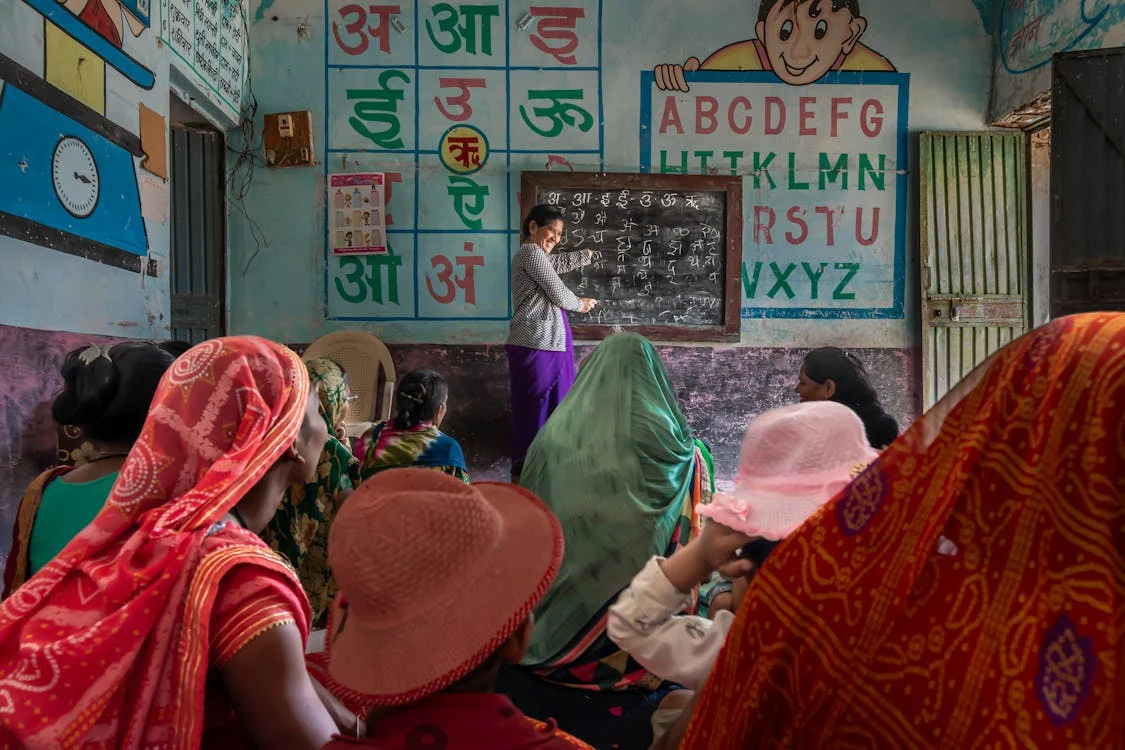
In 1848, Savitribai Phule opened India's first school for girls in Pune and became the country's first female teacher. Her story of defying caste and gender oppression - walking through stones and mud to teach every day - is one of India's most important and least told histories.
On January 3, 1848, a young woman walked through the streets of Pune carrying a bag. Inside it were extra saris - not for herself, but to change into after the men along the route hurled stones, mud, and garbage at her. She was Savitribai Phule, 17 years old, and she was walking to teach at India’s first school for girls. That walk happened every single day. She never stopped.
Who Was Savitribai Phule?
Savitribai Jyotirao Phule was born on January 3, 1831, in Naigaon village in Maharashtra’s Satara district. Her family belonged to the Mali caste - a farming community classified as Shudra in the rigid caste hierarchy of 19th-century India. At the age of nine, she was married to Jyotirao Phule, who was 13. That marriage, unusual for its time, would go on to reshape Indian history.
When Savitribai married Jyotirao, she was illiterate - as was expected of girls from her background. Education was not just unavailable to her; it was actively forbidden. The dominant social belief held that educating women and lower-caste people would bring chaos and dishonor. Jyotirao, who had been educated in a missionary school and developed a fierce hatred for caste injustice, saw things differently. He taught his young wife to read and write.
What began as a husband teaching his wife to read became one of the most radical social reform movements in Indian history.
The Education That Changed Everything
Savitribai’s formal education came through two routes. Jyotirao taught her at home, and she later enrolled in teacher training - first at Ms. Farar’s Institution in Ahmednagar, and then at the Normal School in Pune run by the Scottish missionary couple Thomas and Cynthia Mitchel. She completed both programs with distinction.
This made her India’s first trained female teacher. Not just the first from her caste - the first in the entire country to receive formal teacher training. She graduated not because the system was open to her, but because she and her husband found the cracks in the wall and pushed through them.
“Throw away the scriptures and pick up the pen. No one should be denied knowledge.”
Armed with her training and a deep conviction that knowledge was every person’s right, Savitribai was ready. The question was: where to start?
Bhide Wada: India’s First School for Girls
On January 1, 1848, Savitribai and Jyotirao Phule opened a school at Bhide Wada (the house of Tatya Saheb Bhide) in Budhwar Peth, Pune. It was the first school for girls in India’s recorded history. Savitribai was its teacher - making her India’s first female teacher in a formal school setting.
The school started with just nine students. By the end of the year, it had grown to 48. Within three years, the Phules had opened 18 schools across the region, reaching over 1,500 students - both girls and children from lower-caste and Dalit communities who had been systematically excluded from education.
Year | Milestone |
|---|---|
1831 | Savitribai born in Naigaon, Maharashtra |
1840 | Married to Jyotirao Phule at age 9; begins learning to read |
1846-1847 | Completes teacher training at Ahmednagar and Pune |
1848 | Opens Bhide Wada school - India’s first girls’ school |
1851 | 18 schools running; 1,500+ students enrolled |
1852 | Recognised by the British government for educational work |
1853 | Opens Balhatya Pratibandhak Griha - home for widow pregnancies |
1873 | Co-founds Satyashodhak Samaj with Jyotirao |
1890 | Jyotirao passes away; Savitribai continues his work |
1897 | Leads plague relief in Pune; contracts plague, dies March 10 |
What made this remarkable was not just the numbers - it was what these students represented. They were girls who would otherwise have been married off before adolescence, or kept home to work. They were Dalit children whose very presence in a classroom was considered an act of transgression against the social order. Savitribai taught them anyway.
What She Faced Every Day
The resistance to what the Phules were doing was immediate, organized, and violent.
Upper-caste communities viewed women’s education as an attack on the social order. Local priests declared that educating women would lead to the downfall of dharma. Neighbors threatened the Phule family. Jyotirao’s own father, pressured by community elders, asked them to leave the family home. They were ostracized - thrown out with nowhere to go.
For Savitribai, the hostility was more personal. Every day she walked to school, she was met with abuse. Men threw stones, garbage, and cow dung at her. She began carrying extra saris in her bag so she could change when she arrived. She described her walks to school as going through a rain of insults.
“I shall no longer stop at the gate. Let them throw stones. These stones are flowers to me.”
Despite all of this - losing her home, facing daily violence, being cast out by her community - she kept walking. She taught six days a week. She never closed the school.
Fighting Caste and Gender Together
Savitribai and Jyotirao Phule did not see caste oppression and gender oppression as separate problems. For them, the denial of education to women and the denial of dignity to Dalit communities were both expressions of the same injustice - a social order that divided people by birth and kept them in their designated place through ignorance.
Their schools were explicitly open to Dalit and lower-caste children at a time when Dalit students were not permitted to sit in the same room as upper-caste students, let alone attend the same schools. The Phules rejected this completely. Their students sat together. Dalit women like Jhalkari Bai, who fought at the Battle of Jhansi, came from the same world of exclusion that Savitribai was determined to dismantle through education.
In 1853, Savitribai established the Balhatya Pratibandhak Griha - a home for pregnant widows and women who had been assaulted. At the time, widow pregnancies often led to infanticide or the death of the mother through illegal abortions performed in desperation. Savitribai’s home offered them shelter, medical care, and safe delivery. She personally adopted the son of a Brahmin widow, naming him Yashwantrao, and raised him as her own. This act - a lower-caste woman adopting an upper-caste child - was a deliberate challenge to the caste order.
The Satyashodhak Samaj
In 1873, together with Jyotirao, Savitribai co-founded the Satyashodhak Samaj - the Truth Seekers Society. The organization was built on the principle that all human beings deserved equal rights regardless of caste, religion, or gender. It organized weddings without Brahmin priests, promoted rational thinking over religious superstition, and created a public platform for the voices of the oppressed.
Savitribai was not just a figurehead. She was an active intellectual force within the movement - writing, speaking, and organizing. She ran community programs through the Samaj and was instrumental in shaping its educational work.
A Poet Who Wrote for the Oppressed
Savitribai was also a published poet - one of the earliest women poets in Marathi literature. Her two major collections, Kavya Phule (1854) and Bavan Kashi Subodh Ratnakar (1892), are landmarks in Marathi literary history.
Her poetry was not ornamental. It was a weapon. She wrote directly to the people society had left behind - urging them to seek education, to reject the idea that their oppression was divinely ordained, to stand up and claim their rights. Her language was direct, accessible, and deliberately avoided the Sanskrit-heavy style favored by upper-caste poets of the time.
“Get up, get up. Don’t waste time sleeping. The time has come to study. Toss aside your vessels and bowls, put on your shoes, go quickly to school.”
Savitribai Phule, Kavya Phule
These were not abstract philosophical verses. They were practical calls to action directed at the people sitting across from her in her classroom - children who had been told their entire lives that books were not for them.
The Final Act: Plague Relief in Pune
In 1897, bubonic plague swept through Pune. It was a catastrophe. The city’s official response was chaotic and largely indifferent to the poor and the Dalit communities who were hit hardest. Savitribai, then 66 years old, responded the same way she had responded to every crisis in her life - by walking toward it.
She organized a relief clinic on the outskirts of Pune and personally carried plague patients - including those from Dalit communities that were being actively avoided by other relief workers - on her back to receive treatment. She worked without regard for her own safety.
In early March 1897, while carrying a young Dalit boy named Pandurang Babaji Gaykwad to the clinic, she contracted plague herself. She died on March 10, 1897.
She died doing exactly what she had done her entire life: moving toward the people that everyone else was moving away from.
Recognition That Came Late
For most of the century following her death, Savitribai Phule remained largely absent from mainstream Indian history. Her work was not taught in schools. Her name did not appear in the history textbooks that her own revolution had made possible. This was not an oversight - it reflected the same caste dynamics she had fought against her entire life. The narratives that shaped official history were written by those whose position in society her work had threatened.
The recognition, when it came, was meaningful. In 1998, the Government of India released a postage stamp in her honour. In 2014, Pune University was renamed Savitribai Phule Pune University - one of Maharashtra’s premier institutions now bears the name of the woman who was once pelted with stones for the act of teaching. Google India dedicated its Doodle to her on her birthday in 2017. Her portrait was unveiled in the Indian Parliament in 2022.
January 3 is now observed as Savitribai Phule Jayanti across Maharashtra. Her birthday has become an occasion for rallies, school events, and a public reckoning with the unfinished business of the movement she started.
Women’s Education in India: Then and Now
When Savitribai opened her school in 1848, the female literacy rate in India was estimated at less than 1 percent. Women from lower castes faced an almost complete bar on formal education. Upper-caste women were largely confined to religious texts, if anything at all.
In 2026, India’s female literacy rate stands at approximately 70 percent - a dramatic shift over 175 years. The country now has over 400 million literate women. Girls’ enrollment in primary school has reached near-parity with boys in most states. India has produced women scientists, judges, civil servants, business leaders, and athletes who have competed at the highest levels globally.
Indicator | 1848 (Savitribai’s era) | 2026 |
|---|---|---|
Female literacy rate | Less than 1% | ~70% |
Girls in primary school | Near zero (formal system) | Near parity with boys |
Women in higher education | Zero (barred) | 48% of enrolled students |
Women in workforce | Agricultural/domestic only | ~20% formal sector participation |
Women in Parliament | Not applicable | 15.2% (2024 election) |
But the numbers alone do not tell the full story. Progress has been deeply uneven. Girls from Dalit and Adivasi communities in rural India still face barriers to education that mirror - in softer but still real ways - what Savitribai faced in 1848. Dropout rates for girls climb sharply after Class 8 in many states. Child marriage, while illegal, continues to remove girls from schools across parts of Rajasthan, Bihar, and West Bengal. Access to toilets, transport, and safe school environments remains a genuine constraint in hundreds of districts.
The work is not finished. That is Savitribai Phule’s most important legacy for 2026: she shows us not just how far we have come, but how far we still need to go - and what it looks like to keep walking toward that goal even when the path is hostile.
Why Savitribai Still Matters in 2026
There is a tendency to celebrate historical figures by placing them safely in the past - to honour them without confronting what their work actually demands of the present. Savitribai Phule resists that treatment.
She was not simply a kind woman who opened a school. She was a systematic thinker who understood that caste and gender oppression were interlocking systems that had to be challenged together. She was someone who faced organized social violence and kept showing up anyway. She was a woman who built institutions - schools, a shelter for widows, a community organization - not just a symbol.
- Around 40 million girls in India are still not enrolled in school, according to UNICEF’s latest estimates.
- India ranks 127th out of 146 countries on the World Economic Forum’s Gender Gap Index (2024).
- Less than 20 percent of India’s formal workforce is female - one of the lowest rates in Asia.
- Dalit women continue to face compounded discrimination based on both caste and gender in access to education, healthcare, and justice.
Against this context, Savitribai Phule is not a completed chapter. She is an ongoing argument. The question she posed in 1848 - who deserves to learn? - is still being answered, imperfectly and unevenly, across India today.
Her Method Matters Too
What is easy to miss in the celebration of Savitribai is her method. She did not wait for permission. She did not ask for the system to change before she acted within it. She found the physical space, the institutional connection (the missionary school), the one sympathetic community figure (Tatya Saheb Bhide who gave them his house), and she built something real.
She was pelted with stones. She changed her sari. She kept teaching.
That is not just admirable. It is instructive. Social reform - the kind that touches the lives of people who have been structurally excluded - rarely happens through top-down pronouncements. It happens through people who are willing to walk through daily resistance to build something their community needs. Savitribai Phule understood this 175 years before it became a widely repeated insight about social change. Other reformers of her era made the same wager - Birsa Munda challenged colonial land laws from within tribal communities with the same conviction that structural change starts from the ground up.
Forgotten Heroes Series: Stories That Shaped India
Savitribai Phule is one of many figures whose contributions to India’s social fabric were foundational but have been systematically underrepresented in mainstream history. The Forgotten Heroes series at Unite4India is dedicated to recovering these stories - not as distant inspiration but as living history that speaks to the challenges and possibilities of the present.
These were not perfect people. They were people who saw a specific injustice in their specific context and decided to do something about it. That is a more useful kind of history than hero-worship. It is the kind that leaves room for us.
If Savitribai Phule’s story moved you, explore other reformers and changemakers in the Forgotten Heroes series. Many of them share her conviction that education, dignity, and the rejection of arbitrary hierarchy are not political positions - they are the basic requirements of a just society.
Frequently Asked Questions About Savitribai Phule
When and where was Savitribai Phule born?
Savitribai Phule was born on January 3, 1831, in Naigaon village in the Satara district of present-day Maharashtra. She was born into a family belonging to the Mali (farming) caste.
What is Savitribai Phule known for?
Savitribai Phule is known for opening India’s first school for girls at Bhide Wada in Pune in 1848, making her India’s first female teacher. She is also known for her social reform work against caste discrimination, her advocacy for Dalit education, her poetry, and her co-founding of the Satyashodhak Samaj with her husband Jyotirao Phule.
What was Savitribai Phule’s school called?
The school was located at Bhide Wada (the house of Tatya Saheb Bhide) in Budhwar Peth, Pune. It opened on January 1, 1848, with nine students and Savitribai as the teacher. It is recognized as the first formal school for girls in India’s recorded history.
How did Savitribai Phule die?
Savitribai Phule died on March 10, 1897, from bubonic plague. She had contracted the disease while personally carrying plague patients - including a young Dalit boy named Pandurang Babaji Gaykwad - to a relief clinic she had organized on the outskirts of Pune during the 1897 plague epidemic.
Is there a university named after Savitribai Phule?
Yes. In 2014, the Government of Maharashtra renamed Pune University as Savitribai Phule Pune University in her honour. It is one of Maharashtra’s leading universities, established in 1949.
She walked into the stones every day. We walk on the road she built.
What you can do
- Share the evidenceSend this to one person who should know about this issue.Share on WhatsApp
- Give an afternoonTeach, mentor, clean up, or lend your professional skills.Ways to volunteer
- Tell us what's missingKnow a story, a fact we got wrong, or a solution worth spotlighting?Suggest a story
Politically neutral. Every claim sourced. Report a correction.
No comments yet