India's Traditional Sports Revival: Kabaddi, Kho-Kho and the Road Ahead
Kabaddi has become a global sport with a professional league watched by millions. Kho-Kho is finally getting its national league. Gilli-danda, Mallakhamba, and Silambam are attracting a new generation of practitioners. India's traditional sports are staging a remarkable comeback, and they deserve far more attention than they get.
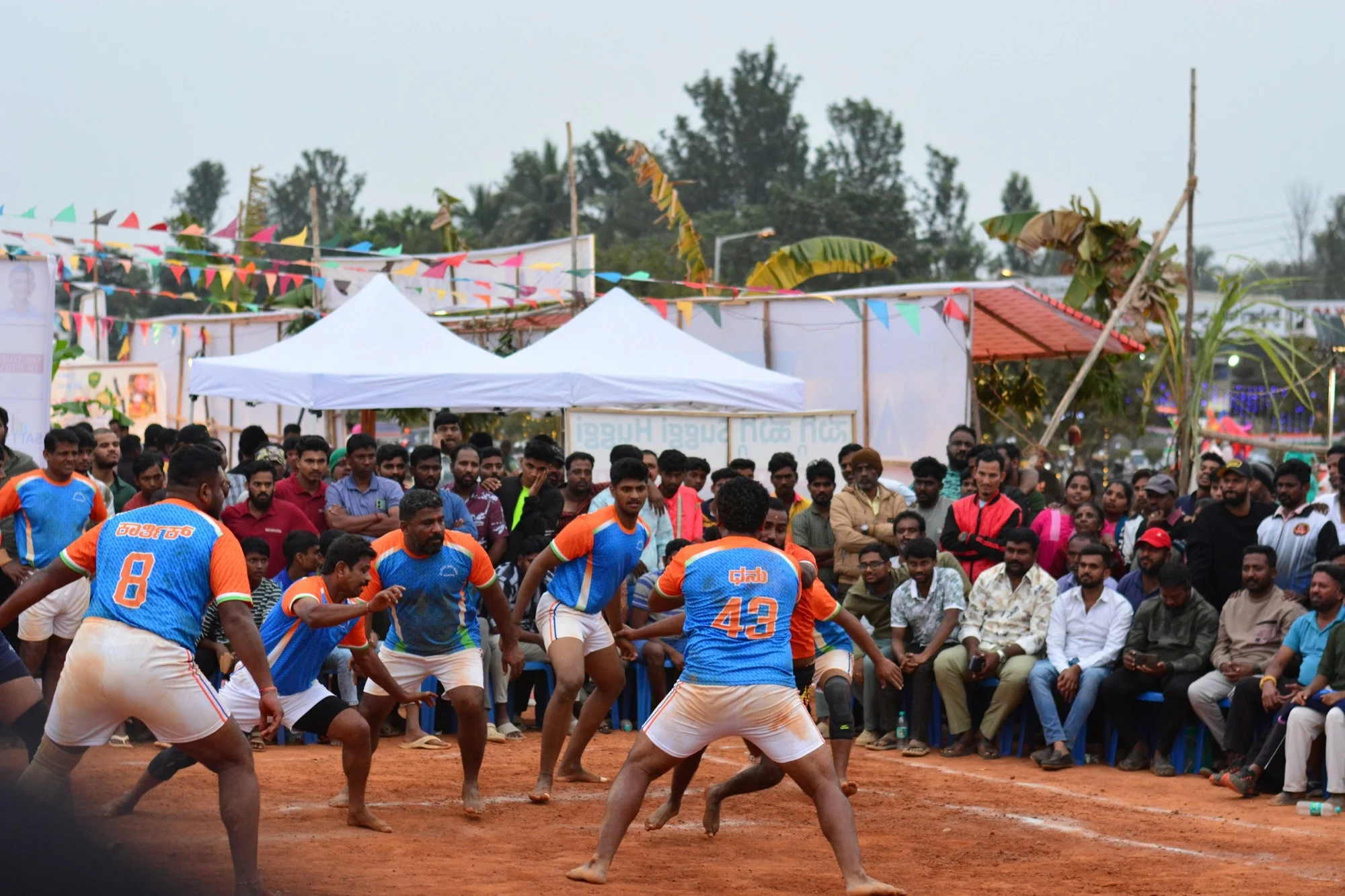
For most of the last century, India’s traditional sports existed in a strange limbo. Played in villages, practiced in akhadas and community grounds, sustained by oral tradition and local pride, but almost entirely absent from the national sports infrastructure, the media, and the international stage. Cricket consumed the nation’s sporting imagination. Badminton and tennis produced international champions. Hockey clung to faded glory. Meanwhile, games that originated in India, that had been played here for hundreds or thousands of years, were slowly being forgotten.
Something has shifted in the last decade. Kabaddi’s transformation from a village game to a globally watched professional sport has been the most dramatic story, but it is not the only one. Kho-Kho has its national league. Mallakhamba, the pole and rope gymnastics that has no exact equivalent anywhere in the world, is being practiced by urban athletes who never grew up near a village akhada. Silambam, the ancient Tamil stick-fighting art, is finding practitioners across India and in the Tamil diaspora worldwide. And Gilli-danda, the ancestor of cricket, baseball, and possibly a dozen other bat-and-ball games, is quietly being rediscovered by children in cities who have never seen it played.
This is a revival worth understanding, celebrating, and supporting.
The skeptics were wrong. Pro Kabaddi Season 1 attracted 435 million viewers across television broadcasts. Season after season, viewership has grown. The league has produced national heroes, raiders and defenders whose names are known to people who had never watched Kabaddi before 2014. The sport is now popular enough that international teams compete in the Asian Games, Kabaddi World Cups, and a growing international tournament circuit.
What Made Kabaddi Work
Kabaddi’s success as a broadcast sport is not accidental. The game has intrinsic qualities that make it excellent television. Raids, the attacking play where a lone player enters enemy territory, tags opponents, and must return to their side in a single breath while defenders try to tackle them, are short, explosive, and visually thrilling. Each raid lasts 30 seconds or less. There is constant action, clear individual heroism, and the outcome of each raid is immediately obvious.
The Pro Kabaddi League’s production quality also helped enormously. World-class graphics, commentators who explained the game to uninitiated viewers, celebrity team ownership, and player auctions that created the same excitement as IPL auctions, all of it translated a traditional game into a modern entertainment product without diluting what made the game exciting.
Grassroots Impact
The impact on grassroots Kabaddi has been significant. Player registrations with the Amateur Kabaddi Federation of India have grown substantially. Schools that had no Kabaddi program have added the game. Young players from small towns who grew up watching Kabaddi on television are now competing at district and state levels with professional aspirations that simply did not exist before 2014. This pipeline will take years to fully manifest in international results, but it is real.
The Ultimate Kho-Kho League, launched in 2022, represents the attempt to do for Kho-Kho what Pro Kabaddi did for Kabaddi. Early signs are promising. The league’s first seasons attracted decent television viewership and created the professional infrastructure, standardized rules, umpiring standards, player contracts, that the sport has needed for decades.
The Case for International Growth
Kho-Kho has been played at the Asian Games at various points, and the sport’s federation has been working to standardize rules for international competition. The sport’s appeal crosses cultural boundaries, it requires no expensive equipment, can be played on a simple field, and the basic rules are simple enough that new players can follow the action quickly. The International Kho-Kho Federation now counts members from over 50 countries, with particularly active development programs in South Asia, Southeast Asia, and the Indian diaspora communities of the UK, Canada, and Australia.
Challenges to Address
Kho-Kho faces structural challenges that Kabaddi has partially overcome. The game is less immediately legible to uninitiated viewers than Kabaddi, the rules around chasing directions, the polo concept, and the scoring system require some explanation. Broadcasting the game effectively requires production innovations that the early Kho-Kho leagues are still developing. And building a sufficient talent pool of nationally-recognized players to anchor franchise teams takes time.
But the fundamentals are sound. The game is spectacular when played at a high level, the athletic requirements are demanding enough to attract serious athletes, and the professional league infrastructure is now in place.
The skills Mallakhamba develops, grip strength, core strength, shoulder flexibility, body control, spatial awareness, are extraordinary. High-level Mallakhamba performances combine the explosive power of gymnastics with the flowing grace of contemporary dance, all performed without safety equipment on a polished wooden pole.
From Akhadas to Urban Gyms
For most of the twentieth century, Mallakhamba was practiced almost exclusively in traditional akhadas, primarily in Maharashtra and some parts of Madhya Pradesh. The sport’s practitioners were largely from communities with multi-generational ties to traditional wrestling culture. This kept the practice alive but limited its spread.
Something interesting has happened in the last decade. Urban athletes, particularly yoga practitioners, gymnasts, and physical culture enthusiasts, have discovered Mallakhamba through social media and YouTube channels where practitioners have been sharing clips of their work. The combination of physical challenge, visual spectacle, and cultural authenticity has attracted practitioners from communities with no previous connection to traditional wrestling culture.
International Recognition
Mallakhamba has been recognized by the International Olympic Committee as a national sports federation, and Indian teams have performed at international gymnastic exhibitions and cultural events globally. The sport was included in the Khelo India Games program, giving young practitioners access to structured competition that was previously unavailable.
Recognition as an Olympic or Commonwealth Games sport remains a long-term aspiration, but the trajectory is positive. Each international appearance generates curiosity, and the visually spectacular nature of high-level Mallakhamba makes it highly shareable on social media, a form of organic global marketing that traditional sports development programs cannot easily replicate.
Silambam never entirely disappeared. Practitioners in Tamil Nadu maintained the tradition, and Silambam gurukuls (traditional schools) continued to teach the art in some districts even as other martial arts faced greater challenges. But its reach was limited, its practitioners aging, and its transmission to younger generations uncertain.
The Revival in Tamil Nadu
The Silambam revival has been driven partly by increased government support (Tamil Nadu has included Silambam in school physical education curriculum in some districts), partly by cultural pride movements that have emphasized Tamil heritage, and partly by organic interest from martial arts practitioners who have discovered the system’s sophistication and depth.
The International Silambam Federation has been actively promoting the sport globally, with the Tamil diaspora communities in Malaysia, Sri Lanka, Singapore, and Western countries serving as natural communities of interest. Silambam schools in Malaysia, which has a large Tamil population, have produced internationally competitive practitioners who have helped raise the global profile of the sport.
Combat Sport and Cultural Heritage
Silambam’s dual identity, as both a competitive martial art suitable for modern sport formats and as a living cultural heritage practice, is both a strength and a challenge. Competitive Silambam uses protective equipment and standardized scoring. Traditional Silambam performance emphasizes fluid movement, complex patterns, and the aesthetic dimensions of the art. Managing this tension while developing both dimensions is the ongoing project of the practitioners and administrators working to grow the sport.
Gilli-danda is arguably the ancestral game of cricket, baseball, and several other modern bat-and-ball sports. Played with a small tapered piece of wood (the gilli) and a striking stick (the danda), it requires similar hand-eye coordination to cricket but can be played on any open ground with minimal equipment. Efforts to formalize and revive the game as a competitive sport are ongoing, though Gilli-danda faces the challenge that its informal, spontaneous nature is part of its appeal.
Lagori
Lagori (also known as Pitthu) is a target-based team game played with a stack of flat stones and a rubber ball. Two teams compete, one to topple the stone stack with the ball, another to defend it and reconstruct it before being tagged. The game requires coordination, throwing accuracy, and team communication. It is undergoing organized revival efforts, with school tournaments and state-level competitions creating structured pathways for young players.
Thang-Ta
Thang-ta is the traditional martial art of the Meitei people of Manipur, practiced with swords and spears. Its revival has been driven by cultural pride movements in Manipur and by practitioners who have recognized its value as both a martial system and a performing art. Thang-ta has been included in national games and cultural festivals, giving practitioners a platform that traditional martial arts rarely received.
School Integration
Physical education in most Indian schools is dominated by cricket, football, and standard athletics events. Incorporating traditional sports into PE curriculum would simultaneously serve the physical development goals of PE and provide a cultural education dimension. Some states have made progress here, Maharashtra has traditional sports in some school programs, Tamil Nadu has Silambam initiatives, but national-level curriculum integration remains elusive.
Talent Identification and Development
The Khelo India program has been valuable in creating structured competition pathways for traditional sports. But talent identification systems need to go deeper, into rural schools, tribal areas, and communities where traditional sports have been practiced continuously. The talent pool for Kabaddi and Kho-Kho is vast; it needs systematic identification and support systems to translate into international-level performance.
Media Representation
Kabaddi demonstrated that media investment creates public interest, not the reverse. The sports media in India, overwhelmingly dominated by cricket, has been slow to invest in traditional sports coverage. Digital media has partially filled this gap, YouTube channels, Instagram pages, and online sports media have built substantial audiences for traditional sports content. The challenge is converting this digital engagement into the kind of broadcast investment that drives mainstream recognition.
International Strategy
India’s traditional sports need a coherent international development strategy that goes beyond simply entering competitions. Building genuine sporting relationships with other countries, developing coaching and refereeing capacity internationally, and working patiently toward inclusion in major multi-sport events (Asian Games, Commonwealth Games, eventually Olympics) requires sustained, strategic effort by sports federations that often lack resources and expertise for this kind of work.
The Economic Impact of Sports Professionalization
The professionalization of traditional sports has created economic opportunities that extend far beyond the athletes themselves. When Pro Kabaddi was launched, the immediate beneficiaries were the players whose earning potential transformed overnight. Top raiders and defenders who had previously earned modest government sports stipends suddenly commanded contracts worth crores of rupees. But the economic ripple effects have been far wider.
Each franchise city generates employment in event management, hospitality, merchandise production, and sports facility maintenance. Local coaching academies that had survived on minimal fees can now position themselves as feeders for professional leagues, attracting better-resourced students and corporate sponsorships. The Sports Authority of India has increased funding allocation for Kabaddi infrastructure, building indoor facilities that serve both elite training and community sport development in cities like Patna, Jaipur, and Bengaluru.
Kho-Kho’s professionalization is following a similar trajectory, though at an earlier stage. The Ultimate Kho-Kho League has brought franchise investment into a sport that had virtually no commercial ecosystem five years ago. Equipment manufacturers who previously focused entirely on cricket are beginning to develop specialized footwear and sportswear for Kho-Kho athletes. Sports management companies are signing young Kho-Kho players, anticipating that the league’s growth will mirror Kabaddi’s trajectory in commercial value.
For less commercialized sports like Mallakhamba and Silambam, the economic impact is different but still significant. Cultural tourism programs in Maharashtra and Tamil Nadu now feature Mallakhamba and Silambam demonstrations, generating income for practitioners and driving interest in local heritage tourism. International workshops conducted by Indian masters in Europe, North America, and Southeast Asia generate both income and cultural exchange. Several Mallakhamba practitioners now earn their primary income from teaching urban fitness classes that adapt traditional techniques for general fitness audiences, creating a sustainable economic model that did not exist a decade ago.
Women in Traditional Sports: Breaking Double Barriers
The revival of traditional Indian sports has created space for women athletes in disciplines that were historically male-dominated. Women’s Kabaddi, though it receives a fraction of the media coverage given to the men’s Pro Kabaddi League, has produced athletes of extraordinary skill and determination. The Indian women’s Kabaddi team has dominated Asian Games competition, winning gold medals consistently, yet most casual sports fans cannot name a single player on the team. This invisibility reflects broader patterns in how women’s sport is covered and valued in India, but it also represents an opportunity for the next wave of traditional sports professionalization.
In Mallakhamba, women practitioners have been challenging assumptions about what the sport can look like. Rope Mallakhamba, which involves performing acrobatic feats on a hanging rope, has seen particular growth among women athletes. The Mallakhamba Federation of India now conducts national championships with women’s categories, and performances by women practitioners at international exhibitions have generated enormous interest on social media. Young women from urban backgrounds who discovered Mallakhamba through Instagram and YouTube are joining traditional akhadas and training with a discipline that surprises practitioners from more conventional gymnastics backgrounds.
Silambam and Thang-Ta have seen growing participation from women who are drawn both to the martial effectiveness and the cultural heritage of these practices. Women’s self-defense programs in Tamil Nadu increasingly incorporate Silambam techniques, creating a pathway from practical self-defense training into deeper engagement with the traditional martial art. In Manipur, women Thang-Ta practitioners are challenging the perception that traditional martial arts are exclusively male domains, drawing on a broader tradition of women’s activism and physical courage in Meitei culture.
The challenge remains that women’s traditional sports lack the commercial infrastructure that drives men’s leagues. No women’s Pro Kabaddi league exists, though advocacy for one is growing. Sponsorship and media investment in women’s traditional sports remains minimal compared to men’s. Addressing this gap is not just a matter of equity but also of smart sports development, as half the potential talent pool and audience remains underserved.
Social Media and the New Visibility
The role of social media in driving the traditional sports revival cannot be overstated. Mallakhamba went from near-total obscurity outside Maharashtra to a globally recognized practice largely through viral videos. When a young Mallakhamba performer executes a series of gravity-defying holds on a wooden pole, filmed in high quality and shared across platforms, the visual impact transcends language barriers and cultural context. Videos of elite Mallakhamba performances have accumulated tens of millions of views across YouTube, Instagram, and TikTok, reaching audiences that no traditional sports marketing campaign could have accessed.
Kabaddi’s media presence is driven primarily by the Pro Kabaddi League’s broadcast deal, but social media extends the conversation between seasons. Player highlight reels, training videos, and behind-the-scenes content keep fans engaged year-round. Young players build personal followings that translate into sponsorship opportunities and personal brand value. The accessibility of content creation tools means that even athletes in non-professional sports can build audiences. A Silambam practitioner with a smartphone and decent lighting can create content that reaches thousands of potential practitioners worldwide.
Digital platforms have also enabled knowledge preservation and transmission. Elderly practitioners of traditional sports who might have taken their knowledge to the grave are now being filmed by younger family members and community historians. Instructional content for sports like Gilli-danda, Lagori, and regional variations of traditional games is being documented and shared on YouTube in ways that supplemented the previously oral-only transmission of rules, techniques, and cultural context. This digital documentation serves both current practitioners and future generations who will inherit a richer archive of traditional sporting knowledge than any previous generation has possessed.
Traditional Sports Status Overview
- Kabaddi: Professional league (Pro Kabaddi, 10 seasons), Asian Games medal sport, 435M+ TV viewers, international federation active in 30+ countries
- Kho-Kho: Professional league (Ultimate Kho-Kho, launched 2022), International Federation with 50+ member countries, Khelo India inclusion
- Mallakhamba: IOC-recognized federation, Khelo India inclusion, growing international exhibition circuit, urban fitness adaptation
- Silambam: International federation active, Tamil Nadu school curriculum integration, Malaysian Tamil diaspora development, self-defense program pathway
- Thang-Ta: National Games inclusion, cultural festival circuit, growing women’s participation, Manipur government support
- Gilli-danda: Informal revival efforts, school tournament programs in some states, digital documentation of rules and variations underway
- Lagori: Organized school tournaments, state-level competitions emerging, minimal professional infrastructure
When a child in Mumbai watches a Mallakhamba video and asks to learn, when a girl in Chennai picks up a Silambam staff for the first time, when a boy in Patna dreams of being a Pro Kabaddi raider rather than a cricketer - that is the revival working. It happens one person at a time, but the numbers are growing.
A Heritage Worth Protecting and Growing
India’s traditional sports are not museum pieces. They are living practices that produce extraordinary athletes, transmit cultural knowledge, and create the kind of community bonding that modern sedentary urban life increasingly lacks. Kabaddi’s transformation shows what is possible when the right combination of professional infrastructure, media investment, and public enthusiasm comes together.
The question for Kho-Kho, Mallakhamba, Silambam, and the dozens of other traditional sports in various stages of revival is whether India will invest in them seriously enough to replicate that success. The talent is there. The cultural foundation is there. The work of building the institutional infrastructure around them is what remains to be done.
Every gold medal India wins in a traditional sport at an international competition tells a story about who we are as a people. That story is worth telling, and winning. The athletes who carry these traditions forward are doing more than competing. They are preserving a cultural inheritance that connects modern India to its deepest roots, while proving that these ancient practices can thrive in a contemporary world. The revival is real, it is growing, and it deserves the sustained attention and investment that will determine whether it becomes a permanent feature of India’s sporting landscape or fades back into the margins where traditional sports have languished for too long.
For more on related topics, explore Northeast India rising as an innovation hub and how it connects to traditional skills and economic empowerment, see our coverage of this important aspect of India’s development story.
What you can do
- Share the evidenceSend this to one person who should know about this issue.Share on WhatsApp
- Give an afternoonTeach, mentor, clean up, or lend your professional skills.Ways to volunteer
- Tell us what's missingKnow a story, a fact we got wrong, or a solution worth spotlighting?Suggest a story
Politically neutral. Every claim sourced. Report a correction.
No comments yet