Rwanda 1994 to 2024: Genocide Aftermath to Africa's Cleanest Capital
Rwanda rebuilt from genocide to Africa's cleanest capital in 30 years. Three mechanisms: Umuganda cleanups, 6-hour business registration, plastic ban. India's lessons.
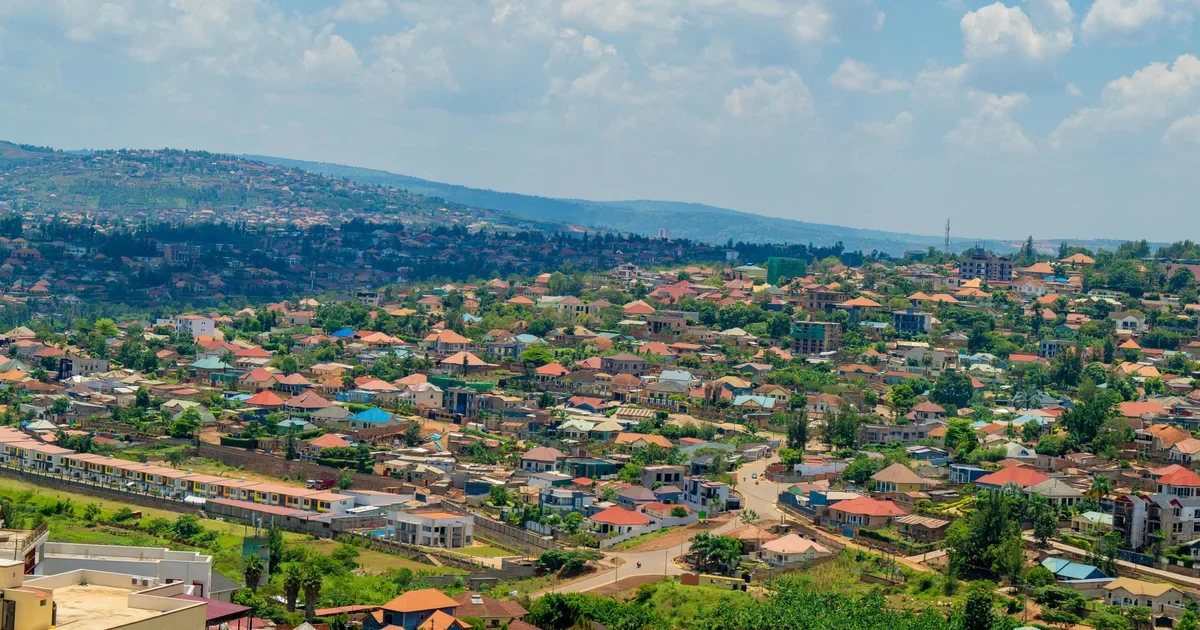
In April 1994, Rwanda descended into one of the twentieth century’s worst atrocities. An estimated 800,000 people were killed in 100 days. The country’s GDP collapsed by 50 percent. Nearly two million people fled across its borders. Thirty years later, Kigali is ranked the cleanest capital on the African continent, a business licence takes six hours to obtain, and 61 percent of legislators in the national legislature are women - no, strike that. Sixty-one percent of seats in the national legislature are held by women, the highest share of any country on earth. Rwanda went from ruin to reform faster than almost any nation in recorded history. Three specific mechanisms made it possible. India needs all three.
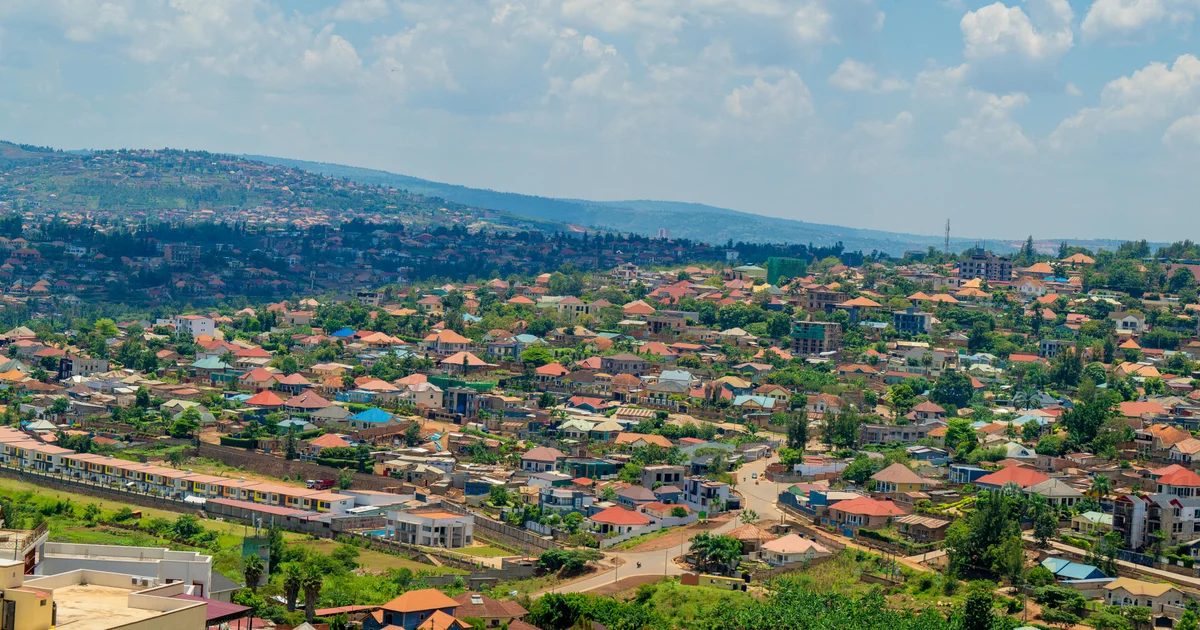
The Numbers That Make You Stop
Rwanda’s per capita income in 1994 was approximately USD 180. By 2023, it had risen to USD 930, a more than five-fold increase in three decades despite starting from a post-genocide economic crater. That growth rate consistently outpaced the Sub-Saharan African average through the 2010s and into the 2020s, according to World Bank data. The country’s life expectancy climbed from 28 years in 1994 (the lowest ever recorded for any country post-war) to 69 years by 2022. Child mortality fell from 230 per 1,000 live births to under 36. These are not incremental improvements. They are structural transformations compressed into one generation.
For India, a country of 1.4 billion people with enormous structural challenges of its own, Rwanda’s case study is not about scale-copying. It is about mechanism-copying. India does not need to be Rwanda. It needs to identify the specific levers Rwanda pulled, understand why they worked, and ask whether equivalent levers exist within India’s own governance architecture.
Lever 1: Umuganda - The Monthly Community Cleanup That Became a National Institution
On the last Saturday of every month in Rwanda, from 8 am to 11 am, the entire country stops. Roads empty of motorized traffic. Shops close. Every Rwandan above the age of 18 is expected to participate in Umuganda - a Kinyarwanda word that roughly translates to “coming together in common purpose.” The activity varies by location: building drainage channels, clearing roadside brush, repairing footpaths, painting public walls, cleaning markets. After the work, community meetings are held where local issues are raised and officials are held accountable in person.
Umuganda is not new. It is a pre-colonial tradition that the Rwandan government formalized by law in 2009. Rwanda’s National Institute of Statistics estimates that the equivalent economic value of unpaid Umuganda labor exceeds USD 60 million per year. Kigali’s clean streets are not the product of a large municipal workforce. They are the product of a mandated civic ritual that makes every citizen a co-owner of public space.
The mechanism matters as much as the outcome. Umuganda is not a volunteer campaign. It is a civic obligation with social enforcement. Non-participation is noticed at the community level. It creates shared accountability across income groups: the minister cleans the same street drain as the market trader. This flattening of civic duty is what makes it structurally different from India’s Swachh Bharat Abhiyan, which has relied heavily on state-driven campaigns rather than institutionalized citizen obligation with community-level accountability.
India’s Gap on Civic Sanitation
India’s Swachh Bharat Mission has achieved measurable progress: open defecation rates have dropped significantly since 2014, and the Swachh Survekshan rankings have incentivized urban local bodies to compete on cleanliness metrics. But the mechanism is top-down. National campaigns funded by the central government flow down to state governments, then to urban local bodies, then to sanitation workers. Citizens participate as beneficiaries and occasionally as volunteers, but not as co-responsible civic actors with a standing monthly obligation.
The result is that cleanliness in Indian cities remains largely dependent on the size and efficiency of the sanitation workforce rather than on distributed citizen behavior. A city that loses municipal funding or faces a budget crunch sees its cleanliness collapse. Rwanda’s Umuganda model makes city maintenance structurally resilient because the labor is distributed and non-monetized.
Lever 2: Rwanda Development Board - Business Registration in Six Hours
In 2010, Rwanda established the Rwanda Development Board (RDB) as a single-window agency integrating all business registration, licensing, and investment facilitation functions under one roof. Before the RDB, starting a business in Rwanda required visiting multiple agencies, paying various fees across departments, and waiting weeks or months for approvals. After the RDB, the process was digitized and consolidated. By 2012, Rwanda had reduced business registration to less than 24 hours. By 2019, the RDB reported an average registration time of six hours for a standard company.
The World Bank’s Ease of Doing Business Index (discontinued in 2021 but historically authoritative) tracked Rwanda’s ascent across all sub-indicators. Rwanda ranked 38th globally in 2020, the highest of any Sub-Saharan African country. Its “Starting a Business” sub-score placed it in the top 10 globally. This was not an accident or natural resource windfall. Rwanda has no oil. It has no large mineral endowment driving investor interest. The RDB’s single-window architecture was the lever.
The philosophy behind the RDB is institutional consolidation: bring all the gatekeepers into a single room, give them shared KPIs tied to registration speed, digitize the paperwork, and remove inter-agency transfer delays. The senior political backing for reform was explicit. Business registration timelines were treated as a presidential priority metric, not a bureaucratic convenience.
India’s Gap on Business Registration
India has made substantial progress on business registration through MCA21, the National Single Window System, and state-level business reform programs. The Doing Business reforms of 2020 placed India at rank 63 globally, a significant improvement from rank 142 in 2014. But the gap with Rwanda’s top-10 placement on the “Starting a Business” indicator persists at the state level, where approvals remain fragmented across departments. A business in most Indian states still requires separate registrations under the Shops and Establishments Act, GST enrollment, Professional Tax, labour registrations, and multiple sector-specific clearances. The World Bank’s “Starting a Business” sub-index showed India’s average start-up time at 18 days as of 2020, versus Rwanda’s six hours.
The RDB model offers India a template: not simply digitizing existing processes, but consolidating the agencies themselves. Several Indian states have experimented with single-window investment facilitation portals, but the underlying agency fragmentation has not been structurally resolved. The window is often a portal that forwards documents to the same agencies that previously received them in person.
Lever 3: The 2008 Plastic Bag Ban That Held
Rwanda banned plastic bags in 2008. Not single-use straws, not plastic packaging on certain products: all non-biodegradable plastic bags of any thickness, for any purpose. Entering Rwanda at Kigali International Airport, customs officials will search your luggage and confiscate plastic bags before you clear immigration. Shops use paper or cloth alternatives. Street markets have adapted. The ban has held for sixteen years without significant backsliding.
The enforcement mechanism is what makes Rwanda’s plastic ban different from similar bans attempted elsewhere (including in India). Rwanda uses a combination of customs inspection at all entry points, community-level enforcement by local government officials (akin to ward-level inspectors), and a graduated fine structure for businesses found using banned materials. The ban is enforced not by a national plastics authority but by the same community governance structures that run Umuganda. Local accountability is built into the compliance mechanism.
The environmental result is visible. Kigali’s streets, drainage channels, and rivers show significantly lower plastic pollution compared to peer African capitals. The Africa Country Environmental Analysis by the World Bank specifically cites Rwanda’s plastic ban as a best-practice model for Sub-Saharan Africa. Several East African countries have attempted to replicate it, with varying success.
India’s Gap on Plastic Regulation
India banned single-use plastics under 75 microns thickness in 2022, extended to additional categories of single-use items. The notification covered cutlery, straws, plates, cups, and thin carry bags. However, enforcement has been inconsistent across states, and market surveys conducted by environmental organizations in 2023 found that banned items remained widely available in most urban retail environments. The gap between notification and compliance is a structural problem with India’s regulatory architecture: rules are set centrally, enforcement is assigned to state and municipal agencies without dedicated enforcement budgets or personnel, and the political priority for compliance fades as soon as the announcement cycle ends.
Rwanda’s lesson is not that bans work everywhere. It is that bans work when enforcement is embedded in existing community governance rather than assigned to a new agency. Rwanda did not create a Plastic Bag Enforcement Authority. It made existing local government officials responsible for compliance within their areas. India’s single-use plastic ban enforcement should follow a similar logic: assign ward-level officers with plastic-specific KPIs and make compliance data publicly reported by ward.
The Women-in-Legislature Story: Mechanism Over Accident
As of 2024, approximately 61 percent of seats in Rwanda’s national legislature are held by women, the highest share of any country in the world, according to the Inter-Parliamentary Union. This did not emerge from cultural factors alone. Rwanda’s 2003 constitution mandated that at least 30 percent of seats in all decision-making bodies be held by women. A gender quota for the lower house reserved seats specifically for women elected through a women-only reserved-seat mechanism alongside the general seats. The combined effect of the constitutional quota and the reserved-seat mechanism drove female representation well above the 30 percent floor.
The economic and governance implications have been documented. Studies by the National Institute of Statistics of Rwanda (NISR) and independent researchers have found correlations between higher female representation in local governance councils and better performance on health, education, and community sanitation indicators. The mechanism produced measurable policy outcomes, not just symbolic representation.
India’s comparable figure is approximately 15 percent female representation in the national legislature, one of the lower rates among large democracies. The Women’s Reservation Bill, passed in 2023, mandates 33 percent reservation for women in national and state legislatures, to be triggered by the next delimitation exercise. The timeline is uncertain. Rwanda’s lesson is that constitutional mandates alone are insufficient without a specific seat-allocation mechanism that ensures seats cannot be filled by male candidates even when party nomination practices tend in that direction.
Rwanda vs India: A Data Comparison
Indicator | Rwanda (2023-24) | India (2023-24) |
|---|---|---|
GDP per capita (USD) | 930 | 2,730 |
Life expectancy (years) | 69 | 70 |
Business registration time | 6 hours | ~18 days (avg.) |
Women in national legislature (%) | 61% | ~15% |
Plastic bag ban enforcement | Enforced since 2008 | Inconsistent post-2022 |
Community civic obligation | Umuganda (monthly, mandatory) | No national equivalent |
Air quality (PM2.5, Kigali vs Delhi) | ~15 ug/m3 | ~92 ug/m3 (Delhi) |
Ease of Doing Business rank (2020) | 38 | 63 |
Sources: World Bank Doing Business 2020, World Bank WDI 2023, Inter-Parliamentary Union 2024, National Institute of Statistics of Rwanda, IQAir 2023 World Air Quality Report.
The India Gap: What the Numbers Reveal
Rwanda’s GDP per capita is roughly a third of India’s. That makes Rwanda the poorer country by the conventional measure. But on governance-quality indicators, Rwanda outperforms India on several dimensions that matter for development trajectory: speed of business registration, enforcement of environmental regulation, female representation in governance, and community-level civic participation infrastructure. These are leading indicators of institutional quality, not trailing indicators of wealth.
The pattern that emerges from looking at Singapore, South Korea, Ireland, UAE, Vietnam, and Israel alongside Rwanda is consistent. India is not short of policy ambition. It is short of enforcement architecture. Swachh Bharat exists; plastic bans have been notified; investment facilitation portals have been built. The gap is in the last mile of implementation: who is responsible, at what level of government, with what accountability metrics, checked by whom, and with what consequence for non-performance.
Rwanda resolved this through localization. Every national policy priority has a community-level counterpart with a named responsible official. Umuganda is not enforced from Kigali. It is enforced by village councils. Plastic compliance is not audited by a national agency. It is checked by cell-level governance officials. Business registration is not a multi-agency process. It is a single-agency process with unified KPIs. India’s governance architecture assigns policy ownership to multiple agencies at multiple levels, which means accountability for outcomes disperses across the system until it becomes invisible.
The country-to-country case studies in this series - from Singapore’s meritocratic public service to South Korea’s chaebol reform to Ireland’s foreign investment framework to the UAE’s logistics infrastructure build-out to Vietnam’s export zone model to Israel’s R&D state investment - point to the same structural truth: the countries that made large developmental leaps did not simply run better campaigns. They redesigned the institutional architecture that determines whether campaigns produce lasting outcomes or not. Rwanda, with the fewest natural advantages of any country in the series, made that redesign most legibly.
The Lever India Can Pull: Swachh Bharat 2.0 with Umuganda Architecture
India already has the ambition. What it lacks is the mechanism. A Swachh Bharat 2.0 that learns from Umuganda would have three structural differences from the current program:
- A standing monthly civic obligation, not a campaign. Every ward in every urban area should designate one morning per month as mandatory civic maintenance time, analogous to Umuganda. The obligation should be defined in municipal by-laws, not just ministerial guidelines. Participation should be tracked at the ward level and reported publicly.
- Ward-level KPIs with public dashboards. Swachh Survekshan already ranks cities. The ranking should be disaggregated to the ward level so that every citizen can look up their ward’s cleanliness score and compare it with neighboring wards. Accountability requires granularity.
- Business registration through genuine single-window consolidation. The National Single Window System should be restructured so that state departments do not merely receive forwarded applications but have their registration and inspection functions operationally merged into single-window offices with unified KPIs. The RDB model requires institutional consolidation, not portal connectivity.
None of these levers require constitutional amendments. All of them require political will at the state and municipal level. The lever exists. The question is who pulls it and when.
This Series in Context
Rwanda is the seventh case study in this series examining how small countries achieved large developmental outcomes. The series has examined Singapore’s 12-decision growth playbook from $500 to $80,000 per capita, South Korea’s five inflection points from poorer-than-Ghana to richer-than-Italy, Ireland’s three policies that tripled GDP in 25 years, UAE’s transformation from desert villages to the world’s top logistics hub, Vietnam’s Doi Moi reform that created a manufacturing tiger from a war-torn economy, and Israel’s R&D state investment model that produced the highest venture capital per capita on earth. The next case study will examine Botswana’s management of its diamond revenues and why resource-rich countries usually fail where Botswana succeeded.
Citizen Actions: Five Layers of Contribution
Rwanda’s transformation was not built by a single leader or a single policy. It was built through millions of citizens repeatedly choosing to show up, clean a drain, register a complaint, and hold a local official accountable. India’s citizens have the same capacity. Here is where to direct it, at each level of reach.
Personal
- Carry reusable bags and refuse plastic at point of purchase, even when it is inconvenient. Behavioral change at scale begins with individual refusal.
- File a complaint through the Swachh Bharat app or your state’s civic app every time you see a violation: open garbage dumping, clogged drains, damaged street lights. Each documented complaint creates a paper trail that ward-level officers must respond to.
- Learn what your ward’s Swachh Survekshan ranking is. If it is low, ask your ward councillor at the next public meeting why, and what the improvement plan is.
RWA / Building Level
- Propose an Umuganda-equivalent at your housing society or apartment complex: a fixed monthly morning where residents voluntarily clean common areas and inspect maintenance needs. Document before-and-after. Share results.
- Audit your building’s plastic use and set a measurable reduction target. Share the target with residents and track it monthly.
- Map the businesses within 200 meters of your building that are still using banned single-use plastic. File complaints against them using your municipal corporation’s environment helpline.
Ward Level
- Request your ward councillor to propose a ward-level civic maintenance day to the municipal corporation, modeled on Umuganda. Many municipal corporations have provisions for citizen-initiated civic programs.
- Attend ward committee meetings and ask for ward-level data on sanitation expenditure, sanitation worker headcount, and cleanliness scores. This data should be publicly available under RTI.
- Organize a ward-level business registration awareness drive for small traders, helping them access the digital single-window portals that most informal businesses are unaware of.
City / State Level
- File RTI applications to your state’s Department of Industries asking for data on average business registration timelines, the number of registrations completed within 24 hours, and the backlog of pending applications. Publish the response.
- Engage with your state’s investment promotion agency to understand what the single-window system covers and what remains outside it. If key approvals (fire, pollution, water) are still handled by separate agencies, document this and write to your state’s industries minister.
- Advocate for ward-level disaggregation of Swachh Survekshan scores. Most state-level Chief Ministers track city rankings. Ward-level data is rarely published in usable form. Push your municipal corporation to publish it.
National Level
- Write to DPIIT (Department for Promotion of Industry and Internal Trade) requesting that the National Single Window System publish agency-wise average processing times for each clearance category, disaggregated by state. This data, if made public, would create competitive pressure on slow agencies.
- Track India’s performance on international governance indices: World Bank Governance Indicators, Transparency International Corruption Perceptions Index, and the Global Innovation Index. Write about changes, share data with your networks, and demand explanations from representatives when scores decline.
- Support civil society organizations working on municipal reform, such as those that train citizen auditors on Swachh Survekshan methodology or that operate RTI clinics for civic complaints. Financial support for these organizations funds the accountability infrastructure that makes top-down policy work.
Rwanda’s story is thirty years old. The reconstruction began in 1994. The results are documented, verified, and replicable in their mechanisms if not in their precise form. A country does not need to share Rwanda’s history to learn from its institutional design choices. It needs the will to redesign the architecture that turns policy into practice. India has everything Rwanda lacked: a large economy, democratic institutions, a vast civil society, a skilled technocratic class, and a population that is asking exactly these questions. The mechanisms are available. The choice is whether to use them.
What you can do
- Share the evidenceSend this to one person who should know about governance.Share on WhatsApp
- Give an afternoonTeach, mentor, clean up, or lend your professional skills.Ways to volunteer
- Tell us what's missingKnow a story, a fact we got wrong, or a solution worth spotlighting?Suggest a story
Politically neutral. Every claim sourced. Report a correction.

No comments yet