Botswana Managed Diamond Money the Way Most Countries Don't. The Anti-Resource-Curse Story.
Botswana went from Africa's poorest to upper-middle-income using diamonds. Three levers: Pula Fund savings, De Beers JV, central bank independence. India's DMF gap.
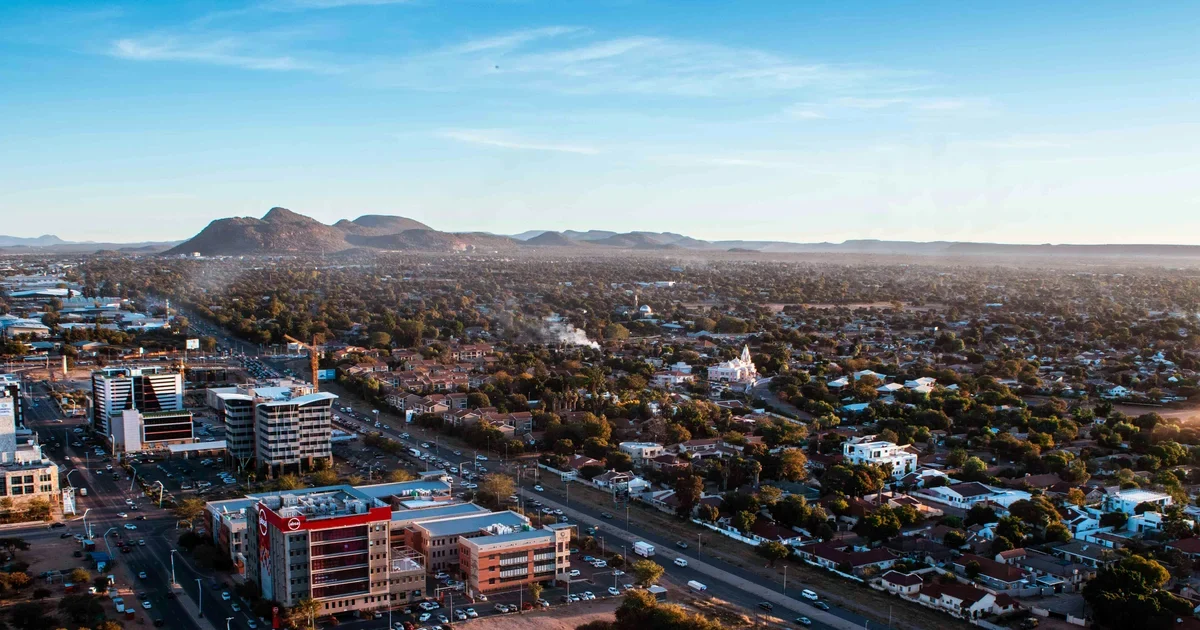
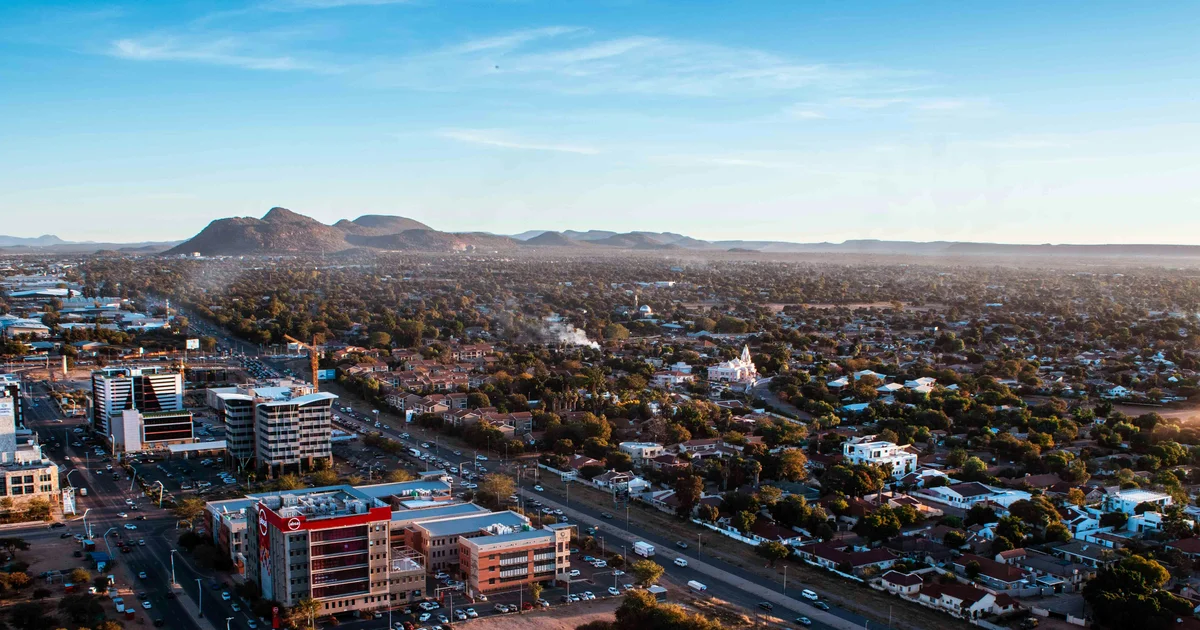
In 1966, Botswana gained independence as one of the poorest countries on earth. GDP per capita was below USD 70. There were 12 kilometers of paved roads in the entire country. The first president, Seretse Khama, inherited a territory that Britain had treated as an afterthought for 80 years. Diamonds were discovered in 1967, one year after independence. In almost every comparable case in history, that discovery would have been the beginning of a different story: civil conflict, elite capture, depleted reserves, and a population left poorer than the resource should have permitted. The resource curse, well documented across Angola, Nigeria, Congo, Venezuela, and dozens of others, converts natural wealth into institutional rot. Botswana did not follow that script. Today, Botswana has a per capita income of approximately USD 7,400, placing it firmly in upper-middle-income status. Its Transparency International Corruption Perceptions rank is 34 globally, cleaner than the United Kingdom in some recent editions and significantly above India’s rank of 93. Three specific decisions made this outcome possible. India’s natural resource governance has not made those decisions yet.
The Resource Curse: Why Natural Wealth Usually Destroys Countries
The “resource curse” is one of the most well-documented phenomena in development economics. Countries that discover large natural resource endowments - oil, diamonds, minerals - frequently show worse long-term development outcomes than comparable resource-poor countries. The mechanisms are understood: resource revenues reduce the state’s need to tax citizens, which reduces citizens’ incentive to demand accountability from the state. Revenue concentration in a small number of export commodities creates exchange rate pressure that makes manufacturing uncompetitive (Dutch Disease). And the sheer scale of resource rents creates winner-takes-all political dynamics that concentrate power and undermine institutions.
The World Bank’s research division has documented resource-curse dynamics across more than 50 countries. The IMF’s Fiscal Affairs department has published extensive research on natural resource revenue management failures. Norway is the most cited exception in the developed world: its Government Pension Fund Global, built from North Sea oil revenues, now manages over USD 1.7 trillion and is governed by explicit rules preventing politicians from spending more than 3 percent of the fund per year in the domestic economy. Botswana is the most cited exception in the developing world. Both chose institutional discipline over short-term consumption, and both kept that discipline across multiple governments and decades.
Lever 1: The Pula Fund - Saving Revenue Rather Than Spending It
Botswana established the Pula Fund in 1994 as a long-term savings vehicle for diamond revenues that exceeded the country’s budget needs. The fund is managed by the Bank of Botswana and invested in international financial assets. The word “pula” means “rain” in Setswana - a scarce and precious resource in a semi-arid country, used as both the name of the currency and as a blessing: “pula” is what Batswana say at celebrations, meaning good fortune. The naming of the sovereign wealth fund was deliberate.
The Pula Fund’s governance rules matter as much as its existence. The fund operates under the Bank of Botswana Act, which establishes explicit investment guidelines and prohibits the use of fund assets to finance the government’s recurrent budget. Only investment returns above a specified threshold can be transferred to the government, and those transfers require parliamentary authorization. The fund is not a slush fund accessible to any sitting administration. It is a constitutional savings mechanism with multi-party oversight.
The IMF has regularly reviewed Botswana’s fiscal framework and consistently cited the Pula Fund as a best-practice model for resource revenue management. As of recent reports, the Pula Fund held assets equivalent to approximately 40 percent of Botswana’s GDP - a cushion that allowed the government to maintain spending during the COVID-19 shock without accumulating the sovereign debt that devastated similar-sized economies.
The mechanism transfers resource wealth across generations rather than concentrating it in the hands of the generation that happened to be in power when the resources were extracted. This is the core institutional insight: diamonds are finite. If you spend all the revenue while extracting them, you leave the next generation with neither the resource nor the accumulated savings. If you save a portion under rules that prevent political discretion, you transform a finite resource into a permanent endowment.
India’s Gap on Sovereign Resource Savings
India has no sovereign wealth fund. The National Investment and Infrastructure Fund (NIIF), established in 2015, is a hybrid investment vehicle that blends government capital with private and institutional co-investors to fund infrastructure projects. It is not a savings vehicle for natural resource revenues. India’s natural resource revenues - from coal royalties, mineral leases, petroleum profit petroleum sharing, and spectrum auctions - flow into the consolidated fund of the central or state government and are spent through the annual budget process without a ringfenced savings mechanism.
The consequences are visible in the District Mineral Foundation (DMF) data. The DMF was established in 2015 under the Mines and Minerals Development and Regulation Act to direct a portion of mining revenues to communities in mining-affected districts. As of 2023, the Pradhan Mantri Khanij Kshetra Kalyan Yojana (PMKKKY) reporting system showed significant underspending of DMF funds in multiple states, with unspent balances sitting in state treasuries rather than being deployed for community development. The CAG (Comptroller and Auditor General of India) has flagged DMF governance failures in multiple state audit reports, including weak project selection, poor implementation tracking, and diversion of funds to non-priority uses. This is a micro-version of the resource curse operating within India’s own borders.
Lever 2: The De Beers Joint Venture - Negotiating from Strength
When diamonds were discovered in Botswana in 1967, De Beers - then the world’s dominant diamond cartel - controlled global diamond mining, sorting, valuation, and distribution through a vertically integrated monopoly. The standard outcome for an African government discovering diamonds in the 1960s and 1970s was to accept De Beers’ terms, which typically left the host country with a minority revenue share and minimal control over valuation and export pricing.
Botswana’s founding president, Seretse Khama, and his successor, Quett Masire, made a different choice. Rather than entering a standard mining agreement with De Beers as the controlling party, they negotiated a 50-50 joint venture. Debswana Diamond Company was incorporated in 1969 as a 50 percent government, 50 percent De Beers partnership. The government’s 50 percent stake gave it equal board representation, direct access to financial accounts, and a seat at the table on all decisions about production volumes, pricing policy, and reinvestment.
In 2006, Botswana renegotiated the terms further. The government increased its De Beers shareholding from zero to 15 percent in De Beers itself (not just in the Debswana JV), making it a direct shareholder in the parent company. In 2013, when Anglo American took a majority stake in De Beers, Botswana’s government held onto its 15 percent share with full shareholder rights. And in a landmark 2023 renegotiation, Botswana secured an agreement to move the global De Beers rough diamond sorting and aggregation hub from London to Gaborone - shifting the value-addition phase of the diamond industry from the UK to Botswana itself. This is a government that repeatedly negotiated upward from its initial position rather than accepting the first deal offered.
The lesson is not that Botswana was lucky to have a good company to negotiate with. De Beers is a commercial entity that pursued its own interests throughout. The lesson is that Botswana’s government had the institutional capacity, the legal preparation, and the political will to negotiate at arm’s length - and that it chose long-term partnership value over short-term cash payments.
India’s Gap on Mineral Negotiation Architecture
India’s mineral concession system has historically awarded exploration and mining rights through processes that the CAG and the Supreme Court have found to lack transparency and competitive price discovery. The 2012 Supreme Court cancellation of 122 telecommunications spectrum licences, and the subsequent cancellation of 214 coal blocks in 2014, both stemmed from findings that allocations had been made through discretionary administrative processes rather than competitive auctions. The state governments that received royalties from these allocations received less than the market value of the resources, while private parties captured the arbitrage.
The shift to e-auction for coal blocks after 2014 has improved transparency in that sector. But India’s approach to critical minerals - lithium, cobalt, nickel, graphite, all essential for the energy transition - remains underdeveloped relative to the stakes. The government’s 2023 amendment to the Mines and Minerals Act to allow government entities first rights over critical mineral blocks is a positive step, but the JV framework that would allow India to negotiate for technology transfer, value addition in-country, and long-term equity stakes (as Botswana did with De Beers) has not been systematically applied.
Lever 3: Central Bank Independence and Low Political Interference
Botswana’s central bank, the Bank of Botswana, has maintained a consistent record of low inflation, stable exchange rate management, and conservative fiscal policy. It has operated without the political interference that has caused monetary instability in Zimbabwe, Nigeria, and other resource-rich African neighbors. The bank’s governor is appointed for a fixed term under statute and cannot be dismissed without cause during that term. The bank publishes quarterly monetary policy statements, and its interest rate decisions are made by an independent Monetary Policy Committee rather than by government directive.
This institutional design is not unusual in the abstract - many countries have formally independent central banks. What is unusual about Botswana is that the independence has been substantively observed rather than nominally maintained. Multiple transitions of power between the ruling party and opposition (Botswana has had competitive multi-party governance since independence) have not resulted in political pressure on the central bank to monetize fiscal deficits. The Pula Fund, managed by the Bank of Botswana, has maintained its investment policy through government changes. This behavioral record, rather than the formal rules alone, is what builds investor confidence and maintains sovereign credit ratings.
Transparency International’s rank of 34 for Botswana in its 2023 Corruption Perceptions Index reflects this institutional consistency. Rank 34 globally places Botswana above several European Union members and significantly above India at rank 93. The transparency score is not primarily about individual honesty - it reflects institutional design that reduces the opportunity for corruption by limiting discretionary decision-making by officials who control resource revenues.
India’s Gap on Natural Resource Institutional Design
India’s Reserve Bank of India is formally independent and has historically maintained credible monetary policy. The governance gap is not at the central bank level. It is at the state level, where natural resource revenues flow through institutions with far weaker independence and accountability. State mining departments, state mineral development corporations, and state-level land acquisition agencies are the points at which resource rent capture occurs in India. The CAG’s audit reports consistently find: inadequate assessment of fair value for mineral leases, failure to collect dues from lessees, undetected illegal mining, and weak enforcement of environmental conditions in mining areas.
The District Mineral Foundation was designed to address the community dimension of this problem. But the DMF’s institutional design replicates the weakness rather than correcting it: DMF governance committees are chaired by district collectors (administrative officers who also oversee mining enforcement), creating a conflict of interest. The Botswana model suggests that effective resource governance requires separating the revenue collection, savings, and distribution functions into distinct institutions with different oversight chains.
Botswana vs India: A Data Comparison
Indicator | Botswana (2023-24) | India (2023-24) |
|---|---|---|
GDP per capita (USD) | 7,400 | 2,730 |
Transparency International CPI Rank | 34 | 93 |
Sovereign wealth fund (% of GDP) | ~40% (Pula Fund) | None |
Diamond revenue to education (%) | ~80% national budget from diamonds | N/A |
Central bank independence (IMF score) | High | Moderate-High |
Natural resource institutional quality | Strong (De Beers JV, Pula Fund rules) | Weak at state level |
District mineral revenue governance | Centralized, rules-based | Fragmented, CAG-flagged |
Population (millions) | 2.6 | 1,430 |
Sources: IMF World Economic Outlook 2024, Transparency International CPI 2023, Bank of Botswana Annual Report 2023, CAG Report on District Mineral Foundation 2022, World Bank WDI 2024.
The India Gap: What State-Level Resource Governance Costs
India has more natural resource wealth than Botswana by several orders of magnitude. Coal reserves alone place India among the top five countries globally. Iron ore, bauxite, manganese, limestone, and increasingly lithium give India a resource endowment that should be a permanent development asset. But the governance architecture through which those resources are converted to public revenues shows structural weaknesses that the Botswana example diagnoses precisely.
The pattern that recurs across Indian state-level mining governance is this: a mineral-rich district generates large royalty and DMF revenues; those revenues are captured in a state treasury account or DMF account; the spending of those revenues is opaque, project selection is discretionary, and communities in mining-affected areas receive services far below what the revenue should permit. The CAG’s 2022 report on DMF implementation in Odisha, Jharkhand, and Chhattisgarh found unspent balances running into thousands of crores, while communities near mines faced inadequate schools, health facilities, and road connectivity.
This is not a resources problem. India has the resources. It is an institutional design problem. Botswana’s three levers - a ringfenced savings fund with independent management, an equity-based JV structure that gives the state a permanent stake in the value chain, and an independent revenue management institution with a clean separation from political discretion - are precisely the design choices India has not made at the state level for mineral revenues.
The Rwanda post in this series examined how a country with no natural resources built clean governance through civic ritual and business reform. Botswana’s case is the inverse: a country with abundant natural resources built clean governance by designing institutions that prevented politicians from accessing those revenues without multi-institution oversight. The mechanism is different. The principle is the same: governance quality is a design choice, not a cultural fate.
The Lever India Can Pull: District Mineral Foundation Reform
The DMF is India’s closest existing equivalent to a resource revenue governance institution. It is also India’s most under-reformed one. The lever available to India is not creating a new institution from scratch - it is redesigning the DMF’s governance along principles that Botswana and Norway have demonstrated work:
- Separate the governance from the administration. The DMF governing council should not be chaired by the district collector who also oversees mining enforcement. An independent governing council with representation from community members, civil society, and a state-level fiscal body should make all spending decisions. The district administration should implement, not govern.
- Mandate public accounting of DMF funds. Every DMF fund’s balance, incoming receipts, outgoing disbursements, and project completion status should be published monthly in machine-readable format. The current PMKKKY portal has significant gaps in data completeness and is not updated at a frequency that enables meaningful oversight.
- Create a national DMF performance index. The Ministry of Mines should publish a state-by-state ranking of DMF performance annually, covering fund utilization rate, project completion rate, community satisfaction metrics, and audit findings. Competitive pressure between states on this index would drive improvement the way Swachh Survekshan drove urban cleanliness competition.
- Pilot a state-level Pula Fund equivalent. At least one mineral-rich state should pilot a long-term savings mechanism for a fixed percentage (say, 10-15 percent) of mineral royalties, invested by the state treasury with independent governance, to build an endowment for post-mining economic transition.
None of these reforms require constitutional amendments. The DMF framework already exists in national law. The governance redesign requires only amendments to the PMKKKY guidelines and state-level DMF rules - executive actions within the power of the Ministry of Mines and state governments.
This Series in Context
Botswana is the eighth case study in this series examining how small countries achieved large developmental outcomes. The series has examined Singapore’s 12-decision growth playbook from $500 to $80,000 per capita, South Korea’s five inflection points from poorer-than-Ghana to richer-than-Italy, Ireland’s three policies that tripled GDP in 25 years, UAE’s transformation from desert villages to the world’s top logistics hub, Vietnam’s Doi Moi reform that created a manufacturing tiger from a war-torn economy, Israel’s R&D state investment model that produced the highest venture capital per capita on earth, and Rwanda’s transformation from genocide aftermath to Africa’s cleanest capital through Umuganda, business reform, and plastic ban. Each study isolates a mechanism rather than celebrating an outcome.
Citizen Actions: Five Layers of Contribution
Natural resource governance seems abstract until you consider that India’s coal revenues alone fund a significant portion of state government budgets - and that how those revenues are collected, saved, and spent determines the quality of schools, roads, and health facilities in mining districts where millions of Indians live. Here is where citizens can intervene at each level.
Personal
- Learn whether your district has a District Mineral Foundation. If your district has mining activity, it almost certainly does. Visit the PMKKKY dashboard (dbt.momines.gov.in) and look up your district’s DMF fund balance and spending data. Note what is unspent and what the stated priority projects are.
- If you live in a mining-affected area, document the gap between DMF revenue allocations and the actual state of roads, schools, and health centers in your area. This documentation is the raw material for accountability advocacy.
- Share Botswana’s story with people who believe India’s governance problems are about culture rather than institutional design. The evidence from Botswana, Rwanda, and the other case studies in this series consistently shows that governance quality is a design choice.
RWA / Building Level
- If your RWA or housing society is near a mining or quarrying zone, engage with the local DMF governing council. Under DMF rules, community members in mining-affected areas have representation rights on the governing council. Exercise them.
- Organize a neighborhood awareness session on DMF: what it is, what your district’s allocation is, how the governing council works, and how to file complaints if funds are not being utilized. Most citizens in mining districts are unaware that a legally mandated resource revenue fund exists for their benefit.
Ward Level
- Request your ward councillor to raise DMF project completion status at the ward committee meeting. Ward councils in mining-affected districts often have a formal advisory role in DMF project selection. If your ward has proposed projects that are stalled, ask for a status update and document the response.
- File RTI applications to your district DMF office asking for: total receipts since inception, total disbursements, list of sanctioned projects, list of completed projects, and the current bank balance. This data must be provided under the RTI Act and should be publicly available on the PMKKKY dashboard - but often is not.
City / State Level
- Engage with state-level civil society organizations that work on mineral governance and environmental compliance in mining areas. Organizations like Mines Minerals & People (MMP) and the Legal Initiative for Forest and Environment (LIFE) have published detailed analyses of DMF governance failures. Their research is the evidence base for advocacy.
- Write to your state’s Mines Department asking for state-level DMF audit reports. Many state CAG offices have already conducted DMF performance audits and the reports are public documents. Compile them, summarize the key findings, and publish them. Making audit findings accessible to general audiences is a form of civic work.
- Advocate for your state to pilot a long-term mineral savings mechanism. Several state governments - Odisha and Jharkhand being the most mineral-rich - have the fiscal scale to pilot a Pula Fund-equivalent. Frame the proposal in terms of post-mining economic transition: what happens to these districts when the coal or iron ore runs out?
National Level
- Write to the Ministry of Mines requesting the publication of a national DMF performance index, ranking districts and states on fund utilization, project completion, and audit compliance. The data for this index already exists within the PMKKKY system. Making it publicly comparable would create the competitive accountability pressure that Swachh Survekshan created for urban cleanliness.
- Track India’s performance in Transparency International’s annual Corruption Perceptions Index. Write about year-on-year changes, share the data with your networks, and ask your representatives what specific reforms they are advocating to improve India’s score. India at rank 93 is not a fixed condition. Botswana at rank 34 demonstrates that a country can choose institutional design that earns a better score.
- Support parliamentary committees - the Standing Committee on Coal and Mines, the Public Accounts Committee - that conduct oversight of mineral revenue governance. Their reports are public documents. Read them, summarize them, and share them. Committee recommendations that are not acted upon deserve public attention.
Botswana’s story is ultimately simple: a small country with a large resource chose rules over discretion at every inflection point. It chose a savings fund over immediate consumption. It chose a negotiated partnership over a take-it-or-leave-it concession. It chose central bank independence over political convenience. Each choice compounded over decades into a governance record that places it in the top third of countries globally on transparency - despite being in Sub-Saharan Africa, despite starting from near-zero, despite having a population smaller than Delhi’s Rohini district. India has incomparably greater resources, human capital, and institutional heritage. The question is whether the design choices that Botswana made in the 1960s and 1970s are choices that India’s mineral-revenue governance systems will make in the 2020s. The mechanism is known. The urgency is real. The lever is available.
What you can do
- Share the evidenceSend this to one person who should know about this issue.Share on WhatsApp
- Give an afternoonTeach, mentor, clean up, or lend your professional skills.Ways to volunteer
- Tell us what's missingKnow a story, a fact we got wrong, or a solution worth spotlighting?Suggest a story
Politically neutral. Every claim sourced. Report a correction.
No comments yet