Costa Rica Abolished Its Army in 1948. Redirected Money to Health and Education. The Outcome.
In 1948, Costa Rica did something no country had done before: it abolished its military and redirected defence spending to schools and hospitals. Seventy-six years later, it ranks as the happiest nation in the Americas, with a life expectancy of 81, a literacy rate of 97%, and a $4-billion ecotourism economy. India spends 2.4% of GDP on defence and only 2.1% on health. The math - and the lesson - deserve a hard look.
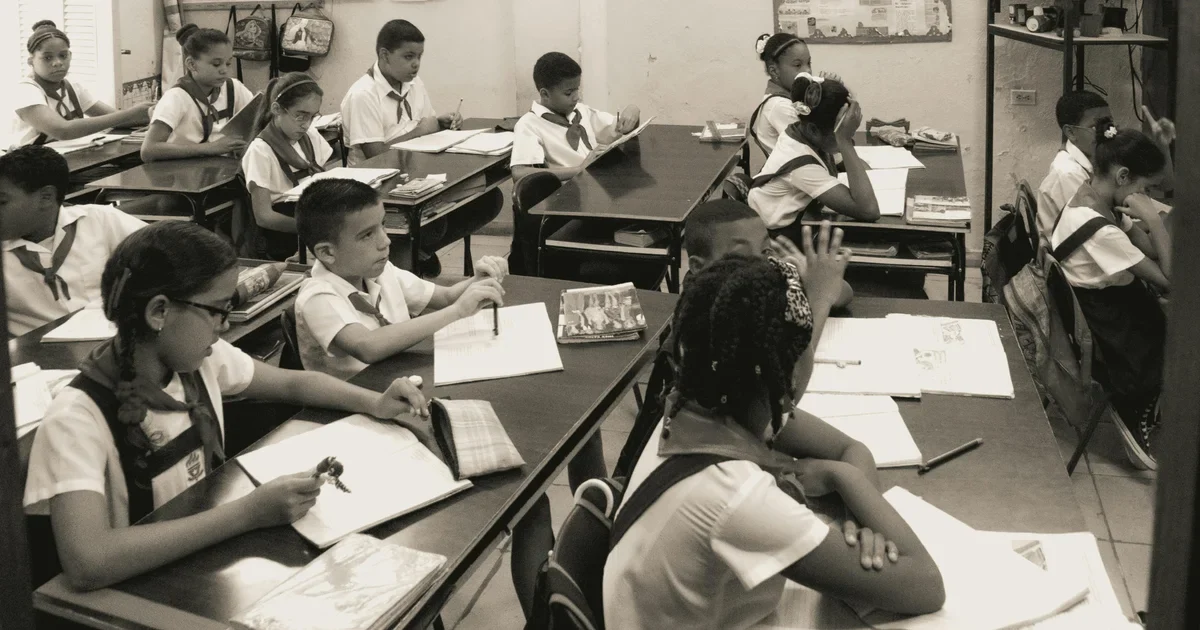
On 1 December 1948, President Jose Figueres Ferres walked into the Cuartel Bellavista military barracks in San Jose, raised a hammer, and struck the wall. The act was ceremonial but the decision was constitutional: Costa Rica would abolish its army. The money saved would go to schools and hospitals. This is the story of what Costa Rica health education spending produced, and what the India comparison reveals about budget priorities.
Seventy-six years later, Costa Rica is the happiest country in the Americas according to the World Happiness Report 2024. It has a life expectancy of 81 years, higher than the United States. Its literacy rate is 97%. Its economy earns over $4 billion a year from ecotourism. It runs on 99% renewable energy. And it has not fired a single military shot in defence of its territory since 1948.
This is not a coincidence. It is arithmetic.
The Decision That Changed Everything
The context matters. In 1948, Costa Rica was emerging from a short but bloody civil war. Figueres had won. He could have consolidated power through military force, as dozens of leaders across Latin America were doing at the time. Instead, he wrote the military out of the constitution entirely.
Article 12 of the 1949 Costa Rican Constitution reads: “The Army as a permanent institution is proscribed.” For the maintenance of order, there are the necessary police forces. Only by continental agreement or for national defense may military forces be organised, and both shall always be subordinate to civil power and may not deliberate, or manifest or make petitions or representations.
This was not naive idealism. Costa Rica sits in Central America, a region that has experienced coups, civil wars, and US military interventions with regularity. The gamble was that regional diplomacy, signed treaties, and international law could substitute for guns. The gamble paid off. It is the same structural logic that drove Rwanda’s transformation from post-genocide ruin to Africa’s cleanest capital, the decision to redirect the state’s energy away from violence and toward institution-building.
“We have more teachers than soldiers.”, A phrase Costa Ricans have used for decades to describe their national identity.
The Spending Redirection: What the Numbers Look Like
Abolishing an army does not immediately produce a literacy miracle. What it does is redirect a structural budget line, year after year, compounded over decades, into sectors that produce human capital. According to World Bank health expenditure data, consistent public health spending above 5% of GDP is strongly correlated with universal coverage outcomes.
Here is what Costa Rica did with those resources, measured in approximate shares of GDP over time (World Bank, OECD data):
Sector | Costa Rica (2023) | Latin America Average | India (2023) |
|---|---|---|---|
Health spending (% GDP) | 7.8% | 5.2% | 2.1% |
Education spending (% GDP) | 6.7% | 4.5% | 2.9% |
Defence spending (% GDP) | 0% (police only) | 1.4% | 2.4% |
The compounding effect is significant. Every year since 1949, Costa Rica has been spending roughly 7-8% of its GDP on health instead of the 2-3% most comparable-income nations spend. Over 75 years, that gap in investment produces measurably different hospital networks, doctor densities, vaccination rates, and maternal mortality figures.
The outcomes are not theoretical. They are on the scoreboard.
What 75 Years of Health Investment Looks Like
Costa Rica established its Caja Costarricense de Seguro Social (CCSS), the Costa Rican Social Security Fund, in 1941, seven years before the army was abolished. When the military spending ended, CCSS received a significantly expanded mandate and funding stream. Today it is one of the most comprehensive universal health systems in the developing world.
- Life expectancy: 81.1 years (WHO 2023), higher than the United States at 79.3
- Infant mortality: 7.6 per 1,000 live births, India’s is 27.4 (World Bank 2022)
- Maternal mortality: 27 per 100,000 live births, India’s is 103
- Universal health coverage index: 75/100 (WHO 2021), India’s is 58
- Physician density: 3.3 per 1,000 people, India’s is 0.74
Costa Rica’s per-capita income is approximately $13,000 (World Bank 2023). India’s is $2,400. Yet on every health metric that matters to actual human lives, how long you live, whether your child survives infancy, whether you can see a doctor, Costa Rica outperforms not just India but the United States.
This is what economists call “health sector efficiency”: the ability to translate spending into outcomes. Costa Rica’s efficiency score is among the highest in the world precisely because it has been spending consistently, universally, and for a very long time.
Education: The Other Pillar
In 1869, Costa Rica made primary education both free and compulsory, becoming one of the first countries in Latin America to do so. When military spending ended in 1948, the same principle was applied further up the education ladder.
Costa Rica currently spends 6.7% of GDP on education (UNESCO 2022). India spends 2.9%. The results:
- Literacy rate: 97% (Costa Rica) vs 77% (India, adults aged 15+, UNESCO)
- Secondary school completion: 85% vs 60%
- Mean years of schooling: 8.7 vs 6.7
- PISA-equivalent science scores: Costa Rica consistently in the top third of non-OECD nations
What sustained education investment did for Costa Rica’s economy is visible in its export structure. In the 1970s, Costa Rica exported bananas and coffee. Today it exports medical devices, software, and pharmaceutical ingredients. Intel set up its first major Latin American manufacturing plant in Costa Rica specifically because of the country’s educated workforce. That plant, opened in 1998, contributed 20% of Costa Rica’s total exports at its peak.
Education is not a social welfare item. It is an industrial policy tool. Costa Rica learned this early and has compounded the return for decades. India has an instructive internal case: Tamil Nadu’s consistent prioritisation of education and health spending produced the best social outcomes of any large Indian state, proof that the Costa Rica logic works within India’s own political geography too.
The India Gap: A Structural Budget Problem
India cannot and should not abolish its military. The geopolitical reality, two nuclear-armed neighbours with active territorial disputes, a history of four wars since 1947, makes demilitarisation not a viable path for India - and irresponsible to suggest. That argument is not what this article is making.
The argument is about the gap between what India spends on defence and health, and whether that gap is structurally optimal. The WHO’s Global Health Observatory consistently flags India as an outlier in the health-to-defence spending ratio among G20 nations.
Country | Defence (% GDP) | Health (% GDP) | Health-to-Defence Ratio |
|---|---|---|---|
Costa Rica | 0% | 7.8% | infinite |
Sri Lanka | 1.7% | 4.0% | 2.4x |
Vietnam | 2.3% | 4.7% | 2.0x |
Bangladesh | 1.2% | 2.6% | 2.2x |
India | 2.4% | 2.1% | 0.9x |
India is one of the very few countries in the world where defence spending exceeds health spending as a share of GDP. According to the World Bank, the global average ratio is approximately 2.5x, countries typically spend two and a half times more on health than on defence. India inverts this.
The numbers in absolute terms: India’s Union Budget 2024-25 allocated Rs 6.21 lakh crore to defence and Rs 89,287 crore to the Ministry of Health and Family Welfare. State health spending adds another Rs 2.5 lakh crore approximately, bringing total government health spend to around 2.1% of GDP. Defence, including pensions and capital expenditure, runs to 2.4% of GDP.
India’s National Health Policy 2017 set a target of 2.5% of GDP for public health spending by 2025. That target has not been met. At current trajectory, it will not be met by 2030 either.
The contrast with Germany is instructive. Germany spends 12.8% of GDP on health (OECD 2023), while its defence spending stands at 1.6% - a health-to-defence ratio of 8:1. Germany achieves near-universal coverage, a physician density of 4.3 per 1,000 people, and consistently ranks in the top 10 globally on health system performance indices. Finland allocates 9.5% of GDP to health alongside 2.2% to defence, and its PISA education scores rank among the world’s highest for four consecutive decades. Neither Germany nor Finland achieved these outcomes by cutting security; they achieved them by committing to health and education as constitutional commitments rather than residual budget lines. The structural decision India must make is the same: treat the 2.5% National Health Policy target as a legislative floor, not an aspirational ceiling.
What Rs 1 Lakh Crore More in Health Would Buy
Closing India’s health-spending gap to match its defence allocation, not even Costa Rica levels, just a symmetric ratio, would mean adding approximately Rs 80,000-100,000 crore in annual public health expenditure. What does that actually purchase?
- 200,000 new MBBS seats over 5 years, at an estimated Rs 1.5 crore per seat in government medical colleges, India currently has 110,000 MBBS seats per year, and the doctor-to-patient ratio is 1:1,457 against the WHO recommended 1:1,000
- 50,000 new primary health centres, India currently has 25,308 PHCs, of which the Comptroller and Auditor General found 40% understaffed in its 2022 report
- Universal vaccination expansion, India’s routine immunisation coverage is 76%; closing that to 95% would prevent an estimated 400,000 child deaths annually (UNICEF estimates)
- Mental health infrastructure, India has 0.3 psychiatrists per 100,000 people vs a WHO minimum recommendation of 1 per 100,000; fully 150 million Indians live with some form of mental illness with effectively no accessible care
None of this requires dismantling the military. It requires recalibrating the ratio, which is a policy and political choice, not a security constraint.
The Ecotourism Economy: Peace as Industrial Policy
Costa Rica’s decision to abolish its military had an unexpected second-order effect: it created the conditions for a $4.2 billion ecotourism economy (Instituto Costarricense de Turismo, 2023).
The mechanism was indirect. Without a military consuming budget and political attention, Costa Rica directed resources toward protecting its forests. It now has 26% of its territory under national park or protected reserve status, one of the highest proportions in the world. Those forests, cloud forests, and coastal ecosystems became the product. Costa Rica receives 3.4 million tourists annually for a country of 5.2 million people, a tourist-to-resident ratio that few nations match.
Tourism accounts for approximately 8% of GDP and employs 1 in 9 Costa Ricans. It is also the sector that has driven rural economic development, putting income into communities that would otherwise remain agricultural subsistence economies.
The lesson for India is not that it should become an ecotourism economy. India already has one, the Himalayan states, the Northeast, the Western Ghats, the Andaman archipelago together constitute one of the world’s great underexploited nature tourism opportunities. The lesson is that sustained environmental protection investment creates compounding economic returns. Forests are not a cost. They are a revenue stream you only access if you fund them.
The Happiness Metric: What It Measures and Why It Matters
The World Happiness Report ranks countries on a composite measure of life evaluation, positive affect, negative affect, social support, freedom, generosity, and perceptions of corruption. Costa Rica has ranked in the top 15 globally for eight consecutive years. In 2024, it ranks 12th globally and 1st in Latin America.
India ranks 126th.
Happiness rankings are sometimes dismissed as soft metrics. They should not be. The component measures, particularly social support, freedom to make life choices, and absence of corruption, are strong predictors of long-term economic productivity, civic participation, and public health outcomes. Countries where citizens report high wellbeing also show stronger tax compliance, better institutional trust, and higher labour participation rates. Happiness is not the output. It is an indicator of the social infrastructure underlying it.
Costa Rica’s ranking is not an accident of geography or temperament. It correlates precisely with its health, education, and environmental investments. Gallup’s research on happiness consistently shows that beyond a certain income threshold, health and social connection matter more than income growth. Costa Rica crossed that threshold decades ago because it prioritised the right inputs.
The Lever India Can Actually Pull
The lesson from Costa Rica is not “abolish the army.” The geopolitical constraints facing India are real and irreducible. The lesson is about the compounding logic of Costa Rica health education spending, and what the India comparison demands in terms of political will required to shift budget ratios.
India’s National Health Policy target of 2.5% GDP is not ambitious by international standards. It is the floor. The WHO benchmark for universal health coverage is 5% of GDP in public spending. India is at 2.1%. The gap between 2.1% and 2.5% is approximately Rs 1.2 lakh crore per year. The gap between 2.1% and 5% is Rs 6 lakh crore, roughly equal to the entire defence budget.
Closing that gap does not happen in one budget cycle. But it happens by committing to a trajectory, the way Costa Rica committed to one in 1948 and has sustained it through 18 different governments.
India has levers it has not fully pulled: GST rationalisation on health products (medical devices currently attract 12-18% GST), National Health Mission funding floors, Ayushman Bharat expansion to cover all citizens rather than the current 107 million household coverage, and most significantly, the political decision to treat the National Health Policy 2.5% target as a floor rather than an aspiration.
5 Actions Every Citizen Can Take
The Costa Rica model did not succeed because of one visionary leader. It succeeded because it was constitutionally embedded and then sustained by civic culture. Citizens demanded their schools and hospitals. The following actions are structured from the immediately personal to the structurally systemic.
Layer 1: Know Your Numbers
Look up your district’s health and education spending via the State Budget documents or the Ministry of Finance’s open data portal. Track your local government school’s per-pupil expenditure against the national average. Know what your district Primary Health Centre’s doctor vacancy rate is, the National Health Mission publishes these annually. Informed citizens are the precondition for accountable governance.
Layer 2: Demand Budget Transparency
Use RTI filings to request district-level health and education expenditure data from your local government body. Ask your MLA or MP, in writing, on record, where your district stands against the National Health Policy 2.5% GDP target. Praja Foundation and PRS Legislative Research publish MP performance data; use them.
Layer 3: Support the Evidence Pipeline
Organisations like the Public Health Foundation of India (PHFI), Centre for Budget and Governance Accountability (CBGA), and Accountability Initiative publish rigorous analyses of health and education budget utilisation. Subscribe, share, and cite their work in public conversations. Evidence that stays inside PDFs changes nothing. Evidence that circulates becomes political pressure.
Layer 4: Vote on Public Services
In every civic mandate cycle - local body, state assembly, or national legislature - make health and education spending a primary criterion. Ask candidates specifically: what is your position on meeting the National Health Policy’s 2.5% GDP commitment? What is your plan for teacher vacancies in government schools? Record answers. Share them. Area-level performance on health and education outcomes is trackable through the government’s own dashboards, HMIS, UDISE+, and MyGov.
Layer 5: Join or Fund the Infrastructure
Costa Rica’s transformation was anchored in physical infrastructure: the CCSS hospital network, the teacher training colleges, the national parks system. India’s equivalent institutions, government hospitals, aanganwadis, community health centres, are underfunded and understaffed. Direct donation to organisations that provide supplementary primary healthcare in underserved areas (Jan Swasthya Abhiyan, Doctors For You, Jan Arogya) converts individual commitment into structural impact. Volunteering for national vaccination drives or school enrollment campaigns closes the last-mile gap that budget allocations alone cannot.
What You Can Do at Every Layer
Personal: Track your household’s use of public health infrastructure and consciously choose government facilities when safe to do so - each visit strengthens the utilisation data that funding bodies use to justify budget increases. RWA/community: Organise a single annual “Know Your PHC” event with your resident welfare association - invite the local Primary Health Centre in-charge to brief residents on doctor vacancy status and what petitions can help. Ward/city: Attend ward committee meetings and ask your councillor to include a “health and education budget line review” in the annual ward development plan; many ward funds go unspent because no one demands they be directed to PHC infrastructure. National: Write to your MP requesting a private member’s bill or a Zero Hour statement on the National Health Policy’s 2.5% GDP commitment; PRS Legislative Research publishes templates.
The Compound Return
The Costa Rica case study is not an argument for pacifism. It is an argument for compounding. Every rupee consistently invested in a child’s health today returns in labour productivity in 2040. Every teacher hired in a government school in Bihar today shows up in a reduced skills gap in 2035. The returns are not immediate. They are not photogenic. They do not appear in quarterly news cycles. They appear in census data, in life expectancy tables, in per-capita income figures twenty years from now.
Jose Figueres struck a wall with a hammer in 1948. The act was symbolic. What followed, 76 years of consistent, constitutional prioritisation of human capital over military capital, was the actual policy. India does not need a hammer moment. It needs a budget trajectory and the political culture to sustain it across policy cycles.
Costa Rica proved that a small country with no army can outlive a superpower. The metric is life expectancy. It stands at 81.
India’s is 67.
The gap is not destiny. It is arithmetic. And arithmetic can be changed.
What you can do
- Share the evidenceSend this to one person who should know about this issue.Share on WhatsApp
- Give an afternoonTeach, mentor, clean up, or lend your professional skills.Ways to volunteer
- Tell us what's missingKnow a story, a fact we got wrong, or a solution worth spotlighting?Suggest a story
Politically neutral. Every claim sourced. Report a correction.
No comments yet