Singapore $500 to $80,000: The 12-Decision Playbook a Small Country Used to Become Rich
In 1965, Singapore's GDP per capita was $500. By 2023, it crossed $80,000. Twelve decisions built that gap — and four of them India can apply at the state level today.
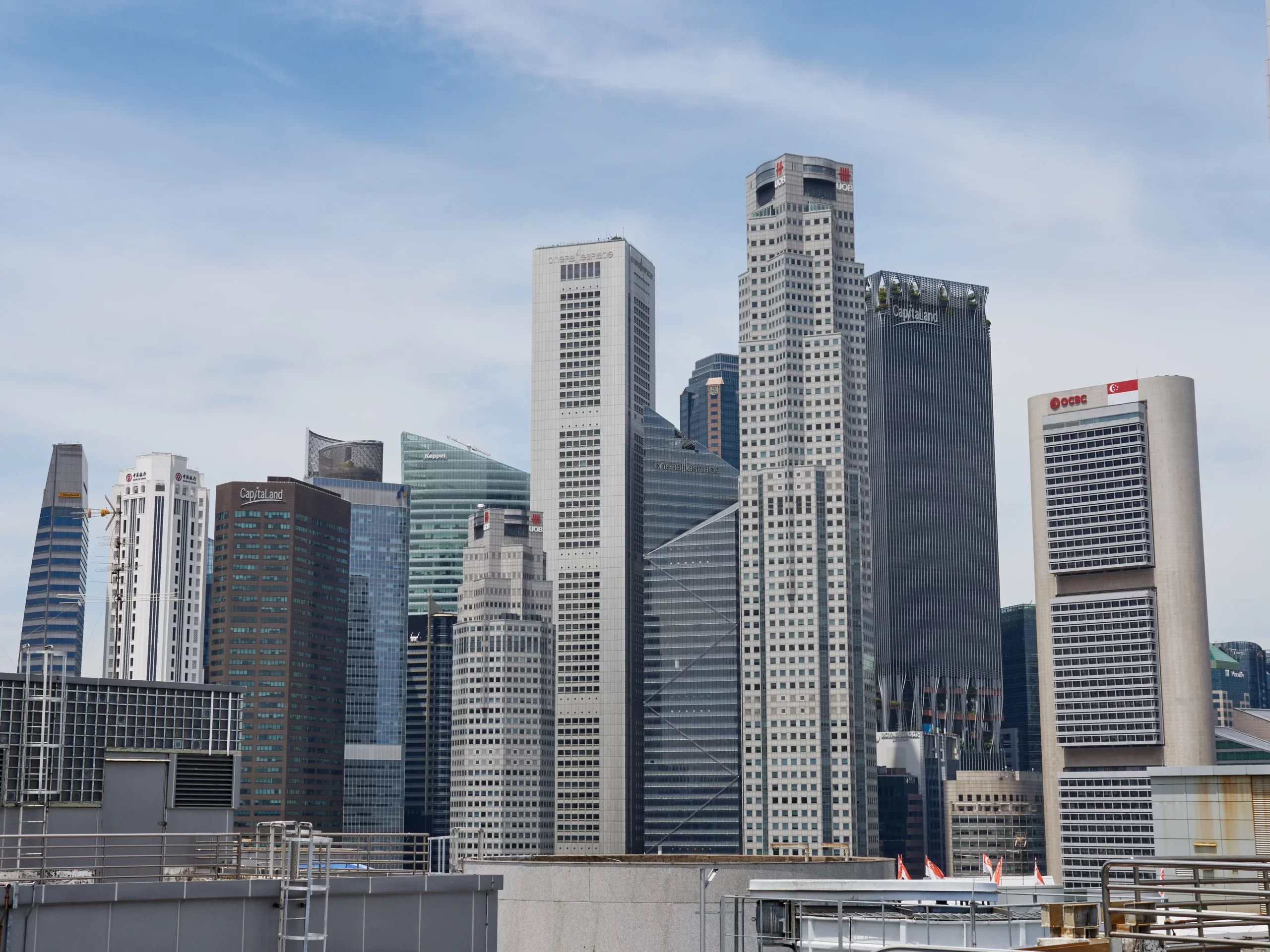
In 1965, Singapore was a swampy island city of two million people with no natural resources, no hinterland, no army, and a GDP per capita of roughly $500. By 2023, that number had crossed $80,000 - placing Singapore among the five wealthiest countries on earth by income per person. The transformation took 58 years and exactly 12 decisions. Not luck. Not geography. Decisions. This is the playbook.
For India - a country of 1.4 billion people with a per-capita GNI still near $2,500 - Singapore’s rise is not a curiosity. It is a manual. Not every decision scales to continental size, but four of the twelve are ready to be applied at the state level right now. We will name them at the end.
The Starting Point: Nothing to Work With
On August 9, 1965, Lee Kuan Yew appeared on national television with tears in his eyes to announce that Singapore had been expelled from the Malaysian Federation. There was no plan. The city had no agriculture, no manufacturing base, a literacy rate below 50 percent, and ethnic tensions fresh in memory from the 1964 race riots. Unemployment ran at 14 percent. The British military - the city’s largest employer - was about to withdraw entirely.
What followed was the most deliberate act of national construction in the twentieth century. Lee and a small group of technocrats made 12 foundational decisions that compounded over six decades. Each decision was calculated to solve a specific structural problem. Together, they created the wealthiest city-state in Asia.
Decision 1: Zero Tolerance for Corruption (CPIB, 1952)
The Corrupt Practices Investigation Bureau existed before independence, but Lee’s People’s Action Party gave it teeth. Investigators could access bank records without a court order. Conviction rates were high and ministers were not exempt - several resigned after CPIB investigations. The result: Singapore now ranks 5th globally on Transparency International’s index. Every other decision on this list is downstream of this one. Corruption corrodes infrastructure spending, FDI confidence, and meritocracy simultaneously.
The CPIB’s power was not just legal - it was structural. Whistle-blowers received protections and rewards. Civil servants caught extracting bribes faced criminal prosecution, not just dismissal. The signal sent to foreign investors was unambiguous: contracts would be awarded on merit, not connections.
Decision 2: Public Housing for 80 Percent of the Population (HDB)
The Housing Development Board was given compulsory land acquisition powers in 1966. By 2000, 85 percent of Singaporeans lived in HDB flats - most of them owner-occupiers. This single decision did four things at once: it ended slum conditions, created forced savings through property equity, broke ethnic enclaves by requiring each estate to match national ethnic ratios, and gave the government infrastructure leverage to plan transport around housing density.
India’s public housing programs serve roughly 10 percent of the population and lack the compulsory land acquisition backbone. PMAY has the subsidy architecture; it does not have the HDB’s ability to acquire land, build at scale, and mandate tenure mix. The result is that Indian cities remain fragmented by income and caste in ways that Singapore engineered out of its housing stock.
Decision 3: English-Medium Education
In a country with four official languages, choosing English as the medium of instruction in 1966 was politically explosive. It meant that a Chinese-speaking majority had to learn in a second language. But it also meant that every graduate could instantly access global capital markets, multinational firms, and international science. Singapore’s universities now rank in the top 20 globally. English-medium schooling created a talent pool that multinationals could hire directly without a training gap.
The decision also had an unintended social benefit: a neutral lingua franca that no single ethnic group owned reduced the linguistic hierarchy that can reinforce social stratification. Education policy and social cohesion policy turned out to be the same decision.
Decision 4: Free Port and Global Hub Strategy
Singapore had no domestic market. Its only choice was to become the market for everyone else. Lee kept the port free, set corporate tax at levels that undercut the region, and built world-class logistics infrastructure. Today, Singapore handles 37 million containers per year - the second-busiest port by tonnage globally. The Changi Airport connects to 100 countries. The city is the Southeast Asian headquarters for over 37,000 international firms. Being small was turned into an advantage: the entire island became one special economic zone.
Decision 5: The EDB Foreign Direct Investment Playbook
The Economic Development Board, set up in 1961, was given a mandate to court specific industries in a specific sequence. Phase 1 (1960s): labour-intensive manufacturing. Phase 2 (1970s): electronics assembly. Phase 3 (1980s): wafer fabrication and chemicals. Phase 4 (1990s): biomedical, finance, logistics. Phase 5 (2010s-present): advanced manufacturing, AI, fintech. Each phase was planned five years ahead. Tax holidays were offered to anchor firms; once they arrived, the EDB used them as proof to attract the next tier. The result: Singapore drew $92 billion in FDI in 2023.
The EDB’s sectoral sequencing model is freely available in the public domain. It is not a trade secret. Any Indian state with a dedicated investment promotion body could adopt the same phased approach - picking one anchor sector, offering competitive incentives to the first five firms, then using those firms as social proof for the next wave.
Decision 6: CPF - Mandatory Savings at Scale
The Central Provident Fund requires employees to contribute 20 percent of wages and employers to add 17 percent - a 37 percent total savings rate compulsorily directed into a personal account. The CPF funds housing, healthcare, and retirement. Singapore’s gross national savings rate hovers above 45 percent of GDP. The government uses the accumulated CPF pool to fund sovereign wealth funds (GIC, Temasek) that invest globally and return dividends to the state. Savings built capital; capital built infrastructure; infrastructure attracted investment.
Decision 7: Ethnic Integration Policy in Housing
In 1989, Singapore legislated that HDB estates must reflect national ethnic proportions. Families could only sell their flats to buyers of a different background if that group was underrepresented in the estate. The policy prevented the residential segregation that follows when housing markets are left unregulated. Social trust - measured by inter-group marriage rates, school integration scores, and the low incidence of inter-group conflict - is a direct return on this investment.
Decision 8: Meritocratic Civil Service with Market-Level Pay
Singapore benchmarks its top civil servants’ salaries to the top 1,000 private-sector earners. A minister earns roughly $1 million per year. The rationale: if the best talent goes to finance or law, the state is governed by the second tier. Entry is through scholarship exams. Promotions are tracked against Key Performance Indicators published annually. The Singapore government consistently ranks as the world’s most efficient by the IMD Competitiveness Index.
India’s civil service is paid 8 to 12 times less than comparable private roles, creating a structural incentive to extract rent. This is not a critique of the individuals in the IAS or IPS - it is a systems observation. When the compensation gap between public and private service is large enough, the talent distribution will shift over time.
Decision 9: E-Government Before It Was Fashionable
Singapore launched its National Computerisation Plan in 1980 - a decade before the web existed. By 2000, 90 percent of government services were online. The SingPass national identity system now gives citizens a single login for 2,000 government and private-sector services. Filing taxes takes under 10 minutes. Company incorporation takes one day. The World Bank’s Doing Business index ranked Singapore first globally for 12 consecutive years. When India built Aadhaar and India Stack, it was constructing the infrastructure Singapore proved could transform governance - a lesson Estonia also demonstrated when it digitized 99 percent of government services in 15 years.
Decision 10: Selective Skilled Migration
Singapore’s Employment Pass system allows companies to hire globally with minimal friction. About 29 percent of Singapore’s resident workforce is foreign-born. The policy is selective: passes require minimum salary thresholds that rise each year, ensuring migrants complement rather than compete with low-wage workers. Singapore’s position as Asia’s top talent hub is inseparable from its willingness to admit the world’s best regardless of origin.
Decision 11: Manufacturing-to-Services Pivot
In the 1980s, Singapore deliberately raised its own costs - increasing wages, raising CPF contributions, and upgrading training requirements - forcing low-margin assembly to relocate to Malaysia and Indonesia. The space vacated was filled with higher-value electronics, chemicals, and eventually biomedical manufacturing. Today, Singapore is the world’s second-largest producer of biologics and a major semiconductor test hub. The lesson: comparative advantage is not found - it is built.
Decision 12: Defence-Tech Sovereignty
A small country surrounded by larger neighbours could not afford strategic dependence. Singapore built a defence science establishment (DSO National Laboratories, DSTA, ST Engineering) that developed indigenous weapons systems, radar, and unmanned vehicles. The defence technology ecosystem then spun civilian applications: satellite technology, drones, cybersecurity. Singapore’s defence budget is 3 percent of GDP, but the return is a dual-use technology base that feeds civilian industry.
Singapore vs India: The Data Gap
Metric | Singapore (2023) | India (2023) | Gap |
|---|---|---|---|
GDP per capita (USD) | $84,500 | $2,500 | 34x |
Corruption Perception Index rank | 5th | 93rd | 88 places |
Population in public housing | 80% | ~10% | 70 points |
Gross national savings (% of GDP) | 47% | 30% | 17 points |
FDI inflows (2023, USD billion) | $92B | $46B | 2x per capita |
Ease of doing business rank | 2nd | 63rd | 61 places |
Government e-service uptake | ~95% | ~40% | 55 points |
Civil service meritocracy rank (IMD) | 1st | 37th | 36 places |
Sources: World Bank Development Indicators 2023, Transparency International CPI 2023, Monetary Authority of Singapore, IMD World Competitiveness Yearbook 2023.
The India Gap
India is not Singapore and cannot become it. With 700 times Singapore’s population and 5,000 times its land area, the city-state’s governance model cannot be copy-pasted. But the gap is not insurmountable, and the components are not alien. India has Aadhaar - the digital identity infrastructure that underpins Singapore’s SingPass. India has PMAY - a housing scheme with the ambition of HDB without the land acquisition muscle. India has a civil service with genuine talent at senior levels, paid a fraction of market rate. India has states that could run their own EDB-equivalent investment promotion boards with dedicated industrial corridors.
The honest summary: India has the architecture. It lacks the execution machinery - specifically, the anti-corruption enforcement, the savings mobilization, the meritocratic pay structure, and the long-range industrial policy horizon that Singapore’s EDB represents. The experience of how Tamil Nadu built India’s best social outcomes through sustained policy consistency offers one domestic proof of what targeted state-level commitment can achieve.
Singapore’s trajectory also shows that the sequencing of reforms matters as much as the reforms themselves. Anti-corruption came first - before housing, before FDI, before e-government. Without a trusted institutional base, every subsequent reform would have leaked. India’s reform programs often fail at delivery rather than at design because the institutional base that Singapore built first is still being constructed here.
The Four Levers India Can Pull at State Level
Not all 12 decisions require national consensus. Four are deployable by a state government today:
- Anti-corruption enforcement with investigative autonomy: A state-level Lokayukta with CPIB-equivalent powers - bank record access, independent prosecution, mandatory asset disclosure for all senior officials. Tamil Nadu, Telangana, and Karnataka have started; none have gone far enough.
- State-run EDB with a 10-year industrial roadmap: Every large state has an investment promotion body. None have a published 10-year sector sequencing plan with dedicated anchor-firm incentive packages. The EDB model is a template, not a trade secret.
- Mandatory government e-services migration: A state can set a target - 80 percent of government-to-citizen services online within three years - and enforce it through its own IT mission. The India Stack (Aadhaar, UPI, DigiLocker) already exists. The bottleneck is last-mile rollout that requires state-level political will.
- Affordable housing with density: States that control land acquisition can pilot HDB-equivalent schemes at district level - mixed-income, high-density vertical housing with mandatory maintenance funds. PMAY has the subsidy; it needs the HDB’s land bank and density requirement.
Citizen Actions: Five Layers of Pressure
Singapore’s decisions were made by a government, but they required a citizenry willing to hold institutions accountable, demand quality, and participate in governance at every level. India’s transformation requires the same. Here is what that looks like in practice across five layers.
Personal
- File your income tax return accurately and on time. Every informal payment to a government official is a vote to keep India at $2,500 per capita.
- Use government e-services (UMANG, DigiLocker, Aadhaar-linked services) and report broken links through official feedback portals. Your usage data funds their improvement.
- If you are a professional, consider one year working in government - as a consultant, a domain expert, or through a fellowship like the Prime Minister’s Rural Development Fellows scheme.
RWA (Resident Welfare Association)
- Demand that your RWA publish its accounts on a public notice board or website annually. Singapore’s HDB blocks have mandatory maintenance accounts - your RWA equivalent should too.
- Organize a neighbourhood anti-corruption pledge: residents commit to not paying bribes for property mutation, electricity connections, or school admissions, and to reporting demands to the state vigilance portal.
- Invite your ward councillor to a quarterly RWA meeting with a fixed agenda: roads, drainage, street lighting, property tax usage. Make attendance a public record.
Ward
- Use the ward-level budget consultations (mandated under the 74th Constitutional Amendment) to push for e-procurement of all ward-level contracts above Rs 5 lakh. Singapore moved to open e-procurement in 1998; your ward can do it in 2026.
- File RTI requests for the ward’s MGNREGA utilization rate, solid waste management contractor payments, and road repair tender records. Share results on a neighbourhood WhatsApp group.
- Support a women’s group or self-help group that runs financial literacy sessions. Singapore’s CPF worked because citizens understood compound savings. Equivalent financial literacy is the precondition for any Indian savings mobilization policy.
City
- Attend or watch your Municipal Corporation’s council sessions - most are now live-streamed. Track which councillors ask budget questions and which ones don’t. Vote accordingly.
- Push your city’s investment promotion body to publish a 5-year sectoral plan (which sectors it is targeting, why, and what progress it has made). Singapore’s EDB publishes this annually.
- Advocate for high-density affordable housing in your city’s master plan revision. If your city is revising its Development Plan, submit written comments arguing for mixed-income vertical housing near transit hubs - the exact model that Singapore’s HDB pioneered.
National
- Support civil service pay reform: India’s best bureaucrats earn one-fifteenth of what their Singapore equivalents earn. Write to your MP advocating for a civil service pay commission that benchmarks against private-sector roles at equivalent seniority.
- Demand Lokayukta independence: every state’s Lokayukta should have CPIB-equivalent powers - direct bank record access, protected whistleblower status, and a published conviction rate. Track yours at the state legislature level.
- Amplify the case studies: every time a state government announces a reform that mirrors one of Singapore’s 12 decisions - whether it is a new industrial corridor, an e-government mandate, or a corruption conviction - share the international parallel. Civic pressure scales when citizens understand the benchmark.
Singapore built wealth on decisions, not destiny. India’s decisions are being made right now - in legislative sessions, in budget allocations, in hiring choices, and in the willingness of 1.4 billion citizens to hold institutions accountable. The playbook is written. The question is whether we read it.
What you can do
- Share the evidenceSend this to one person who should know about governance.Share on WhatsApp
- Give an afternoonTeach, mentor, clean up, or lend your professional skills.Ways to volunteer
- Tell us what's missingKnow a story, a fact we got wrong, or a solution worth spotlighting?Suggest a story
Politically neutral. Every claim sourced. Report a correction.



No comments yet