UAE: From Desert Villages to World's #1 Logistics Hub. The Math.
How the UAE went from desert villages in 1971 to the world's top logistics hub by 2024. Five levers India can study.
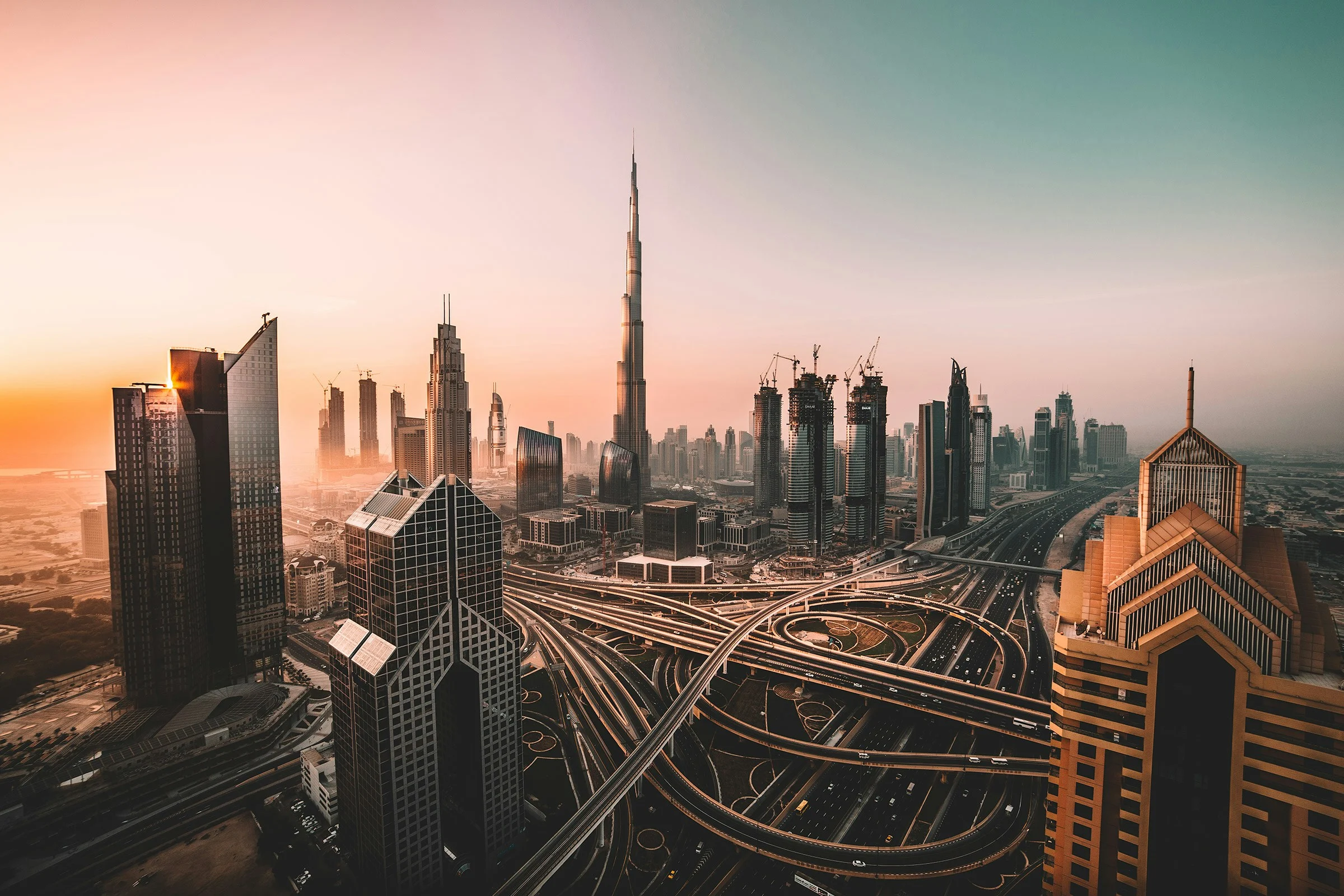
In 1971, the UAE was seven desert sheikhdoms with a combined population of about 180,000 people, no paved highway connecting them, and an economy dependent entirely on oil revenues that could run dry within a generation. By 2024, the UAE logistics hub ranking is number one in the world: 24 million international tourist arrivals annually, the busiest international airport on earth, a sovereign wealth fund exceeding $1.5 trillion, and the Jebel Ali Free Zone as the largest free zone globally. Per capita GDP crossed $45,000. The transformation took 53 years and five specific, replicable levers - none of which required natural resources India does not already possess.
The Starting Point: Desert Villages in 1971
When the seven emirates - Abu Dhabi, Dubai, Sharjah, Ajman, Umm Al-Quwain, Fujairah, and Ras Al-Khaimah - federated in December 1971, the territory had no universities, no functioning public health system, and literacy rates below 20 percent. Oil had been discovered in Abu Dhabi in 1958, but Dubai’s oil reserves were comparatively modest, and Sharjah’s even smaller. The federation’s founders understood that resource dependence was a terminal strategy.
Sheikh Rashid bin Saeed Al Maktoum of Dubai reportedly told his sons in the 1970s: “My grandfather rode a camel, my father rode a camel, I drive a Mercedes, my son drives a Land Rover, his son will drive a Land Rover, but his son will ride a camel again - unless we build something that lasts.” Whether apocryphal or not, the sentiment became policy. The UAE did not invest oil money in consumption. It invested in infrastructure, institutions, and connectivity that would outlast the oil.
Lever 1: Free Zones as Economic Sovereignty Accelerators
The Jebel Ali Free Zone (JAFZA), established in 1985, is the single most consequential economic decision in UAE history. It gave foreign companies 100 percent ownership of their operations, zero corporate tax for 50 years, full profit and capital repatriation, and exemption from import and export duties - all within a dedicated zone that did not require UAE-wide regulatory reform. Within the zone, you were operating under a different ruleset.
The results compounded. By 2024, JAFZA housed over 9,500 companies from 100 countries, contributed 23.5 percent of Dubai’s GDP, and handled $200 billion in annual trade. DP World, the port operator spun out of JAFZA’s logistics success, now operates 83 marine terminals across 54 countries. The free zone model was replicated 40+ times: Dubai Internet City, Dubai Media City, Dubai Healthcare City, Dubai International Financial Centre (DIFC), Abu Dhabi Global Market. Each zone offered 100 percent foreign ownership, a specialized regulatory environment, and a cluster effect for talent and investment in that vertical.
India’s SEZ experiment, launched in earnest post-2005, started from the same playbook but stalled on implementation. As of 2024, India has 424 notified SEZs but only 274 are operational, and many operate below capacity. The World Bank’s 2022 SEZ review found India’s zones underperformed on account of land acquisition delays, dispute resolution timeframes averaging 5-7 years, and domestic tariff area (DTA) sales restrictions that limited the domestic market as an SEZ customer. JAFZA had none of these constraints.
Metric | UAE / JAFZA | India SEZs |
|---|---|---|
Zones with 100% foreign ownership | 40+ (all zones) | Partial (sector restrictions) |
Corporate tax in zone | 0% (50-year guarantee) | Variable, incentive-based |
Dispute resolution | DIFC Courts (common law, English) | Domestic courts, avg 5-7 yrs |
Largest zone trade value | $200B (JAFZA) | ~$150B (all SEZs combined, 2023) |
Zone-to-GDP contribution | 23.5% (JAFZA to Dubai GDP) | ~5% (all SEZs to national GDP) |
International arrivals (2024) | 24 million tourists | 9.5 million tourists |
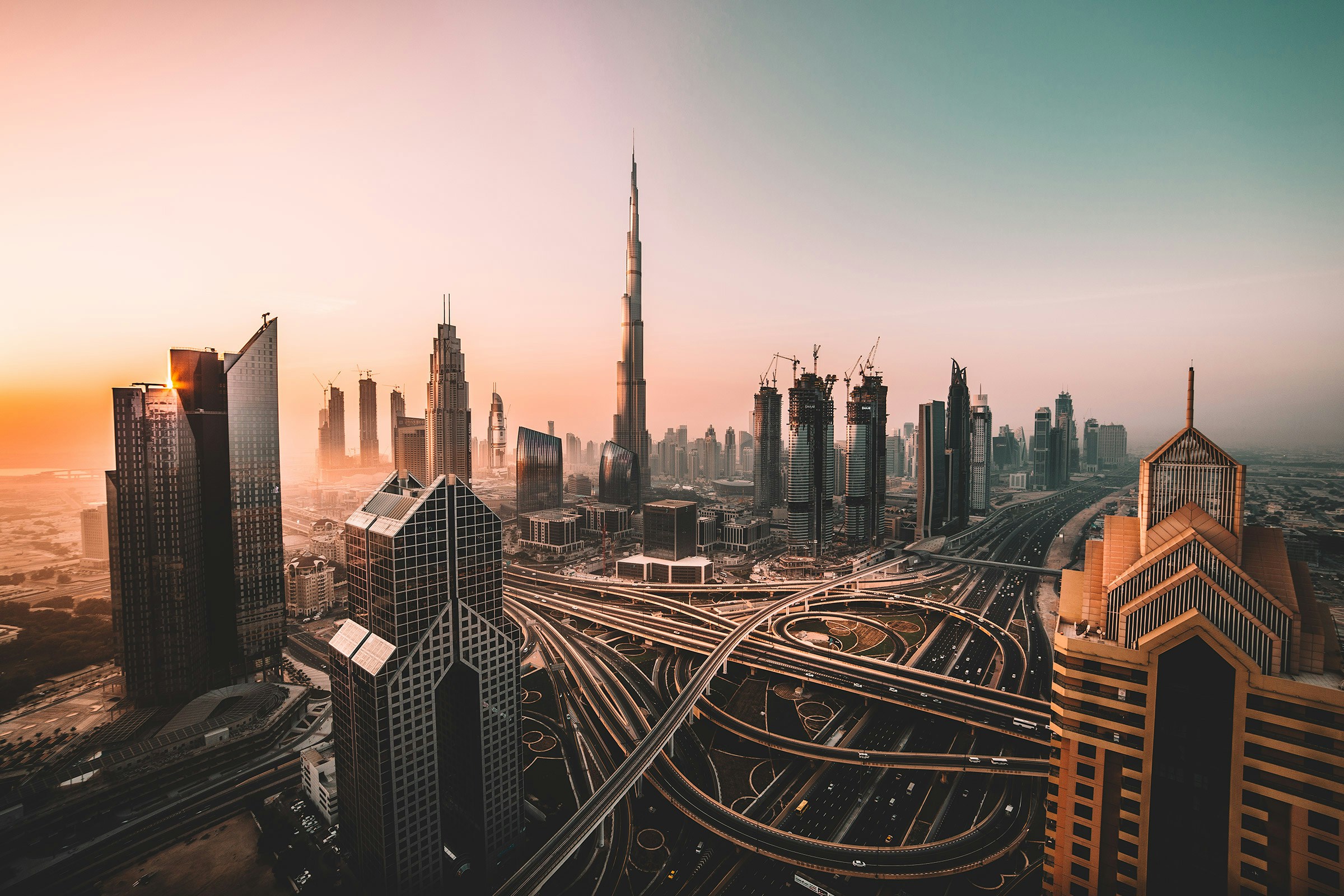
Lever 2: The 30-Minute E-Visa - Tourism as an Industrial Policy
The UAE’s tourism visa processing time dropped to under 30 minutes in 2023 for most nationalities. The country offers visa-on-arrival or e-visa access to 175+ nationalities. In 2022, the UAE introduced a 5-year multiple-entry tourist visa. In 2023, it expanded the 10-year Golden Visa and introduced a 2-year “Green Visa” for skilled workers and freelancers, eliminating the employer-sponsorship requirement that had historically tied workers to a single company.
The economic logic was explicit: every tourist arrival generates approximately $1,500-2,000 in direct spending (IATA, 2023). Dubai’s tourism revenues reached $22 billion in 2023. The 30-minute visa is not a hospitality gesture - it is a revenue mechanism that the UAE has industrialized. The entire visa issuance system runs on a digital backend where biometric data from a prior visit auto-populates the next application. The Emirates ID, linked to airport databases, immigration, health, and financial KYC, means a returning visitor clears immigration faster than a domestic passenger in many countries.
India received 9.5 million foreign tourist arrivals in 2023, against a target of 20 million by 2030 (Tourism Ministry). The gap is not marketing - it is friction. The e-Visa for India takes 3-7 business days for processing and is available to 169 nationalities, but the UI, rejection rate opacity, and lack of visa-on-arrival for major source markets (China, Russia) cap demand. The World Economic Forum’s Travel and Tourism Competitiveness Index ranked India 54th in 2024, with “visa requirements” scoring notably below peer economies. Tourism’s contribution to India’s GDP stood at 5.8 percent in 2023 versus the UAE’s 11.6 percent. The gap in arrivals directly maps to the friction gap.
Lever 3: Airport-as-City - DXB and Al Maktoum as Economic Anchors
Dubai International Airport (DXB) handled 86.9 million passengers in 2023, making it the world’s busiest international airport for the 10th consecutive year (Airports Council International). This was not an accident of geography - Dubai sits at a roughly equal flying distance from 2 billion people across Europe, Africa, South Asia, and East Asia. But so does Mumbai. The difference was policy: DXB was built with a 24-hour operational mandate, unlimited frequency rights for Emirates, and a hub-and-spoke model that made Dubai a natural transfer point for any intercontinental journey passing near the Arabian Peninsula.
Emirates airline was founded in 1985 with $10 million in seed capital from the Dubai government and two leased Boeing 737s. By 2024, Emirates operates 275 aircraft to 145 destinations, carries 60 million passengers annually, and generated $23 billion in revenue. The airline’s Open Skies policy - negotiated bilaterally with 175+ countries - meant competitors could not use regulatory barriers to block Emirates from their markets. The entire model was designed around maximizing airport throughput, which maximizes Dubai’s positioning as a transit economy.
Al Maktoum International Airport (DWC), currently under its $35 billion expansion, is designed to handle 260 million passengers annually when complete - more than any airport on earth. It is being built 35km from downtown Dubai. The strategic logic: airports are not transport infrastructure, they are economic multipliers. Every 1 million passengers through an international hub generates approximately 900 direct and 1,500 indirect jobs, plus the economic activity of transit retail, hotels, cargo, and logistics services.
India’s aviation sector is growing but structured differently. Indira Gandhi International Airport (Delhi) handled 72 million passengers in 2023. Mumbai’s CSIA handled 50 million. But India has no equivalent of Emirates - IndiGo and Air India are primarily domestic/regional carriers, and India’s Open Skies agreements are bilateral and restricted. The 5th freedom traffic rights that allow Emirates to pick up passengers in Mumbai and carry them to New York - India has not unlocked equivalent rights for its own carriers to the same scale. India’s aviation sector contributes approximately 2.4 percent of GDP versus the UAE’s aviation cluster at over 15 percent.
Lever 4: The Expat Skilled-Worker Architecture
Approximately 89 percent of the UAE’s population of 9.7 million are expatriates. This is not a demographic quirk - it is a deliberate human capital strategy. The UAE recognized that it could not organically produce enough engineers, doctors, financiers, logistics specialists, and hospitality professionals to run the economy it was building. Rather than slow the economy to match its citizen workforce, it built a talent import system of extraordinary efficiency.
The 2022 visa reforms were the most significant since the free zone era. The abolition of the “no objection certificate” (NOC) requirement - which had previously required an employer’s permission for a worker to change jobs - removed the single biggest lever of worker exploitation and simultaneously made the UAE more competitive in attracting talent. Skilled workers could now change employers without losing their residency status. The 10-year Golden Visa, for investors, exceptional talents, researchers, and specialized professionals, provided long-term certainty for high-value residents.
The results are visible in R&D and innovation: 87 percent of UAE startups in 2023 had at least one foreign co-founder (Dubai Chamber of Digital Economy). The UAE ranked 33rd on the Global Innovation Index 2023, ahead of every other Arab economy and most emerging markets. India ranked 40th - respectable, but the UAE reached 33 with an indigenized population of only about 1 million citizens. The leverage ratio of imported talent to innovation output is extraordinary.
Lever 5: The Sovereign Wealth Fund as Perpetual Machine
Abu Dhabi Investment Authority (ADIA), founded in 1976, manages approximately $993 billion in assets (Global SWF, 2024). Mubadala Investment Company manages $302 billion. The Investment Corporation of Dubai manages approximately $302 billion. Across all Emirates SWFs, total assets under management exceed $1.5 trillion - making the UAE collectively the second-largest sovereign wealth fund economy in the world after Norway.
The mechanism: oil revenues were not spent on current consumption. They were invested globally, generating returns that now fund UAE government expenditures independently of oil prices. ADIA’s estimated annual return over 30 years is 7.3 percent. At $993 billion AUM, that generates approximately $72 billion annually - more than the UAE’s total oil revenues in many years. The UAE has essentially converted a depleting resource (oil) into a permanent income stream (diversified global investment returns). Oil independence was achieved through the fund, not through the economy transitioning off oil.
India’s National Investment and Infrastructure Fund (NIIF), established in 2015, manages approximately $4.9 billion. India does not have an oil windfall to invest, but it does have a consistent fiscal surplus opportunity: India collects substantial fuel excise revenues. The question is whether those revenues are recycled into permanent assets (infrastructure, technology, healthcare capital) or consumed in current expenditure. The UAE’s SWF model suggests the answer matters enormously over a 50-year horizon.
India’s Gap: The Numbers Behind the Distance
India’s tourism arrivals of 9.5 million in 2023 compare to the UAE’s 24 million despite India having 136 times the population, a far larger land area, UNESCO World Heritage Sites, the Himalayas, 7,500 kilometres of coastline, and an unmatched cultural depth. The gap is not assets - it is systems. India’s tourism ministry budget in 2024-25 was Rs 2,400 crore ($290 million). The UAE’s Dubai Tourism spent $350 million on marketing alone in 2023. India’s visa processing infrastructure, hotel room count per tourist (India: 1.3 million classified rooms for 1.4 billion people versus UAE: 155,000 classified rooms for 24 million annual visitors), and last-mile connectivity between airports and heritage sites all lag the UAE standard.
India’s logistics performance index rank was 38 in 2023 (World Bank), an improvement from 44 in 2018 but still 37 places below the UAE’s rank of 1. India’s port dwell time - the average time cargo spends in a port - is 3.2 days versus 1.4 days for UAE’s Jebel Ali. India’s Dedicated Freight Corridor (DFC), with 3,300 km operational as of early 2024, is a genuine structural upgrade; the Eastern DFC’s impact on coal and container logistics is already measurable. But the last-mile from DFC to port, and from port to export market, still carries inefficiencies the UAE eliminated 20 years ago.
India’s SEZ Act 2005 created the framework but the implementation diverged from the intent. Land acquisition disputes delayed or cancelled 150+ SEZ proposals between 2006 and 2015 (Ministry of Commerce). The 2012 minimum alternate tax (MAT) imposition on SEZ developers retroactively changed the fiscal compact with investors. JAFZA has never had its tax terms changed mid-contract. Trust - specifically, the credibility that the terms offered today will still apply in 10 years - is the one input to foreign investment that cannot be mandated or subsidized.
The Lever India Can Pull
India’s Sagarmala programme and Dedicated Freight Corridor are the operational equivalents of JAFZA’s port infrastructure play. Sagarmala has sanctioned 839 projects worth Rs 5.48 lakh crore as of 2024; 490 are complete. The physical infrastructure is being built. The missing piece is the institutional layer - the governance structure that makes a JAFZA different from a generic port zone.
Three specific reforms would close the largest portion of the gap:
- Visa-on-arrival for top 20 tourism source markets - China, Russia, and 18 other high-value markets still face friction India’s competitors have eliminated. India’s e-Visa system, if upgraded to 24-hour processing and extended to VoA for these markets, could add 5-7 million arrivals annually within 3 years (World Tourism Organisation estimate methodology).
- Single-window SEZ clearance with a 90-day land-to-operation timeline - JAFZA’s model was an integrated development authority with jurisdiction over land, utilities, customs, and labour within the zone. India’s current system routes each approval through separate ministries. A single authority with time-bound clearance mandates changes the investment calculus.
- Green Card equivalent for high-skilled foreign workers - India’s OCI (Overseas Citizen of India) card is the closest instrument but is limited to persons of Indian origin. A parallel “India Talent Visa” for non-origin high-skilled workers, with a 10-year multiple-entry work authorization, would open India to the same talent absorption model the UAE uses.
None of these require oil revenues. None require a rewrite of the constitution. Each is a policy decision that fits within existing legislative and executive authority.
Citizen Actions: What Every Indian Can Do at Their Level
The UAE’s transformation was not a top-down decree. It was built layer by layer - a free zone policy here, a visa reform there, an airline route authority, a sovereign fund allocation. Each decision was made at a specific governance level and compounded over decades. India’s transformation will work the same way: aggregated decisions at five levels of civic life.
Personal Level
- Travel within India before traveling abroad. Every rupee spent on domestic tourism builds the hospitality infrastructure that eventually competes for foreign arrivals. The domestic tourism market - 1.5 billion trips annually - is the training ground for the 24-million-arrivals ambition.
- If you work in logistics, export, or trade, document every friction point - port dwell times, customs clearance delays, documentation requirements - and submit them through CPGRAMS (Centralised Public Grievance Redress and Monitoring System) or the DPIIT’s single-window portal. Data aggregated from thousands of industry participants changes policy faster than think-tank reports.
- Learn how India’s SEZ policy works, including the investment opportunities and employment it creates. If you are in a position to invest, study the PM GATI Shakti portal - it maps India’s multimodal infrastructure in real time and identifies investment gaps.
RWA / Building Level
- If your residential society is near a proposed logistics corridor or SEZ zone, engage with the master plan process. JAFZA succeeded partly because surrounding communities were not adversarially displaced - the zone created employment that the surrounding population participated in. Demand the same engagement model for Indian zone developments in your area.
- Organize neighbourhood-level awareness sessions about India’s e-governance exports: the ONDC network, UPI’s international expansion, Aadhaar-linked DBT. These are India’s equivalents of the UAE’s digital infrastructure, and citizen understanding of them drives adoption and political support for scaling them.
Ward / Local Body Level
- Push your ward councillor to demand cleanliness, signage, and hospitality-grade public infrastructure around every heritage site, market street, and natural attraction in your city. Dubai’s transformation of Al Fahidi Historical Neighbourhood into a world-class heritage tourism destination - without destroying it - is a template. Your city’s heritage lanes deserve the same attention and budget.
- Attend public hearings on master plan amendments that affect tourism and logistics zones. These hearings are legally mandated and rarely attended by informed citizens. Your presence changes the quality of decisions made.
City / State Level
- States have the authority to create their own special economic zone frameworks and investment incentives within central guidelines. Tamil Nadu, Karnataka, Gujarat, and Telangana have done this more effectively than others. If you are in a state that is falling behind, advocate specifically for a dedicated investment promotion authority with single-window clearance powers - the governance instrument, not just the subsidy package.
- Demand that your city’s airport master plan treat the airport as an economic anchor, not just transport infrastructure. Every city with an international airport should have an aerotropolis plan - a mixed-use economic zone within the airport’s catchment area that maximizes cargo, logistics, hospitality, and business activity generated by flight traffic. RTI the airport authority for the master plan and file feedback through the AERA (Airports Economic Regulatory Authority) public consultation process.
National Level
- Write to your your elected MP about visa reform for tourism. The specific ask: expand e-Visa to visa-on-arrival for the top 20 source markets; reduce processing time to 24 hours; create a multi-year tourist visa equivalent to the UAE’s 5-year multiple-entry option. The tourism ministry has a public consultation portal - use it during the Union Budget pre-budget consultation window (October-November each year).
- Support the Dedicated Freight Corridor Corporation’s public engagement processes. The DFC is India’s JAFZA equivalent in infrastructure scale. Its success in connecting ports to production clusters determines India’s logistics competitiveness for the next 30 years. Track its progress on the DFC Corporation’s public dashboard and flag deviations through RTI if timelines slip without explanation.
- Advocate for a National Talent Visa - a long-term work authorization instrument for high-skilled workers from any nationality, modelled on the UAE’s Golden Visa and the US H-1B’s green card pathway. India’s demographic advantage is real, but talent density - the concentration of globally competitive expertise - is what creates innovation ecosystems. India can import the talent it needs while producing more of its own.
The 53-Year Lesson
The UAE’s success is not a story about oil money. Norway has more oil money and built a welfare state, not a logistics hub. Saudi Arabia had more oil money and for decades built a consumption economy that is now painfully pivoting. The UAE’s story is about specific, sequenced institutional decisions: free zones before oil diversification was urgent, airports before tourism was a priority, sovereign fund before the oil ran low. The sequencing was strategic, not reactive.
India is not building from a desert in 1971. India has 1.4 billion people, the world’s fifth-largest economy, a functioning democratic system, the world’s most adopted digital public infrastructure (UPI, Aadhaar, ONDC), and more UNESCO World Heritage Sites than the UAE has residents. Estonia showed how a small nation digitized its entire government in 15 years - India has already done the digital infrastructure part at a scale Estonia never imagined. What India needs from the UAE story is not resources. It is the institutional will to make the specific policy decisions - on visas, on free zone governance, on talent import, on sovereign wealth recycling - that compound over decades.
The math is not complicated. The UAE went from 180,000 people in desert villages to 9.7 million residents, 24 million annual visitors, and the world’s top logistics ranking in 53 years. India started with 550 million in 1971 and is 1.4 billion today. Indian states like Tamil Nadu have already demonstrated that focused, evidence-based governance produces measurable results - the same principle scales nationally. The question is not whether India can match the UAE’s trajectory. The question is which 53 years we are choosing to live in.
Sources: UAE Statistics Centre (uaestatistics.gov.ae); IATA Annual Review 2023; World Bank Logistics Performance Index 2023; Global SWF database 2024; Airports Council International Traffic Report 2023; WEF Travel and Tourism Competitiveness Report 2024; Ministry of Tourism India Annual Report 2023-24; DPIIT SEZ Annual Report 2023; DP World Annual Report 2023.
What you can do
- Share the evidenceSend this to one person who should know about this issue.Share on WhatsApp
- Give an afternoonTeach, mentor, clean up, or lend your professional skills.Ways to volunteer
- Tell us what's missingKnow a story, a fact we got wrong, or a solution worth spotlighting?Suggest a story
Politically neutral. Every claim sourced. Report a correction.

No comments yet