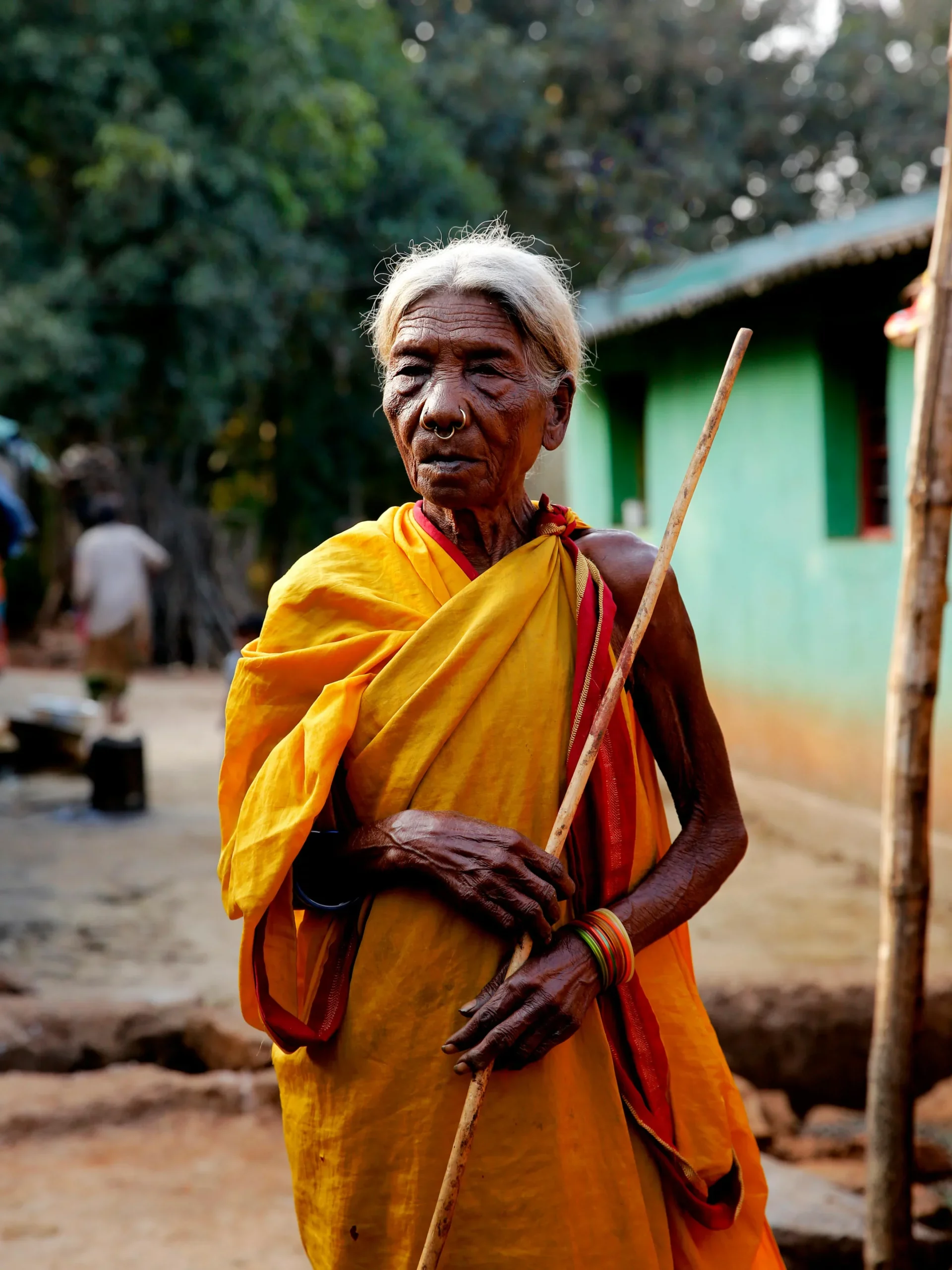
Dr. Binayak SenThe Paediatrician India Charged with Sedition
Dr. Binayak Sen spent three decades providing medical care to Adivasi communities in Chhattisgarh. In 2007, he was arrested on sedition charges under UAPA. In 2011, the Supreme Court granted bail amid a global petition signed by 22 Nobel laureates. His case is a window into India's conflict-zone health equity crisis.
In December 2007, police in Chhattisgarh arrested Dr. Binayak Sen, a paediatrician who had spent three decades providing medical care to Adivasi communities in some of India’s most medically underserved districts. The charge: sedition and providing material support to a Maoist organization. In 2010, a sessions court sentenced him to life in prison. In 2011, the Supreme Court granted him bail. In 2011, a global petition signed by over 22 Nobel laureates called his imprisonment a threat to human rights defenders everywhere. His case - whatever one thinks of the legal arguments - is a window into the structural tension between state security logic and the delivery of basic health services in India’s conflict zones.
Who Binayak Sen Is: The Doctor Before the Case
Binayak Sen was born in 1950 in West Bengal. He completed his MBBS and MD (Paediatrics) from the Christian Medical College, Vellore - one of India’s premier medical institutions. CMC Vellore has a tradition of producing doctors who go on to serve in rural and tribal areas; Sen is among its most prominent alumni.
After his training, Sen joined the Shaheed Hospital in Dalli-Rajhara, Chhattisgarh, a hospital established by the trade union of iron ore miners in the region. This was not a standard career choice for a specialist with Sen’s qualifications. Dalli-Rajhara is a small industrial town in what was then Madhya Pradesh (Chhattisgarh was carved out as a separate state in 2000). The hospital served miners, their families, and Adivasi communities in surrounding forest areas.
Over the following decades, Sen developed expertise not only in paediatrics but in the public health challenges specific to Chhattisgarh’s tribal communities: malnutrition (the state has consistently ranked among the worst in India on child stunting indicators), sickle cell anaemia (which disproportionately affects Adivasi populations), and malaria. He also became active in the People’s Union for Civil Liberties (PUCL), serving as its Chhattisgarh vice president.
The Chhattisgarh Context: Salwa Judum and Its Aftermath
To understand Sen’s case, one must understand Chhattisgarh’s context in 2005-2007. The state was the epicentre of the Maoist (Naxalite) insurgency that, at its peak, affected over 90 districts across India. The insurgency was rooted in genuine grievances - land dispossession, lack of development in forest areas, and the failure of legal institutions to reach Adivasi communities - combined with a Maoist political organization that used violence as a strategy.
In 2005, the Chhattisgarh government launched the Salwa Judum, a state-organized militia that recruited Adivasi youth to fight against Maoists in their own communities. The Supreme Court of India, in 2011, ruled that Salwa Judum was unconstitutional - that the state could not arm civilians and deploy them against other civilians. The court’s ruling (Nandini Sundar vs State of Chhattisgarh) described Salwa Judum as a violation of Articles 14 and 21 (equality and right to life) of the Constitution.
It was in this environment - a state running an unconstitutional militia, a Maoist insurgency using violence, and Adivasi communities caught between them - that Binayak Sen was working as a doctor and civil liberties advocate. He had visited Narayan Sanyal, a Maoist leader imprisoned in Raipur Central Jail, multiple times. This became the basis of the charge that he was providing material support to a Maoist organization.
The Legal Case: What the Courts Found
Sen was arrested in May 2007 and charged under the Chhattisgarh Special Public Security Act and the Unlawful Activities (Prevention) Act (UAPA). The sessions court in Raipur, in December 2010, found him guilty and sentenced him to life imprisonment.
In April 2011, the Supreme Court’s vacation bench granted him bail, with Justice H.S. Bedi stating: “We are not prima facie satisfied that this is a case where the conditions for bail have been made out under the UAPA… but there are other circumstances.” The court noted that Sen had no criminal history, was a respected medical professional, and had been in jail for three years. The Supreme Court did not rule on the merits of his conviction at that stage; the bail order was procedural, not an acquittal.
The appeal against his conviction remains formally pending in the Chhattisgarh High Court. Legal observers and civil liberties organizations, including Amnesty International and Human Rights Watch, have maintained that the prosecution’s evidence was inadequate to establish the statutory criteria for conviction under UAPA. The prosecution’s case rested heavily on letters found in Sanyal’s possession and Sen’s visits to the jail, which the defence argued were permitted under applicable prison rules.
“The imprisonment of Binayak Sen strikes at the heart of the right to dissent, which is fundamental to any democracy. A doctor who works with the poorest communities and speaks for civil liberties is precisely the kind of person whose freedom should be protected, not threatened.”
The Health Data: What Chhattisgarh’s Adivasi Communities Actually Need
Separate from the legal dispute, the public health reality that Sen spent his career addressing is documented by primary sources and is unambiguous.
According to the National Family Health Survey (NFHS-5, 2019-21), Chhattisgarh had a child stunting rate of 31.3% and a severe acute malnutrition rate of 11.5% - both significantly above the national average. Sickle cell disease, which Sen studied extensively, affects approximately 20-30% of Adivasi populations in Chhattisgarh (Indian Council of Medical Research). The Maternal Mortality Ratio in Chhattisgarh was 137 per 100,000 live births in the 2018-20 SRS data, compared to a national average of 97 - one of the worst rates among major Indian states.
These are not abstract statistics. They reflect a population that has been systematically underserved by public health infrastructure for decades - a population for which doctors like Sen are among the only qualified medical professionals accessible. Rural Chhattisgarh has approximately 0.3 doctors per 1,000 population, far below the WHO benchmark of 1 per 1,000. The comparison with Costa Rica, a middle-income country that achieved near-universal health coverage with a doctor density of 1.3 per 1,000, illustrates how far India’s conflict-zone districts are from functional primary health care.
The Broader Pattern: Human Rights Defenders and Health Workers in Conflict Zones
Sen’s case is not unique in India’s conflict zone districts, though it is unusually high-profile. Médecins Sans Frontières (Doctors Without Borders) documented multiple cases between 2010 and 2015 of health workers and medical volunteers in Chhattisgarh and Jharkhand being detained by security forces or accused of Maoist sympathies for treating patients who were suspected insurgents. The principle that medical care is neutral - that doctors must treat patients regardless of their alleged politics - is foundational to international humanitarian law but is operationally difficult to enforce in counterinsurgency environments.
Rwanda, which rebuilt its health system after 1994’s catastrophic violence, offers a useful contrast on what is achievable when state and citizens commit to health equity in post-conflict settings. Rwanda’s community health worker (CHW) program, which deploys 45,000 elected village-level health workers, reduced child mortality from 196 per 1,000 live births in 2000 to 36 per 1,000 in 2022 (World Bank). The CHW model works because community health workers are from the communities they serve and have legitimacy that external medical workers cannot replicate. India’s ASHA worker program is structurally similar but funded at a fraction of Rwanda’s investment per worker.
What Every Indian Can Do: Five Levels of Citizen Action
- Personal level: Support organizations that deploy health workers in tribal and conflict-affected districts. Jan Swasthya Abhiyan (People’s Health Movement), Community Health Resource Centre, and Ekjut (Jharkhand) are NGOs that train community health workers in underserved districts and have documented impact on maternal and child health outcomes. Donating to or volunteering with these organizations addresses the same health equity gap that Sen’s career was focused on.
- RWA/building level: If your housing community includes medical professionals, encourage them to volunteer with rural health camps in tribal districts. Tribal health camps organized by CMC Vellore, AIIMS, and state government medical colleges do operate in underserved areas - connection with a resident doctor can get information on how to participate.
- Ward/local body level: Monitor the doctor vacancy rates in your district’s government health facilities. File RTI applications with your district collector or Chief Medical Officer asking: how many MBBS doctor positions are sanctioned versus filled in PHCs in your district? Post vacancy rates in tribal blocks are typically 40-70%. This data, once public, creates pressure to fill posts.
- City/state level: Advocate for state governments to enforce PESA (Panchayats Extension to Scheduled Areas Act, 1996), which gives gram sabhas in Schedule V areas authority over minor forest produce, local plans, and social sector programs. PESA-compliant governance would give Adivasi communities more say over how health budgets are spent in their areas - reducing the dependence on individual champions like Sen to advocate on their behalf.
- National level: Support a national Sickle Cell Mission that goes beyond the announcements made in Budget 2023. Ask your MP to raise in the national legislature: how many sickle cell screening camps have been conducted in each tribal district? What is the treatment protocol and are medicines (hydroxyurea) accessible in tribal PHCs? The government announced a national elimination target by 2047 - citizens should demand accountability on the annual milestones.
The Structural Lesson
Binayak Sen’s case does not lend itself to simple moral conclusions - the legal proceedings are formally unresolved, and the security context in which the arrests occurred was genuinely dangerous. What is not in dispute is the public health need that Sen spent his career addressing, the documented effectiveness of the civil liberties frameworks he advocated for through PUCL, and the chilling effect that cases like his have on doctors and health workers considering service in conflict-zone districts.
India cannot build functional primary health care in its underserved tribal districts if the doctors willing to work there face legal risk for their advocacy. The two things are not separable. Health equity in Chhattisgarh, Jharkhand, and Odisha requires doctors, community health workers, and civil society organizations working together - and all of them must be able to operate without the threat of sedition charges for treating patients whose political sympathies are contested. Rwanda learned this after its own catastrophe. India needs to learn it without one.
Explore More on India’s Health and Governance Stories
India’s public health infrastructure challenges are interconnected with governance and accountability. Read about why rural Indians pay more per hospital visit than Swedes and the other Forgotten Heroes who shaped India’s civic landscape.
What you can do
- Share the evidenceSend this to one person who should know about governance.Share on WhatsApp
- Give an afternoonTeach, mentor, clean up, or lend your professional skills.Ways to volunteer
- Tell us what's missingKnow a story, a fact we got wrong, or a solution worth spotlighting?Suggest a story
Politically neutral. Every claim sourced. Report a correction.

No comments yet