Aruna RoyThe IAS Officer Who Quit to Build the RTI Act
Aruna Roy resigned from the IAS in 1974, founded the MKSS in Rajasthan, and spent 30 years building the citizen movement that produced India's Right to Information Act and shaped MGNREGA's design. A forgotten architect of India's accountability infrastructure.
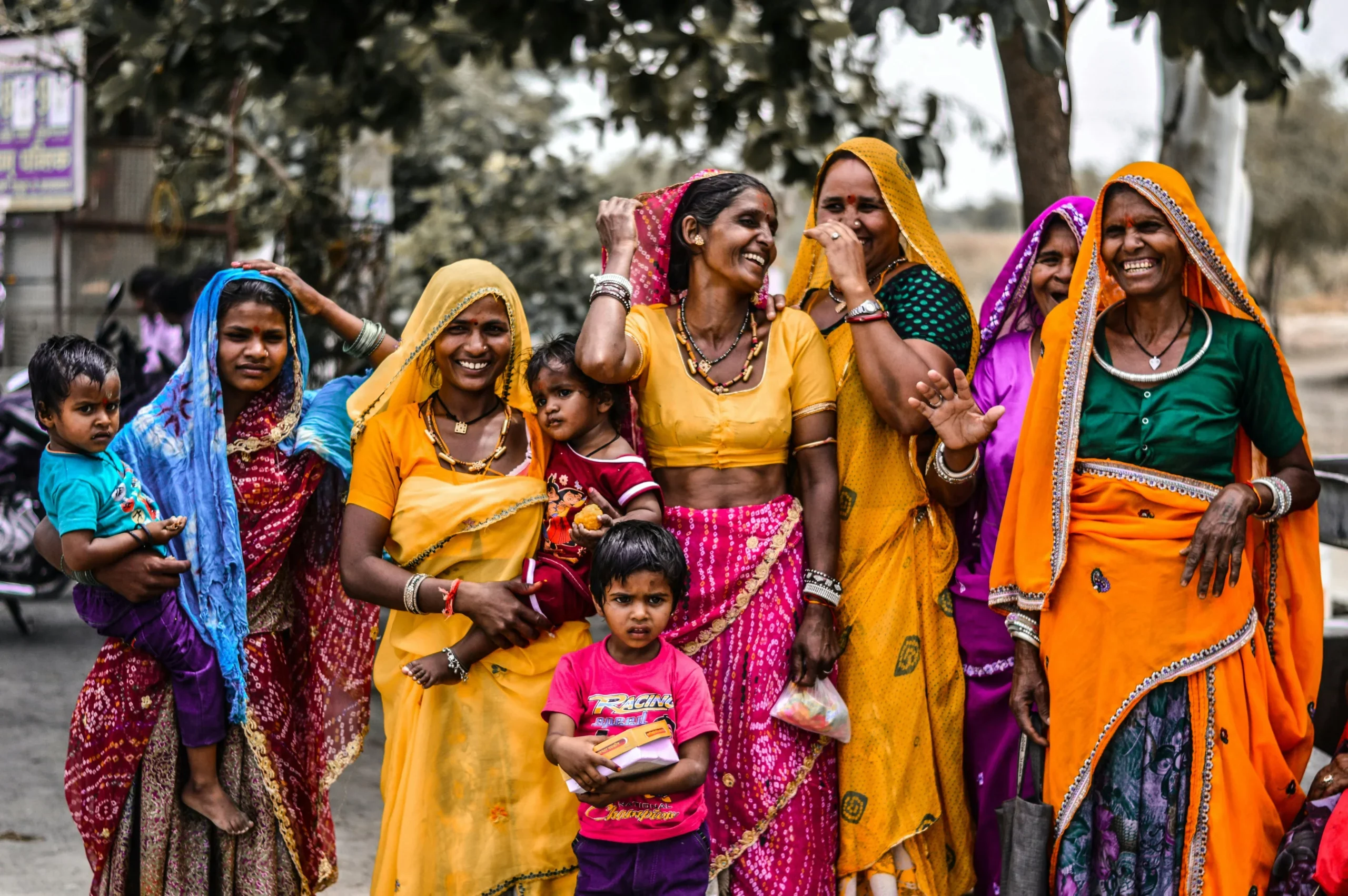
In 1974, a young IAS officer posted to Ajmer, Rajasthan, handed in her papers and resigned from one of India’s most coveted career tracks. Aruna Roy had been a civil servant for six years. She walked away not in defeat but in deliberate choice - choosing to live among the rural poor of Rajasthan rather than administer them from a distance. What followed was one of the most consequential acts of citizen institution-building in independent India: the creation of the Right to Information Act.
From the IAS to the Villages of Rajasthan
Aruna Roy was born in 1946 into a middle-class Tamil Brahmin family in Delhi. She studied at Delhi’s Indraprastha College, took her MA from Madras, and joined the Indian Administrative Service in 1968 - part of the batch that entered the IAS at the height of the post-Independence confidence in the state as an agent of development.
By 1974, that confidence was fraying. Roy found herself administering welfare programs in Ajmer whose benefits rarely reached the intended recipients. The bureaucratic distance between policy and people was not incidental - it was structural. Forms required literacy. Offices were inaccessible. Records were hidden. The poor had no mechanism to demand accountability from a system that existed, on paper, to serve them.
Roy resigned, joined the Social Work and Research Centre (Barefoot College) in Tilonia for several years, and then in 1987, with Nikhil Dey and Shankar Singh, founded the Mazdoor Kisan Shakti Sangathan (MKSS) - the Workers and Farmers Power Organization - in the Rajsamand district of Rajasthan.
MKSS and the Jan Sunwai: Inventing the Public Hearing
The MKSS’s foundational insight was elegant: if rural workers doing drought-relief labor were being paid less than they were owed, or if names of fake workers were appearing on government muster rolls, the only way to prove it was to obtain copies of the actual government records. The muster rolls, vouchers, and material purchase records for public works were government documents. They should, in principle, be accessible to citizens. In practice, government officials routinely denied requests for copies, citing no law but simply bureaucratic inertia and the assumption that ordinary citizens had no right to examine official documents.
Between 1990 and 1994, the MKSS began conducting jan sunwais - public hearings - in Rajasthan villages. Citizens would present evidence of corruption in government works: the road that was never built, the wages that were paid on paper but not in hand, the materials whose purchase was logged but never delivered. Government officials were invited to respond. The jan sunwai was not a court - it had no enforcement power - but it created a public record and a form of social accountability that the bureaucracy had no framework to resist.
The MKSS demanded two things: copies of government records for all public works, and the legal right to obtain them. The second demand - the right to information - became the organizing principle for a national campaign.
“The right to know is the beginning of all rights. Without knowing what is being done in our name, with our money, how can we hold the state accountable?”
The Beawar Dharna and the National Campaign
In 1996, the MKSS held a 40-day dharna in Beawar, Rajasthan, demanding that the state government pass a right to information law. The Rajasthan government, under pressure, passed a limited state RTI Act in 2000. But Roy and the National Campaign for People’s Right to Information (NCPRI), which she had helped found, understood that a state-level law was insufficient. Corruption in public works, welfare schemes, and government employment was a national problem that required a national solution.
The comparison with other countries shows how unusual India’s grassroots-driven RTI was. Sweden has had freedom of information legislation since 1766 - the oldest in the world. The United States passed the Freedom of Information Act in 1966. The UK’s Freedom of Information Act came into force in 2005, the same year as India’s. But most countries’ information access laws were enacted through legislative processes driven by legal reformers and civil society lawyers. India’s RTI Act emerged from a mass movement of rural workers demanding muster roll copies in Rajasthan villages.
Roy testified before parliamentary committees, negotiated with successive governments, and built a coalition that included lawyers, journalists, economists, and civil servants alongside the rural poor. The resulting Right to Information Act 2005, which came into force on October 12, 2005, is widely recognized as among the strongest information access laws globally - it covers all public authorities, applies to private bodies that receive substantial government funding, and creates a tiered appellate structure with the Central Information Commission as the final arbiter.
NREGA: Designing a Guarantee, Not Just a Scheme
Aruna Roy’s contribution to India’s governance architecture did not end with RTI. When the ruling coalition formed the National Advisory Council in 2004, Roy was appointed to it. The NAC, chaired by Sonia Gandhi, was the body that drove the design of several transformative social sector programs.
The Mahatma Gandhi National Rural Employment Guarantee Act (MGNREGA), passed in 2005, bears the conceptual fingerprints of Roy and the MKSS’s work. The Act guarantees - not promises, but guarantees as a legal right - 100 days of employment per year to every rural household whose adult members volunteer to do unskilled manual work. This legal rights-based framing (as opposed to the scheme-based framing of previous employment programs) was central to the MKSS’s philosophy and to Roy’s input into NAC deliberations.
MGNREGA’s built-in transparency provisions - the social audit mechanism, the requirement that muster rolls be publicly displayed and read out in gram sabhas - are directly derived from the MKSS’s jan sunwai methodology. This is an unusual case where an activist organization’s ground-level practice was written into national legislation as a mandatory accountability mechanism.
The World Bank’s 2014 evaluation of MGNREGA found that it had supported consumption in drought years, reduced distress migration, and contributed to rural wage convergence. The NSS 68th round (2011-12) found that MGNREGA employment reached the poorest quintile households at higher rates than most targeted welfare schemes. These outcomes were not accidental - they reflect design choices about rights, transparency, and accountability that came from 15 years of MKSS practice.
RTI at 20: What the Data Shows
Twenty years after the RTI Act’s passage, the data on its use is both encouraging and sobering. According to the Central Information Commission’s annual reports, Indian citizens filed over 20 lakh (2 million) RTI applications in 2022-23. The RTI has been used to expose irregularities in public distribution systems, demand school enrollment records, obtain government tender documents, and track land acquisition processes.
But the RTI’s institutional infrastructure has eroded. The Central Information Commission has faced prolonged vacancies - in 2022, it operated with fewer than half its mandated complement of Information Commissioners, creating backlogs of over 3 lakh pending appeals (Satark Nagrik Sangathan, RTI Assessment 2022). Several states have Information Commissions that are effectively non-functional due to vacancy and pendency. The Whistle Blowers Protection Act, which was meant to protect RTI activists from retaliation, has not been notified into operation.
The gap between the RTI Act as designed and the RTI Act as administered is precisely the kind of gap that Roy’s MKSS model was designed to expose. The mechanism exists. The will to use it effectively must come from citizens.
What Every Indian Can Do: Five Levels of Citizen Action
- Personal level: File at least one RTI application this year. The process is straightforward: write to the Public Information Officer of any central government department (application fee of Rs 10 by postal order or demand draft, or online through the RTI Online Portal at rtionline.gov.in). Start with something concrete: your area’s road maintenance records, the status of a welfare scheme application, or the attendance records of a government school or health centre in your locality.
- RWA/building level: Organize an RTI literacy session in your housing society. The RTI Act covers municipal corporations, water boards, and local bodies - all the institutions that directly affect your daily infrastructure. Train 5 people in your building or locality to file RTI applications on issues that affect the community (water quality test records, municipal budget expenditure on your ward, status of local development works).
- Ward/local body level: Demand that your local body hold social audits of public works expenditure. MGNREGA’s social audit mechanism is mandatory by law. Ask your gram panchayat or urban local body representative whether social audits are being conducted and when the next one is scheduled. Attend social audits when they are announced - public presence matters.
- City/state level: Monitor your State Information Commission’s annual report (most are published on the commission’s website). Check the pendency figures - how many RTI appeals are waiting? How many vacancies exist among Information Commissioners? Write to your state’s Chief Minister’s office demanding that vacancies be filled within 30 days, citing the Supreme Court’s ruling in Anjali Bhardwaj vs Union of India (2019) that vacancies in Information Commissions are unconstitutional.
- National level: Support the operationalization of the Whistle Blowers Protection Act. File RTI applications with the Ministry of Personnel asking about the timeline for notifying the Act into operation. Support organizations like Satark Nagrik Sangathan and the National Campaign for People’s Right to Information that track CIC appointments and pendency systematically. The RTI’s effectiveness depends on the institutional infrastructure that Roy and others built - that infrastructure must be maintained.
The Architecture of Accountability
Aruna Roy’s career illustrates something specific about how institutional change happens in democratic India. The RTI Act was not passed because legislators woke up one morning committed to transparency. It was passed because a movement of rural workers, organized over 15 years, made the political cost of not passing it too high. The Beawar dharna, the jan sunwais, the NCPRI coalition - these created the conditions in which lawmakers could act.
The lesson for 2026 is that India’s governance architecture has more levers than most citizens realize. The RTI Act, MGNREGA’s social audit requirement, the gram sabha’s constitutional powers under Panchayati Raj - these are real mechanisms. They were put there by people like Roy, after years of struggle. They work when citizens use them. They atrophy when citizens don’t.
Explore More from the Forgotten Heroes Series
India’s governance architecture was built by people most Indians don’t know. Explore the full Forgotten Heroes series to understand who built the institutions that still shape Indian life. Also read about whether MGNREGA actually works – the 2026 verdict on one of Roy’s signature contributions.
What you can do
- Share the evidenceSend this to one person who should know about governance.Share on WhatsApp
- Give an afternoonTeach, mentor, clean up, or lend your professional skills.Ways to volunteer
- Tell us what's missingKnow a story, a fact we got wrong, or a solution worth spotlighting?Suggest a story
Politically neutral. Every claim sourced. Report a correction.

No comments yet