India's Sports Stories: Hockey - How a Tribal Heartland and One State's Money Brought Back the Olympic Podium
Indian men's hockey won Olympic bronze in 2021 and 2024 after 41 years without a medal. What Odisha's sponsorship, Sundargarh's tribal talent and long-term planning changed, and what other sports can copy.
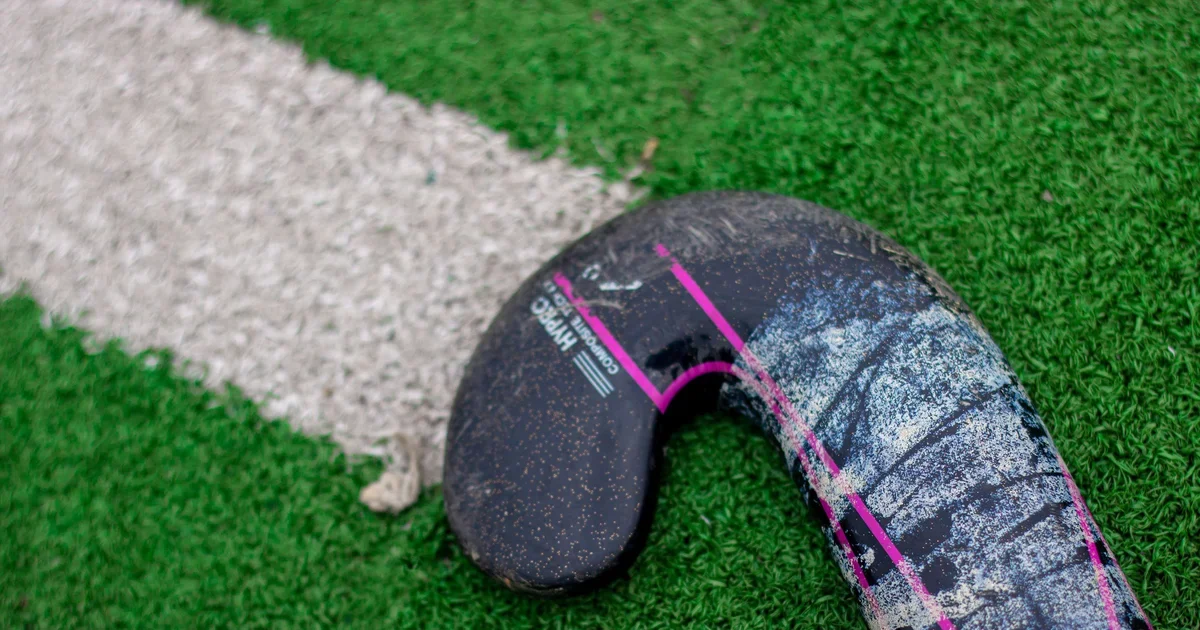
Photo by Writchid Snipes on Pexels
In this story
On 5 August 2021, the Indian men’s hockey team beat Germany 5-4 in the bronze medal match in Tokyo. It was India’s first Olympic hockey medal in 41 years. On 8 August 2024, in Paris, the team beat Spain 2-1 to win bronze again, the first time since 1972 that India has won hockey medals at two Games in a row. Between those matches sits a quieter story: a state government that agreed to pay for the national teams, a tribal district that keeps producing players, and a decision to plan in decades instead of seasons.
This post looks at what changed in Indian hockey, how much of it can be tied to evidence, and what other Indian sports could take from it. It also covers the parts that are not working, because a medal table can hide them.
How far had Indian hockey fallen?
The scale of the fall explains why the medals mattered. According to the record of the Indian men’s national team, India won Olympic gold in 1928, 1932, 1936, 1948, 1952, 1956, 1964 and 1980, silver in 1960, and bronze in 1968 and 1972. That is eight golds and eleven medals in all up to 1980.
Then came the long drought. India won no Olympic hockey medal from 1984 to 2016. In 2008 the men’s team failed to qualify for the Beijing Games, the first time India had been absent from Olympic hockey. A common explanation is that artificial turf, which arrived at the Olympics in 1976, favoured countries that could afford it and play on it every week, and Indian hockey lost ground. The 41-year gap that the Tokyo bronze ended is the gap between the Moscow Games of 1980 and the Tokyo Games.
What happened in Tokyo and Paris?
The results are simple to state.
Games | Result | Medal match |
|---|---|---|
Tokyo 2020 (held in 2021), men | Bronze | India 5, Germany 4 on 5 August |
Tokyo 2020, women | Fourth place | First semi-final for the women’s team at an Olympics, as noted by Odisha’s chief secretary |
Paris 2024, men | Bronze | India 2, Spain 1 on 8 August |
Paris 2024, women | Did not qualify | Finished fourth at the Olympic qualifier in Ranchi |
The men’s medals are verified in Wikipedia’s reports of the two tournaments. The women’s record is a reminder that one team’s medals do not mean the whole system is healthy. The women’s team has won the Asian Champions Trophy in 2023 and 2024, but missing the Olympics in Paris was a setback.
What has Odisha done?
Odisha became the official sponsor of the Indian men’s and women’s hockey teams in 2018. The sponsor is the state’s mining company, Odisha Mining Corporation (OMC), which signed an agreement with Hockey India for five years, 2018 to 2023. The state cabinet then approved a further 10 years. As reported by The Sentinel, OMC committed to sponsor the teams from 1 February 2023 to 31 January 2033, with a total of Rs 434.12 crore, excluding taxes, to be paid to Hockey India. That works out to about Rs 43 crore a year, by our arithmetic.
Two features of the deal are unusual in Indian sport.
- Length. A 10-year commitment lets coaches and administrators plan camps, tours and talent pipelines without fearing a sponsor’s exit after one bad tournament. The chief minister announced the extension after the Tokyo Olympics, before the earlier agreement had run out.
- Both teams. The money supports the men’s and the women’s team. Women’s hockey is among the least commercially attractive sports in the country, and it is usually first to lose support.
The state’s role goes beyond cheques. Odisha hosted the men’s Hockey World Cup in 2018 at the Kalinga Stadium in Bhubaneswar, and again in 2023, split between Kalinga and the new Birsa Munda Stadium in Rourkela, a stadium of about 20,000 seats named after the tribal freedom fighter. As Governance Now reported, the state is also laying artificial turf in all 17 blocks of Sundargarh district. Odisha’s chief secretary said when the extension was approved that the state’s partnership with Hockey India had played a significant part in the revival of the sport in India.
A caution is in order. That statement is the state’s own account. No published study separates Odisha’s contribution from everything else that changed in Indian hockey over the same years, including coaching staff, sports science, international match exposure and the players’ own work. What the evidence supports is narrower: Odisha provided money, grounds and a stable base, and the results arrived during the same period.
Why does Sundargarh keep producing players?
The answer is older than the sponsorship. Sundargarh, in the north-west of Odisha, is a tribal-majority district. Down To Earth reports that scheduled tribes make up more than half of its people, and that hockey was introduced by European Christian missionaries in the mid-19th century in what are now the blocks of Balishankara, Biramitrapur and Gurundia. Tribal villagers already played a stick-and-ball game, and the new sport took hold.
It has since become part of social life. Most villages have their own ground, and tournaments are held on social and cultural occasions through the year, once with goats and chickens as trophies. Children dribble small stones with sticks on the way to school. Former Olympian Lazarus Barla told the reporter that hockey is an extension of a tribal household’s life and that his first stick was cut from Kendu wood by his father.
The results are specific. Governance Now says the district has produced over a hundred internationals, senior and junior, men and women. Saunamara village in Balishankara block alone has given India Dilip Tirkey, who played three Olympics and later became president of Hockey India, Amit Rohidas, a member of the Tokyo bronze team and a vice captain, women’s captain Subhadra Pradhan and Dipsan Tirkey. Lulkidihi village has produced Deep Grace Ekka, who played two Olympics and was the women’s vice captain, and the brothers Prabodh and Ignace Tirkey.
What the state added
The government’s role was to turn a village passion into a pipeline. An Economic and Political Weekly note records that the State Sports Hostel at Panposh and the Steel Authority of India Hockey Academy in Rourkela were set up in 1985 and 1992 to nurture hockey in Sundargarh, and that the state committed to at least one hockey school club in each of its 30 districts. The Odisha Naval Tata Hockey High Performance Centre in Bhubaneswar adds coaching and sports science for elite players.
The pattern is clear. Talent was there. What was missing was ground, coaching, a place to stay and a path to the national squad, and the state supplied these.
The cost of an uneven path
Down To Earth also records the other side. Poverty has pushed many promising players out of the game as they grew older, and there are national-level junior players, men and women, who ended up selling vegetables or doing construction work in big cities. A sponsorship for the national teams does not by itself keep a 17-year-old in a village on the pitch. The district and state systems have to do that.
How does a village game become a pipeline?
The Sundargarh story has four stages, and each one is documented by local reporting.
Stage one: the village tournament
Before any state programme, there were village tournaments. Governance Now describes sticks of bamboo or Kendu branches, balls made from a wild fruit similar to custard apple, and even a lump of heated polythene and charcoal shaped by hand. Tournaments between villages had a chicken as the trophy in earlier decades. Today the winners of the famous Khasi cup take home a garlanded goat and hold a feast for the whole village. Under-14 tournaments award chocolates. Every international from the district, the report says, played in these local tournaments early in their career, and the players treat village pride as worth more than the prize.
Missionaries gave the game structure. Premananda Panda, a former professor of anthropology at Sambalpur University, told Down To Earth that hockey proved an effective way to draw tribal families to the school, hospital and church, and that the missionaries stressed education, nutrition and discipline along with sport. Sunil Pattnayak, a local chronicler who has worked with many of the district’s players, argues that this mix may have helped make Sundargarh’s players different from those in other tribal areas of the state. That is his opinion, not a measured finding, but it fits the pattern of schools and sport arriving together.
Stage two: the first international
Governance Now reports that the district produced its first international player, Peter Tirkey, in 1982, when he played in the second Junior World Cup in Kuala Lumpur. Down To Earth dates national attention to the mid-seventies, when the defender Michael Kindo, born in Jharkhand, settled in Rourkela and helped groom new talent. A first international is a hinge: it shows every child in a village that the road from the village ground to the national team exists.
Stage three: hostels and turf
In the 1980s the state government set up sports hostels in several districts, including Panposh, where selected athletes trained with professional coaches and, in time, on artificial turf. Governance Now says that over 60 players from the Panposh hostel have gone on to play for India. The first coach of Odisha hockey, Sylvester Toppo, has groomed scores of players, at least twenty of whom represented the country, including Lazarus Barla, Namita Toppo and Lilima Minz.
Stage four: a job at the end
The fourth stage is the one most sports systems miss. Governance Now reports that around 1,200 to 1,400 hockey players from the district have found employment in state government, central government departments, public sector companies and private firms. For a family in a tribal village, a sport that leads to a salaried job is an anchor, which is why the game has such a hold on the district. It is also why the loss of players to poverty, noted earlier, matters: where the job route breaks, so does the pipeline.
What did the World Cups add?
The 2018 and 2023 World Cups gave Odisha two things beyond matches. The first was infrastructure that stays: Down To Earth notes that before the 2023 event the state built the Birsa Munda International Hockey Stadium and 17 artificial turfs in the 17 blocks of Sundargarh. The second was attention. A player in a village that now has a turf, a stadium within driving distance and a national team that wins medals has a reason to believe the effort is worth it. Michael Kindo once said, “Give me 11 tribal youth of Sundargarh and I can beat the Indian team”. Down To Earth asks whether the new turfs will make that boast a reality, and the question is still open.
How should success be measured, beyond medals?
Medals are the last link in a long chain, and they arrive years after the decisions that produced them. If Odisha’s partnership is to be judged fairly, and copied by other states, it needs measures that show up sooner. The record above suggests five, each tied to a gap named in the reporting.
- Women’s qualification. The women’s team missing Paris is the clearest sign that the system has not yet matched the men’s. A women’s squad that qualifies for the next Games would show the sponsorship working for both teams.
- Where the players come from. Count the districts and states that supply national junior players. If the list stays narrow, the pipeline is a regional one, however good.
- Turf in use. The number of working artificial pitches, and the hours children actually play on them, say more than the number laid. A pitch locked behind a gate does little.
- Retention after 18. Down To Earth describes junior internationals who left the game for vegetable stalls and construction sites. The share of juniors who are still playing at 22 is a direct test of whether the pathway holds.
- Jobs and scholarships. If 1,200 to 1,400 players from one district have found employment through the sport, the next question is how many of the next generation can do the same, and in which sectors.
None of these needs new data systems. Hockey India, the Odisha sports department and the High Performance Centre already hold most of the numbers. Publishing them once a year, with the same definitions each time, would let the public see whether the revival is deepening or only the medal count is rising.
What are the gaps in the revival?
- The women’s side is behind. The women missed Paris after finishing fourth in the qualifier. The sponsorship covers them, yet the squad’s depth and the league above the junior level are thinner than the men’s.
- One state carries a lot. Odisha’s money, stadiums and academies are doing work that, in many countries, a federation or a national league does. If the state’s priorities change after 2033, or earlier, the system will be exposed.
- Medals are a thin base. Two bronze medals is a recovery, not a return to the gold-medal years. The 1928 to 1980 record includes eight golds.
- Dropouts at the village level. Down To Earth’s reporting shows that without livelihood options, players still leave the game.
- Turf is expensive. Artificial pitches need maintenance and replacement. Laying them in all 17 blocks of a district is a good start, and keeping them in playable condition is a recurring cost.
- Other states are absent. Hockey grounds, hostels and coaches are not spread evenly across India’s states, so the national team draws from a narrow base.
What can other sports learn?
The hockey story offers a few lessons that apply well beyond the sport. Each is tied to something in the record.
Lesson | What hockey shows |
|---|---|
Commit for a decade, not a season | Odisha’s 10-year, Rs 434.12 crore extension, announced before the first deal ended |
Fund the women’s team in the same contract | Both national teams are covered under the sponsorship |
Start where the sport already lives | Sundargarh’s tribal villages had played for generations before any state programme arrived |
Build the full pipeline | Village grounds, hostels, an academy, a high performance centre and a path to the national team |
Use big events to build facilities | Two World Cups left the Kalinga and Birsa Munda stadiums in the state |
Plan for the person, not only the player | Players who leave the game for lack of income show what a pipeline without a livelihood plan loses |
Other sports in the country are working on pieces of this. Our post on kabaddi’s journey from village courts to a league shows the commercial route, and our post on athletics from PT Usha to Neeraj Chopra shows what a generation of investment can do. The post on grassroots support for athletes, state by state gives the wider picture of how unevenly states support sport, and the revival of traditional sports covers kabaddi and kho-kho. Odisha is applying the same model to other sports: Deccan Herald reported that the state would sponsor the national kho-kho team for three years.
Chess offers a contrast. Our post on Gukesh becoming the youngest world chess champion shows a sport that grew from families, coaching academies and tournaments, with little stadium infrastructure. Hockey needs the ground, which is why state support matters more there.
How does this fit Odisha’s wider story?
Odisha has become known for building public systems around a problem, whether in disaster response or sport. Our post on how Odisha learned to evacuate before cyclones traces how a state with limited resources built an institution that saved lives. The hockey effort follows a similar logic: pick a goal, commit for years, build in the places where the problem is, and measure results. It is also a reminder that a single state’s priorities can move a national outcome, which is both a strength and a risk.
What can you do?
- Ask your school to play hockey. A hockey stick, a ball and a flat ground are enough to begin. Many schools have a ground and no hockey programme.
- Find your district’s sports hostel or academy. State sports departments run trials. Look for the next trial date and apply.
- Watch the women’s games. The women’s team plays fewer televised matches than the men. Viewing numbers and attendance are the evidence sponsors look at.
- Back local clubs. A district league, an inter-village tournament or a school team needs volunteers, referees and a water supply more than donations.
- Press your municipality for a public pitch. Ask your ward councillor whether public grounds are protected and whether a synthetic pitch is planned, and for a maintenance budget.
- Keep the player in the plan. If you run a business or a scheme, support jobs for young sportspeople. A part-time job or a scholarship can keep a promising player in the game.
Frequently asked questions
When did India last win Olympic hockey medals before 2021?
The last one was gold at Moscow in 1980. India then went without an Olympic hockey medal until the bronze at Tokyo in 2021.
How many Olympic medals has Indian men’s hockey won?
Thirteen in total: eight golds (1928, 1932, 1936, 1948, 1952, 1956, 1964, 1980), one silver (1960) and four bronzes (1968, 1972, 2021 and 2024).
Who sponsors the Indian hockey teams?
The Odisha government, through the Odisha Mining Corporation, has sponsored the men’s and women’s national teams since 2018. The current agreement runs to January 2033 and is worth Rs 434.12 crore.
Why is Sundargarh called the cradle of Indian hockey?
Because the tribal-majority district has produced over a hundred junior and senior internationals, and villages such as Saunamara and Lulkidihi have given India several Olympians.
Did the women’s team win a medal?
No. The women reached the semi-finals in Tokyo and finished fourth, and did not qualify for Paris 2024.
Can one state’s money explain the medals?
Not on its own. The evidence shows Odisha provided money, grounds and a stable base, but no study isolates its share from coaching, fitness science and match exposure.
The takeaway
Indian hockey’s recovery shows what patient, local, long-term backing can do when it meets a community that already loves a game. The sponsorship is the visible part. The village grounds, the hostels and the families in Sundargarh are the foundation. The next test is to extend that foundation to the women’s team, to more states and to the young player who has talent and no income.
Sources: Olympic results from Wikipedia’s tournament pages; The Sentinel (IANS) on the Odisha cabinet decision; Governance Now (January 2023); Down To Earth (January 2023); Deccan Herald.
What you can do
- Share the evidenceSend this to one person who should know about this issue.Share on WhatsApp
- Give an afternoonTeach, mentor, clean up, or lend your professional skills.Ways to volunteer
- Tell us what's missingKnow a story, a fact we got wrong, or a solution worth spotlighting?Suggest a story
Politically neutral. Every claim sourced. Report a correction.
No comments yet