Why Do 60% of Indian Graduates Remain Unemployable?
India produces about 10 million graduates a year, but employability surveys find many are not job-ready. This article explains the numbers and why education and the job market do not match.
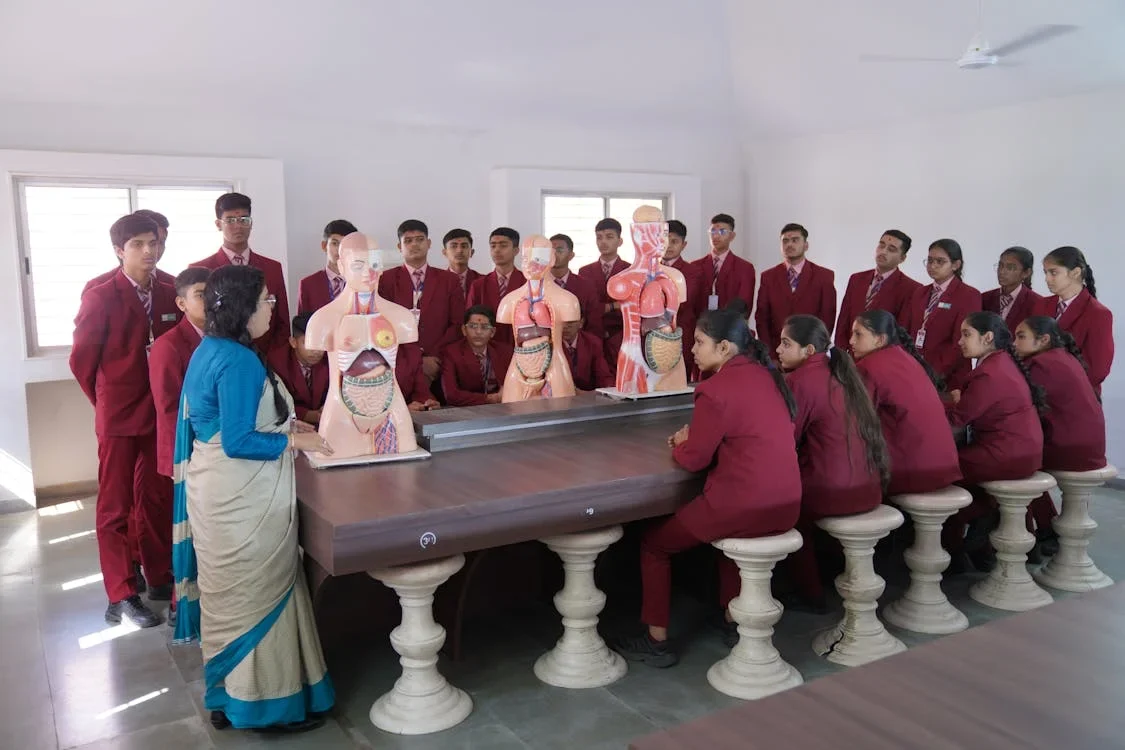
The Degree That Opens No Doors
Every year, India produces roughly 10 million graduates. They walk out of colleges with degrees in engineering, commerce, arts, and science. Their families have often spent their life savings on tuition, selling land, taking loans from moneylenders at 24% interest, mortgaging gold jewellery that was meant to be a daughter’s wedding dowry. Their resumes look complete on paper: a degree, a graduation date, a college name.
And then reality hits.
According to multiple employability surveys, including reports by Wheebox, Aspiring Minds (now SHL), and the India Skills Report, between 50% and 60% of Indian graduates are not employable in any knowledge-economy job. Not because they’re unintelligent. Not because they’re lazy. Because the education they received didn’t prepare them for the work that exists.
India has a degree production system. What it doesn’t have is an education system.
The consequences of this gap are not abstract. They are visible in every city, every town, every village in India. Young men with engineering degrees driving auto-rickshaws. Young women with commerce degrees working as domestic help. Families that went into debt for four years of college discovering that the degree their child earned has less market value than a six-month plumbing certification.
And the most painful version of this reality: every few months, a news story surfaces about thousands of graduates, including PhDs and MBAs, applying for jobs that require only a 5th-grade education. These stories are treated as oddities, shared on social media with disbelief. But they are not oddities. They are the logical outcome of a system that produces degrees without producing capability.
The Numbers Behind the Crisis
Metric | Figure | Source |
|---|---|---|
Annual graduates | ~10 million | AISHE 2024 |
Engineering graduates per year | ~1.5 million | AICTE |
Engineers employable in IT roles | ~20-25% | Aspiring Minds/SHL |
Overall graduate employability | ~45-50% | India Skills Report 2025 |
Youth unemployment (15-29) | ~16% | CMIE/PLFS |
Graduates willing to work for ₹10,000/month | Over 30% | Azim Premji University study |
Graduates applying for peon jobs | Thousands regularly | News reports (UP, Bihar, Rajasthan) |
Average engineering graduate starting salary (non-elite) | ₹18,000-25,000/month | Industry surveys |
The most telling statistic: in 2023, when the state of Uttar Pradesh advertised 62 posts for office peons (requiring only 5th grade education), it received over 93,000 applications, including from candidates with PhDs, engineering degrees, and MBAs. In 2015, Chhattisgarh received 75,000 applications for 30 peon positions. In Maharashtra, 17,000 graduates applied for 13 sweeper posts.
These numbers aren’t aberrations. They’re the system working exactly as it was built to work, producing credentials without competence, diplomas without skills, graduates without futures.
Something is deeply broken.
What’s Actually Wrong
1. A System Designed for Memorisation, Not Thinking
India’s higher education system, with notable exceptions like the IITs, IIMs, and a handful of top institutions, remains rooted in a 19th-century model designed by the British to produce clerks for the colonial administration. The model was never meant to produce thinkers, innovators, or problem-solvers. It was meant to produce literate, obedient workers who could follow instructions in English. The model served the British well. Independent India inherited it and, despite 75 years of self-governance, has barely changed it.
The system works like this: lectures, textbooks, rote memorisation, annual exams. Students are tested on their ability to reproduce information, not to analyse, create, or solve problems. A student who can recite a definition of photosynthesis scores well. A student who can design an experiment to improve agricultural yields, but can’t reproduce the textbook definition verbatim, fails.
In a world where AI can produce information on demand, the ability to memorise facts has zero market value. Employers need critical thinking, communication, teamwork, and problem-solving. The education system produces none of these at scale. An employer interviewing a graduate from a mid-tier engineering college will typically find someone who can recite sorting algorithms but cannot debug a simple programme, who can define “object-oriented programming” but cannot design a basic application, who has a degree in computer science but has never built anything.
The examination system reinforces this. Indian university exams are overwhelmingly written, timed, and fact-based. There are no oral examinations (which test communication), no project-based assessments (which test application), no peer-reviewed work (which tests collaboration). A student can graduate from most Indian universities without ever having spoken in front of a class, worked on a team project, or solved an open-ended problem.
2. The Quantity-Over-Quality Explosion
India went from 20 universities in 1947 to over 1,100 today, with 43,000+ colleges. The expansion was necessary, a growing population needed access to higher education. But the expansion happened without quality controls, driven primarily by the private sector’s discovery that education was enormously profitable.
The economics are simple: a private engineering college charges ₹1-4 lakh per year in fees. With 500-1,000 students, that’s ₹5-40 crore annually. Land is cheap in small-town India. Faculty can be hired cheaply (or not hired at all, many colleges list faculty on paper who don’t actually teach). Labs exist in brochures but not in buildings. Libraries have books but not the ones students need.
The numbers are stark:
- Many private engineering colleges have less than 30% faculty positions filled. The rest are listed as “visiting” or “adjunct”, phantom positions that satisfy regulatory requirements without providing actual teaching.
- Labs exist on paper but not in practice. AICTE requires certain laboratory equipment for accreditation. Colleges buy the equipment for inspections, then lock it away. Students graduate from “computer science” programmes having shared 10 computers among 60 students.
- Curriculum is updated every 5-10 years when industry changes every 6-12 months. A student entering an engineering programme in 2022 is studying a curriculum designed in 2017 for an industry that existed in 2015. By the time they graduate in 2026, the curriculum is a decade behind.
- Accreditation (NAAC) is self-reported and easily gamed. Colleges prepare for accreditation visits the way restaurants prepare for health inspections, everything looks perfect for the day, then returns to normal.
- 40% of engineering seats go unfilled. India has more engineering seats than students who want them. Colleges that can’t fill seats reduce admission standards to zero, anyone who can pay is admitted, regardless of aptitude or preparation.
The result: a degree from a top-20 institution means something, IIT, NIT, BITS, a few strong state universities. A degree from the other 42,980 colleges often means little to employers, who have learned through painful experience that the degree is not a reliable signal of competence.
3. The English Barrier
Most white-collar jobs in India require English proficiency. But most students in non-elite colleges were educated in their state language through school, Hindi, Tamil, Telugu, Bengali, Marathi. They arrive at college with textbooks in English they can barely read, taught by professors whose own English is limited, in classrooms where the working language switches unpredictably between English and the regional language.
This isn’t about intelligence. It’s about a system that uses language as a filter rather than building genuine communication skills. The same student who can’t crack an English interview could be brilliant in Hindi, Tamil, or Bengali, but the job market doesn’t care. Corporate India operates in English. IT services companies, which are the largest employers of fresh engineers, require English for client communication. Even manufacturing companies use English for documentation.
The unfairness is compounded by class. Students from English-medium schools (which charge higher fees, which require wealthier families) enter the job market with an enormous advantage that has nothing to do with their technical ability and everything to do with their parents’ income. A first-generation college graduate from a Hindi-medium background, no matter how brilliant, faces a language barrier that his English-medium competitor never encounters.
The solution is not to abandon English, it’s a global business language and India’s IT industry depends on it. The solution is to teach English as a skill, starting early and consistently, rather than using it as a gatekeeping mechanism that filters out talent based on economic background.
4. Industry-Academia Disconnect
In countries like Germany, South Korea, and Japan, industry partnerships with universities are structural, apprenticeships, co-op programmes, industry-designed curricula, joint research projects, industry professionals teaching courses. In Germany, the “dual education” system means students spend half their time in classrooms and half in workplaces, graduating with both a degree and years of practical experience.
In India, the connection barely exists outside elite institutions. Most college professors have never worked in industry. Most industry professionals have never taught in a college. The curriculum is designed by academics for academics, not by employers for future employees. Internships, when they exist, are often formalities: a student sits in a company for a month, does nothing meaningful, gets a certificate, and moves on.
Companies spend months retraining graduates before they’re productive. TCS, Infosys, and Wipro run what are essentially finishing schools for the engineers they hire, three to six months of intensive training to teach graduates what their colleges should have taught them. The cost of this retraining runs into thousands of crores annually. Smaller companies can’t afford this, so they don’t hire fresh graduates at all, creating a Catch-22: graduates can’t get experience because they have no skills, and they can’t get skills because no one will hire them.
A telling comparison: in South Korea, Samsung works directly with universities to design curricula, fund research, and train students. The result is that Korean engineering graduates are productive from day one. In India, the relationship between industry and academia is, at best, transactional (companies recruit from campuses) and at worst, non-existent.
5. Too Many Engineers, Too Few Skilled Workers
India produces 1.5 million engineers annually but has a critical shortage of plumbers, electricians, welders, CNC operators, paramedics, and healthcare technicians. The social stigma against vocational education means families push children toward degrees even when skill-based careers would pay better and provide more certainty.
A skilled welder in India earns ₹30,000-50,000 per month. A graduate from a mid-tier engineering college earns ₹18,000-25,000, if they get a job at all. A plumber with five years of experience earns more than most MBA graduates from non-elite institutions. But Indian families would rather their child be an unemployed engineer than a well-paid plumber, because the degree carries social prestige that the skill does not.
Germany has 3.5 million students in vocational training at any given time, and vocational qualifications carry genuine social respect, a master electrician is addressed as “Meister” and commands the same respect as a university graduate. India has fewer than 5 million students in its entire Industrial Training Institute (ITI) system, for a population 16 times larger than Germany’s. And ITI graduates carry a social stigma: they are seen as people who “couldn’t make it” academically, regardless of their actual skill or earning potential.
This stigma is not just a cultural problem, it’s an economic one. India’s construction industry alone needs millions of skilled workers it cannot find. Manufacturing companies import skilled technicians from other countries because India doesn’t produce enough of its own. The shortage of skilled healthcare workers means that India has one of the worst doctor-to-patient ratios in the world (1:1,511 versus the WHO recommendation of 1:1,000).
6. The Government Job Obsession
For millions of Indian graduates, the goal isn’t a career, it’s a sarkari naukri (government job). The appeal is understandable: job security, a pension, social status, and (in the case of state-level positions) the ability to stay in one’s home region. In a country where private-sector jobs are precarious, poorly paid, and carry no social security, a government job represents safety.
The result is a massive misallocation of human capital. Millions of graduates spend years, three, five, sometimes ten years, preparing for competitive exams (UPSC, SSC, state PSCs, railway exams, banking exams) that they have a less than 1% chance of passing. In Rajasthan’s Sikar district and Bihar’s Patna, entire neighbourhoods are populated by young men who do nothing but prepare for government exams, supported by their families, waiting for the next test date.
The opportunity cost is enormous. A 25-year-old who has spent five years preparing for the UPSC and failed has no work experience, no industry skills, and a degree that is now five years stale. They are, in many ways, worse off than they were at 20, older, less employable, and psychologically damaged by years of failure.
What’s Being Tried
India isn’t ignoring the problem. The National Education Policy (NEP) 2020 is the most ambitious reform attempt in decades:
- Multidisciplinary education, Students can combine subjects (engineering + humanities, science + arts) instead of being locked into rigid streams. This mirrors the liberal arts model that has produced some of the world’s most innovative thinkers.
- Skill integration, Vocational training embedded from school level, not treated as a separate “lesser” track. The NEP envisions a system where every student has both academic knowledge and practical skills.
- Multiple entry/exit, Students can leave after 1 year (certificate), 2 years (diploma), 3 years (degree), or 4 years (honours), instead of the all-or-nothing degree model that forces students to complete four years even when they’ve stopped learning.
- Academic Bank of Credits, Credits earned at one institution are portable to another, allowing students to learn from multiple sources rather than being locked into one college’s limitations.
- Research focus, The creation of the National Research Foundation, with a budget of ₹50,000 crore, is meant to drive original research across universities. India currently produces less than 3% of the world’s research output despite having 18% of the world’s population.
The Skill India Mission has trained over 14 million people since 2015. The startup ecosystem is creating new kinds of jobs that didn’t exist a decade ago. Programmes like PMKVY (Pradhan Mantri Kaushal Vikas Yojana) provide short-term skill training with industry certification.
But implementation lags behind ambition. The NEP was announced in 2020; by 2026, most universities have barely begun adopting its provisions. The Academic Bank of Credits exists but few institutions participate. Vocational integration at the school level has been piloted but not scaled. The gap between policy and practice, always India’s challenge, remains enormous.
What Needs to Change
The hard truth is that India cannot solve its employability crisis without confronting uncomfortable realities:
- Close colleges that don’t work. Thousands of colleges exist only because they charge fees, not because they educate. Genuine accreditation with consequences, including closure, is essential. The AICTE has begun this process, closing hundreds of engineering colleges in the last five years. It needs to accelerate, despite the political resistance from college owners who are often local politicians.
- Destroy the stigma around vocational education. A skilled welder earns more than most BA graduates. Until Indian families accept this, the degree-for-the-sake-of-degree cycle will continue. This requires cultural change, which is slow, but also policy signals: if the government treats vocational qualifications with the same prestige as academic degrees (in recruitment, in public communication, in pay scales), society will follow.
- Teach in languages students actually speak. Insisting on English-medium instruction for students who think in Hindi or Tamil doesn’t produce English speakers, it produces graduates who understand neither the content nor the language. Technical education in regional languages, combined with strong English language training as a separate skill, would produce graduates who are both technically competent and professionally communicative.
- Make industry partnerships mandatory, not optional. Every college should be required to have active industry partnerships with internship placements, industry-designed courses, and industry professionals on their faculty. No partnerships, no accreditation. This single reform would do more to improve employability than any curriculum change.
- Fund public universities properly. India spends 3.1% of GDP on education (the NEP target is 6%). State universities are starved of funds, and the students who can least afford private alternatives suffer the most. India’s public university system, which serves the vast majority of students, is chronically underfunded, understaffed, and under-resourced. The government’s focus on creating new IITs and IIMs (elite institutions that serve a tiny fraction of students) comes at the cost of improving the thousands of state universities that serve everyone else.
- Reform the examination system. Replace annual written exams with continuous assessment, project-based evaluation, practical demonstrations, and oral examinations. Test what matters: not what students can memorise, but what they can do.
The Question That Won’t Go Away
India is the world’s youngest major economy. Over 65% of the population is under 35. This should be India’s greatest advantage, a demographic dividend that powers decades of growth, the way it powered China’s rise in the 1990s and 2000s, and South Korea’s transformation in the 1970s and 1980s.
But a demographic dividend is only a dividend if the young population is skilled, productive, and employed. If it isn’t, the same demographic bulge becomes a demographic disaster, hundreds of millions of frustrated, underemployed young people with degrees that mean nothing and prospects that match. History shows what happens when large populations of educated, unemployed young people lose hope: social instability, political radicalisation, and economic stagnation.
India is not there yet. The startup ecosystem, the IT services industry, the gig economy, and the sheer entrepreneurial energy of India’s young people are absorbing some of the shock. But the gap between what the education system produces and what the economy needs grows wider every year.
India has the oldest university tradition in human history. It has produced some of the finest minds in mathematics, science, and technology. The talent exists. The intelligence exists. The ambition exists. What doesn’t exist, yet, is an education system worthy of the students it’s supposed to serve.
So the question remains: why do 60% of Indian graduates remain unemployable? And how much longer can India afford not to answer it?
This article is part of unite4india’s “Questions India Must Answer” series, exploring the hard questions facing the nation.
What's your answer?
We read every reply, and the strongest arguments on both sides shape the follow-up.
Tell us your viewWhat you can do
- Share the evidenceSend this to one person who should know about this issue.Share on WhatsApp
- Give an afternoonTeach, mentor, clean up, or lend your professional skills.Ways to volunteer
- Tell us what's missingKnow a story, a fact we got wrong, or a solution worth spotlighting?Suggest a story
Politically neutral. Every claim sourced. Report a correction.



No comments yet