India in 2030: 5 Questions the Next Decade Must Answer
By 2030 India will likely be the world's third-largest economy. Whether it is also a just, equitable, and environmentally viable country depends on five questions the country is avoiding answering clearly.
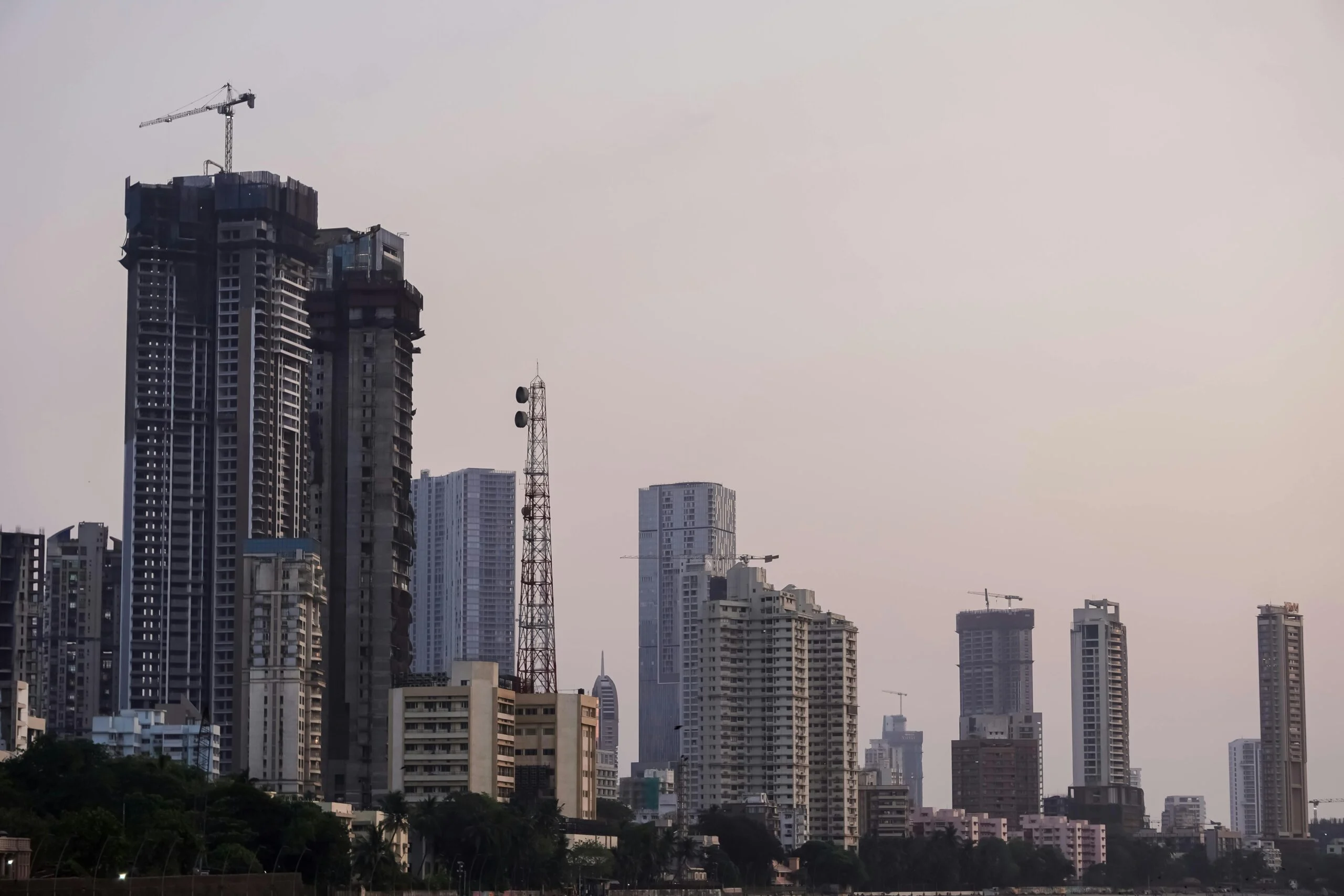
By 2030, India will almost certainly be the world’s third-largest economy. Demographically it will be the largest, already is, depending on whose count you trust. Its GDP will have crossed $7 trillion on most projections. Its middle class will have grown by 200 million people in a decade. The headline numbers are flattering, and they will be everywhere in speeches, annual reports, and billboards at conferences.
Headline numbers, however, do not tell you whether a country is succeeding. For that you have to ask what the growth is for, who it is reaching, and what it is costing. I have spent the last two years watching Indian policy conversations cycle through the same optimistic framings and wondering why so few of them include the hard questions that will actually determine whether 2030 feels like a triumph or a warning. Here are five questions India needs to answer in the next five years, not because the answers are unknowable, but because the country has so far preferred not to ask them clearly.
1. Where are the jobs going to come from?
The simplest and most urgent question on the list. India adds roughly 8 to 10 million people to its working-age population every year. It adds perhaps 2 to 3 million formal-sector jobs. The gap widens annually, and every young person entering the labour force who cannot find formal work slides into informal employment or unemployment, and the longer that lasts, the harder it becomes to reverse.
The informal sector absorbs most new entrants. Gig work, casual labour, street vending, agricultural underemployment. But these are not pathways to the income security that the Indian growth story assumes, as I wrote in detail in my piece on the eight million Indians working in the gig economy. A country that grows its GDP at 6 to 7 percent while the employment elasticity of growth stays near zero is a country where wealth concentrates without broadening.
The diagnosable issues are not mysteries:
- Manufacturing share of GDP is stuck around 14 to 15 percent, well below East Asian comparators at similar development stages. China peaked above 30 percent. Vietnam is at 25 percent today. India has not come close.
- Labour law reform has been partial. The 2019-2020 labour codes consolidated 29 laws into four, but implementation rules are still incomplete in most states five years later, leaving workers and employers in legal limbo.
- Capital-intensive growth. Much of India’s economic expansion has been in sectors, services, finance, IT, that employ relatively few workers per rupee of output.
What a clear answer to this question would look like: a coherent industrial policy that says, in specific terms, which sectors will absorb 50 million workers by 2030 and what policy is needed to make that happen. Not “we will be a manufacturing powerhouse,” which is a slogan. Specific sectors, specific labour absorption targets, specific incentive structures, and follow-through when the targets are missed. The Production Linked Incentive scheme is a partial answer. Whether it scales to the employment problem or remains a top-down subsidy to a handful of conglomerates is the question.
2. Who pays for the climate transition?
India’s per capita emissions are low, roughly 2 tonnes of CO2 equivalent, compared to the US at 15 and China at 8. Its absolute emissions are the third-highest in the world and growing. Under its Nationally Determined Contribution, it has committed to net zero by 2070, a date chosen partly because it leaves another generation of headroom for the hardest adjustments.
The hard question is not the 2070 net-zero target. It is the transition path between now and then, and the transition path is where the real political fights happen:
- Who funds the coal-to-renewable shift in states whose economies depend on coal, Jharkhand, Odisha, Chhattisgarh, where coal jobs are some of the only formal-sector employment available?
- Who absorbs the cost of climate-adapted agriculture, new seed varieties, water management investments, crop insurance premiums, in a country where 60 percent of the population is still rural?
- Who pays for the air pollution externality in cities where particulate concentrations are 10 to 15 times WHO guidelines, and where the public health cost runs into multiple percentage points of GDP annually?
The climate finance debate at international forums has focused heavily on transfers from developed to developing countries. That is important, but even generous international transfers will not cover more than 10 to 20 percent of what India actually needs. The remaining 80 percent is a domestic question, and domestic questions require domestic answers, carbon pricing that actually raises revenue, reform of the roughly $40 billion in annual fossil fuel subsidies, and a decisive shift in electricity market rules to support renewables. None of these are politically easy. All of them are overdue.
3. What is the social safety net going to look like?
Eighty percent of Indian workers are in the informal sector. They have no provident fund, no employer-provided health insurance, no paid leave, and no reliable old-age pension. The Pradhan Mantri Jan-Dhan Yojana brought 500 million people into the banking system, which is a real achievement. The Ayushman Bharat health insurance scheme covers 500 million people for hospitalisation. The PM-KISAN cash transfer pays Rs 6,000 annually to 110 million farmers. These are the largest social programs in the world, and they are still not enough.
The gap is in old-age security. Informal workers lack meaningful pensions. The National Social Assistance Programme pays old-age pensions of Rs 200 to Rs 500 per month, which is well below subsistence in any urban area and not much better in rural ones. The Atal Pension Yojana requires contributions that most informal workers cannot afford to make consistently. A universal, portable, non-contributory old-age pension is not currently on any government’s agenda at benefit levels that would actually keep a retired gig worker or street vendor out of poverty.
By 2030 India will have 150 million people over 60. A safety net planned for a working-age-majority country does not scale to that demographic shift, and the policy work to build one needs to start now. It mostly has not. That is one of the most predictable policy failures of the coming decade, and it is one that I think will be remembered as a generational injustice if it is not corrected.
4. Can the federation hold?
India is not one economy. It is a federation of states that increasingly diverge on per capita income, educational attainment, and fiscal capacity. The richest Indian state, Goa or Karnataka or Tamil Nadu depending on the year, has a per capita GDP three to four times that of the poorest, Bihar or Uttar Pradesh. The gap is widening, not narrowing. Fiscal federalism, the system by which central government revenues are redistributed to states via the Finance Commission, has transferred a large share of resources from richer to poorer states for decades, and the richer states have accepted the transfer as part of the national project.
Two pressures on the federation are now becoming visible:
- Delimitation after 2026. Parliamentary seats were frozen in 1976 based on 1971 population. When delimitation resumes, states that successfully reduced population growth, mostly southern states, will lose seats, and states where population kept growing, Hindi-belt states, will gain them. The political representation shift will be substantial and will be viewed by southern states as punishment for policy success, which is an accurate description of what it is.
- GST revenue distribution. States surrendered most of their independent taxation power to the GST Council. The distribution of GST revenue, particularly for compensation amounts after the 2022 cess expiry, has been contested in tense meetings. States have limited levers left if the central formula turns against them.
A workable 2030 federation needs a new political settlement that addresses both these tensions. What the settlement looks like is genuinely unclear. That one is needed is not.
5. What do we owe the people development leaves behind?
This is the ethical question underneath the first four, and it is the one that keeps me awake when I think about India in 2030. Economic growth is not morally neutral. It distributes gains and costs unevenly, and the distribution is almost never the same as the distribution of political power. India has so far treated the distributional question as a residual: grow the pie first, worry about the slices later.
The slices-later argument is empirically weak. Countries that deferred distributional questions during their growth phase, Brazil in the 1970s and the US after the 1980s, ended up with entrenched inequalities that subsequent growth did not reduce. Countries that tied growth to distributional mechanisms from the start, South Korea and Taiwan and to a lesser extent Malaysia, saw more durable political stability and continued to grow. The evidence is not ambiguous.
The specific distributional questions India needs clearer answers on:
- Displaced populations from infrastructure projects, dams, highways, mines, airports. The rehabilitation record is patchy at best. I covered the specific case of the Narmada dam displacement at length, and the pattern it documents is not an exception, it is the rule across dozens of smaller projects.
- Tribal Adivasi communities whose land and forest rights collide with resource extraction and conservation policy, often with the same corporate actors sitting on both sides of the table.
- Women’s economic participation. India’s female labour force participation rate remains around 20 to 25 percent, one of the lowest in the G20, and actually fell during the 2010s before a partial recovery.
- Caste-based wealth gaps, which current policy addresses via reservation in education and government employment but not via wealth redistribution, which is where the gaps are actually growing fastest.
None of these are new problems. All of them have had policy responses that have been partial and slow, sometimes slow enough that the people they were meant to help have died waiting. A 2030 India that cannot answer “what do we owe the people we are leaving behind” will be a materially richer country with durable social tensions, and durable social tensions eventually translate into political instability that the country cannot afford while it is trying to manage a climate transition and a demographic shift at the same time.
The hopeful version of 2030
There is a version of 2030 where India answers all five questions reasonably well. The jobs question is addressed through a serious manufacturing and services push that absorbs labour at scale. The climate transition is funded partly by carbon pricing, partly by reforming fossil subsidies, and partly by international finance. The safety net expands into a genuinely universal old-age pension funded by a progressive tax base. The federation renegotiates its fiscal and political settlement in good faith before delimitation becomes a crisis. And the distributional question is taken seriously as a first-order policy concern rather than a residual issue for charity.
None of this is implausible. The demographic, fiscal, and institutional resources exist. The missing ingredient is the political will to ask the hard questions clearly rather than celebrating the top-line numbers. Is that a ingredient Indian politics can produce in the next five years? I hope so. I am not certain.
The pessimistic version
The other version: India grows into the third-largest economy but the gains concentrate. Jobs do not scale. The climate transition is under-funded and the adaptation burden falls on farmers who have no insurance, no savings, and no political voice. The informal workforce ages into insecurity. The federation frays along north-south and rural-urban lines, and a generation of southern political leaders decides the national project is no longer working for them. The displaced remain displaced. The country is materially richer and politically more fragile, and moments like Irom Sharmila’s sixteen-year fast against AFSPA get remembered as early warnings we chose not to hear.
Both versions are compatible with the headline 2030 GDP number. The GDP does not tell you which one you got.
The work the next five years have to do
No single answer resolves all five questions, and nobody has the full picture of how to solve them. But the answers are buildable. They require specific policy work: a coherent industrial policy, a funded climate transition plan, a universal old-age pension financed by a reformed tax base, a renegotiated federal settlement, and a distributional ethic written into the way policy is made rather than appended at the end.
The next five years are the window. The demographic dividend peaks and begins to decline around 2035 to 2040. If India has not answered these questions by then, the later answers will be harder to implement and more expensive to fund, because the working-age population that is supposed to carry the transition will be shrinking relative to the population that depends on it. One decade. Five questions. No more excuses about the pie and the slices.
What's your answer?
We read every reply, and the strongest arguments on both sides shape the follow-up.
Tell us your viewWhat you can do
- Share the evidenceSend this to one person who should know about this issue.Share on WhatsApp
- Give an afternoonTeach, mentor, clean up, or lend your professional skills.Ways to volunteer
- Tell us what's missingKnow a story, a fact we got wrong, or a solution worth spotlighting?Suggest a story
Politically neutral. Every claim sourced. Report a correction.
No comments yet