Private Schools or Public Failure: Why India's Middle Class Abandoned Government Schools
ASER 2024 found that only 43 percent of Class 5 students in government schools can read a Class 2-level text. India has over 1.07 million vacant teaching posts in government schools. Kerala and Himachal Pradesh show what committed public investment can achieve. The Delhi AAP school model made real gains and real compromises. A Finland-level public education rebuild would cost roughly Rs 3.5 lakh crore per year. The political class whose children study abroad is the same class that controls the budget.
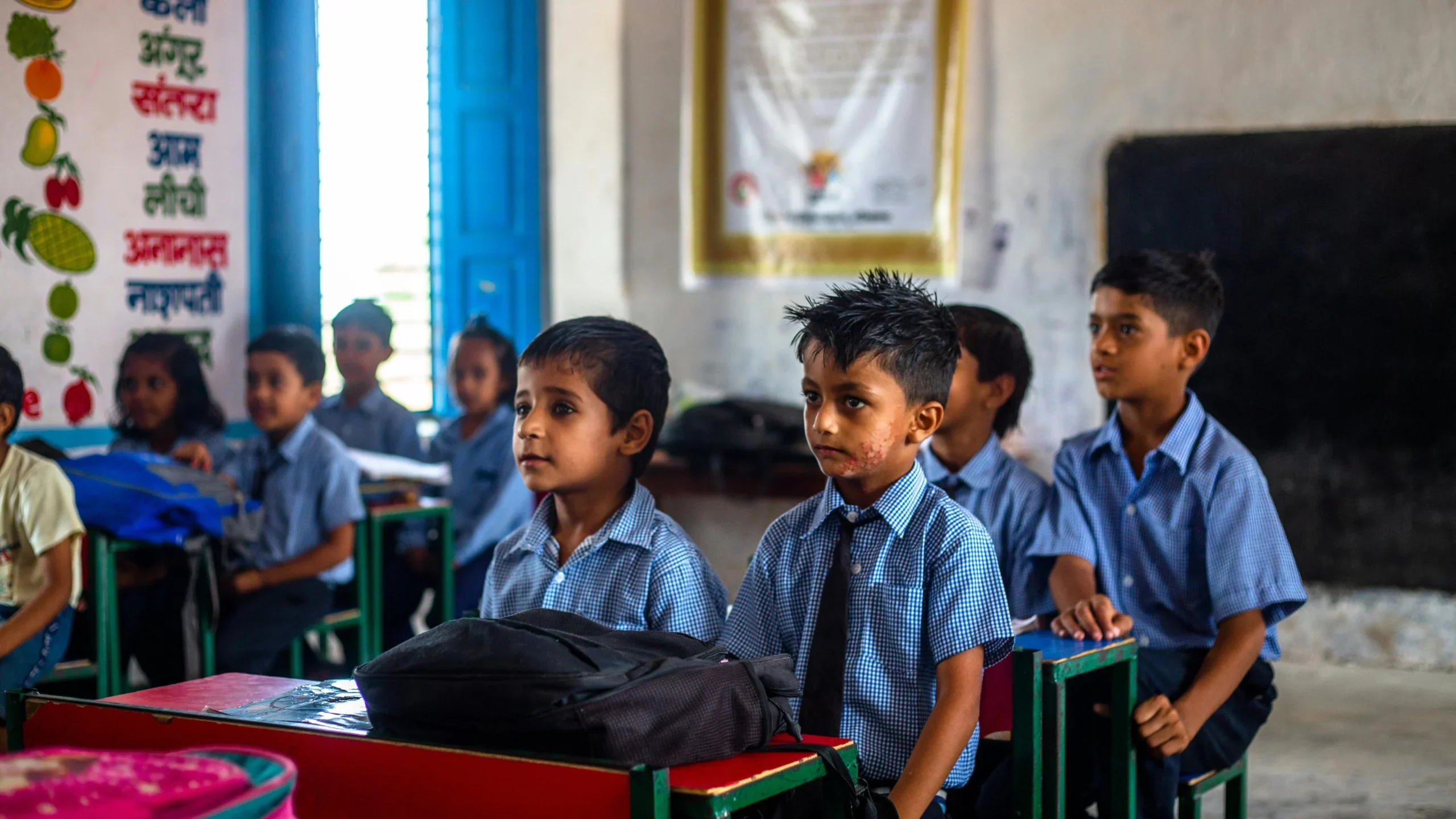
In 2024, the Annual Status of Education Report found that only 43 percent of Class 5 students enrolled in government schools could read a Class 2-level text. In 2018, that figure was 50 percent. The learning crisis in India’s public schools has not stabilised. It is getting worse, even as enrolment has improved and school buildings have gone up. The middle class noticed this long before the data confirmed it, and they left. The question worth asking is not why they left. It is what would need to change for any government to genuinely want them back.
What ASER 2024 Actually Shows About Government Schools India
The Annual Status of Education Report is produced by Pratham, the education NGO, and is the most widely cited independent measure of learning outcomes in Indian schools. The 2024 report surveyed over 700,000 children across 28 states. Its findings for government schools are specific and unflattering.
- 43.3 percent of Class 5 students in government schools can read a Class 2-level story. This is down from 50.3 percent in 2018.
- Only 43.3 percent of Class 8 students in government schools can do basic division. In 2018, it was 44.1 percent.
- In Class 3, only 20.5 percent of government school students can read a simple sentence in English.
- In rural government schools, approximately 26 percent of children enrolled in Class 8 cannot fluently read a Class 2-level text in their own language.
These are not inputs. They are outputs. They measure what children who have been inside the system for years actually learned. The Right to Education Act of 2009 mandated enrolment and infrastructure. It did not require learning outcomes as a condition for promotion. The no-detention policy, which prevented schools from holding students back until Class 8, was widely blamed by teachers and researchers for producing a cohort of children at higher grades who had not mastered foundational skills. The policy was partially reversed in 2019, but the accumulated deficit from a decade of implementation remains.
The proportion of rural children in Class 5 who can read a Class 2-level text has dropped from 50.3% in 2018 to 43.3% in 2024 in government schools, while the same figure for private schools remained above 65% throughout the same period.
ASER 2024, Annual Status of Education Report, Pratham
Private schools in the same survey are not dramatically better in absolute terms, but they are consistently better. The gap has been widening. A parent watching their child’s progress understands this without reading the ASER report. The traffic to private school admission offices tells the story.
The Teacher Vacancy Problem
India’s Ministry of Education reported in 2022 that there were over 1.07 million vacant teaching posts in government schools across the country. These are sanctioned posts, positions that the system has authorised and budgeted for, that simply have no teacher in them. The breakdown by state is revealing.
- Uttar Pradesh had over 300,000 vacant government school teacher posts in 2022, the highest of any state.
- Bihar had approximately 90,000 vacancies at the same time.
- Jharkhand and Chhattisgarh had vacancy rates exceeding 35 percent of sanctioned posts in some districts.
- Even relatively better-performing states like Rajasthan carried over 50,000 vacancies.
What this means in practice is that schools designated as primary schools on paper are operating without full staff, often with a single teacher managing multiple grades in the same room. The Unified District Information System for Education Plus (UDISE+) data shows that in 2021-22, approximately 13 percent of government schools in India were single-teacher schools. In some states, particularly in Bihar, Madhya Pradesh, and Rajasthan, the figure was considerably higher.
Teacher vacancies are not primarily a budget problem. India has the money to pay teachers. The problem is a combination of slow recruitment processes, political interference in appointments, high rates of teacher absenteeism in filled posts, and the use of poorly trained contract teachers (called para-teachers or shiksha mitras in various states) as a low-cost substitute for regular teachers. A 2019 World Bank study found that teacher absenteeism rates in India’s government schools, measured by unannounced visits, ranged from 15 to 25 percent across states. Teachers were present on paper and absent in practice.
Kerala and Himachal Pradesh: What Works and Why
Not all of India’s public school system is in crisis. Kerala and Himachal Pradesh are the two states where government school quality is consistently ranked higher than the national average, and where parents across income levels continue to send their children to government schools in significant proportions. Understanding why requires looking at specific policy choices rather than just cultural or historical explanations.
Kerala has the highest teacher-pupil ratio of any major state, with approximately one teacher for every 22 enrolled students in government schools, compared to the national average of around 1:26. More importantly, Kerala’s teacher vacancy rate is among the lowest in the country, consistently below 5 percent. The state has maintained high teacher salaries relative to local private sector alternatives, which has meant that government school teaching remains a profession that attracts qualified applicants. Kerala also spends more per student than almost any other state: approximately Rs 35,000 to Rs 40,000 per student per year, compared to the national average of roughly Rs 15,000 to Rs 18,000 per student in government elementary schools.
Himachal Pradesh offers a slightly different model. The state is small and mountainous, which limits the private school expansion that has occurred in the plains. But it has also consistently invested in teacher training, maintained relatively low vacancy rates, and used the small-state advantage of proximity between state administration and school-level outcomes to enforce accountability. ASER 2024 consistently ranks Himachal Pradesh among the top five states for government school learning outcomes.
The lesson from both states is not complicated. Quality government schools require adequately paid, trained, and present teachers. They require spending per student that is sufficient to cover learning materials, school maintenance, and mid-day meals that children will actually eat. And they require administrative accountability that connects school performance to someone who can be held responsible. These things cost money and political will. They are not mysteries.
The Delhi AAP Model: What It Got Right and Where It Stopped
The Aam Aadmi Party government in Delhi under Arvind Kejriwal made significant investments in government schools between 2015 and 2022, and those investments were real. The claims deserve an honest assessment rather than either uncritical celebration or partisan dismissal.
What the Delhi government did that worked:
- Increased the education budget from approximately Rs 5,000 crore in 2014-15 to Rs 16,377 crore in 2022-23, which was roughly 25 percent of the Delhi government’s total budget, among the highest proportions of any state or union territory.
- Built or renovated over 20,000 classrooms, eliminating the most visible physical deterioration in the school stock.
- Introduced the School Management Committees with enhanced powers and training for school principals through the Business Leadership Training programme at institutions including IIM Ahmedabad.
- Delhi’s Class 10 government school pass rate improved from 67 percent in 2015 to 98 percent by 2019, though critics noted concerns about the quality of this improvement and comparisons with private schools were mixed.
What the Delhi model did not achieve:
- ASER data for Delhi shows that government school learning outcomes, while somewhat above the national average, have not dramatically outperformed comparable states even after a decade of investment. The improvement in pass rates was not consistently matched by equivalent improvement in foundational learning.
- The Delhi model depended heavily on physical infrastructure and management training without adequately addressing teacher quality. Teacher recruitment and training remain state-level challenges with long timelines.
- Delhi’s fiscal advantage, as a union territory with higher per capita tax revenues than most states, makes its model difficult to replicate in Bihar, Uttar Pradesh, or Rajasthan, where the scale of need is vastly larger and the fiscal base much smaller.
- The AAP government’s claims about its school results were challenged by independent evaluators, including a CAG report that flagged issues with data reliability in the pass rate figures.
Delhi shows that political attention and budgetary commitment to government schools can produce visible improvements. It does not show that a single state-level intervention, even a well-resourced one, can overcome systemic problems in teacher supply, curriculum, and assessment that require national-level reform.
Politicians’ Children and the Accountability Gap
There is a straightforward political economy reason why government schools in India receive inadequate attention from the people who control public budgets. The children of Members of Parliament, state legislators, senior bureaucrats, and ministers do not attend government schools. They attend elite private schools in Indian cities or study at institutions abroad. This is not a moral critique of individual choices. It is an observation about incentives.
When the class of people who decide how public money is spent has no stake in the quality of the public service that money funds, the quality of that service tends to decline over time. This pattern is visible in public health as well as education. The same political families who have overseen decades of government school decline send their children to private schools in India and abroad without any evident cognitive dissonance about the system they administer. The question of who gets counted in India’s social policy extends to who gets served by India’s public institutions. Those outside the charmed circle of private alternatives are the ones who depend on what the state provides.
This accountability gap is structural, not accidental. Breaking it requires either compelling the political class to use the services it administers (practically impossible) or creating alternative accountability mechanisms: strong school management committees with real power, publicly reported learning outcome data at the school level, and consequences for school administrators whose schools consistently underperform. The Right to Education Act created School Management Committees but without enforcement teeth. State governments have been reluctant to publish school-level learning data that would embarrass constituencies of government school teachers who are also a significant voter bloc.
What a Finland-Style Rebuild Would Cost India
Finland is consistently cited as the benchmark for public education quality. Its school system features no private schools in the K-12 sector, all teachers required to hold a master’s degree, among the highest teacher salaries relative to national average wages in the OECD, and no standardised national exams until the end of secondary school. Finland spends approximately USD 11,000 per student per year on primary and secondary education.
India spent approximately Rs 4.7 lakh crore on elementary and secondary education from all sources, central and state governments combined, in 2022-23. With approximately 230 million children enrolled in government schools, this works out to roughly Rs 20,000 per student per year, or approximately USD 240. Finland spends roughly 45 times more per student than India’s current government school average.
A more realistic comparison would be to ask what it would cost India to match Kerala’s level of investment nationally. Kerala spends approximately Rs 35,000 to Rs 40,000 per student per year. Applied to 230 million government school students nationally, that implies a total annual expenditure of approximately Rs 8 lakh crore to Rs 9.2 lakh crore, or roughly 2.7 to 3.1 percent of India’s GDP of approximately Rs 295 lakh crore. India’s current government education spending is approximately 2.9 percent of GDP from all levels of government combined, already near this range. The problem is not only the total amount but how it is allocated: too much on salaries of absent teachers, too little on learning materials, teacher training, and school maintenance.
A genuine Finland-style rebuild, including competitive teacher salaries, mandatory teacher training, and per-student spending at Finland’s levels, would cost India something in the range of Rs 25 lakh crore to Rs 30 lakh crore annually. That is approximately 8 to 10 percent of GDP, roughly three times current public education spending. This is not a feasible short-term target for a country at India’s income level. But it frames the question honestly. The distance between what India spends and what high-quality universal public education costs is enormous. Marginal increases will produce marginal results. The revenue case for a wealth tax in India partly rests on exactly this kind of calculation: the fiscal space needed to meaningfully fund public services does not come from existing tax structures.
A more achievable intermediate target would be to double per-student spending in the bottom 200 districts by educational outcome, identified through ASER data, over a ten-year period. The National Education Policy 2020 targets 6 percent of GDP for education spending overall. India has never reached this target since it was first articulated in the Kothari Commission report of 1966. That six-decade gap between stated ambition and actual funding tells its own story.
The Private School Expansion and Its Limits
The growth of low-cost private schools in India, particularly in small towns and peri-urban areas, has been one of the more striking educational developments of the past two decades. These schools charge fees ranging from Rs 300 to Rs 2,000 per month and have drawn children away from government schools in large numbers. Between 2010 and 2020, private school enrolment in rural India rose from approximately 21 percent of all enrolled children to approximately 30 percent. In urban India, the figure is considerably higher.
The appeal of these schools is straightforward: the teachers turn up. The schools are typically smaller. The principal is accountable to paying parents in a way that a government school principal is not. English is often taught from an early grade, which parents correctly assess as a market advantage for their children.
But the private school expansion has not solved the education problem. ASER data consistently shows that low-cost private schools in India perform better than government schools on most measures, but the gap is smaller than commonly assumed and has been narrowing. In some states, government schools outperform comparable low-fee private schools on learning outcomes when teacher qualifications and attendance are controlled for. Low-cost private schools also frequently hire untrained teachers at below-government wages, which keeps costs down but creates its own quality problems. And private schools serve the middle and aspirational poor. The poorest children, those whose families cannot afford even Rs 300 per month, remain in the government system.
What Would Actually Change Outcomes
The research on what improves learning outcomes in developing-country contexts is fairly consistent. Several interventions have strong evidence behind them.
- Targeted instruction at the right level: Pratham’s own Teaching at the Right Level approach, which groups children by learning level rather than grade for literacy and numeracy instruction, has shown large gains in controlled trials across India, with Class 3 students gaining the equivalent of one additional year of learning in a single academic year.
- Eliminating teacher absenteeism: Studies by Esther Duflo and colleagues in Rajasthan found that paying teachers based on verified attendance sharply reduced absenteeism. Camera monitoring in some interventions produced 21 percent reductions in teacher absence rates.
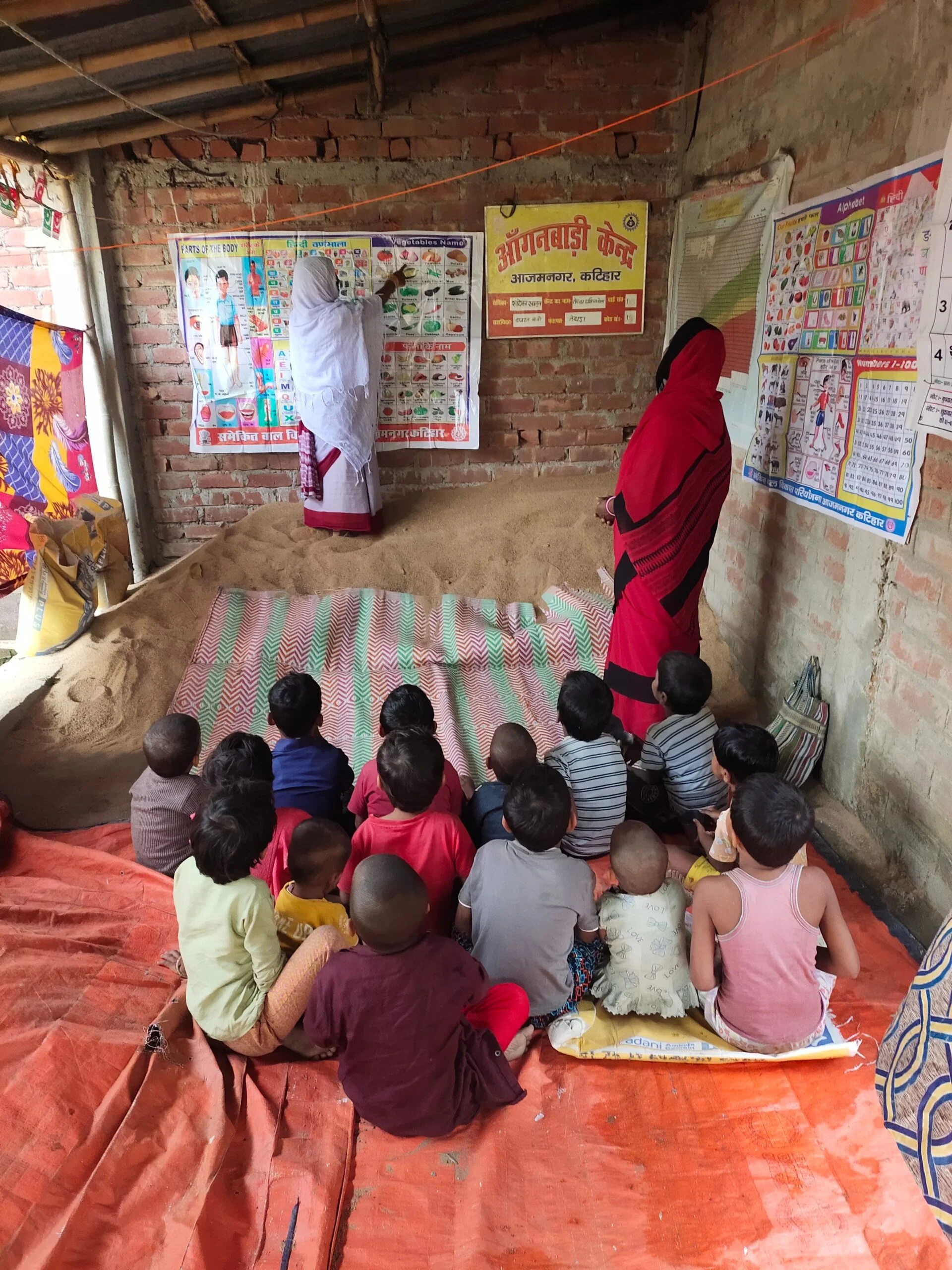
- Improving pre-primary education: ASER data shows that children who attended any form of pre-school arrive in Class 1 with significantly higher foundational skills. India’s Anganwadi system covers children under six but quality is highly variable and learning is not systematically assessed.
- School management accountability: States with School Management Committees that have real control over teacher attendance monitoring and school operations show better outcomes than those where SMCs are nominal bodies with no power over staff.
None of these interventions are free, but none of them require Finland-level per-student spending either. The question is political will. Teacher unions in India are politically powerful and have historically resisted accountability measures. State governments depend on teacher votes. The incentive structure of the political system runs directly against the reforms that the evidence points toward.
The Middle Class, the State, and the Question of Public Goods
When middle-class families abandon a public service, the political pressure to reform it falls. This is the trap India’s government schools are in. The families with the most voice, the ones who write to newspapers and petition politicians and appear in surveys, have already opted out. The families whose children remain in the government system are often the least politically powerful: rural poor, urban daily-wage workers, families without the money or connections to secure private school admission.
A government school system that educates only the poor tends to become poor education. This is not a universal law, but it is a tendency with enough historical support that it should be taken seriously as a policy problem. Rebuilding middle-class confidence in government schools is not merely an ideological project. It is a strategy for rebuilding the constituency that makes adequate public investment politically sustainable.
The National Education Policy 2020 articulates a vision of high-quality universal public schooling. Its implementation depends on states, most of which face significant fiscal constraints and political calculations that work against the reforms the policy describes. The policy targets 6 percent of GDP for education spending. The current figure is approximately 4.6 percent when all sources are counted. The gap represents roughly Rs 4.5 lakh crore per year in foregone investment, year after year, while learning outcomes decline and more families conclude that the government school down the road is not good enough for their children.
What a Credible Reform Agenda Looks Like
A credible reform agenda for India’s government schools would need to address five things simultaneously, which is exactly why it has not happened.
- Fill the vacancies: 1.07 million vacant posts is a solvable problem on a ten-year timeline with sustained recruitment. States that have reduced vacancy rates through accelerated teacher recruitment drives, including Rajasthan in 2020-22, have shown it is operationally possible.
- Fix teacher accountability: Introduce independent attendance verification, link school-level learning outcomes to principal performance reviews, and publish school-level ASER-equivalent data annually at the district level.
- Restructure per-student spending: Shift funding from unoccupied posts toward learning materials, pre-primary expansion, and school maintenance. The NEP 2020 proposes this explicitly. Implementation at scale requires central pressure on state governments that has not materialised.
- Reform teacher education: India’s B.Ed programme, the standard route to teacher certification, is widely regarded as poor preparation for classroom teaching. The NEP calls for a four-year integrated B.Ed degree with stronger practical components. This reform requires transforming approximately 17,000 teacher education institutions, most of which are private and operating at minimum standards.
- Raise the spending floor: The 6 percent of GDP target needs a binding commitment with penalties for non-achievement, not just a policy aspiration repeated across successive education documents since 1966.
ASER 2024 gives India the data it needs to know where it stands. Bihar counted its castes and found the evidence changed what policy arguments were possible, as the case for a national caste census demonstrates when good data forces uncomfortable questions about representation. ASER does the same for education. The learning crisis is documented. The exceptions that work are identified. The cost of a credible alternative is calculable. What remains, as usual, is the political choice about whose children matter enough to fund.
The Children Left Behind
There are approximately 150 million children currently enrolled in government primary and upper primary schools across India who have no private school option. They are in the system because their families cannot afford the alternative, not because the government school in their village or urban ward is meeting their needs. ASER 2024 tells us that for a large fraction of these children, years inside the system are producing learning outcomes that will permanently limit their economic possibilities.
A child who reaches Class 8 unable to read a Class 2 text is not going to compete effectively for skilled employment in an economy that is rapidly requiring higher technical and literacy capabilities. The human cost of this is distributed across India’s poorest families. The economic cost is carried by India’s growth potential. The political cost is borne by no one in particular, because the families most affected have the least political leverage.
The National Education Policy 2020 is a serious document written by people who understand these problems. Its implementation record so far suggests that the gap between articulated ambition and funded action is as large as it has always been in Indian education policy. Kerala and Himachal Pradesh show that the gap can be closed. Finland shows what closing it completely would require. The distance between where India is and where it needs to be is not a mystery. It is a choice, repeated annually in budget allocations that tell the truth about priorities more honestly than any policy document.
What Needs to Happen Now
The argument for rebuilding India’s government school system is not primarily ideological. It is fiscal, demographic, and practical. India has 600 million people under the age of 25. The quality of education they receive in the next decade will determine the productive capacity of the economy for the forty years after that. A system that leaves 150 million children in schools where learning outcomes are declining is not a welfare programme. It is a failure with compounding consequences.
The families who abandoned government schools did not make a mistake. They read the evidence correctly and responded rationally. Getting them back, or more precisely, getting the system to the quality level where their return would be rational, requires the kind of sustained political commitment that has produced Kerala’s outcomes over fifty years of consistent investment. It requires filling teacher vacancies, funding pre-primary education, publishing school-level learning data, and holding administrators accountable for results rather than inputs.
None of this is happening at the scale the problem demands. Until the people who control the budget have a personal stake in the quality of the result, the gap between the ASER data and the policy response will persist. Changing that equation is a political project, not an educational one.
What's your answer?
We read every reply, and the strongest arguments on both sides shape the follow-up.
Tell us your viewWhat you can do
- Share the evidenceSend this to one person who should know about education.Share on WhatsApp
- Give an afternoonTeach, mentor, clean up, or lend your professional skills.Ways to volunteer
- Tell us what's missingKnow a story, a fact we got wrong, or a solution worth spotlighting?Suggest a story
Politically neutral. Every claim sourced. Report a correction.
No comments yet