The Guest Teacher: How India Filled Its Classrooms Without Funding Careers
For two decades India closed teacher shortages with contract, guest and para teachers on short renewable terms. It filled the vacancy column on paper and built a parallel workforce doing the same job for a fraction of the pay.
In this story
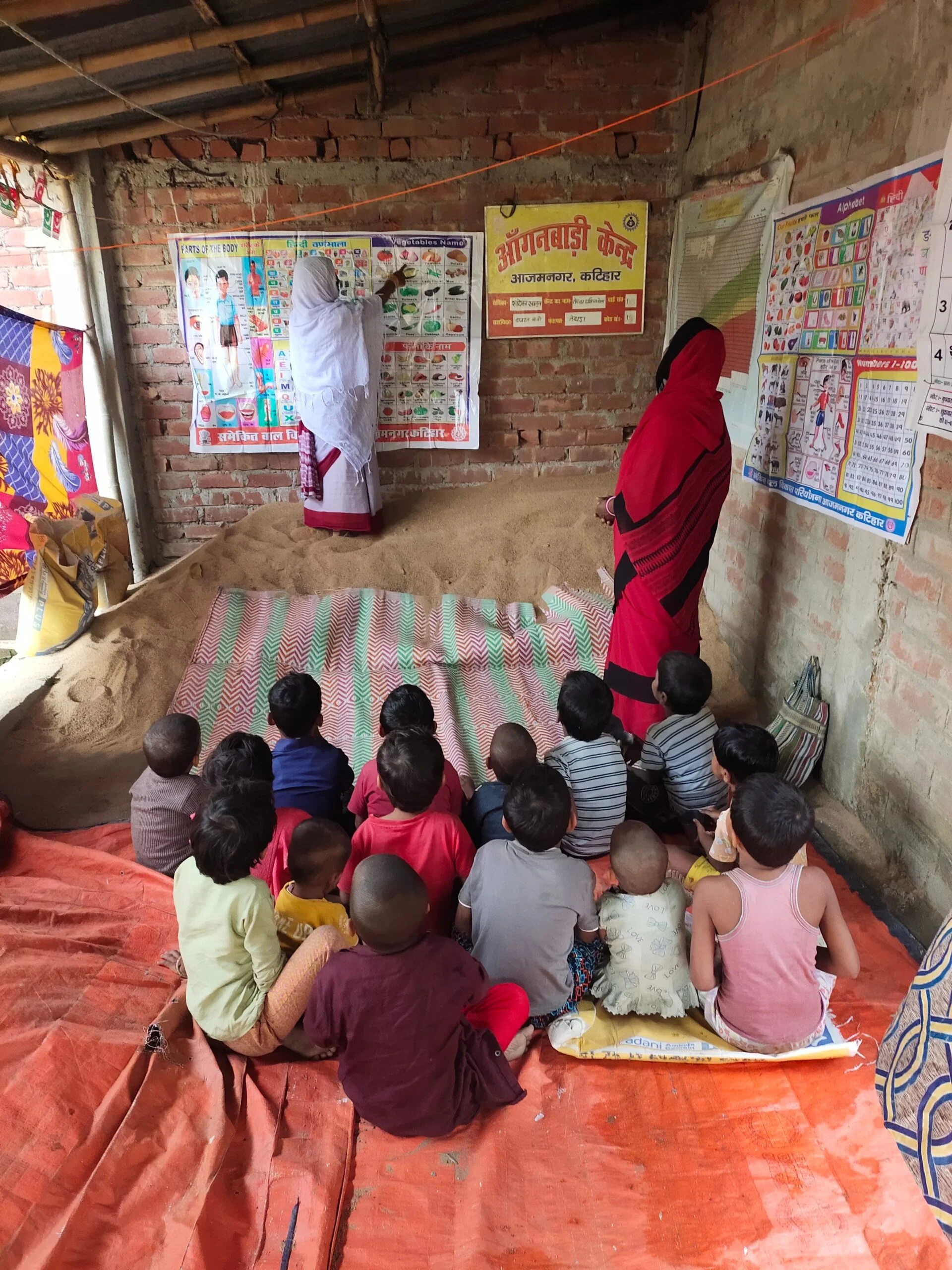
Two teachers stand in the same government school. They teach the same grades, follow the same syllabus, sit the same students for the same board exam, and are held to the same attendance rules. One earns four to six times what the other does, has a pension, and cannot be removed without cause. The other is renewed, or not renewed, every eleven months.
This is not an anomaly in one district. It is how a large share of India’s classrooms have been staffed for the better part of two decades, and it is the single biggest reason the vacancy numbers in official reports understate the problem.
Where the parallel workforce came from
The origin is understandable, even sympathetic. In the 1990s and 2000s India was pushing hard to get every child enrolled. Enrolment targets were met faster than states could recruit permanent teachers, and permanent recruitment was slow, litigated, and expensive.
States responded with a category of teacher hired locally, on contract, at a fraction of the pay scale, often through the village body rather than the education department. The names varied by state: shiksha karmi, shiksha mitra, para teacher, vidya volunteer, guest teacher. The design was the same everywhere.
- Hired against a need rather than a sanctioned post, which kept them off the establishment budget.
- Paid an honorarium rather than a salary, so no pay commission revision applied.
- Appointed for a fixed term, usually under a year, so no permanency claim could accrue.
- Often recruited from the same village, which solved the rural posting problem no transfer policy could.
It worked, in the narrow sense that classrooms had adults in them and enrolment kept climbing. What was supposed to be a bridge became the permanent structure, because once a state has staffed a third of its classrooms at a quarter of the cost, converting those posts is a bill nobody wants to present.
A guest teacher is counted as a filled post in the annual return. The vacancy disappears from the report without a career appearing anywhere.
Why this distorts every number we have
School data in India is filed on an annual return, and that return asks how many teachers are working in the school. A guest teacher working today is a teacher today. The form does not ask whether that person will be there in April, or what happens to the class if the contract is not renewed.
The effect is that official staffing looks better than the classroom is. A school reported as having three teachers may have one permanent teacher and two people on eleven month terms, one of whom will not return. That is a different school from one with three permanent teachers, and the data cannot tell them apart.
It also means the vacancy figures that get quoted, including the very large ones from states carrying lakhs of unfilled posts, sit alongside a shadow workforce that is doing the work of those posts without holding them. The country is simultaneously short of teachers and employing people to teach, which sounds contradictory only until you look at how the posts are counted.
The audit finding that more than one lakh schools run on a single teacher has to be read with this in mind. Some of those single teachers are permanent. Some are on a contract that expires before the academic year does.
What it does to the person doing the job
The human side of this deserves more attention than it gets. A guest teacher is usually a local graduate, frequently a woman, often the most educated person in her village, doing skilled public work at an honorarium that can fall below what unskilled daily wage work pays over a full month.
She has no medical cover, no pension, no maternity protection worth the name, and no assurance beyond the current term. Payment is often delayed by months because the honorarium is routed through a scheme rather than the payroll. When a state announces a recruitment drive for permanent posts, she has to compete for the job she is already doing, against fresh candidates, sometimes with an age limit she has now crossed because she spent eight years teaching on contract.
Successive rounds of protest and litigation across several states have turned on exactly this point, and courts have periodically ordered regularisation. Implementation has been partial and slow, because each conversion is a permanent addition to the salary bill.
What it does to the classroom
The instinct is to assume contract teachers must be worse teachers. The evidence is more interesting than that. Studies across Indian states have generally found contract teachers performing at least comparably to permanent teachers on classroom outcomes, sometimes better, largely because they are local, present, and aware that renewal depends on showing up.
The damage is not in a given year. It is in the turnover and the ceiling.
- Continuity breaks. A child may have a different teacher each year, none of whom carries forward what the previous one knew about that child.
- Training does not accumulate. Investing in the professional development of someone who may not be renewed is money the department is reluctant to spend, so contract teachers get less training than anyone.
- The ceiling caps ambition. A job with no promotion path and no permanency attracts people while they wait for something better, which is a rational thing for them to do and a poor foundation for a school.
Put those together and the system gets adequate teaching this year at the cost of never building a stable teaching profession, which is precisely what the states with the best outcomes did build over decades.
The false economy
Contract staffing looks cheap in a budget line and is expensive in ways no budget line records.
Every non renewal means a fresh appointment, fresh orientation, and a fresh person learning which children need help. Every regularisation dispute means years of litigation costs. Every cohort of children taught by a rotating cast of short term teachers carries a learning deficit that the state pays for later in remedial programmes, repeated grades, and an unemployable workforce.
The honest comparison is not contract salary against permanent salary. It is the total cost of a stable teacher over twenty years against the total cost of twenty years of instability, including the outcomes at the end of it. No state has published that comparison, which is itself informative.
The same pattern outside the classroom
Teaching is where this is most visible, because schools are counted every year and the numbers get published. The design is not confined to education.
Health services run on contractual staff hired under national programmes, with community health workers paid an incentive rather than a wage for work that is functionally full time. Municipal sanitation runs substantially on contractors rather than municipal employees, which is why the people who clean a city are frequently not employed by it. Data entry, records, and front desk work across government offices is routinely outsourced to agencies that supply staff on renewable terms.
In each case the logic is identical: a service is needed permanently, the post is funded temporarily, and the gap between the two is absorbed by the person doing the work. The state gets the service. It does not carry the obligation.
That is worth naming plainly, because it is usually discussed one sector at a time as though each were an unfortunate local arrangement. It is a single staffing philosophy applied across the whole of public service delivery, and it explains a great deal about why so many public services function unevenly while appearing fully staffed on paper.
What would fix it
Report contract and permanent separately
One line change to the annual return. Publish permanent posts filled, contract staff engaged, and posts genuinely vacant as three distinct numbers. The country currently cannot see the difference, which makes every staffing debate partly guesswork.
A defined path to permanency
Years served plus a qualifying assessment leading to a permanent post, published as a rule rather than won case by case in court. It gives the state a predictable bill and the teacher a reason to stay.
Age relaxation equal to service
Nobody should be aged out of a permanent post by the years they spent doing that post on contract. This is the same failure that shows up across public recruitment, examined in the years India’s job aspirants lose waiting.
Pay on time, whatever the amount
Delayed honorariums are the most common and most fixable grievance. Moving contract staff onto the regular payroll system, even at the existing rate, costs nothing and removes months of hardship.
What you can do about it
- At your local school: ask how many of the teachers are permanent. Parents almost never know, and the answer changes how you read the school.
- In your community: a guest teacher owed four months of honorarium is a specific, solvable problem that a written query to the block office often moves.
- At district level: ask in writing for the split between sanctioned, permanent filled, and contract engaged. It is public information and rarely requested.
- Nationally: push for the three way split to be published in the annual school data as standard, so the shadow workforce becomes visible without anyone having to ask.
India solved its enrolment problem partly on the labour of people it never agreed to employ properly. That bargain is now two decades old, and the bill for it is still sitting in a drawer.
Featured photo by TEGHRA DACCHIN TOLA on Pexels.
Context on national teacher vacancy and staffing distribution from NITI Aayog’s School Education System in India, May 2026.
What you can do
- Share the evidenceSend this to one person who should know about education.Share on WhatsApp
- Give an afternoonTeach, mentor, clean up, or lend your professional skills.Ways to volunteer
- Tell us what's missingKnow a story, a fact we got wrong, or a solution worth spotlighting?Suggest a story
Politically neutral. Every claim sourced. Report a correction.



No comments yet