India's Higher Education Reached 4.5 Crore Students. The Harder Question Is What They Got.
The AISHE report released in July 2026 shows record enrolment, women ahead of men, and rising participation from every disadvantaged group. It also shows growth slowing, and says almost nothing about what a degree is now worth.
In this story
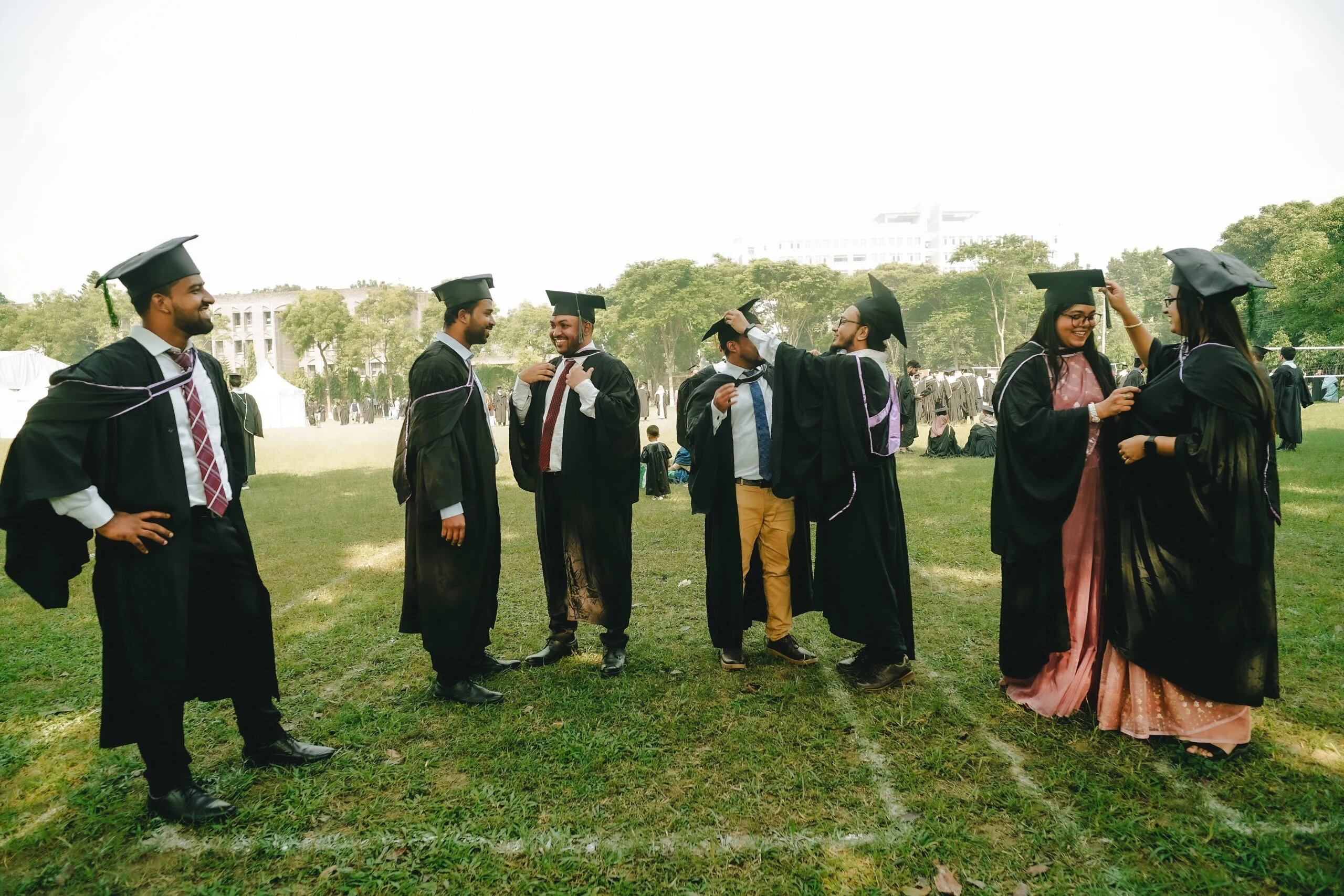
On 8 July 2026 the Union Ministry of Education released two years of the All India Survey on Higher Education at once, covering 2022-23 and 2023-24. The headline number is genuinely large: enrolment in Indian higher education has reached 4.5 crore students, with a gross enrolment ratio of about 30.
Set against where India started, that is one of the fastest expansions of tertiary education anywhere. Set against what happens to those graduates afterwards, it raises a question the survey is not designed to answer.
What the survey found
The gains are broad, and they are not confined to the groups that were already ahead.
- Total enrolment reached 4.50 crore in 2023-24.
- Women moved ahead of men. The gender parity index stands at 1.08, with female enrolment at 2.24 crore, up from 1.57 crore in 2014-15.
- STEM enrolment rose to 1.02 crore from 91.5 lakh, and the share of women within STEM rose from 38.4 per cent to 44 per cent.
- Scheduled Caste enrolment rose about 51 per cent over the decade, Scheduled Tribe enrolment about 76 per cent, and Other Backward Class enrolment about 60 per cent.
The tribal number deserves particular attention. A 76 per cent rise in a decade is the fastest growth of any group in the table, from the smallest base, in the communities furthest from campuses. Whatever else is true, scholarship and reservation policy moved a real number of first generation students into higher education.
More Indian women are in higher education than Indian men. That fact has not yet reached the labour market, where women’s participation remains among the lowest in the region.
The gap between the classroom and the job
The parity index of 1.08 is the finding most worth sitting with. India now educates more women than men at the tertiary level. It also has one of the lowest female labour force participation rates in its neighbourhood, lower than several countries with far weaker education outcomes, a contrast we examined in the comparison with Pakistan and Bangladesh.
Those two facts together describe a country that is investing heavily in educating women and then not employing them. The loss is not abstract. It is a graduate degree, funded by a family and partly by the state, followed by a working life that never uses it.
The reasons are well documented and mostly sit outside education: unpaid care work, safety in commuting, employer assumptions about marriage and childbirth, and a jobs market that has not created the kind of work that would draw women in at scale. A ministry of education cannot fix any of those, which is precisely why the enrolment number on its own tells you so little.
The same disconnect appears in the STEM figure. Women now make up 44 per cent of STEM enrolment, and they outnumber men in the sciences while remaining a minority in engineering. Yet the share of women in India’s technical workforce, particularly in senior roles, stays far below either figure. We looked at that pipeline in women in STEM and India’s hidden gender gap.
Growth is slowing, and that matters
Beneath the record total, the rate of increase has come down. That slowdown has a few plausible drivers, and they point in different directions.
One is demographic. The cohort reaching college age is no longer growing as fast as it was, so a slower rise in absolute enrolment can coexist with a rising participation ratio. That is a benign explanation and partly true.
The less comfortable explanation is that families are re-evaluating whether a degree is worth the cost. When graduates from ordinary colleges struggle to find work that pays more than non graduate work, the calculation changes for a family weighing three years of fees and foregone earnings. Enrolment slowing is what that reassessment looks like in a spreadsheet.
India has a long standing employability problem, examined in why 60 per cent of Indian graduates remain unemployable. Expansion without a matching improvement in what colleges deliver produces exactly this: more degrees, similar skills, and a credential that buys less each year.
Where the four and a half crore actually study
A national total conceals the shape of the system underneath it. Indian higher education is delivered overwhelmingly by small, private, standalone colleges affiliated to a university rather than by the universities whose names appear in rankings.
The typical Indian undergraduate is not at a central university or an institute of technology. She is at an affiliated college in a district town, with a few hundred students, a syllabus set elsewhere, examinations conducted elsewhere, and a faculty that may be substantially part time. The degree on her certificate carries a university name she has rarely visited.
This structure explains a great deal. It is why expansion was possible so quickly, because opening an affiliated college requires far less than founding a university. It is also why quality is so uneven, because the affiliating university has neither the capacity nor the incentive to inspect hundreds of colleges properly.
National conversation about higher education tends to be conducted through the institutions the commentators attended, which is why debates about campus politics and admissions at elite institutes take up so much of it. We have written about two of those in our pieces on IIT Bombay and JNU. Both matter, and between them they account for a rounding error in the 4.5 crore.
What the survey does not measure
AISHE is a census of institutions, students, and teachers. It is good at what it counts and silent on everything else, and it is the silence that shapes the debate.
- Learning. There is no national measure of what a graduate knows at exit, so a degree from any of tens of thousands of colleges is treated as equivalent.
- Employment outcomes. Institutions are not required to publish what happened to their graduates a year later.
- Teaching quality. Faculty vacancy rates run high across public universities, and a post filled by a guest lecturer counts as taught.
- Cost to the family. Fees, coaching, hostel and the debt taken to cover them are absent from the picture entirely.
Without those four, enrolment growth can be reported as success indefinitely, regardless of whether any of it converts into a life a graduate could not otherwise have had.
What would make the next report mean more
Publish outcomes by institution
Employment and further study rates one year after graduation, per college, published openly. It would be uncomfortable for a large number of institutions, which is the point. A student choosing where to spend three years and a family’s savings currently chooses blind.
Count faculty vacancies alongside enrolment
An enrolment figure without a staffing figure describes a crowd, not an education. The two numbers belong in the same table.
Track the women who graduate
If parity at enrolment is a national achievement, and it is, then what happens to those graduates over the following five years is the measure that matters. Nobody currently follows them.
What you can do about it
- If you are choosing a college: ask for placement data in writing, by course, for the last three years. A college that will not provide it has told you the answer.
- If you employ people: a first generation graduate from an ordinary college is frequently more capable than their institution’s reputation suggests. Interview for reasoning rather than pedigree.
- In your family: the pressure on young women to stop at the degree rather than take the job is the single largest reversible cause of the participation gap.
- Nationally: ask for graduate outcome data to be published per institution. It is collected by many colleges already and released by almost none.
Four and a half crore students is a real achievement, built by families spending money they did not have on an expectation of mobility. Whether that expectation was honoured is the number India still does not publish.
Featured photo by SR Raju on Pexels.
Sources: All India Survey on Higher Education 2022-23 and 2023-24, released July 2026, reported via Free Press Journal and Business Standard.
What you can do
- Share the evidenceSend this to one person who should know about education.Share on WhatsApp
- Give an afternoonTeach, mentor, clean up, or lend your professional skills.Ways to volunteer
- Tell us what's missingKnow a story, a fact we got wrong, or a solution worth spotlighting?Suggest a story
Politically neutral. Every claim sourced. Report a correction.

No comments yet