Why India's Labour Force Participation for Women Is Lower Than Pakistan's
India's female labour force participation is about 24 percent, below Pakistan, Bangladesh and the global average. The article explains the causes and what Kerala shows.
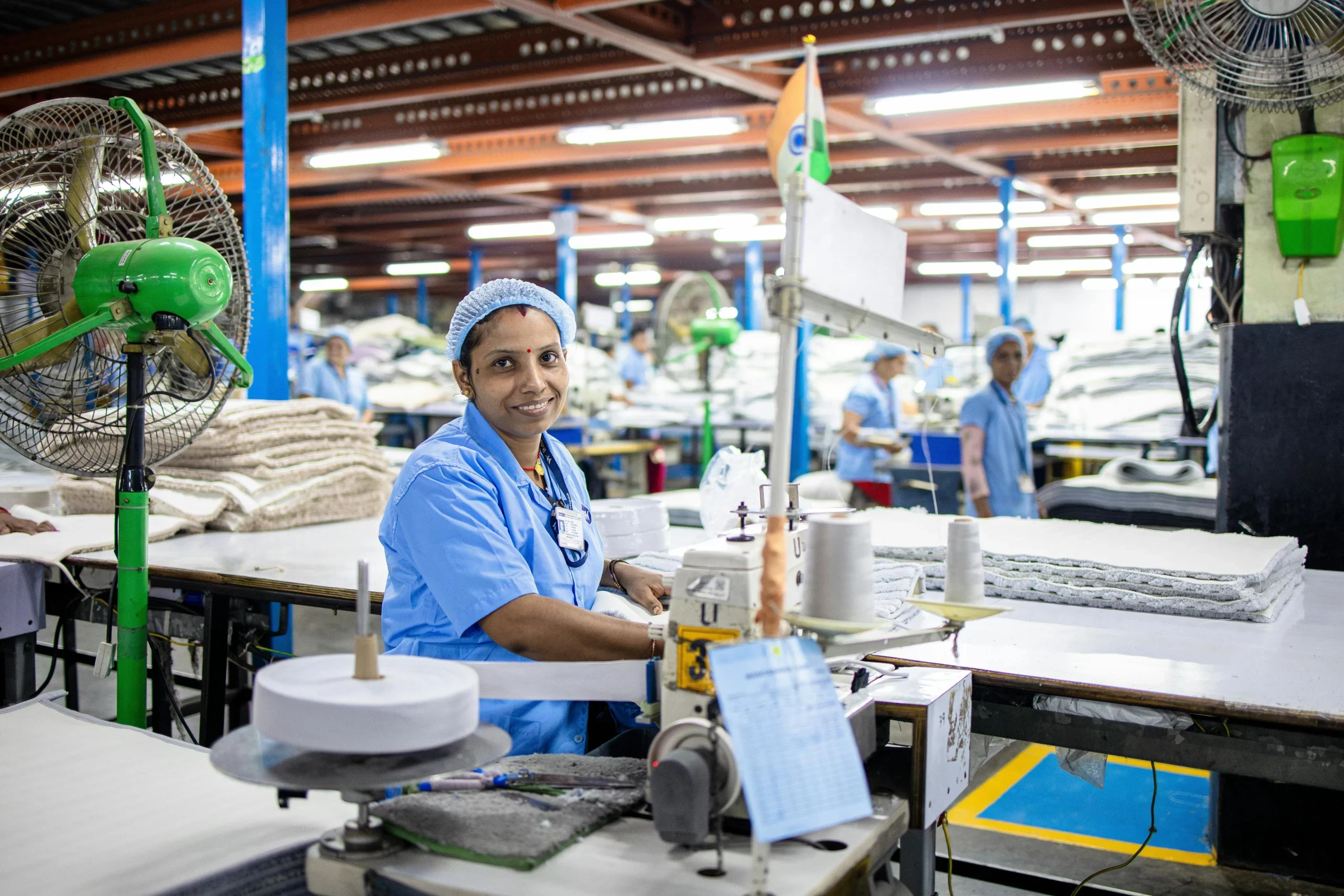
There is a number that does not appear in many political speeches. It does not feature in India’s growth story. It is rarely cited as an achievement or even as a failure. It is simply ignored. That number is India’s female labour force participation rate, and at just 24 percent, India’s FLFPR sits below Pakistan, Bangladesh, and the global average.
Pakistan’s FLFPR is approximately 25 percent. India’s is 24 percent.
The gap is one percentage point. But the meaning of that gap is enormous. It tells us that India’s growth story, celebrated across decades, cited in GDP tables and infrastructure reports, has not been a story of shared prosperity. For roughly half the population, the economy has grown around them, not because of them.
India’s Female Labour Force Participation: The Numbers That Should Make Us Uncomfortable
Let us start with the data, because the data is where the denial usually begins.
According to International Labour Organization (ILO) ILOSTAT data and the Periodic Labour Force Survey (PLFS) conducted by India’s Ministry of Statistics:
Country | Female Labour Force Participation Rate (approx.) |
|---|---|
India | 24% |
Pakistan | 25% |
Bangladesh | 36% |
Sri Lanka | 37% |
Nepal | 80% |
Indonesia | 53% |
Vietnam | 69% |
China | 61% |
Global Average | 47% |
Bangladesh, where the garment industry employs millions of women in difficult, often dangerous conditions, has an FLFPR that is 12 percentage points higher than India’s. Vietnam, with its manufacturing-export-led model, is at 69 percent. Nepal, without India’s infrastructure or urban economy, has an FLFPR of 80 percent, driven partly by subsistence agriculture and male out-migration, but nonetheless representing women who work and are counted.
India’s female labour force participation rate has been in decline since at least 2004-05, when it was around 42 percent. The rise of India’s economy, paradoxically, was accompanied by a long withdrawal of women from the labour force. This is the jobless-growth paradox with a gendered face.
Why Women Are Not Working: The Real Reasons
Unpaid Care Work Is Not Called Work
The largest single factor keeping Indian women out of the labour force is not laziness, lack of ambition, or cultural preference. It is the colossal burden of unpaid care work, childcare, eldercare, domestic work, cooking, cleaning, fetching water, managing illness, that falls almost entirely on women.
The ILO estimates that Indian women spend on average 352 minutes per day on unpaid care work, compared to 51.8 minutes for men. That is nearly seven hours a day for women, versus under an hour for men. The gap, over 300 minutes, is one of the largest in the world.
This work is invisible to the GDP. It does not show up in the FLFPR. It does not earn wages, generate social security contributions, or build pension entitlements. It simply disappears from the accounting sheet of the Indian economy, even as it subsidises every other part of that economy.
When women are unavailable for paid work because they are doing unpaid work that the state has refused to socialise, through public childcare, affordable elder care, or domestic infrastructure, the labour market calls this a “supply-side problem.” The women, it is implied, have chosen this.
They have not chosen it. It has been assigned to them.
Safety Is an Economic Variable
The second major structural barrier is safety, or more precisely, the well-documented lack of it.
India’s National Crime Records Bureau data consistently shows high rates of crimes against women in public spaces, transport, and workplaces. The ILO has identified safety concerns as a significant deterrent to female labour participation in South Asia. Survey after survey, including studies by the International Center for Research on Women (ICRW) and the Centre for the Study of Developing Societies (CSDS), show that women, and the families that gatekeep their mobility, cite safety as a primary reason for not working outside the home.
This is not an abstract concern. It is a rational response to a specific environment. When a woman cannot safely commute to work, because public transport is inadequate, because last-mile connectivity is missing, because harassment is structurally tolerated, her absence from the labour market is not a personal choice. It is the economy’s failure to provide the infrastructure that would make her participation possible.
Safe, affordable public transport is not a welfare measure. It is an economic enabler. Every city that has invested in it, from Mumbai’s suburban rail network to Bogotá’s TransMilenio, has seen a measurable increase in female labour participation.
Cultural Gatekeeping and the “Respectability” Tax
There is a third factor that is harder to quantify but essential to acknowledge: the social and familial gatekeeping that defines “respectable” employment for women by caste, class, and region.
In large parts of north and central India, female labour force participation is treated as a signal of family poverty rather than family productivity. A woman who works is sometimes read as evidence that her husband cannot provide, a status stigma that functions as a powerful disincentive. Families in upwardly mobile income brackets often withdraw women from work as a marker of social arrival, a phenomenon documented in academic literature as the “feminisation U-curve” of development.
This is not a moral failure of individual families. It is the product of a social structure in which women’s labour is coded as servitude rather than contribution, and in which the absence of women from the workforce is rewarded with social prestige.
The result is perverse: India’s economic growth has produced a class of households wealthy enough to keep women home, and those households have exercised that option in large numbers, pulling the FLFPR down precisely when GDP was going up.
Jobless Growth: The Economy That Built Around Women, Not With Them
India’s growth over the last three decades has been heavily concentrated in sectors that are either male-dominated by structure, or that actively shed female workers.
The decline of labour-intensive manufacturing, particularly the failure to build a garment export sector on the scale of Bangladesh’s, has removed one of the most significant pathways through which women in developing economies enter the formal labour force. Bangladesh’s FLFPR is 36 percent largely because of its garment workers: four million people, 80 percent of them women.
India’s services-led growth, IT, BPO, finance, real estate, created jobs for educated urban workers, but did not absorb the mass of women from rural and semi-urban backgrounds who lacked both the credentials and the geographic access those sectors demanded.
Agriculture, which does employ large numbers of women, has been hollowing out. The farm crisis, driven by falling returns, climate volatility, and inadequate state support, has pushed male workers out of farming into cities, often leaving women behind to manage degraded landholdings without ownership rights or institutional credit access. The question of whether MGNREGA actually delivers sustained income support for rural women remains deeply contested.
The growth story, in short, was designed for a specific kind of worker. That worker was, mostly, male.
The Kerala Exception
Kerala is the outlier that confirms the structural argument.
Kerala’s FLFPR is higher than the national average. Its female literacy rate is close to 97 percent. Its infant mortality rate is among the lowest in the country. Its rates of domestic violence, while not absent, are lower than in many other states.
The factors that explain Kerala are not mysterious. They include decades of public investment in female education, a strong public health infrastructure that reduces the care burden on families, significant male out-migration to the Gulf (which gave women greater economic autonomy), and a tradition of left-wing governance that treated female labour participation as a policy objective rather than a cultural inevitability.
Kerala is not a perfect society. But it demonstrates that female labour force participation in India is not a fixed cultural constant. It is a policy variable. When states invest in education, healthcare, safety, and public infrastructure for women, women work. When they do not, women do not. A similar pattern of deliberate public investment explains how Tamil Nadu built some of India’s best social outcomes, a model of what state-level structural commitment can achieve.
The north Indian states with the lowest female labour participation, Uttar Pradesh, Bihar, Rajasthan, are not culturally distinct from Kerala in ways that explain a 40-50 percentage point gap. They are structurally distinct: poorer infrastructure, worse public services, higher rates of violence, lower female education attainment, and decades of governance that treated women as dependents rather than economic agents.
What Left-Wing Economics Says: This Is Structural, Not Cultural
The standard right-wing response to India’s FLFPR crisis is to attribute it to culture, to “traditional values,” to women’s own preferences, to the joint family system, to a social conservatism that will presumably yield on its own as incomes rise.
This analysis is wrong, and the data proves it is wrong.
If rising incomes were sufficient to raise female labour force participation in India, we would expect to see the FLFPR rising as India’s GDP grew. Instead, the opposite happened. As GDP rose between 2004 and 2018, the FLFPR fell, from approximately 42 percent to 23 percent. Income growth, in the absence of structural change, produced a “prosperity withdrawal” of women from the workforce as families could afford to enforce traditional gender norms.
The structural argument, the left-wing argument, is different. It says that women’s absence from the labour force is not a preference but a constraint: a constraint imposed by the absence of public childcare, the under-investment in safe public transport, the failure to enforce workplace safety laws, the lack of equal inheritance rights, the social cost-benefit calculation that families make when they weigh a woman’s wages against the social penalty of her working.
Removing those constraints requires public investment, not cultural exhortation. It requires childcare infrastructure, creches, anganwadis, after-school programmes. It requires universal public transport with safe last-mile connectivity. It requires labour laws that protect women from harassment, discrimination, and arbitrary dismissal. It requires equal inheritance rights enforced in practice, not just on paper. And it requires a manufacturing strategy, a deliberate industrial policy, that builds the labour-intensive sectors where women’s participation is highest.
None of these are cultural interventions. All of them are political choices.
What Needs to Change
The policies that would move India’s female labour force participation rate from 24 percent toward something closer to the global average are known. They are not secret. They have been demonstrated to work in Kerala, in Bangladesh, in Vietnam, in countries across the income spectrum.
They include:
- Universal public childcare: Expanding the anganwadi network from a nutrition programme to a full childcare infrastructure, with universal access and trained workers paid living wages.
- Safe public transport: Last-mile connectivity, reserved compartments, better-lit stations, and real enforcement of harassment laws on public transport networks.
- Maternity and paternity policy reform: Extending paid leave, requiring employers to provide creche facilities, and introducing paternity leave that redistributes care work.
- Land and inheritance reform: Ensuring that women’s inheritance rights under the Hindu Succession Act are implemented in practice, not undermined by family pressure and an indifferent court system.
- Industrial policy for women’s employment: Building the garment, food processing, and light manufacturing sectors that have driven female participation in Bangladesh, Vietnam, and Indonesia.
- Enforcement of equal pay and anti-discrimination law: India has them. They are largely unenforced.
The question is not whether we know what to do. The question is whether the political system has the will to do it.
Conclusion: The Number That Tells the Real Story
GDP is a number that measures the size of an economy. FLFPR is a number that measures who the economy is for.
When India’s female labour force participation sits at 24 percent, below Pakistan and far below the global average, it is not a statistical accident. It is a political outcome. It is the accumulated result of decades of infrastructure choices, welfare choices, industrial choices, and enforcement choices that have, collectively, decided that women’s labour is optional, a surplus, not a necessity.
The women who are not in India’s labour force are not idle. They are working, cooking, cleaning, caring for children and elders, fetching water, managing households. They are doing work that the economy depends on. They are simply not being paid for it, not being counted for it, and not being given the conditions that would allow them to enter the workforce and build economic independence.
India cannot achieve its stated goal of being a developed economy while leaving half its potential workforce on the margins. The path to Viksit Bharat runs through women’s economic participation. It runs through public childcare, safe transport, fair wages, and industrial policy.
It runs through the same structural choices that Bangladesh made for its garment workers, that Vietnam made for its manufacturing zones, that Kerala made through decades of public investment, and that South Korea made when it moved from a low-FLFPR economy in the 1960s to near-60-percent participation today by investing in education and manufacturing employment for women.
The number is 24 percent. The country it should embarrass most is not Pakistan. It is India.
What You Can Do: Citizen Action at Every Level
Structural change happens faster when citizens act on multiple fronts simultaneously. Here is how individuals, communities, and advocates can push the agenda forward:
- Personal: If you are an employer, hiring manager, or team leader, audit your own hiring, pay, and promotion practices. Equal pay and flexible work arrangements are policies any workplace can adopt without waiting for legislation.
- RWA and community: Resident Welfare Associations can push for better street lighting, CCTV coverage, and safe walkways in the immediate neighbourhood, reducing the safety barrier for women commuting to work. An RWA that formally requests its municipal ward to improve last-mile lighting has standing to demand action.
- Ward and city level: Engage your ward councillor specifically on public transport safety and anganwadi capacity in your area. Ask: how many anganwadi centres in this ward are operating at full capacity, and what is the waitlist? Councillors who face specific data questions respond faster than those fielding vague demands.
- National level: Write to the Ministry of Labour and Employment and the Ministry of Women and Child Development asking for a public annual dashboard tracking FLFPR by state and district, linked to specific policy interventions. Japan and South Korea publish gender employment parity data at this granularity as standard accountability tools. India’s PLFS data exists, the public dashboard does not.
Countries like South Korea and Japan shifted their female labour force participation trajectories not through single grand gestures but through consistent, multi-level pressure across decades. India is overdue for the same convergence.
If this article made you think, you may also want to read about India’s gender pay gap and the structural barriers women face in the formal economy. Share this if you believe economic justice means economic inclusion for everyone.
What you can do
- Share the evidenceSend this to one person who should know about gender equality.Share on WhatsApp
- Give an afternoonTeach, mentor, clean up, or lend your professional skills.Ways to volunteer
- Tell us what's missingKnow a story, a fact we got wrong, or a solution worth spotlighting?Suggest a story
Politically neutral. Every claim sourced. Report a correction.

No comments yet