99,000 Schools Without a Girls' Toilet: The Gap Behind India's Dropout Numbers
India's 2026 school audit found close to 99,000 schools with no separate toilet for girls. That single missing facility explains more adolescent dropout than most education policy debates admit.
In this story
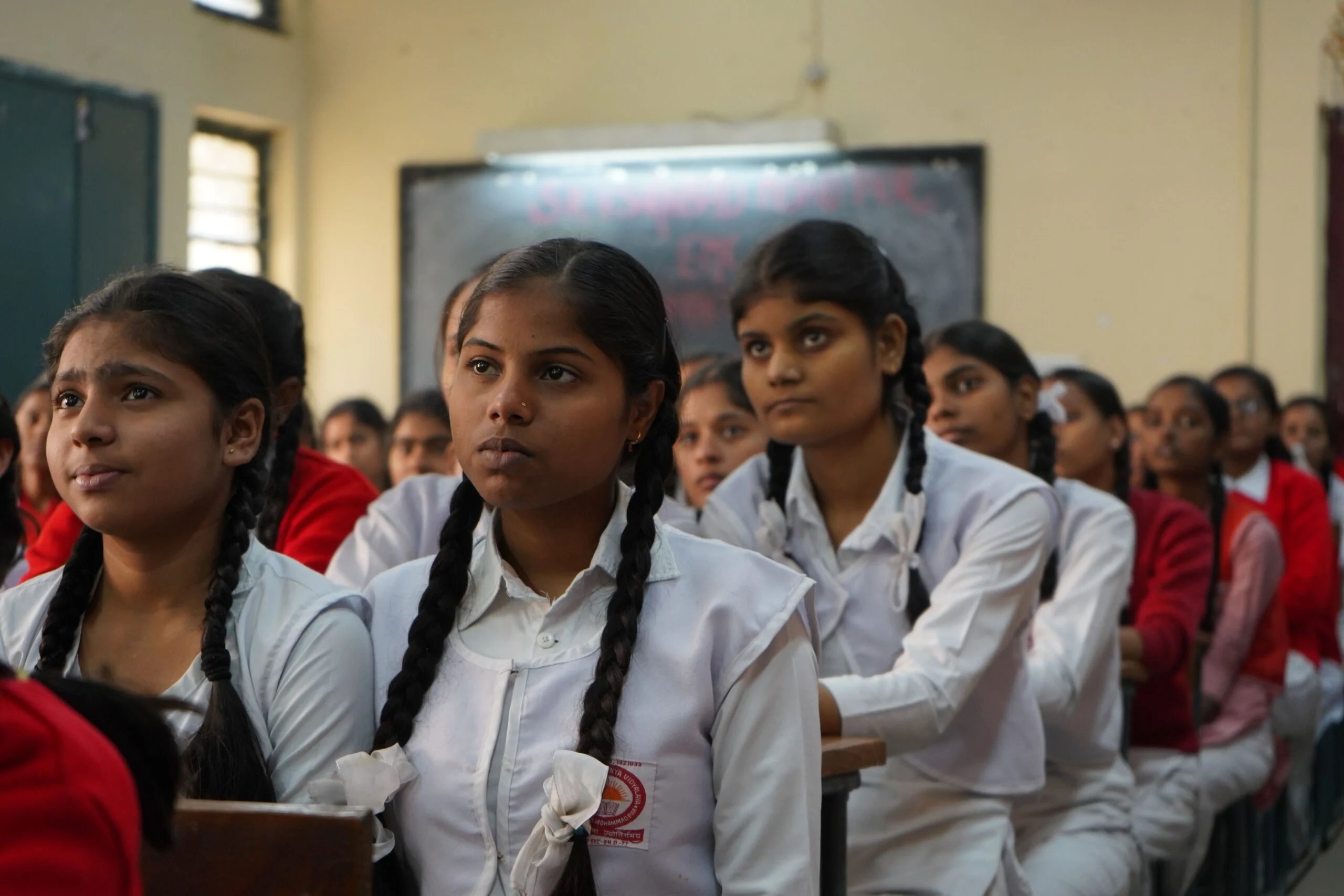
India’s school dropout debate usually runs through big ideas: curriculum reform, teacher quality, the cost of private schooling, the pull of early employment. All of those matter. None of them explains why the dropout curve bends sharply upward for girls at exactly the age of puberty, and stays flat for boys.
The 2026 government audit of school education put a number on the least discussed reason. Close to 99,000 schools in India have no separate toilet for girls.
What a missing toilet does to attendance
For a girl who has begun menstruating, a school with no private, lockable, water supplied toilet is not a school she can attend every day of the month. The arithmetic is simple and brutal.
- Four to five days missed per cycle is roughly 50 days of a school year.
- That is close to a quarter of the academic calendar, every year, from about age 12.
- Miss a quarter of three consecutive years and a student is two grade levels behind on content she was never taught.
- Falling behind produces exam failure, and exam failure is what parents and schools record as the reason for leaving.
The dropout is then logged as academic. It was infrastructural. The girl did not fail school. School failed to provide a room with a door and a bucket of water.
She is not behind by choice or by ability. She is behind by plumbing.
The number is worse than it reads
The 99,000 count is schools with no separate girls’ toilet at all. It does not capture the much larger category of schools where a toilet was built and does not work.
School facility data in India is self reported on an annual form, and that form asks whether a toilet has been constructed. A structure with no water connection, a broken door, no lock, or no cleaning arrangement is still a constructed toilet on paper. Anyone who has visited a rural school knows the difference between the two, and the form does not.
So the real figure for schools where a girl cannot reliably use a toilet during her period is larger than 99,000. Nobody knows how much larger, because nobody measures usability, only construction.
India already proved it can build these
This is not a story about a country that cannot build toilets. Between 2014 and 2019 India constructed household toilets by the crore under a national sanitation programme, at a speed few countries have matched. We covered what that push achieved and where it thinned out in India’s sanitation revolution.
The lesson from that programme applies directly here. Construction was funded, measured, and celebrated. Water supply, maintenance, and cleaning were funded by nobody in particular, so a large share of what was built stopped working within a few years.
A school toilet has an additional requirement most household toilets do not: somebody has to clean it daily for 200 children. In most government schools no such post exists. The work falls to whoever can be persuaded, which in practice often means it does not happen, and within a year the block is locked to stop it being used at all.
The other half of the problem is silence
Facilities are necessary and not sufficient. A functioning toilet in a school where menstruation cannot be mentioned still leaves a girl managing the situation alone, without materials, without a disposal option, and without an adult she can tell.
We wrote about the wider version of this in period poverty in India. The school specific piece of it is narrow and fixable: a supply of pads on the premises, a disposal bin, a female teacher designated as the person to ask, and permission to leave class without explaining why.
Several states run pad distribution schemes already. Where they work, they work because the supply is stored in the school rather than requiring a trip to a health centre, and because collection does not require asking a male teacher for a form.
What the school actually has to spend
It helps to know how a government school is funded, because the toilet problem sits inside that structure. A school receives a small annual composite grant, scaled to enrolment, meant to cover minor repairs, consumables, electricity, and cleaning. For a small primary school this can be a few tens of thousands of rupees for the entire year.
Out of that the head teacher has to cover chalk, registers, minor repairs, the electricity bill if there is a connection, and any cleaning arrangement. A water connection for a toilet block, or a submersible pump where there is no piped supply, is a capital expense that does not fit inside a composite grant at all. It requires a separate sanction, which requires an application, which requires a follow up at the block office by a head teacher who is also teaching five grades.
This is why so many toilet blocks stand unused next to functioning schools. The building was funded by one scheme, and nothing in the recurring budget was designed to keep it running.
What changes when the toilet works
The reason this specific fix gets recommended so often is that its effect is measurable and fast, unlike most education interventions. Where schools have added a functioning, private, water supplied toilet along with a pad supply, the attendance of adolescent girls responds within a term rather than a decade.
That is unusual. Curriculum reform takes a generation to show up in outcomes. Teacher training takes years. A working toilet changes attendance in the same academic year, because it removes a specific barrier on specific days rather than trying to improve something diffuse.
It also compounds in the right direction. A girl who stays in school through Class 10 marries later, earns more, and her own children are more likely to complete school. Every one of those effects is well documented across Indian states and internationally. The intervention is a room with a door and a water supply, and the return runs across two generations.
What it would take to close the gap
Fund water and cleaning, not just construction
A recurring maintenance line per school, tied to the toilet block, is the single change that would keep the most existing facilities open. It is unglamorous, which is why it is rarely proposed.
Measure usability, not construction
Change the annual form. Ask whether the toilet has running water, a working lock, and was used yesterday. A form that asks a better question produces better data within one cycle, at no cost.
Publish it at the school gate
Every school already reports this. Almost no parent has seen their own school’s entry. A painted board showing facility status turns a national statistic into a local question somebody has to answer.
What you can do about it
- Personally: visit the government school nearest you and ask to see the girls’ toilet. Not whether one exists. Whether it has water today.
- In your neighbourhood group: funding a water connection and a year of cleaning for one school block is a small, specific, permanent contribution.
- At panchayat or ward level: school management committees can allocate maintenance funds and mostly do not, because nobody attends and asks.
- At district level: ask in writing for the list of schools reporting no functional girls’ toilet. The list exists.
- Nationally: push for the annual form to ask about water and usage rather than construction alone.
India spent two decades getting girls into classrooms and largely succeeded at enrolment. Keeping them there past 12 turns out to depend on something far less interesting than policy: a door that locks, a tap that runs, and somebody paid to clean the room. The same audit that counted the missing toilets also counted more than one lakh schools running on a single teacher. Both numbers describe the same decision to fund buildings and not upkeep.
Featured photo by Yogendra Singh on Pexels.
Sources: NITI Aayog, School Education System in India, May 2026; infrastructure findings reported via ETV Bharat.
What you can do
- Share the evidenceSend this to one person who should know about gender equality.Share on WhatsApp
- Give an afternoonTeach, mentor, clean up, or lend your professional skills.Ways to volunteer
- Tell us what's missingKnow a story, a fact we got wrong, or a solution worth spotlighting?Suggest a story
Politically neutral. Every claim sourced. Report a correction.

No comments yet