Period Poverty in India: The Silent Crisis
In rural India, 23 million girls drop out of school every year because of menstruation. With only 50 per cent of rural women using hygienic menstrual products and deeply entrenched taboos enforcing silence, period poverty remains one of India's most urgent, and least discussed, crises.
A Morning in Barmer
In a dusty hamlet on the outskirts of Barmer, one of Rajasthan’s most remote districts, fourteen-year-old Kavita sits on a cot in the courtyard of her family’s mud-walled home. It is a Tuesday morning. Her classmates are in school, forty minutes away by foot. Kavita is not. She is menstruating, and in her household - as in millions of households across rural India - that means she stays home.
Kavita uses strips of old cloth, folded and refolded, washed in the open when no one is looking, dried in dark corners away from sunlight because even hanging menstrual cloth in the open is considered shameful. She does not own a sanitary pad. She has never used one. The nearest shop that stocks them is in the block headquarters, twelve kilometres away, and even if she could get there, a packet of pads costs Rs 30-40 - a sum her family, surviving on her father’s daily wages as a construction labourer, cannot spare every month.
“When I have my period, I feel dirty. My mother says I should not touch the water pot, not go to the temple, not sit on the bed. I want to go to school but she says no. She says it has always been this way.”
Kavita’s story is not exceptional. It is ordinary. It is the lived reality of millions of Indian girls and women for whom menstruation is not a biological process but a monthly crisis - of hygiene, dignity, health, education, and social participation. This is period poverty: the inability to afford or access menstrual products, compounded by stigma, misinformation, and systemic neglect.
India’s menstrual hygiene data, drawn primarily from the National Family Health Survey (NFHS-5, 2019-21) and UNICEF reports, reveals a landscape of stark deprivation and inequality.
Access to Menstrual Products
- Only 64 per cent of women aged 15-24 use a hygienic method of menstrual protection (sanitary pads, tampons, or menstrual cups). The remaining 36 per cent use cloth, rags, ash, sand, husk, or nothing at all.
- In rural India, the figure for hygienic method usage drops to 50.5 per cent. In urban areas, it is 77.5 per cent.
- State-level variations are enormous: Kerala has 89.9 per cent hygienic method usage; Bihar has 40.5 per cent; Madhya Pradesh stands at 41.9 per cent.
- Among the poorest wealth quintile, only 37.6 per cent of women use hygienic methods, compared to 91.3 per cent among the wealthiest quintile.
Impact on Education
- 23 million girls drop out of school annually in India, citing menstruation as a primary reason (UNICEF India). This contributes to India’s broader education crisis, where girls from marginalised communities face compounding barriers to staying in school.
- Girls miss an average of 5 days of school per month during menstruation in areas with poor menstrual hygiene management.
- Over a school year, this translates to 50-60 missed school days - effectively losing one-fifth of the academic year.
- By Class 10, the cumulative effect of absenteeism and the stigma associated with menstruation contributes to girls dropping out permanently.
Health Consequences
- Use of unhygienic materials during menstruation increases the risk of reproductive tract infections (RTIs) by 70 per cent, according to a study published in the Indian Journal of Community Medicine.
- Urinary tract infections (UTIs) are disproportionately common among women who use cloth or other non-hygienic materials.
- Cervical cancer risk is elevated in populations with poor menstrual hygiene, though establishing direct causation is complex.
- Toxic Shock Syndrome (TSS), while rare, is a risk when homemade materials are used for prolonged periods without changing.
Awareness
- 71 per cent of adolescent girls in India reported being unaware of menstruation before their first period (UNICEF, 2019). They experienced menarche with no preparation, no explanation, and in many cases, with terror.
- In some communities, menstruation is never discussed between mothers and daughters until the first period arrives, and even then the conversation is limited to restrictions rather than biology or hygiene.
India’s menstrual taboos are ancient, pervasive, and deeply intertwined with religious and caste-based notions of purity and pollution. Understanding period poverty in India requires confronting these cultural realities head-on.
The Concept of “Impurity”
Across Hindu, Muslim, and many tribal traditions in India, a menstruating woman is considered ritually impure. The specifics vary by community, but the restrictions are remarkably consistent:
- Temple entry banned: Menstruating women are barred from entering temples, performing puja, or touching religious texts. The Sabarimala temple controversy in Kerala brought national attention to this practice, but it remains the norm in temples across India.
- Kitchen restrictions: In many households, menstruating women cannot enter the kitchen, touch the water pot, or cook food. They are served separately, often eating last.
- Isolation: In parts of Maharashtra, Gujarat, and Odisha, practices like “chaupadi” (menstrual exile) force women to sleep outside the house, in sheds, or in designated isolation huts during their period. Despite being illegal, the practice persists.
- Physical contact avoided: Family members may avoid physical contact with a menstruating woman. In some communities, even her shadow is considered polluting.
The Silence Around Menstruation
Perhaps more damaging than the restrictions themselves is the silence that surrounds menstruation. Sanitary pads are purchased in whispers and wrapped in black polythene bags - even in urban pharmacies. Television advertisements for menstrual products use blue liquid instead of anything resembling blood. The word “period” is rarely spoken in mixed company.
This silence has real consequences. Girls reach puberty without knowing what is happening to their bodies. They associate menstruation with shame. They internalise the idea that their bodies are inherently dirty or polluting. A study by WaterAid India found that 55 per cent of girls surveyed believed that menstruation was a disease.
Regional Variations
The intensity of menstrual taboos varies significantly across India:
- Southern India (particularly Tamil Nadu and Kerala) has relatively higher awareness and product access, partly due to higher female literacy and active NGO presence. Some communities in the south celebrate a girl’s first period with a coming-of-age ceremony.
- Northern and central India (UP, MP, Bihar, Rajasthan) tends to have the strongest restrictions and lowest product access. These are also states with low female literacy, high gender disparity, and entrenched patriarchal norms.
- North-eastern states generally have less stigma around menstruation, with some tribal communities treating it as a natural process without restriction.
- Urban India is evolving rapidly, particularly among educated, middle-class populations, but stigma persists even in metropolitan cities - it simply takes subtler forms.
In the course of reporting on menstrual hygiene across three districts in Rajasthan, conversations with girls, women, ASHA workers, and teachers revealed the human dimension behind the statistics.
The Girls
Suman, 16, from a village in Jodhpur district, described her first period: “I was in school and suddenly there was blood on my uniform. I thought I was dying. I started crying. The other girls laughed. The teacher sent me home. My mother slapped me and then told me I was a woman now. She gave me a cloth and told me not to tell my father or brothers.”
Priya, 15, from Jaisalmer, told us: “I know about pads from TV. But my family cannot buy them. Sometimes the ASHA didi gives us free pads, but it is not every month. When I have my period, I just stay home. My teacher does not ask why. Everyone knows.”
Rekha, 13, from Barmer: “My friend told me that if you use a pad once, it makes you infertile. So I am scared to use one. I use cloth like my mother.”
The Mothers
Kamla Devi, 42, mother of three daughters, explained: “I have never used a pad in my life. I use cloth. I wash it and dry it under the bed so no one sees. My daughters do the same. It is our way. When you have to choose between food for the family and pads for the girls, the choice is obvious.”
Santosh, 38: “I want my daughters to stay in school. But when they bleed, how can they sit in a classroom with no toilet, no water, no place to change? The school has a toilet for girls but it has no door and no water. Would you send your daughter there?” The lack of adequate sanitation infrastructure in schools across India remains a critical barrier to girls’ education and menstrual hygiene management.
The ASHA Workers
Geeta Devi, an ASHA (Accredited Social Health Activist) worker in Barmer block: “The government gives us pads to distribute - sometimes. Six months ago we got a supply. Before that, nothing for eight months. Even when we have pads, many women refuse them. They say cloth is better because it is what they have always used. We try to explain, but old beliefs are very strong.”
“The biggest problem is not pads. The biggest problem is shame. Girls do not talk about periods. Mothers do not talk about periods. Fathers definitely do not talk about periods. Everyone pretends it does not exist. How can we solve a problem no one will name?”
The Teachers
Sunita Sharma, a government school teacher in Jodhpur district, with 15 years of experience: “I can tell when a girl is menstruating. She sits at the back, does not stand up, does not raise her hand. She is terrified of a stain showing. After two days she simply does not come. This happens every month. By Class 8, many girls have fallen so far behind that they give up.”
“We had a session on menstrual hygiene last year. A woman from an NGO came. The girls were too embarrassed to ask questions. After the NGO woman left, they came to me one by one. The questions they asked - basic questions about their own bodies - broke my heart.”
Addressing period poverty in India requires action across multiple dimensions: product access, education, infrastructure, and cultural change. Several initiatives - governmental and non-governmental - are making headway.
Government Programmes
Menstrual Hygiene Scheme (MHS): Launched in 2011 under the National Health Mission, the scheme provides subsidised sanitary pads (brand name: Freedays) to adolescent girls in rural areas through ASHA workers. The pads are sold at Rs 6 for a pack of six. While the scheme has expanded coverage, distribution is erratic, supply chains are unreliable, and awareness remains low in many areas.
Suvidha Pads (Jan Aushadhi): In 2018, the Pradhan Mantri Bhartiya Janaushadhi Pariyojana introduced ultra-affordable sanitary pads priced at Rs 1 per pad through Jan Aushadhi Kendras (government pharmacies). The initiative addressed cost, but geographic access to Jan Aushadhi Kendras in remote rural areas remains a barrier.
State-Level Initiatives: Several states have launched their own programmes:
- Tamil Nadu was a pioneer, providing free pads to schoolgirls through the “Pudhu Yugam” scheme since 2011.
- Kerala launched “She Pad” in 2018, installing sanitary pad vending machines and incinerators in schools and public toilets.
- Rajasthan announced free pad distribution for schoolgirls in 2019, though implementation has been uneven.
- Odisha introduced the “Khushi” scheme, providing free pads to 17 lakh girls in 45,000 schools.
GST Reduction: In 2018, following a sustained public campaign, the government removed the 12 per cent GST on sanitary pads, making them tax-free. While this was symbolically important, the price reduction at the retail level was modest.
NGO and Civil Society Efforts
Goonj (“Not Just a Piece of Cloth”): Founded by Anshu Gupta (Ramon Magsaysay Award recipient), Goonj’s “Not Just a Piece of Cloth” campaign has been one of India’s most impactful menstrual hygiene initiatives. Goonj collects urban surplus cloth and converts it into “My Pads” - clean, cloth-based menstrual kits distributed in rural areas. The campaign also focuses on breaking the silence around menstruation.
Myna Mahila Foundation: Based in Mumbai’s slums, Myna Mahila employs local women to manufacture and distribute affordable sanitary pads within their own communities. The model addresses access, affordability, and employment simultaneously. The foundation gained international attention when Meghan Markle (now Duchess of Sussex) highlighted their work.
Pad Man / Jayaashree Industries: Arunachalam Muruganantham, whose story was adapted into the Bollywood film “Pad Man,” developed a low-cost sanitary pad manufacturing machine that can be operated by women’s self-help groups in rural areas. His machines have been installed in over 1,000 locations across India and 106 countries, creating local manufacturing capacity and employment.
WaterAid India: Focuses on the infrastructure dimension - ensuring that schools and public places have adequate water, toilets, and disposal facilities for menstrual hygiene management. Their advocacy has pushed for WASH (Water, Sanitation, and Hygiene) standards in school infrastructure.
The “Pad Man” Effect
The 2018 Bollywood film “Pad Man,” starring Akshay Kumar, was a cultural milestone. Based on Muruganantham’s life, the film brought menstruation into mainstream cinema and public conversation in a way that no awareness campaign had achieved. Google searches for “sanitary pads” and “menstrual hygiene” spiked dramatically after the film’s release. It demonstrated the power of popular culture to shift social norms.
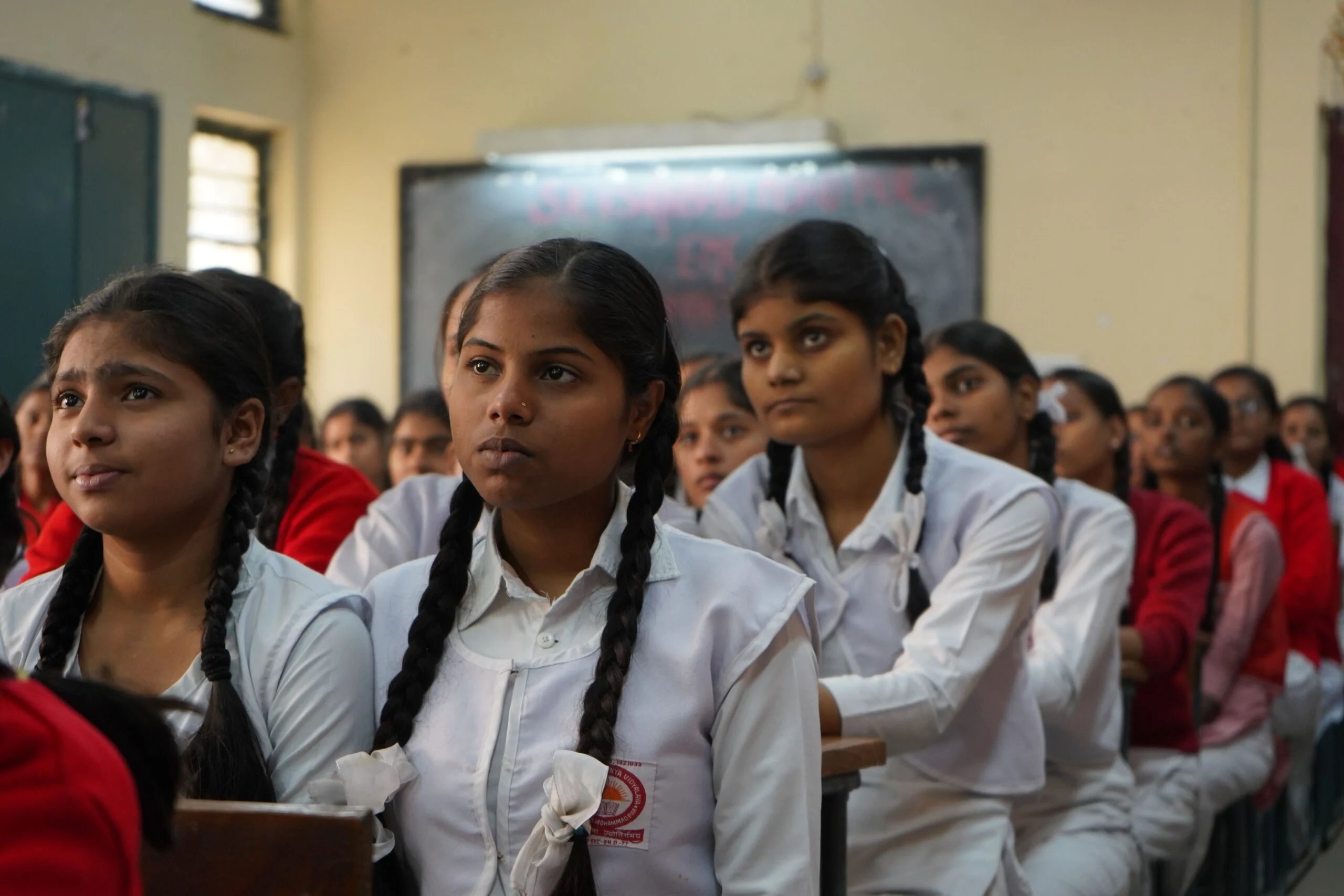
The school environment is the single most critical point of intervention for adolescent menstrual hygiene. Yet Indian schools - particularly government schools - are woefully unprepared.
The Infrastructure Gap
- Only 53.4 per cent of Indian schools have separate functional toilets for girls (UDISE+ 2021-22)
- Many school toilets that exist on paper are locked, broken, or without water
- Sanitary pad vending machines are present in less than 5 per cent of government schools
- Disposal facilities (incinerators or covered bins) are rare; girls often carry used products home or throw them in the open
- Changing rooms or private spaces for girls are virtually non-existent
What a “Menstrual Hygiene-Friendly” School Looks Like
A school that supports menstrual hygiene management requires:
- Separate girls’ toilets with doors, locks, and running water
- Sanitary pad availability (free or subsidised)
- Covered disposal bins and safe disposal mechanisms
- A private changing area
- Menstrual hygiene education as part of the curriculum
- Trained female teachers who can provide guidance without judgment
- A culture where menstruation is normalised and absenteeism addressed
The menstrual hygiene conversation in India has historically focused on disposable sanitary pads. But a broader range of products is gaining attention:
Menstrual Cups: Reusable, cost-effective (a single cup lasting 5-10 years), and environmentally friendly. Brands like Boondh, SheCup, and SilkyCup are promoting adoption, though uptake remains low due to cultural resistance to insertion-based products, lack of awareness, and the need for clean water and private spaces.
Reusable Cloth Pads: Improved designs of traditional cloth use - standardised, washable, and manufactured to hygienic standards. Organisations like EcoFemme (Auroville) produce and distribute reusable pads with educational programmes.
Biodegradable Pads: Addressing the environmental impact of disposable pads (a single pad takes 500-800 years to decompose), brands like Saathi, Carmesi, and Heyday produce pads from banana fibre, bamboo, and other biodegradable materials.
The environmental dimension is significant: India generates an estimated 12.3 billion disposable pads per year, most of which end up in landfills or water bodies. Sustainable alternatives are essential but must not come at the cost of access - the priority for the poorest women must remain affordable products of any kind.
Despite progress, the menstrual hygiene landscape in India requires fundamental shifts in policy, investment, and culture.
1. Universal Free Pads for Schoolgirls
Every government school in India should provide free sanitary pads to all adolescent girls as a matter of policy. The cost is trivial compared to the benefits: keeping girls in school, preventing RTIs, and normalising menstruation. States like Tamil Nadu and Odisha have demonstrated that this is feasible.
2. Comprehensive Menstrual Health Education
Menstrual health education must begin before puberty - in Class 4 or 5, reaching girls before their first period. It must include biological facts, hygiene practices, product choices, and myth-busting. Crucially, boys must be included in these sessions. Menstruation will never be destigmatised if half the population is excluded from learning about it.
3. School Infrastructure
The Swachh Vidyalaya initiative must be revived and expanded, with specific standards for menstrual hygiene infrastructure in every school. Independent audits - not self-reporting by school administrators - should verify compliance.
4. Community-Level Behaviour Change
ASHA workers and Anganwadi workers should be trained and empowered as menstrual hygiene educators. Community-level conversations - involving men, religious leaders, and panchayat members - are essential to shifting norms. The involvement of local women’s self-help groups (SHGs) in pad manufacturing and distribution can create both economic incentives and social momentum. Period poverty also intersects with other forms of child welfare challenges, as girls from economically vulnerable families face compounding disadvantages that push them out of school and into early marriage or labour.
5. Supply Chain and Last-Mile Delivery
Government pad distribution schemes must address the chronic supply chain failures that render them ineffective. Integrating pad distribution with the existing Public Distribution System (PDS) or ASHA worker network could improve reach.
6. Data and Monitoring
India needs better data on menstrual hygiene. The NFHS should expand its menstrual hygiene module to include questions about product type, school absenteeism, menstrual disorders, and access to facilities. State-level menstrual hygiene management (MHM) scorecards should be published annually.
Period poverty is not a women’s issue. It is a public health issue, an education issue, a gender equality issue, and a development issue. It is inseparable from the larger questions of how India treats its girls and women - whether it sees their bodies as sources of shame or as deserving of care, whether it prioritises their health and education or treats them as afterthoughts.
The silence around menstruation in India serves a function: it maintains a system where women’s bodies are controlled, their mobility restricted, and their participation in public life conditional on biological processes they did not choose. Breaking that silence is not just about distributing pads - it is about recognising the fundamental dignity and equality of half the population.
As Kavita, 14, from Barmer told us: “I want to go to school every day. Every day, not just the days when I am not bleeding.” It is a wish that should not require courage to express. The fact that it does tells us everything about how far India still has to go.
Key Data Sources
- National Family Health Survey (NFHS-5), 2019-21
- UNICEF India: Menstrual Hygiene Management Reports
- WaterAid India: Menstruation in India Report
- UDISE+ 2021-22 (Unified District Information System for Education)
- Indian Journal of Community Medicine: Menstrual Hygiene Studies
- Ministry of Health and Family Welfare: Menstrual Hygiene Scheme Data
- Dasra Foundation: “Spot On!” Report on Menstrual Health
What you can do
- Share the evidenceSend this to one person who should know about gender equality.Share on WhatsApp
- Give an afternoonTeach, mentor, clean up, or lend your professional skills.Ways to volunteer
- Tell us what's missingKnow a story, a fact we got wrong, or a solution worth spotlighting?Suggest a story
Politically neutral. Every claim sourced. Report a correction.

No comments yet