Science & Technology: India's Quantum Mission - The 6,000-Crore Bet to Catch China
In 2023, India announced a National Quantum Mission with a budget of approximately 6,000 crore rupees over eight years, targeting a set of milestones that would put India in the global top tier of quantum computing, quantum communication, and quantum sensing capabilities by 2031. The announcement pl...

In 2023, India announced a National Quantum Mission with a budget of approximately 6,000 crore rupees over eight years, targeting a set of milestones that would put India in the global top tier of quantum computing, quantum communication, and quantum sensing capabilities by 2031. The announcement placed India alongside the United States, China, the European Union, the United Kingdom, and Japan as countries with serious national quantum strategies. Whether India’s quantum programme will actually achieve its targets is a question that turns on scientific capacity, institutional quality, industrial policy execution, and the gap between political announcements and funded reality - all areas where India has a mixed historical record in deep technology development.
What Quantum Computing Actually Is - and Why It Matters
Quantum computing exploits quantum mechanical properties - superposition, entanglement, and interference - to perform certain types of computation fundamentally differently from classical computers. A classical bit is always either 0 or 1. A quantum bit (qubit) can exist in a superposition of both states simultaneously, enabling quantum computers to explore many possible solutions to a problem simultaneously rather than sequentially. For certain categories of problems - most importantly, the simulation of quantum systems (molecules, materials), optimisation problems, and the factoring of large numbers - quantum computers offer potential exponential speedup over any classical algorithm.
The practical implications of this speedup are large. Factoring large numbers is the basis of the RSA encryption that secures most internet communication; a sufficiently powerful quantum computer could break RSA encryption, which is why governments worldwide are investing in both quantum computing and post-quantum cryptography simultaneously. Simulating molecular quantum mechanics at the level of individual electrons would enable the design of new catalysts, drugs, and materials at a level of accuracy that classical computation cannot achieve - with potential consequences for pharmaceutical development, battery chemistry, solar cell efficiency, and nitrogen fixation (and therefore fertiliser production). Optimisation problems relevant to supply chain management, financial portfolio construction, and logistics scheduling are candidates for quantum advantage, though the practical speedup achievable for specific real-world instances of these problems is still being determined.
The Global Race: Where India Sits
The global competition in quantum computing is primarily between the United States and China, with significant programmes in the European Union, the United Kingdom, and Japan playing catch-up roles. American progress is led by Google (which claimed quantum supremacy in 2019 with its Sycamore processor), IBM (which has published a public roadmap toward 100,000-qubit systems by the end of the decade), and a cluster of startups including IonQ, Quantinuum, and PsiQuantum. China has made quantum communication (quantum key distribution networks) a particular focus and has deployed the world’s largest quantum communication network connecting Beijing and Shanghai; its quantum computing progress, while less publicly documented than American progress, is believed by intelligence assessments to be substantial.
India’s starting position in this race is several years behind the leading programmes. The country has research groups working on quantum technologies at the Tata Institute of Fundamental Research, the Indian Institute of Science, IIT Madras, IIT Bombay, and several other institutions, but the scale and funding of these groups has been substantially below what comparable programmes in leading countries receive. India does not currently operate a gate-based quantum computer of scale competitive with IBM’s or Google’s publicly available systems. The National Quantum Mission’s eight-year timeframe targets developing quantum computers of 50-1,000 logical qubits (a range that reflects genuine uncertainty about what will be technically feasible), establishing quantum communication networks across major Indian cities, and developing quantum sensing and metrology applications.
India’s quantum mission is attempting to compress into eight years a development trajectory that leading countries have been pursuing for over a decade. The scientific talent exists. The institutional infrastructure and sustained funding commitment are the questions.
India’s Quantum Advantages and Disadvantages
India’s advantages in quantum technology development are primarily in software, algorithms, and theoretical research rather than hardware. Indian researchers have made contributions to quantum algorithms, quantum error correction theory, and quantum cryptography that are competitive at the international level. The country produces a large number of physics and engineering PhD graduates annually, many of whom work in quantum research at institutions in the United States and Europe; the National Quantum Mission specifically targets creating conditions that would attract some of this diaspora talent back to India. India’s software engineering ecosystem, which is globally significant in classical computing, is a potential asset if quantum computing develops in directions where software and algorithm development are competitive advantages rather than hardware.
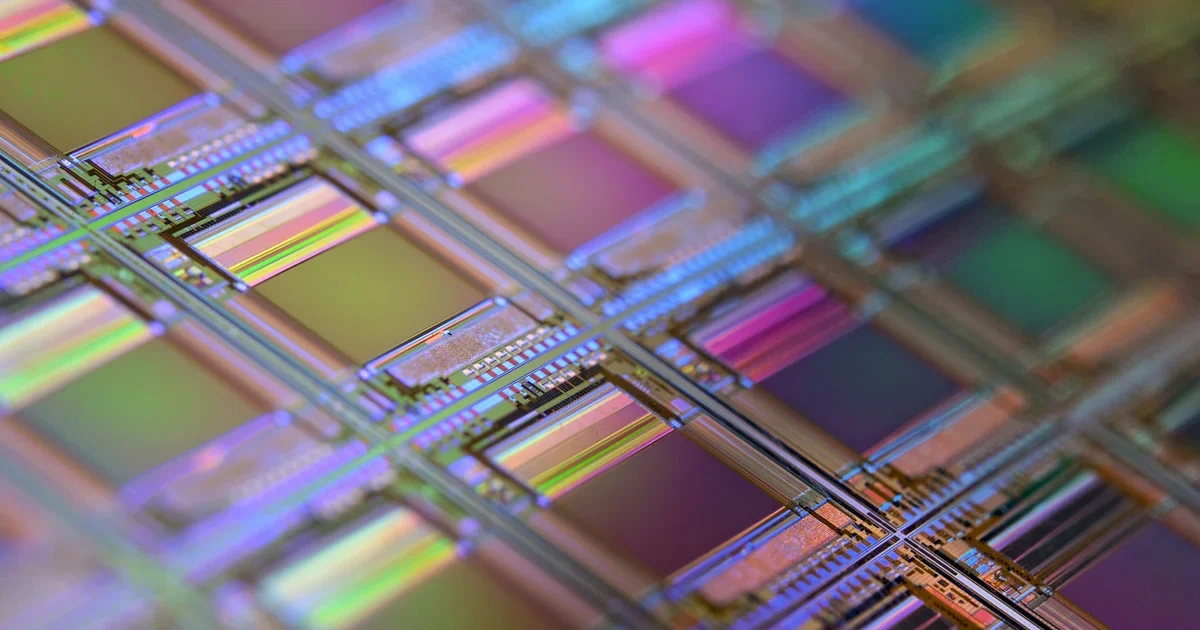
The disadvantages are more structural. Quantum hardware development - the engineering of qubit systems, dilution refrigerators, control electronics, and cryogenic infrastructure - requires industrial capabilities that India does not currently possess at the required level. The leading quantum computer hardware approaches (superconducting qubits, trapped ions, photonic qubits) all require extremely specialised manufacturing and materials capabilities. India’s semiconductor manufacturing ecosystem, which has been the subject of its own policy effort (the India Semiconductor Mission), is nascent; fabricating quantum processor chips requires capabilities that are not yet available domestically. This means India’s quantum hardware development will initially depend on imported components and equipment, creating supply chain vulnerabilities and cost disadvantages that domestic manufacturers in the United States, Japan, and China do not face to the same degree.
India Quantum Mission Targets (by 2031) | Target |
|---|---|
Quantum computer scale | 50-1,000 logical qubits |
Quantum communication | Network linking major cities |
Quantum sensing | Atomic clocks, gravimeters, seismometers |
Budget | Rs 6,003 crore (~$730 million) |
Duration | 2023-2031 (8 years) |
Lead agency | Department of Science and Technology |
Institutional Challenges: Can India Execute?
The National Quantum Mission’s success depends not just on its funding and technical targets but on institutional execution capacity that India’s science and technology missions have a mixed record in demonstrating. The Space technology programme (ISRO) and the nuclear programme are examples of India successfully developing and operating cutting-edge technology indigenously; both are characterised by a combination of strong institutional culture, protected funding, and relative insulation from normal government procurement and HR constraints. The quantum mission will need to operate more like ISRO than like typical government science programmes if it is to achieve its targets.
The mission is organised through four “Technology Hubs” (T-Hubs) at national institutions focused on quantum computing, quantum communication, quantum sensing, and quantum materials and devices. The hub structure is intended to concentrate talent and resources rather than dispersing them across many individual institutional grants. Whether the hubs will actually function as integrated research and development centres - attracting the best researchers, purchasing equipment without the delays and restrictions that afflict normal government procurement, and retaining talent against private sector and international competition - will determine much of the mission’s actual trajectory. India’s connection to this technological frontier is also relevant to understanding broader patterns of Indian scientific contribution, including the mathematical traditions we examine in our piece on India’s invention of zero and mathematical heritage.
The Strategic and Economic Stakes
India’s motivation for a national quantum programme is both strategic and economic. Strategically, quantum communication networks offer the possibility of unbreakable communications for sensitive government and military applications - a capability that matters particularly for a country managing complex relationships with China and Pakistan. Quantum sensing technologies - atomic clocks of extreme precision, gravimeters that can detect underground structures, magnetometers - have applications in navigation, resource exploration, and defence that make them strategically important. The United States has begun restricting exports of some quantum technologies to China; India needs to develop indigenous capability or risk being dependent on American supply chain decisions in a strategically sensitive technology area.
Economically, the quantum computing market - currently small but projected to grow substantially over the next decade - represents an opportunity for India to establish early positions in quantum software, quantum algorithms, and quantum-as-a-service businesses before the technology matures. Several Indian technology companies have begun quantum practices, and the IIT and IISc ecosystems have produced quantum computing startups that are still early-stage but demonstrating the startup formation capacity that India’s quantum ecosystem needs to develop. Whether the 6,000 crore rupee National Quantum Mission investment will be sufficient to create globally competitive institutions, or whether it will be divided too thinly across too many programmes to achieve critical mass in any single area, is the central execution question. For a country that discovered zero and made foundational contributions to the mathematics that underlies computing, the ambition is historically grounded even if the institutional path is uncertain.
Watching the Mission
India’s quantum mission is an ambitious bet on a technology that is still years from practical widespread deployment. The bet is justified: quantum computing, once mature, will be as transformative as the internet, and countries without domestic quantum capabilities will face significant strategic and economic disadvantages. The question is not whether to invest but how to invest effectively - concentrating resources, protecting from bureaucratic friction, and retaining talent against international competition. The next three years of the mission, during which the T-Hubs become operational and first systems are built, will reveal whether India’s quantum ambition is matched by institutional capacity.
Post-Quantum Cryptography: The Defensive Side
The threat that quantum computers pose to current encryption standards is driving a parallel programme in post-quantum cryptography (PQC) - cryptographic methods that would remain secure even against quantum computer attacks. In 2022, the US National Institute of Standards and Technology (NIST) finalised its first set of post-quantum cryptographic standards, selecting algorithms based on mathematical problems (lattice problems, hash functions, code-based problems) that quantum computers are not believed to be able to solve efficiently. India’s cybersecurity and cryptography community is engaged in this transition, which will require updating the encryption infrastructure of banks, government systems, telecommunications, and internet services to PQC standards before quantum computers capable of breaking current encryption become available.
The timeline pressure is significant: security experts use the term “harvest now, decrypt later” to describe the threat posed by current collection of encrypted data by adversaries who intend to decrypt it once quantum computers become available. Sensitive government communications, intelligence data, and long-lived financial records encrypted today with RSA or elliptic curve methods could potentially be decrypted in the future if a sufficiently powerful quantum computer is developed and the adversary has been archiving the encrypted traffic. This threat is not hypothetical - state-level intelligence agencies are assumed to be collecting encrypted traffic that they cannot currently decrypt, with the intention of doing so when the technology exists. India’s National Quantum Mission includes quantum communication development (quantum key distribution) precisely because QKD provides information-theoretically secure communication that is not vulnerable to this attack, regardless of future computing advances.
India’s Quantum Startups and Research Ecosystem
India’s quantum ecosystem includes a growing number of startups working on quantum software, quantum algorithms, and quantum sensing, even as quantum hardware development remains nascent. Companies including QNu Labs (quantum random number generation and QKD hardware), BosonQ Psi (quantum simulation for engineering applications), and Qulabs have attracted venture funding and customer interest in sectors including finance, telecommunications, and pharmaceuticals. These companies are primarily software and systems integrators rather than hardware manufacturers - they build quantum applications that run on existing cloud quantum computers (IBM’s Q Network, Amazon Braket, Google Quantum AI) rather than developing their own quantum processors. This positions them to deliver near-term value from quantum computing without the enormous capital investment required for hardware development.
The Indian academic research community in quantum information science, while smaller than those in the United States, China, or Europe, has produced significant contributions. The Tata Institute of Fundamental Research (TIFR) in Mumbai has been a centre for quantum information and computation research since the 1990s; IIT Madras, IIT Bombay, and the Raman Research Institute in Bengaluru have active quantum research groups. The Department of Science and Technology’s Quantum-Enabled Science and Technology (QuEST) programme, which preceded the National Quantum Mission, funded early-stage quantum research at 17 institutions. The challenge for the National Quantum Mission is to scale these scattered research efforts into coordinated, well-funded programmes that can compete with the world’s leading quantum research centres. India’s mathematical heritage - including the same traditions that produced zero and the foundations of algebra - provides cultural confidence in scientific capability, as explored in our analysis of India’s invention of zero.
What you can do
- Share the evidenceSend this to one person who should know about this issue.Share on WhatsApp
- Give an afternoonTeach, mentor, clean up, or lend your professional skills.Ways to volunteer
- Tell us what's missingKnow a story, a fact we got wrong, or a solution worth spotlighting?Suggest a story
Politically neutral. Every claim sourced. Report a correction.

No comments yet